Gardens that are friendly to wildlife rarely sit still, even when you do. Seasonal biodiversity cycles keep rewriting the cast list - who feeds, who nests, who blooms, who vanishes - and that’s precisely why these spaces matter to anyone who wants more than a tidy border and a quiet patio. If you’ve ever wondered why your “wild” corner looked lush in May, scruffy in August, and oddly busy again in October, you’re not imagining it: the garden is responding, not performing.
One morning it’s a damp lawn peppered with worm casts and blackbirds flipping leaves like pages. A week later the same patch is dust-dry, seed heads rattling, hoverflies hanging in the air as if pinned there. The point isn’t consistency. The point is life.
The garden isn’t a picture; it’s a process
A wildlife-friendly garden behaves more like a shoreline than a showroom. It shifts with rain, temperature, day length, and the small decisions you make without thinking - when you mow, what you leave standing, whether you top up a dish of water.
Biodiversity arrives in pulses. Early in the year, nectar and shelter are the currency; later, it’s seed and shade; later still, it’s cover and rotting wood. If you build for only one moment (usually “summer flowers”), the rest of the year goes hungry.
A garden that looks “unfinished” to us can be fully booked to everything else.
Seasonal biodiversity cycles: the four act structure you can’t skip
Think of the year as a relay race, with different species taking the baton as conditions change. The handovers are where gardens look most different - and where they often feel “messy” to human eyes.
Spring: the scramble for nectar and nesting
In spring, everything is urgency. Queens emerge, birds pair up, amphibians move, and the garden’s value is set by whether it offers early fuel and safe corners.
What changes the look of the garden fastest at this time:
- Bulbs and early blossom pop, then fade quickly.
- Fresh growth hides last year’s stems almost overnight.
- Nesting material disappears: moss, fur, dried grass pulled from edges.
If you left stems over winter, spring is when they pay you back. Hollow stalks that looked like litter in February can release solitary bees in April.
Summer: abundance, then heat stress
Summer feels like the “main show”, but it’s also when a wildlife garden can look most uneven. After the first flush, plants pause, flop, or go to seed; lawns scorch; ponds shrink; insects cluster around what still offers moisture and shade.
Two gardens on the same street can diverge wildly here. One gets afternoon sun and bakes; one sits in dappled shade and stays green. One has a pond edge; one is all paving. Wildlife follows the microclimate, not your planting plan.
A few small features create big visual swings:
- A shallow water source turns into a daily meeting point.
- Long grass becomes a cool corridor, then browns off.
- Deadheading keeps colour going; leaving seed heads shifts the palette to straw and bronze.
Autumn: seed, fruit, and the great clear-out (that you shouldn’t rush)
Autumn is when the garden trades petals for provisions. Berries colour up, seed heads ripen, fungi appear, and leaf fall creates a whole new habitat layer.
This is also where gardeners tend to “reset” - and accidentally erase the next season’s wildlife. If you cut everything down because it looks spent, you remove food and shelter at the exact moment many species are trying to bank energy for winter.
A slower approach keeps the garden alive and still manageable:
- Leave some stems standing; cut others for paths and access.
- Rake leaves off lawns, but pile them under hedges as leaf mould-in-the-making.
- Let a patch of nettles or brambles remain if you can - they’re nurseries, not nuisances.
Winter: structure, shelter, and quiet work you can’t see
Winter gardens can look bare, but “bare” is not “empty”. This is the season of hiding places: dense evergreens, log piles, stone gaps, thick litter under shrubs. It’s also when decomposition does its patient job, turning last year’s growth into next year’s soil.
If your garden looks different each winter, it’s often because you’ve changed one structural element - removed ivy, cleared a corner, chopped back a hedge hard - and the wildlife response is immediate. Shelter is a strict requirement, not a nice extra.
Why two wildlife gardens don’t match, even with the same plants
People copy plant lists and expect similar results. But wildlife responds to context: surrounding habitat, light, moisture, pesticide drift, and even what your neighbours do.
A few invisible differences that produce obvious changes:
- Connectivity: a garden near trees, allotments, or a railway verge gets more visitors than an isolated courtyard.
- Soil and water: clay holds moisture (and frogs); sandy soil drains fast (and favours different flowers and bees).
- Mowing and cutting timing: a fortnight’s delay can mean a whole cycle of flowers and insects either happens or doesn’t.
- Night lighting: bright security lights can suppress moths, which then affects bats and nocturnal pollination.
Your job isn’t to force symmetry with someone else’s garden. Your job is to make your own patch easy to use.
The “good mess”: letting the garden show its ecology
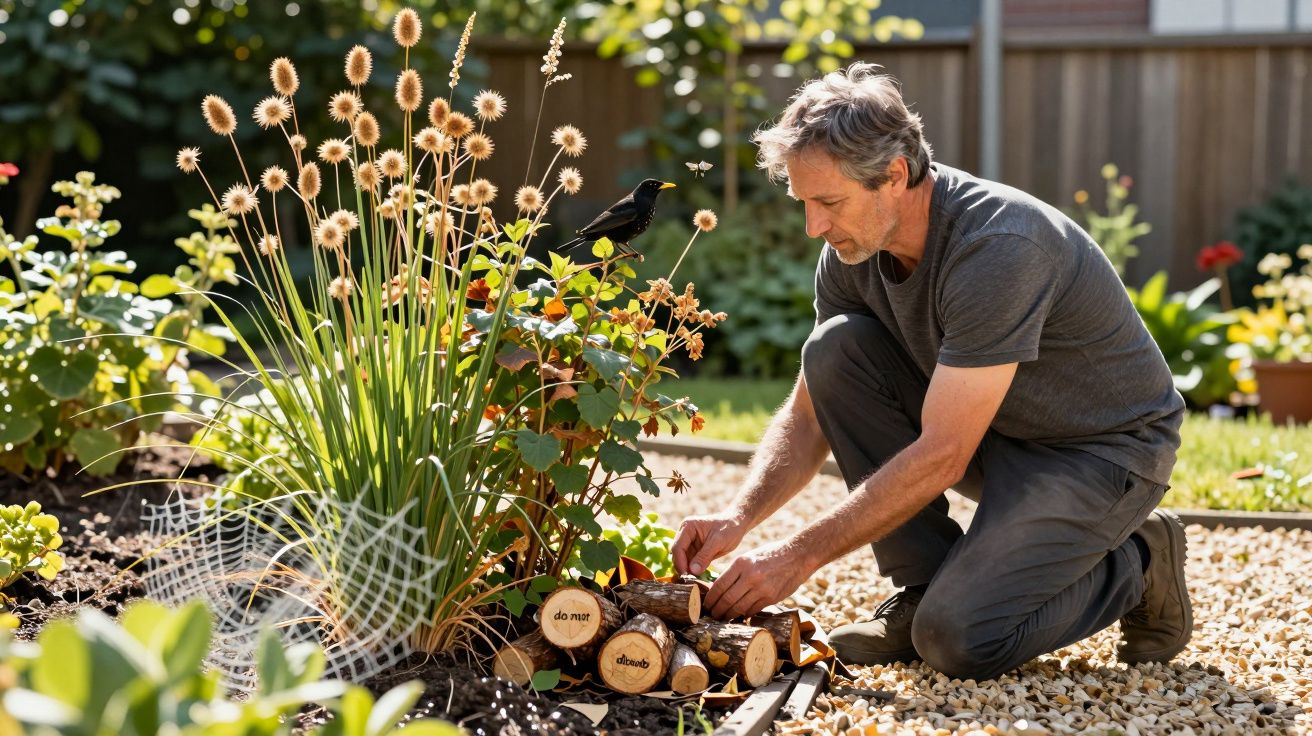
There’s a particular kind of untidiness that signals function. Seed heads that stand like small scaffolds. A log pile that looks like procrastination. A border edge that softens into grass and suddenly hosts butterflies you didn’t plant for.
If you want a quick check that the mess is doing work, look for activity rather than perfection:
- Are there bite marks on leaves (caterpillars have to eat)?
- Do you see spiders’ webs in the morning dew (structure matters)?
- Are birds using stems as perches (vertical layers matter)?
- Do you find larvae in pond plants or damp compost (life is cycling)?
The goal isn’t a wild-looking garden. The goal is a usable one.
A simple way to design for change without losing control
You don’t need to let the whole garden roam. The most successful wildlife-friendly gardens usually have a bargain built in: freedom in some areas, clarity in others.
Try this layout logic:
- Keep edges crisp: one mown strip, one gravel path, or a neat boundary makes everything else look intentional.
- Create “habitat zones”: a long-grass patch, a shrub thicket, a sunny flower area, a damp corner.
- Stagger resources: early flowers, summer nectar, autumn seed, winter shelter.
- Leave a “do not disturb” pile: logs, stones, and leaves in a back corner that you don’t keep reinventing.
The garden will still look different month to month, but it won’t feel out of control - it will feel seasonal on purpose.
What to expect (and what to stop worrying about)
Here’s what change typically means, not as a failure but as feedback.
| What you see | Likely cause | What it supports |
|---|---|---|
| Sudden bare patches in summer | Heat/drought; shorter mowing | Ground beetles, solitary bees, drought-tolerant plants |
| More “untidy” winter structure | Stems and seed heads left | Birds, overwintering insects, spring emergence |
| A boom, then a lull | A life cycle completing | Predators arrive later; balance takes time |
If you’re new to this, the hardest lesson is patience. The garden often looks best to wildlife at the exact time it looks least “finished” to you.
FAQ:
- Will a wildlife-friendly garden always look messy? No. It will look more seasonal and structural: periods of lushness, periods of seed heads and stems, and quieter winter shapes. You can keep it visually tidy with paths, defined edges, and selective cutting.
- Do I need a pond for biodiversity? It helps, but it’s not mandatory. A shallow water dish, damp planting, and leaf litter can still support a lot of life; a pond simply adds an extra habitat layer with dramatic seasonal shifts.
- When should I cut things back? Stagger it. Cut some stems in late winter as new growth starts, and leave others until spring warmth arrives. Avoid clearing everything at once - that’s when shelter and food disappear together.





Comments (0)
No comments yet. Be the first to comment!
Leave a Comment