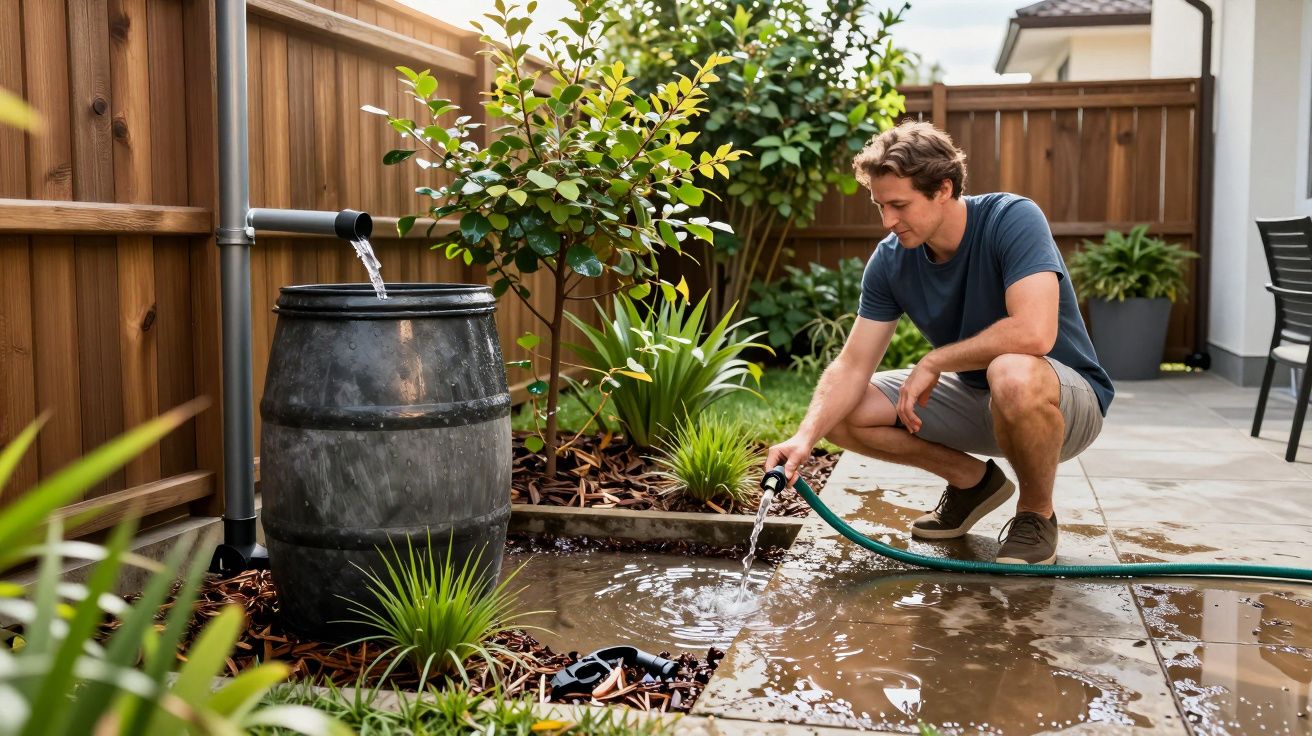
The first time I properly noticed where rain went in my garden was after a summer cloudburst that sounded like gravel on the shed roof. Water pooled by the patio, the borders slumped, and the next week the lawn went straw-dry anyway. That contradiction is exactly why water-sensitive design matters in climate-resilient gardens: it’s a way of shaping your space so water is slowed, soaked in, stored, and used-rather than treated like a nuisance you rush towards the nearest drain.
It isn’t a single product or a trend label. It’s a practical way of thinking about every surface, slope, and planting choice so the garden behaves better in both downpours and droughts, with less fuss from you.
The day your garden becomes a tiny catchment
Most gardens are built like miniature car parks: hard edges, compacted soil, and a default “send it away” approach. Then we wonder why the borders look stressed and why the water butt is empty the moment we need it. Water-sensitive design flips the direction of travel: keep water on-site for longer, and let it do some work.
Think of the garden as a small catchment area. The roof, the path, the patio, even the shed-everything collects water. The question becomes: where do you want it to pause, and where can it safely sink in?
What “water-sensitive” actually means at home
It helps to picture three jobs happening at once: slow, spread, soak. You’re trying to reduce runoff, increase infiltration, and give plants more reliable moisture. That’s climate resilience in plain terms: fewer soggy corners in winter, fewer stressed plants in summer, and less reliance on mains water when restrictions bite.
A simple rule that holds up: if water is rushing, it’s not helping you. If it’s lingering in the wrong place, it’s not helping you either.
The quiet culprits: compaction, hardscape, and the wrong kind of neat
Gardens fail hydraulically in boring ways. Soil gets compacted by builders’ boots and years of mowing. Patios are laid dead flat. Gravel is put over membrane and becomes decorative, not functional. Borders are edged so tightly they can’t accept a sheet of runoff.
You don’t need to turn the place into a wetland. You do need to stop fighting physics with aesthetics.
- Compacted soil sheds water like a roof; aeration and organic matter change that fast.
- Impermeable paving speeds runoff; swapping to permeable materials buys time.
- Guttering straight to drains wastes free water; diverting to storage or planting is an easy win.
- Over-pruned planting exposes soil; shade and ground cover reduce evaporation and erosion.
The moves that change everything (without rebuilding the whole garden)
Water-sensitive design isn’t an “all or nothing” retrofit. It’s a series of small decisions that stack up, and you feel the difference the next time it buckets down.
1) Capture: treat your roof like a reservoir
Roofs are often the cleanest, most predictable water source you’ve got. A water butt is the obvious start, but it’s more useful when it’s planned like a system rather than a token barrel behind the shed.
- Link two butts if you have the space, or add a slimline tank for a tight side return.
- Fit a diverter so overflow goes somewhere purposeful (a border, a soakaway, a rain garden), not back onto the path.
- Use the stored water for containers and new planting first; that’s where drought stress shows up fastest.
2) Infiltrate: make “soft landing zones” for runoff
If you’ve got a patio or path, you’ve got runoff. The trick is giving that runoff a place to slow down and sink in that isn’t your house foundations.
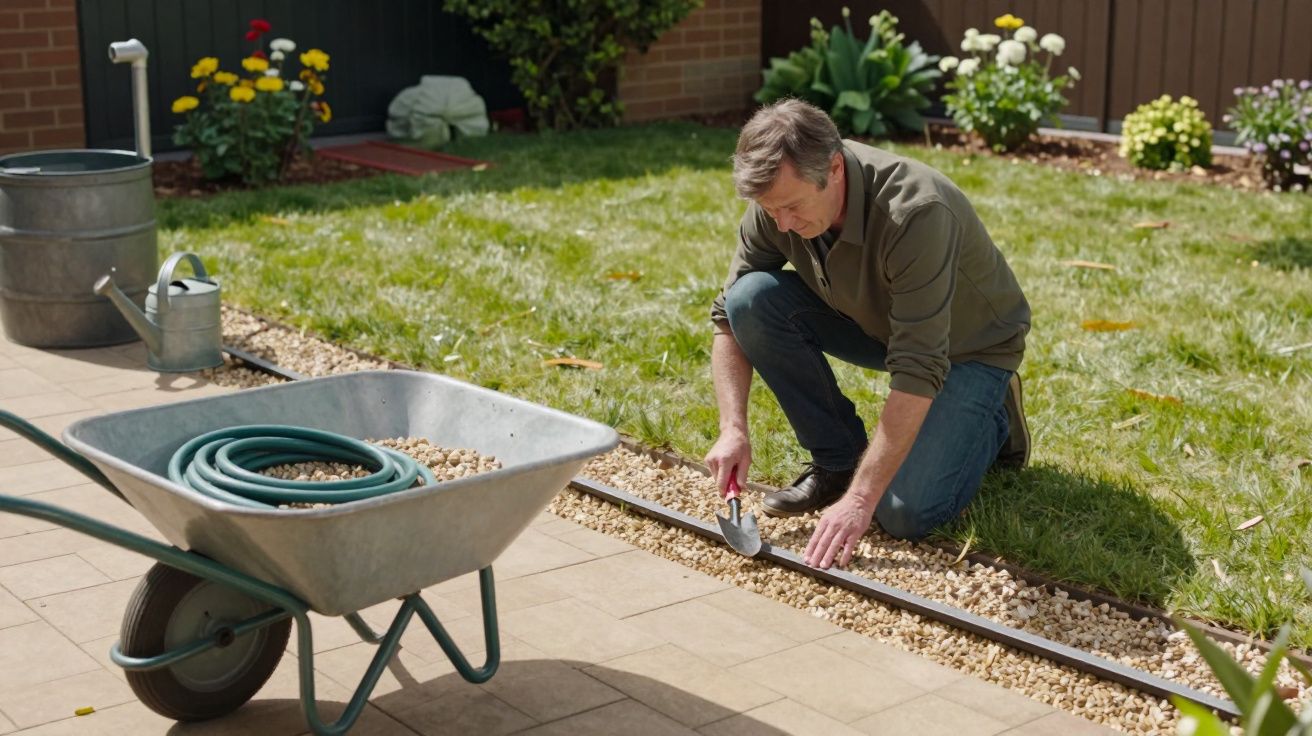
Good options include: - Permeable paving (or simply widening joints and planting between pavers where appropriate) - Gravel without plastic membrane, laid over a well-graded sub-base so it actually drains - Soakaway crates or a rubble trench, sited away from buildings - Raised beds with overflow into adjacent borders, so water has a second chance to infiltrate
3) Store in the soil: the cheapest water tank you own
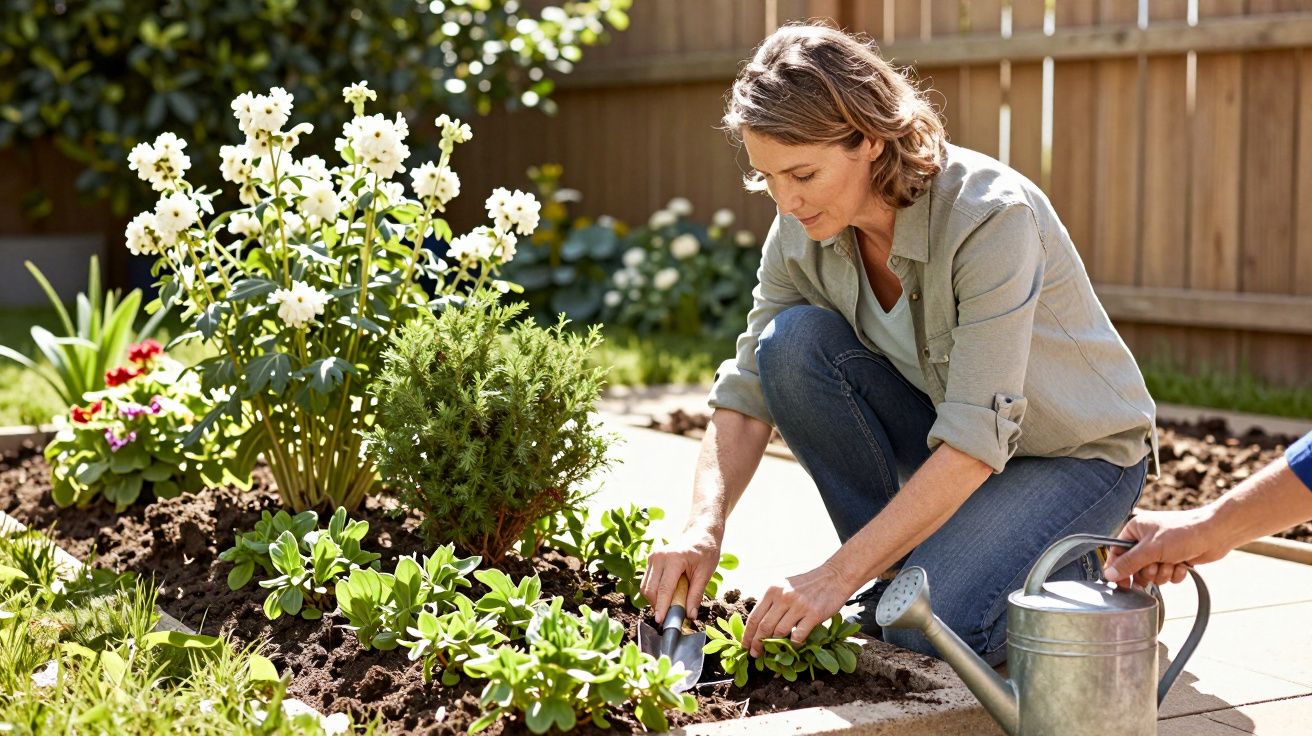
Healthy soil is storage. Compost, leaf mould, and mulch increase water-holding capacity and reduce evaporation, and they do it quietly in the background.
A practical rhythm that works: - Add organic matter in autumn or spring. - Mulch before hot weather arrives, not after plants have already wilted. - Keep soil covered with plants or mulch; bare soil is a fast track to drying out and crusting over.
Rain gardens: not a pond, not a swamp, just smart planting
A rain garden is basically a shallow basin designed to temporarily hold water and let it infiltrate. It’s one of the most visible pieces of water-sensitive design, and also one of the most misunderstood. It shouldn’t stay wet for days. If it does, it’s telling you the soil needs improving, the sizing is off, or the outlet is missing.
Choose plants that cope with “feast then famine”: wet feet for a short spell, then dry periods. In UK terms, that often means mixing tough perennials and grasses with a few moisture-lovers in the lowest point.
A simple layout: - Centre (wetter): plants that tolerate occasional saturation. - Sides (drier): plants that prefer free-draining soil. - Edge (tough zone): ground cover to stabilise and stop splash erosion.
Planting for climate-resilient gardens: less thirst, more shade, deeper roots
A water-sensitive garden isn’t only about where water goes. It’s also about how quickly it leaves. Plant choice matters, but so does structure: canopies, layers, and wind buffering reduce evaporation dramatically.
Good principles (more useful than a perfect plant list): - Prefer deep-rooted perennials and shrubs over shallow-rooted, high-demand bedding. - Use dense ground cover to shade soil and reduce temperature swings. - Group plants by water needs, so you’re not trying to keep a thirsty pot next to a drought-tolerant border. - Accept that lawns may need to be smaller, or managed differently, rather than forced to stay summer-green at all costs.
A quick self-check: is water working for you or against you?
If you want a sixty-second audit, go out during heavy rain and look for three things: where water starts, where it accelerates, and where it ends up. You’ll usually spot the fixes immediately, because the garden shows you the map.
Here’s a compact way to decide what to do next:
| What you see | Likely cause | A sensible first fix |
|---|---|---|
| Puddles by the patio | Flat, impermeable surface | Add a fall to a border or swap a section to permeable |
| Runoff cutting through beds | Compaction + bare soil | Mulch, add organic matter, plant ground cover |
| Water butt always empty | Not enough capture/storage | Add diverter, second butt, or a larger tank |
The point isn’t perfection. It’s follow-through.
Water-sensitive design rewards small, consistent upgrades more than dramatic one-off projects. Each change-one downpipe redirected, one border softened, one patch of compacted soil revived-makes the next extreme weather event feel less like a fight and more like a system doing its job.
And that’s the real appeal for modern eco gardens: you’re not just choosing “green” materials. You’re teaching the garden how to hold water, share it, and cope when the weather swings hard.
FAQ:
- Do I need a professional to use water-sensitive design in a small garden? Not usually. Start with observation in heavy rain, add a water butt with an overflow plan, and improve soil with organic matter and mulch.
- Will a rain garden attract mosquitoes? In the UK, a correctly built rain garden should drain within 24–48 hours, which is too quick for most mosquito breeding cycles. If water sits for days, adjust soil structure or add an overflow/outlet.
- Is permeable paving always better? For drainage and reducing runoff, yes. But it still needs the right sub-base; poorly installed permeable surfaces can clog and behave like solid paving.
- How far should soakaways be from the house? Keep infiltration features away from foundations and follow local guidance for your soil and property type. When in doubt, get site-specific advice, especially for older buildings or clay-heavy ground.



Comments (0)
No comments yet. Be the first to comment!
Leave a Comment