A sustainable garden isn’t finished when the last plant goes in. Long-term ecological planning and sustainable landscaping treat time as a design material, because the “look” you buy on day one is rarely the garden you’ll live with on year five. If you want lower maintenance, richer wildlife, and fewer expensive do-overs, you have to design for what will change as much as for what will sit still.
I learnt this the hard way watching a neighbour’s immaculate new border slump into a weedy tangle by its second summer. Nothing was “wrong” with the plants; the plan just ignored growth, shade, and soil life doing what they always do. The garden did exactly what time demanded.
Time is the invisible layer in every planting plan
A garden is a moving system. Trees thicken, light shifts, soil structure loosens or compacts, and the wind pattern changes when a hedge finally knits together. Design that only works in the first month is essentially a staged photo.
The most durable gardens are drawn with two timelines in mind: the establishment phase (usually 1–3 years) and the settled phase (3–10+ years). The early years are about roots, not perfection. After that, the garden starts paying you back with resilience.
A garden that looks “finished” on day one often costs you later. A garden that looks a bit young can be the one that lasts.
Succession planting: the quiet art of letting things take turns
In nature, one community prepares the ground for the next. You can borrow that logic in a domestic plot without it becoming messy or wild-looking. Start with fast cover that protects soil, then let longer-lived plants take the lead.
Common, practical successions include:
- Annuals and quick perennials for colour and pollinators while shrubs establish
- Nitrogen-fixers (like clover in a lawn alternative) to feed the system early on
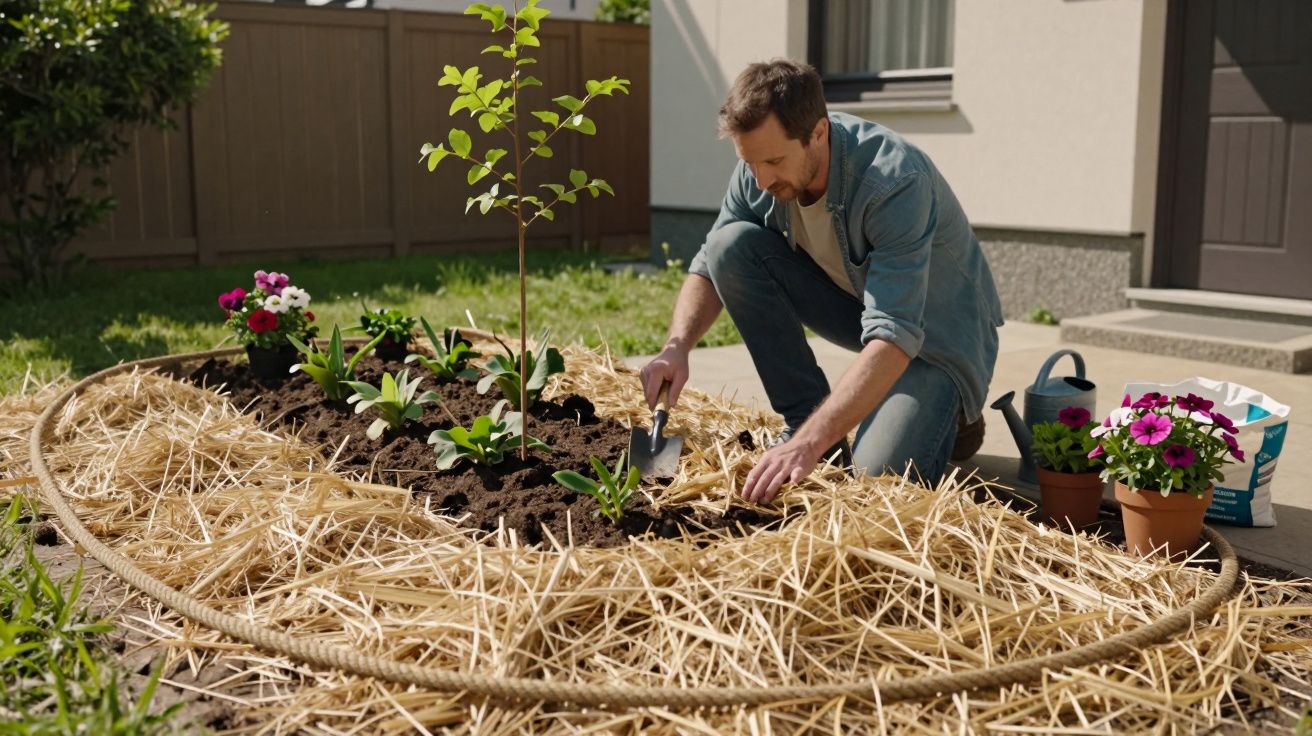
- Temporary groundcover (straw mulch, living mulches) until canopy shade reduces weeds
- “Nurse” plants that shelter slower species from wind and scorching sun
The win is psychological as much as ecological. You stop expecting every plant to be a forever plant, and you start building a garden that can change without feeling like failure.
Soil isn’t a surface; it’s a long project
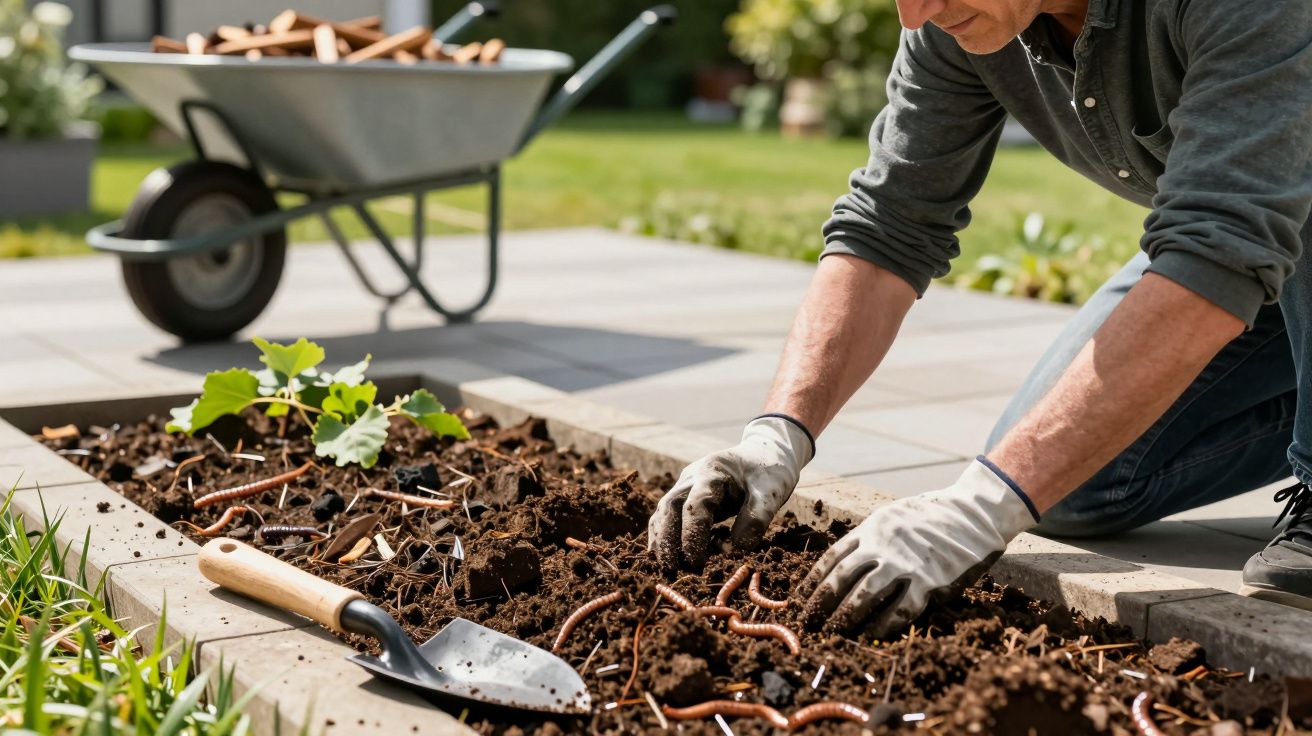
Most garden problems look like plant problems and behave like soil problems. Compaction, low organic matter, and bare ground set you up for constant watering, constant feeding, constant disappointment. Time-based design flips that: you invest early so maintenance drops later.
A few high-return moves:
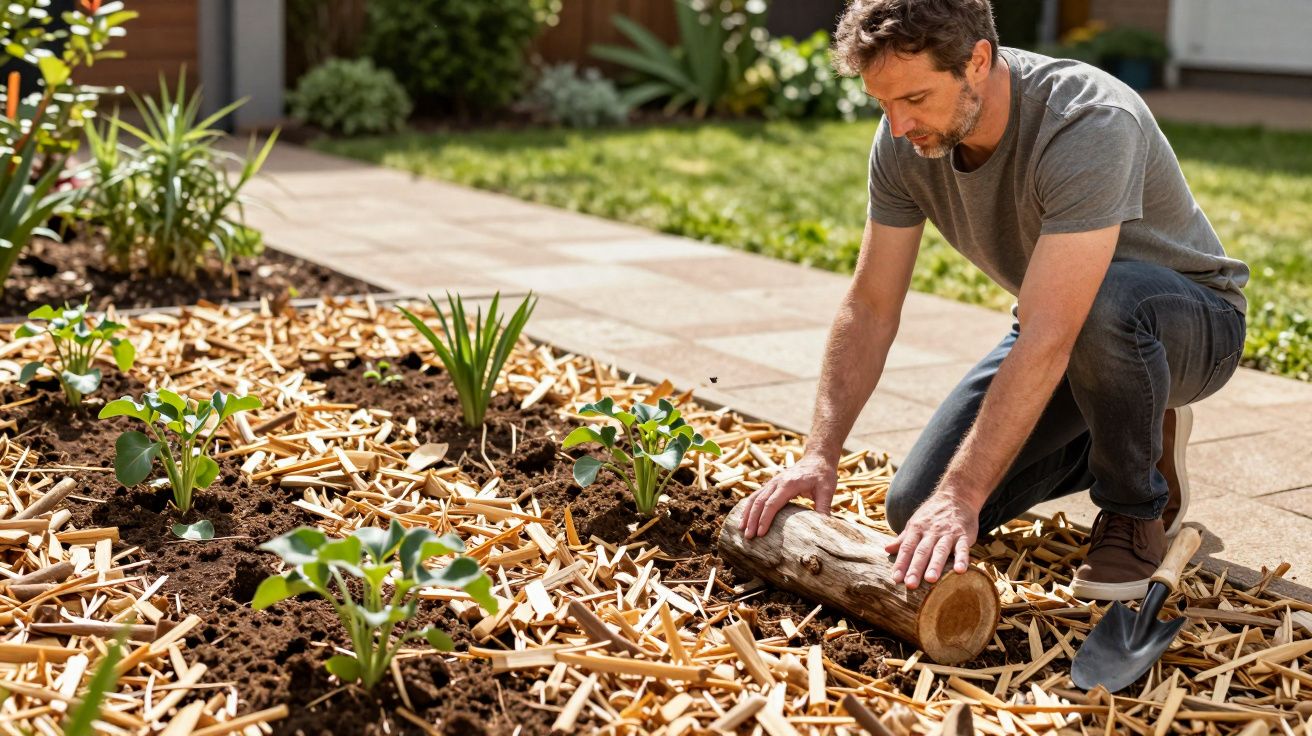
- Keep soil covered year-round with mulch or living plants
- Add compost little and often, rather than “one big fix”
- Avoid digging repeatedly; it resets soil structure and disrupts fungi
- Capture leaves in autumn and treat them as an on-site resource, not waste
You’re not just growing plants. You’re growing the conditions that make plants less needy.
Shade, roots, and the future footprint of plants
A sapling is a promise. In five years it might be the reason your sun border fails, your lawn thins, and your patio stays damp in winter. That’s not a reason to avoid trees; it’s a reason to design around their future.
Try planning in “grown-up measurements”:
- Mark the mature canopy spread with a rope on the ground
- Assume root competition out to at least the drip line
- Place sun-loving perennials where they’ll still get sun in year five
- Keep high-traffic paths clear of future low branches and leaf fall zones
If you do this once, you avoid the classic cycle: plant, crowd, move, replace, repeat.
Water planning works best when you design for drought years, not average ones
British gardens can swing from waterlogged winters to dry springs that feel oddly Mediterranean. Time-aware design treats these swings as normal, not exceptional. You plan for infiltration, storage, and survival.
A simple framework:
- Slow water down with mulch, planting density, and rough surfaces
- Sink water with rain gardens, permeable paving, and healthy soil
- Store water in butts or cisterns sized for your roof area
- Share water by grouping plants with similar needs (hydrozones)
The cheapest irrigation system is soil that holds water and plants that can cope when it doesn’t.
Maintenance becomes lighter when you design for the calendar
A sustainable garden often looks like less work because it is less work-after the early push. The trick is designing tasks that fit the year, not fighting the year.
Good “time-friendly” choices include:
- Spring: bulbs and early nectar sources that don’t need replanting
- Summer: drought-tolerant perennials with deep roots, not thirsty annual churn
- Autumn: leaving seedheads and stems as habitat, then cutting back in late winter
- Winter: structural evergreen shape and paths that stay usable in rain and frost
This is where long-term ecological planning becomes personal. Your life has seasons too, and a garden that demands peak effort at your busiest time won’t stay loved.
What time-based design looks like in practice
If you want a quick test for whether a garden plan respects time, ask these three questions:
- What happens in year two when everything doubles in size?
- What happens in a drought year?
- What happens when you miss a fortnight of weeding or watering?
If the answer is “it collapses”, you don’t need tougher willpower. You need a design that assumes you’re human.
A small planning habit that prevents big rework
Sketch your garden twice: once for now, once for five years ahead. Note expected shade, height, and where leaf litter will gather. Then choose plants and materials that can age gracefully into that second sketch.
The point isn’t to predict perfectly. It’s to stop designing as if time won’t show up.
FAQ:
- Do I have to wait years for a sustainable garden to look good? No. You can use temporary fillers (annuals, quick perennials, mulch) for early impact while longer-lived plants establish.
- Is long-term ecological planning only for big gardens? It’s often more important in small gardens, where mature size, shade, and root competition arrive quickly and mistakes are harder to hide.
- What’s the quickest “time-smart” improvement I can make this weekend? Cover bare soil. A mulch layer or dense groundcover reduces weeds, stabilises moisture, and starts improving soil biology straight away.




Comments (0)
No comments yet. Be the first to comment!
Leave a Comment