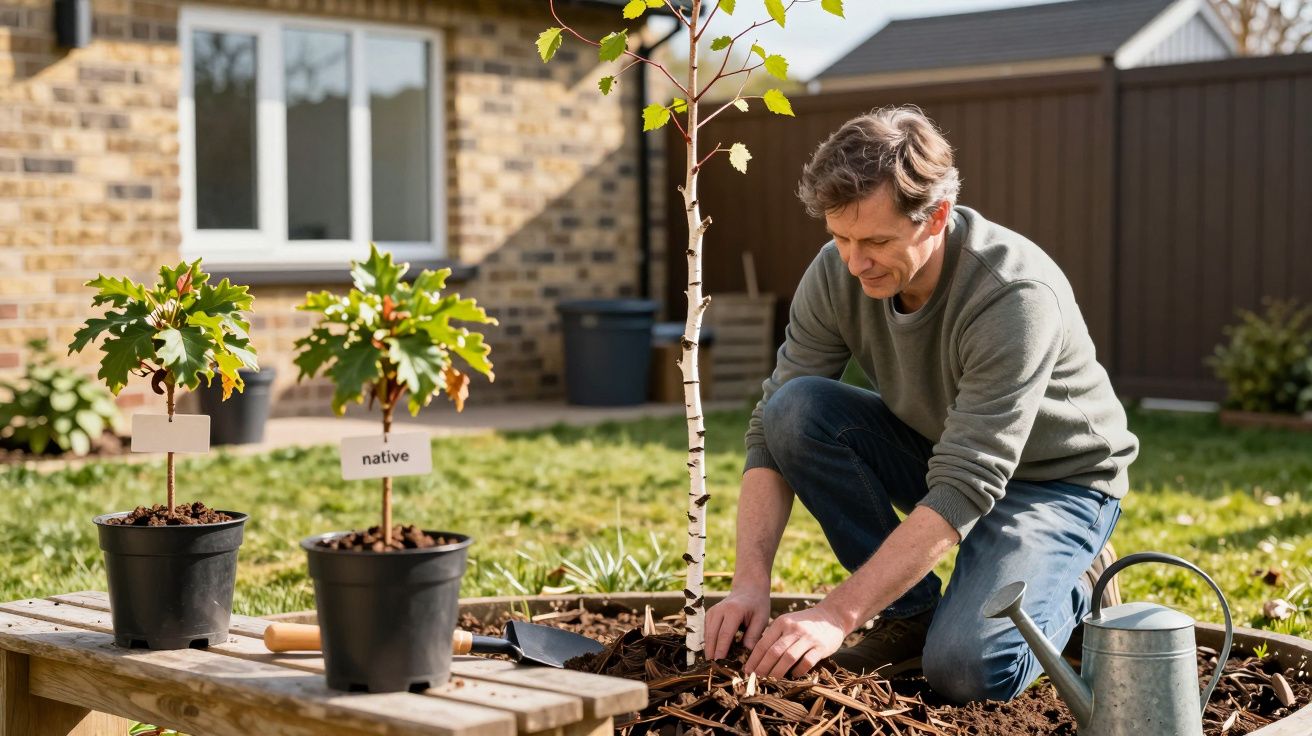
Planting for the next fifty years is no longer a purely aesthetic decision. Native tree species are becoming the default choice in climate-resilient gardens because they tend to cope better with local extremes while quietly supporting the wildlife your plot used to host. It’s a shift driven less by nostalgia than by simple, practical risk management: what survives, what thrives, and what keeps working when the weather stops behaving.
Walk through a new estate, a school grounds redesign, or a front garden swapped from gravel to green, and you can feel the brief changing. Less “statement tree”, more “long-term canopy”; fewer imports chosen for novelty, more species selected for stability. The language is quietly engineering-like: resilience, function, maintenance, failure rates.
The bet that pays off: trees that already belong
In landscape design, “native” isn’t a moral badge; it’s a clue about fit. A tree that evolved in Britain’s soils, light levels and seasonal rhythms often needs less coaxing to establish, and less intervention to keep it healthy. That matters when summers run hotter, winters flip-flop between wet and dry, and budgets for watering and replacements stay stubbornly finite.
The strongest argument is boring in the best way: native species come with an instruction manual written by the place itself. They’re adapted to local pests and pathogens (not immune, but not naïve), and they tend to respond predictably to familiar stresses such as wind exposure, heavy rain, and clay that holds water too long. Predictability is a design tool.
“Resilience” in planting plans often means: fewer surprises, fewer replacements, and fewer emergency call-outs in year five.
What “native” actually means in practice
People use the word loosely, so it helps to pin it down. In UK landscape specs, “native” typically means a species that arrived without human help after the last ice age and established here long before modern horticulture. Sometimes you’ll also see “locally native”, which tightens the focus to regional provenance - not just the right species, but the right genetic line for your area.
That nuance isn’t academic. A hawthorn grown from local seed often times its leafing and flowering to local conditions, which can improve establishment and reduce stress. In a warming climate, provenance choice becomes part of the design, not a footnote.
Why future-focused landscapes keep circling back to ecology
It’s easy to think wildlife value is a “nice extra” until you watch what happens when it drops out. Many non-native ornamentals look lush but act like green wallpaper: they offer shelter, but far less food. Native trees, by contrast, tend to sit at the centre of food webs - not because they’re prettier, but because local insects can actually use them.
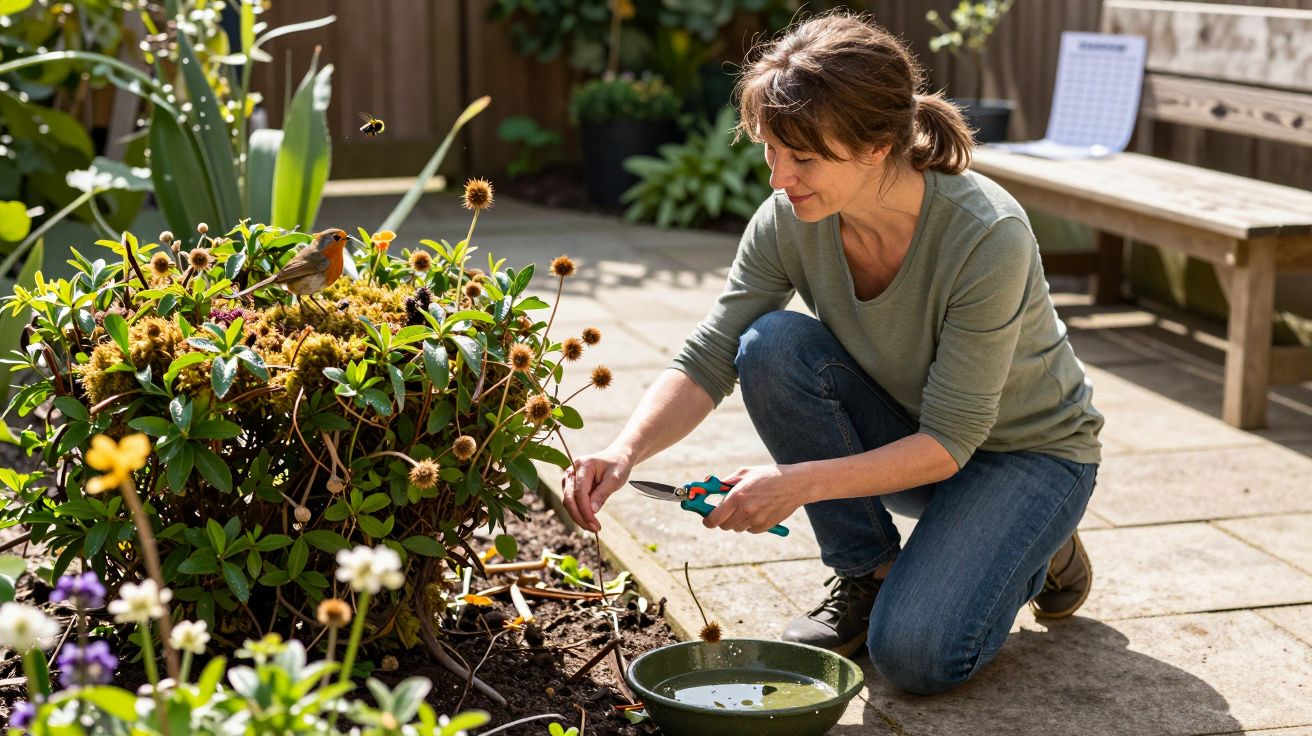
That insect layer matters more than most planting lists admit. If you want birds, you need caterpillars. If you want pollinators beyond a brief summer rush, you need a spread of flowering and habitat resources across the year. Mature native trees do this almost by accident, which is the point: the system keeps running even when no one is micromanaging it.
Examples in UK gardens and public spaces that consistently earn their keep:
- Silver birch for light canopy, quick establishment, and habitat value.
- Rowan for berries and compact form in smaller plots.
- Field maple for tough hedgerow-style resilience and autumn colour without fuss.
- Alder for wetter ground and stream edges where other trees sulk.
None of these are magic. They’re just reliable participants in the ecology your site already has.
Heat, drought, flooding: the new design brief in plain English
Climate-resilient gardens aren’t built on one heroic species. They’re built on reducing points of failure: diversifying planting, matching trees to soil and aspect, and choosing species that won’t collapse the moment conditions drift outside the old “normal”.
Native trees often score well on that brief because they’ve already dealt with Britain’s particular cocktail: wet winters, dry spells, wind, late frosts, compacted urban soils. That doesn’t mean every native works everywhere; it means the baseline is usually sensible.
A quick way to think about it is “stress types” rather than “hardiness zones”:
- Drought stress (thin soils, south-facing plots, reflected heat in towns)
- Waterlogging (clay, heavy downpours, poor drainage)
- Wind exposure (coastal sites, open developments)
- Soil compaction and pollution (street trees, school grounds, small front gardens)
Native choices won’t solve each stress automatically, but they reduce the need for constant correction.
The uncomfortable bit: natives are not invincible
Ash dieback, oak processionary moth pressures, and shifting disease ranges are reminders that “native” doesn’t equal safe. The smarter takeaway is diversity: plant a mix so one pathogen doesn’t rewrite your whole landscape. Future-focused planting plans increasingly specify variety not only across species, but across ages and forms - standards, feathered trees, copses, hedgerows.
If you want resilience, you don’t put all your shade, screening and biodiversity into a single genus and hope. You spread the risk like you would with anything valuable.
Maintenance is where the decision becomes real
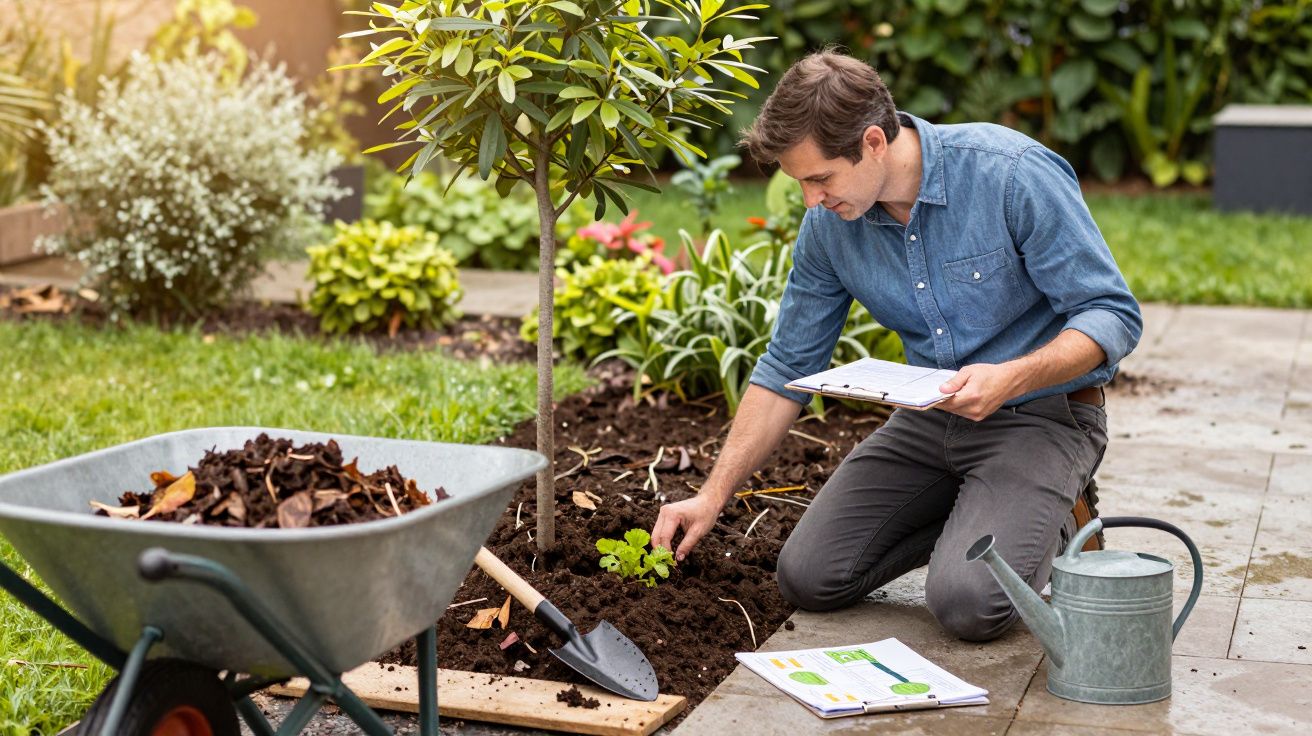
A tree choice looks visionary on paper until it hits real life: hosepipe bans, vandalism, tight council schedules, and a household that forgets to water for three weeks in June. Native trees are often chosen because they’re more forgiving of imperfect care once established.
They can also reduce knock-on tasks. Less pest flare-up can mean fewer interventions. Better canopy fit can mean fewer heavy pruning cycles. And species that suit the soil are less likely to decline slowly and expensively, forcing you into removal and replacement just as the garden should be settling.
Here’s a simple rule that designers lean on: the cheapest tree is the one you don’t have to replace.
How to choose native tree species without turning it into a dogma
The best landscapes use natives as a backbone, not a fence. There are legitimate reasons to include non-natives - especially where future climate conditions may outpace some local species, or where a specific constraint (salt spray, extreme urban heat, very small pits) calls for something else. The point is to make the choice explicit rather than habitual.
A practical selection process for a garden-scale project:
- Start with your site truths: soil type, drainage, light, wind, space for canopy and roots.
- Pick a native “framework”: one or two main canopy or small-tree species that suit the site.
- Add diversity deliberately: avoid repeating the same tree down a whole street or across a whole development.
- Specify provenance where it matters: especially for hedgerows and ecological restoration-style planting.
- Plan establishment care: mulch, watering for the first two summers, and protection from strimmers and deer.
That last step is the quiet make-or-break. Even the right tree fails if it’s treated like a decorative pot plant for six weeks and then abandoned.
A quick checklist: what natives give you that’s hard to fake
- A canopy that tends to “fit” local weather patterns rather than fight them.
- Stronger links to local insects, birds and soil life.
- More predictable performance in typical UK soils and seasons.
- A design language that ages well: less novelty, more permanence.
A future-focused landscape is, at heart, a promise to your future self. Native trees dominate because they make that promise easier to keep.
FAQ:
- Are native tree species always best for climate-resilient gardens? Not always, but they’re often the most reliable baseline. The best results come from matching species to site conditions and building diversity so one disease or extreme event doesn’t take everything out.
- Do natives mean “no maintenance”? No. Most trees need watering and protection while establishing, plus sensible pruning. Natives often become lower-maintenance after establishment because they’re better suited to local conditions.
- What’s the difference between native and locally native? Native refers to species that naturally occur in the UK; locally native usually means stock grown from regional seed sources, which can improve adaptation and wildlife value.
- Can I mix natives with ornamental non-natives? Yes. Many designs use natives as the structural backbone and add carefully chosen non-natives for specific constraints or extended flowering, while avoiding invasive or high-risk species.
- What’s the biggest mistake people make when planting a “resilient” tree? Ignoring the site: planting a tree that dislikes the soil or drainage, then trying to fix it with extra watering, feeding and pruning. Fit first, then care.


Comments (0)
No comments yet. Be the first to comment!
Leave a Comment