Yesterday I watched a neighbour point at her front border and say, “It’s meant to look after itself.” Low-maintenance gardens are often sold as that kind of promise, especially when you’re trying to keep weekends free and still follow sensible environmental practices. The catch is that “low maintenance” isn’t the same as “no planning” - it just shifts the work to the decisions you make before anything goes in the ground.
You see it most clearly in late summer, when a bed that looked effortless in May starts to sulk. Leaves crisp at the edges, gravel migrating into the lawn, weeds finding the one seam you didn’t notice. The landscape isn’t being difficult; it’s replying to your site, your soil, your drainage, your light - all the things you can’t out-mow.
Low maintenance is a design brief, not a plant list
Most people start with the shopping: lavender, ornamental grasses, a roll of membrane, a tidy layer of stone. That can work, but it’s not a strategy. A low-input garden is built on matching the garden to reality, not to a Pinterest palette.
The planning questions are unglamorous and completely decisive. Where does water sit after a storm? Which corner bakes at 3pm? What gets battered by wind, dogs, footballs, or bins dragged out twice a week? If you answer those first, you can pick materials and plants that don’t need rescuing.
A designer friend once put it bluntly: “Low maintenance is just fewer interventions.” You don’t get fewer interventions by hoping. You get them by removing the reasons you’d need to intervene.
The hidden work: water, edges, and access
The easiest gardens to live with tend to have three things you can’t always see at a glance: a water plan, crisp boundaries, and enough access to maintain what remains. Miss any one of those and you’ll be “low maintenance” in theory, high maintenance in practice.
Water is usually the make-or-break. In UK gardens, it’s rarely drought or rain - it’s both, sometimes in the same month. Smart planning looks like controlling where water goes, slowing it down, and giving it somewhere sensible to soak away.
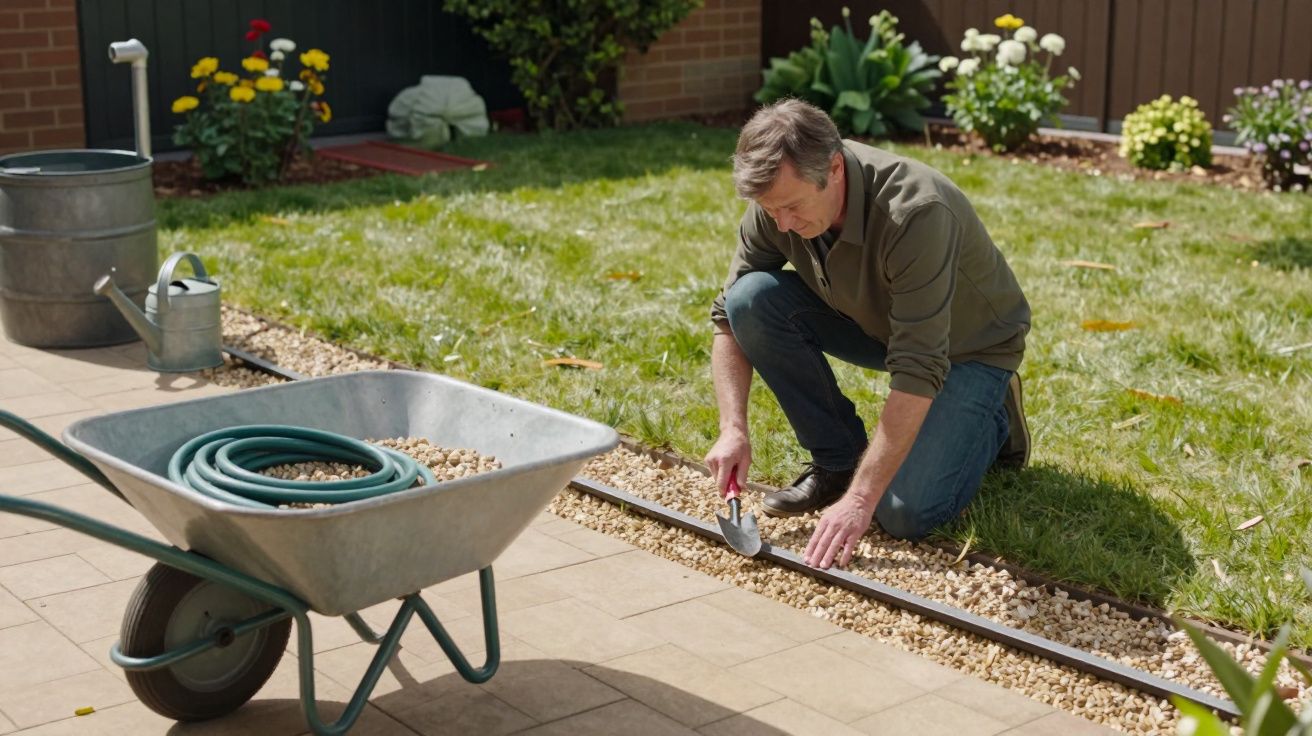
Edges are the second secret. Gravel without a proper restraint will creep. Mulch without a defined line will blur. Borders without a physical boundary invite lawn grasses and weeds to negotiate new territory every week.
Access is the quiet third. If you can’t reach the back of the bed without stepping into it, you’ll compact soil, snap stems, and avoid doing the small jobs that keep a garden from becoming a project.
A simple checklist that prevents a lot of “why is this so much work?”:
- Map sun and shade at three times: morning, midday, late afternoon.
- Watch drainage after heavy rain: puddles, run-off paths, downpipe outlets.
- Decide where you’ll walk and work: bin route, hose reach, mower turns.
- Plan edges as hard lines: steel edging, brick, setts, or a planted trench edge.
- Group plants by water needs, not by colour.
Environmental practices that actually reduce maintenance
Sustainable choices aren’t just moral; they’re practical. A garden that relies on weekly feeding, constant watering, or repeated replanting is labour-heavy and resource-heavy at the same time. The goal is to build a system that stays stable with light touch.
The most useful environmental practices tend to be boring and structural:
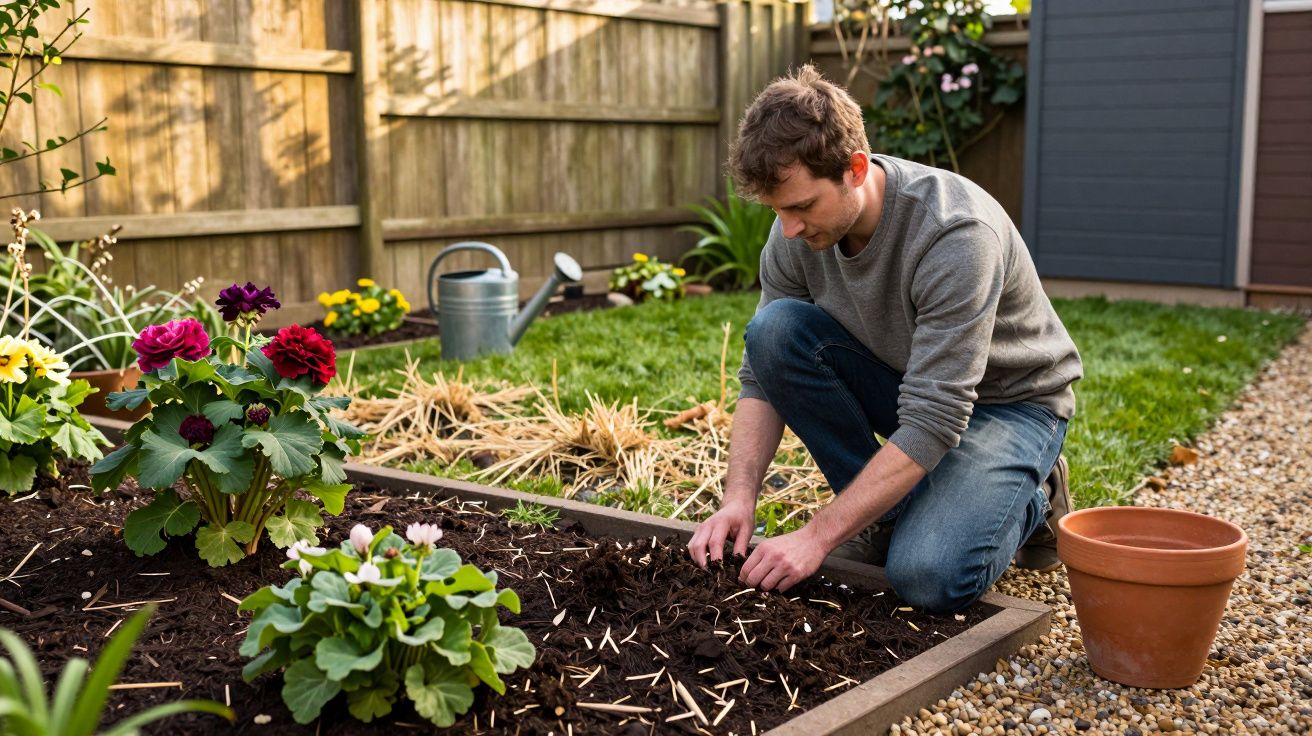
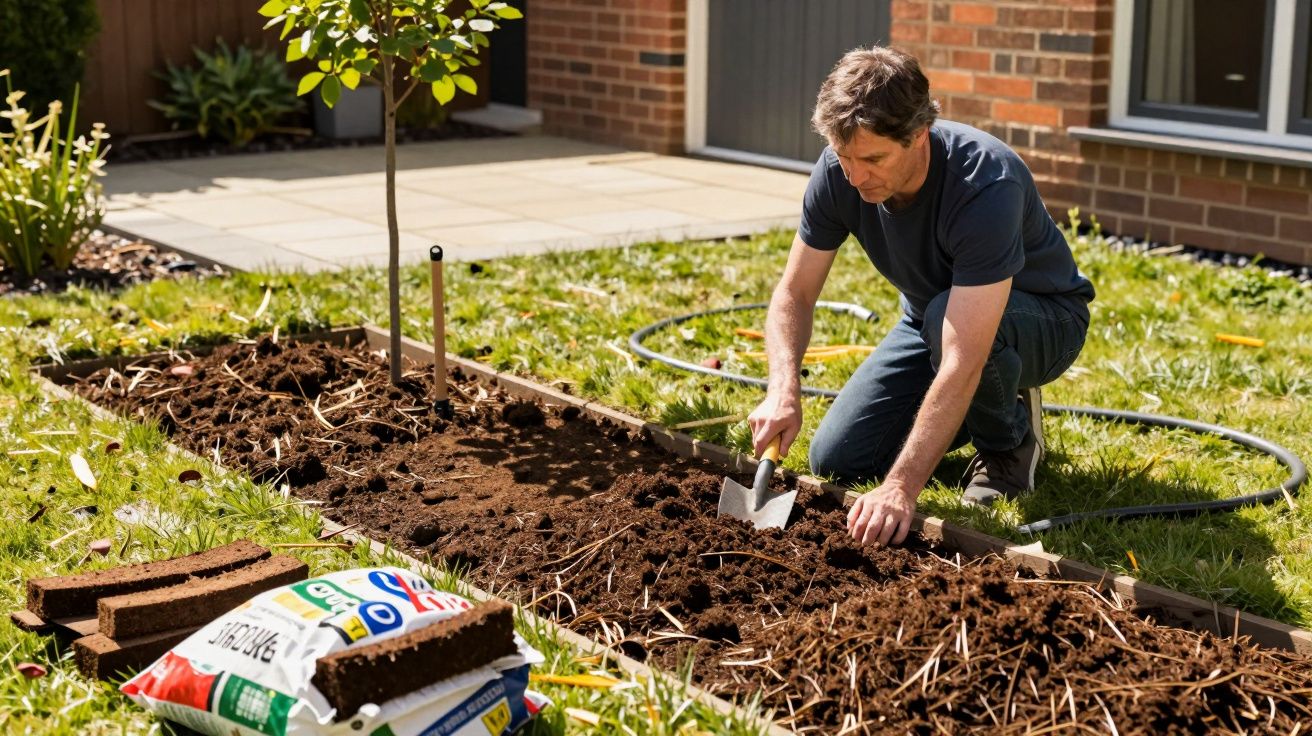
- Keep soil covered. Dense planting or mulch protects moisture, buffers temperature, and reduces weed germination.
- Harvest rainwater where possible. A butt on a downpipe and a porous bed beneath it can reduce both hose use and waterlogging.
- Choose permeable surfaces. Resin-bound might look tidy, but gravel on a solid base with proper edging, or permeable paving, handles UK downpours more gracefully.
- Compost on-site. Even a small bin turns prunings and leaves into mulch, reducing waste and improving soil.
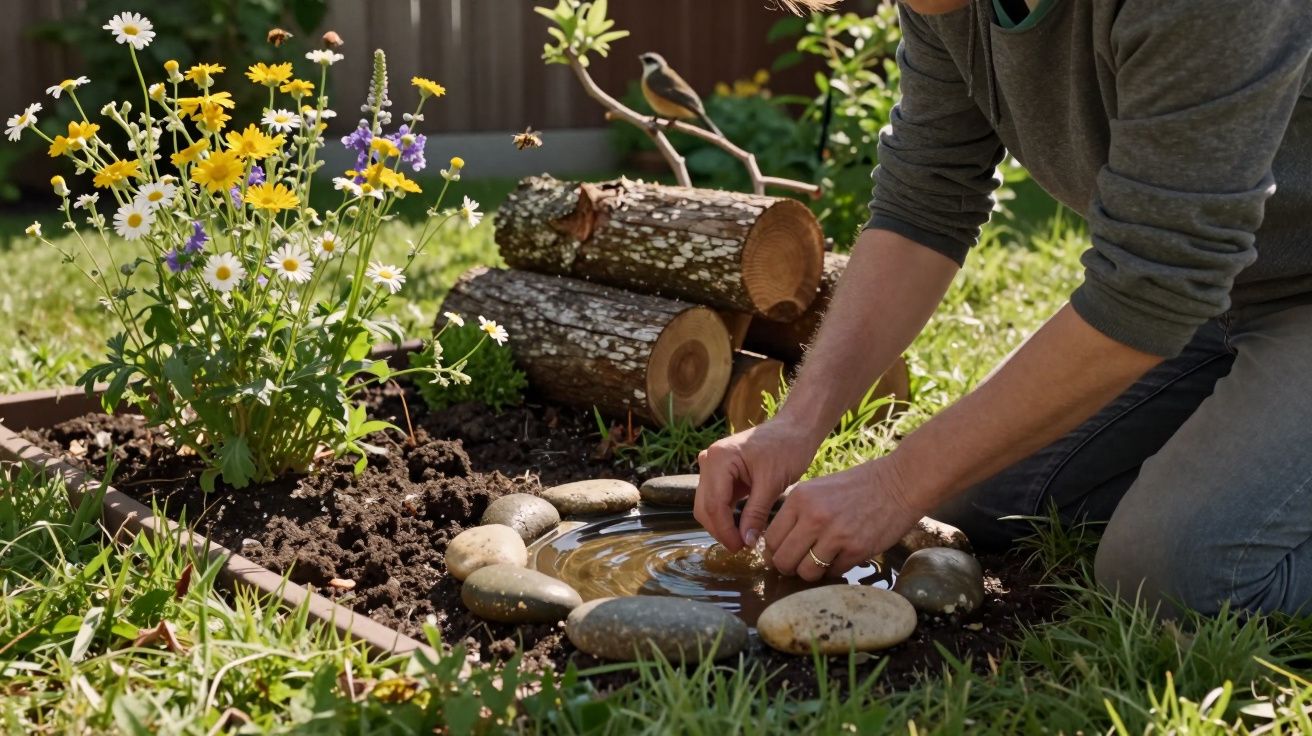
- Plant for biodiversity, not perfection. A mix of flowering times and structure supports pollinators and tends to be more resilient when weather swings.
There’s also a counterintuitive point: a bit of “wild” can be the lowest maintenance part of the garden, if it’s intentional. A small meadow patch with a mown edge looks deliberate and asks far less than a thirsty, heavily-fed lawn.
Common low-maintenance traps (and what to do instead)
The mistakes are predictable because the marketing is persuasive. Weed membrane under gravel, a single-species hedge, a fashionable plant used everywhere regardless of light - they all look neat early on, then demand constant correction.
Weed membranes, in particular, are a classic. They can suppress weeds briefly, then trap silt and organic matter on top, creating a perfect seed bed you can’t hoe properly because the fabric is in the way. A better approach is a deep, well-compacted base for gravel, a defined edge, and an acceptance that you’ll do occasional spot-weeding - but far less of it.
Another trap is planting too sparsely to “leave room”. Nature doesn’t leave room. If you don’t fill the gaps with plants or mulch, weeds will do it for you.
If you want low maintenance that holds up past the first season, think in swaps:
- Swap flimsy borders for fewer, bigger planted areas.
- Swap thirsty annuals for hardy perennials and shrubs suited to your aspect.
- Swap lots of tiny beds for one or two generous shapes you can reach easily.
- Swap novelty materials for proven details: edging, falls, and drainage.
“A tidy garden is usually a controlled garden,” a hard-landscaper once told me. “Control the water and the edges, and the rest is mostly timing.”
A planning method you can steal before you buy anything
Give yourself one hour with a mug of tea, a tape measure, and your phone camera. Walk the garden and treat it like a small site survey rather than a shopping list.
- Take photos from the same spots in the morning and late afternoon.
- Mark where the sun falls and where shade lingers.
- Note any slopes and where water runs during rain.
- Decide your “maintenance minimum”: one hour a fortnight, or two hours a month, and be honest.
- Choose three materials and stick to them. Too many finishes create too many edges to manage.
- Pick plants in repeating groups, and plant closer than you think (allowing for mature size, not instant gaps).
Low-maintenance gardens aren’t lazy gardens. They’re gardens that don’t argue with their conditions - and that’s why the planning pays you back.
| Planning choice | What it prevents | Why it matters |
|---|---|---|
| Water route + permeable surfaces | Puddles, dieback, algae, constant watering | Less rescue work in extremes |
| Proper edging | Gravel creep, lawn invasion, messy borders | Quicker mowing and weeding |
| Dense planting or mulch | Bare soil and weed flushes | Fewer inputs, healthier soil |
FAQ:
- Is gravel always the lowest-maintenance option? Not automatically. Without good edging and a stable base it migrates and collects silt; permeable paving or densely planted beds can be lower effort long-term.
- Do I need irrigation for a low-maintenance garden? Often no, if you choose plants that suit your aspect and improve soil with compost and mulch. Watering is most critical in the first year while plants establish.
- What’s the best “easy” plant palette for the UK? It depends on light and soil, but resilient mixes often include shrubs for structure, tough perennials, and grasses - repeated in groups rather than scattered singles.
- How do environmental practices reduce work? Healthy soil, rainwater use, and biodiversity-friendly planting make the garden more resilient, so you spend less time correcting stress-related problems.



Comments (0)
No comments yet. Be the first to comment!
Leave a Comment