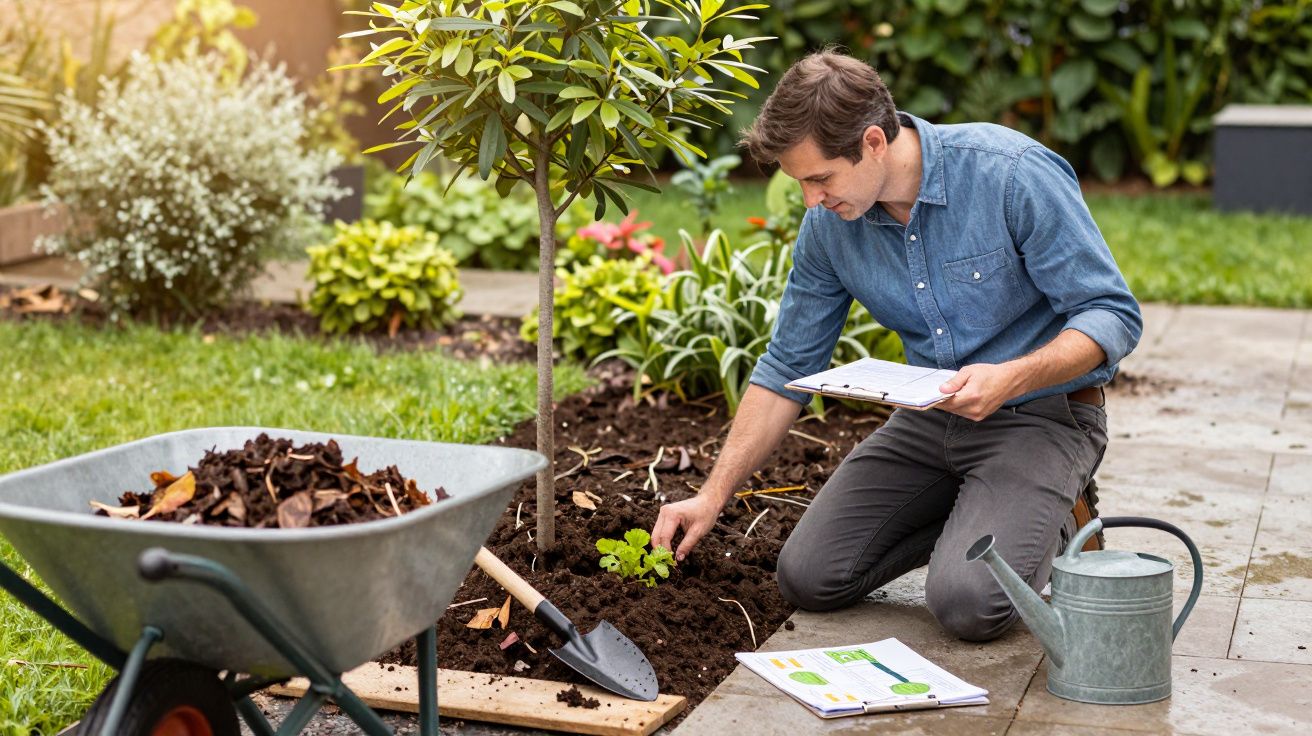
Greener places don’t arrive like a finished room; they arrive like a conversation you keep having with soil, rain, shade, and time. In sustainable landscaping, long-term ecological planning is the difference between a garden that merely looks “done” and one that keeps getting better-cooler in heatwaves, sturdier in storms, kinder to wildlife, and cheaper to run. That matters to you because the landscape will change whether you design for it or not, and change is either a cost you keep paying or an asset that keeps compounding.
Walk past a new build in year one and it’s all crisp lines and nervous plants, mulch still smelling of the bag. Come back in year five and you can read the truth in the canopies: wind has picked a direction, shade has moved, water has found its shortcuts, and the ground has decided what it will tolerate. People call that “maintenance”. Often it’s just the site teaching you what you missed.
The day your “finished” garden starts moving
Landscapes settle on paper. Outside, they negotiate. Roots search, microbes trade, fungi stitch, insects arrive, birds test the place like they’re browsing a menu. A lawn edge that looked precise in April blurs by August because growth doesn’t respect your string line; it respects light and moisture.
The surprise is not that things change-it’s how quickly the feedback loops kick in. Add tree canopy and you don’t just get shade; you change evaporation, leaf litter, soil temperature, and which plants can compete. Improve soil structure and suddenly water stops running off, which changes what survives the dry spell, which changes what blooms, which changes what pollinators visit. One intervention, many knock-on effects.
If you’ve ever felt your garden “turn” after a single wet winter-compacted areas going sour, moss showing up, perennials sulking-you’ve met the truth: living systems don’t click into place. They drift towards whatever conditions you keep repeating.
Why stable-looking landscapes still keep evolving
We tend to design for snapshots: the planting day, the first summer, the Instagram angle. Ecology designs for cycles. Even a well-balanced planting will shift as pioneers give way to slower, tougher species, and as animals discover routes and shelter.
Three forces do most of the pushing:
- Succession: early, fast plants create cover and organic matter; later plants move in when conditions soften.
- Disturbance: drought, heavy rain, frost, foot traffic, pets, pruning-each is a reset button in miniature.
- Resource drift: shade expands, soil fertility changes, water patterns reroute, and the winners change accordingly.
This is why “low maintenance” is a misleading promise. The honest promise is low drama: fewer crises because you’ve built in slack-diversity, soil health, and room for adjustment.
“I’m not trying to freeze a planting plan,” a designer told me on a site visit in sleet. “I’m trying to give it a direction it can keep choosing.”
The craft: steer, don’t clamp
The most effective sustainable landscaping feels less like control and more like coaching. You set the boundaries, supply the conditions, and then you watch what the site does with them. When it’s working, the garden starts correcting itself: weeds find fewer gaps, pests meet predators, and plants stop needing constant rescue.
A simple way to think about it is write–observe–rewrite:
- Write the first version: soil prep, water strategy, structure plants, and access routes.
- Observe through seasons: where water sits, what scorches, what thrives, what gets eaten, what people actually do.
- Rewrite with small, deliberate edits: swap species, shift densities, add shade, change mowing, adjust drainage.
Common early mistakes are human, not stupid. People chase novelty rather than fit. They plant for colour but not for canopy. They irrigate like a schedule instead of a response. Let’s be honest: nobody reads a garden perfectly in year one.
Here are corrections that almost always pay back:
- Build soil first, not last. Compost, leaf mould, and reduced compaction outperform a trolley full of “tough plants”.
- Plant for future shade. Put sun-lovers where they’ll still have sun in five years.
- Use density as a tool. Close gaps early to suppress weeds, then thin later as plants mature.
- Let water slow down. Swales, rain gardens, and permeable surfaces turn storms into recharge instead of runoff.
- Keep access obvious. People make desire lines; give them paths so the soil doesn’t get pounded into concrete.
Long-term ecological planning: time as a design material
Long-term ecological planning is not a grand document you file away; it’s a habit of thinking in phases. Instead of asking, “What will it look like when it’s done?” you ask, “What will it do as it grows up?”
A phased plan typically has three horizons:
- 0–12 months (establishment): protect soil, control watering, reduce plant stress, accept imperfection.
- 1–3 years (competition): manage winners and losers, add layers (groundcover, shrub, canopy), start reducing inputs.
- 3–10 years (resilience): prune for structure, refresh mulch from on-site biomass, refine habitat, adjust to climate drift.
This is where the “greener” part becomes measurable. Not just more plants, but more function: cooler microclimates, better infiltration, more carbon stored in soil, fewer chemicals, fewer replacements.
What it looks like when a landscape is allowed to mature
You can feel it before you can name it. The air is calmer near layered planting because wind breaks across leaves instead of ripping across bare ground. The soil is darker and smells alive because it’s fed regularly and disturbed less. Summer watering becomes occasional rather than constant because roots go deeper and the surface is covered.
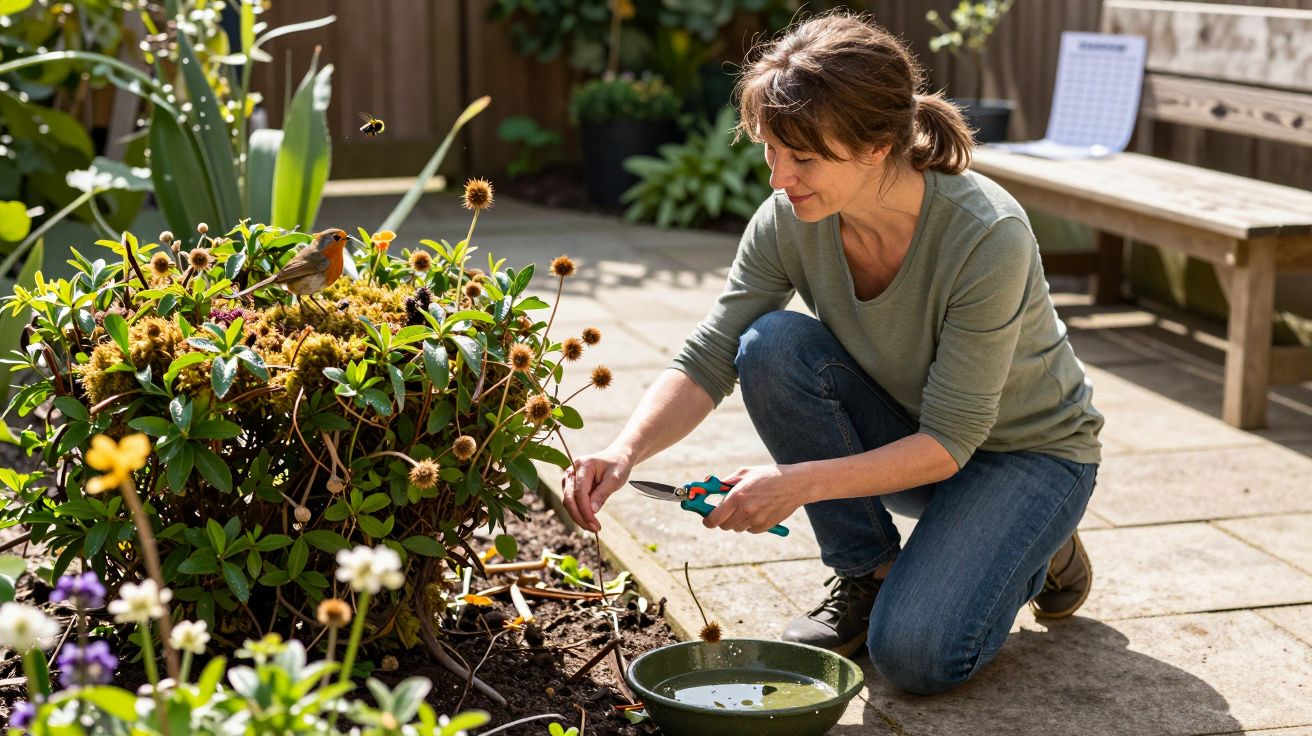
Wildlife doesn’t need a grand gesture; it needs continuity. A hedge that flowers in spring, berries in autumn, and holds structure in winter becomes a corridor. A pond with planting shelves and a messy edge becomes a nursery. The shift is subtle: you stop thinking in ornaments and start thinking in relationships.
And yes, it will still evolve. That’s the point. A greener landscape isn’t a final state-it’s a system that keeps finding its next stable note.
| Point clé | Détail | Intérêt pour vous |
|---|---|---|
| Landscapes don’t “finish” | Succession, disturbance, and resource drift keep changing conditions | Less frustration when the garden shifts; better decisions earlier |
| Steer rather than clamp | Write–observe–rewrite with small edits | Lower costs and fewer failures than constant replanting |
| Plan in phases | Establishment → competition → resilience | A garden that gets easier and tougher with time |
FAQ:
- Do I need to redesign everything to be sustainable? No. Start with soil health and water management, then make targeted plant swaps as you learn what the site prefers.
- How long before a landscape feels settled? It may look “together” in 1–3 years, but it will keep evolving as trees cast more shade and soil improves. Plan for change rather than waiting for stillness.
- Is evolving the same as becoming messy? Not necessarily. You can keep clear paths and structure plants while allowing softer areas to naturalise and fill in.
- What’s the quickest win for resilience? Reduce bare soil. Mulch, groundcovers, and layered planting stabilise moisture, suppress weeds, and protect soil life.
- How do I know if long-term ecological planning is working? Inputs go down over time: less watering, fewer replacements, fewer pest flare-ups, and more consistent performance across tough seasons.



Comments (0)
No comments yet. Be the first to comment!
Leave a Comment