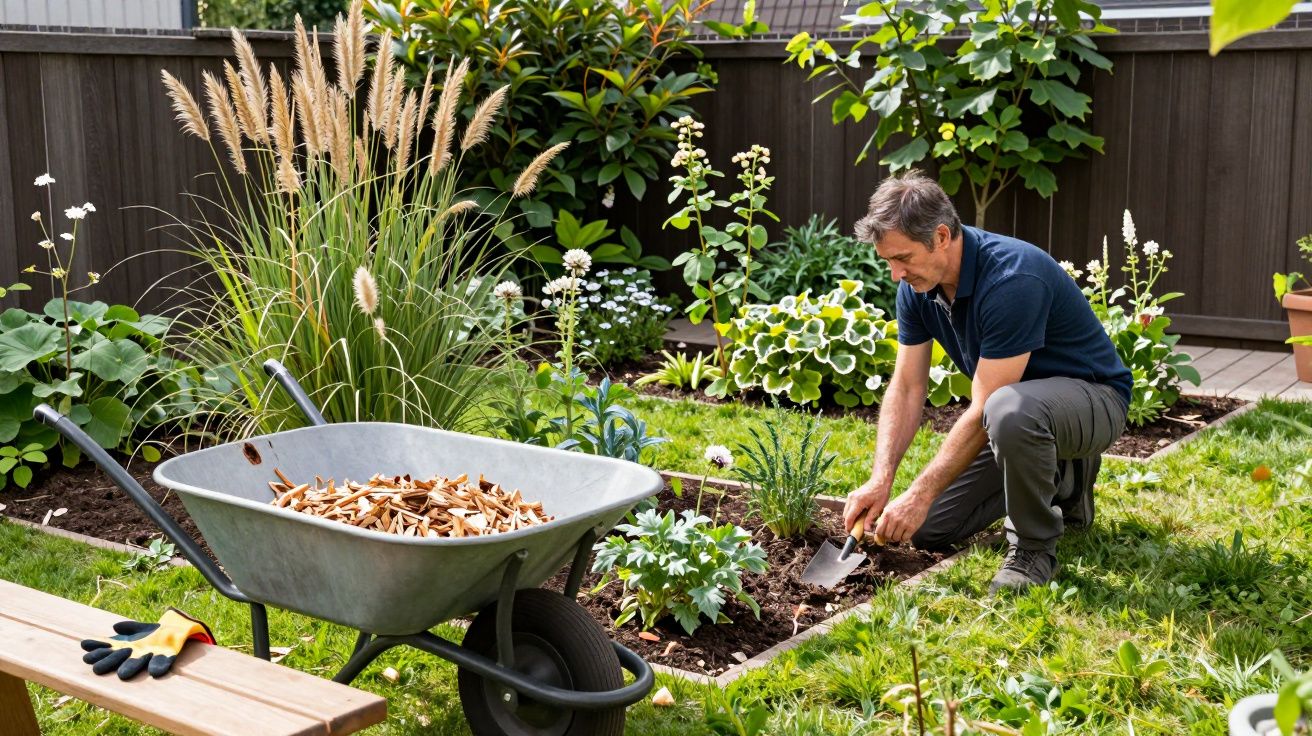
Sustainable landscaping often looks “unfinished” because it trades instant neatness for systems that keep working: soil life, water cycles, insects, and plants that shift through the year. Naturalistic planting schemes lean into that same idea, using layered planting and seasonal change rather than rigid, always-the-same structure. If you’ve ever wondered why the greenest gardens can feel a bit scruffy in places, it’s usually a sign that something is alive and moving, not that something is neglected.
The friction is cultural as much as practical. We’ve been trained to read clipped edges, bare soil and uniform height as care. Greener gardens ask you to read different signals: ground covered by mulch or plants, seedheads left for birds, and plants allowed to lean, self-sow, and rest.
The “finished” look is a short-term snapshot
A tidy border is often finished because it is simplified. Fewer species, clear gaps, tight spacing, and frequent intervention keep it visually stable, but also keep it dependent on you. The moment you stop edging, feeding, and weeding, the illusion cracks.
Naturalistic planting is the opposite. It’s designed to change-weekly, not just seasonally-because plants mature, spread, collapse, and return. What looks like a mess in October may be shelter and food; what looks sparse in March is often deliberate breathing space for perennials to rise.
A greener garden is rarely “done”; it’s managed through phases.
Biodiversity introduces texture, and texture reads as untidy
Diverse planting creates a mix of leaf sizes, heights, and bloom times. That’s good for resilience-more roots at more depths, more nectar over longer periods, fewer pest boom-and-bust cycles. Visually, it means you see overlap and variation, not one clean block.
Common “unfinished” cues in sustainable beds are often functional choices:
- Seedheads left standing for birds and overwintering insects.
- Fallen leaves kept as a soil blanket instead of bagged and binned.
- Groundcover allowed to knit together, hiding soil (and reducing weeds).
- Paths that are mown or barked rather than paved edge-to-edge.
The key is that these cues look intentional only when there’s a clear framework.
Soil-first gardening avoids bare earth, and that can look rough
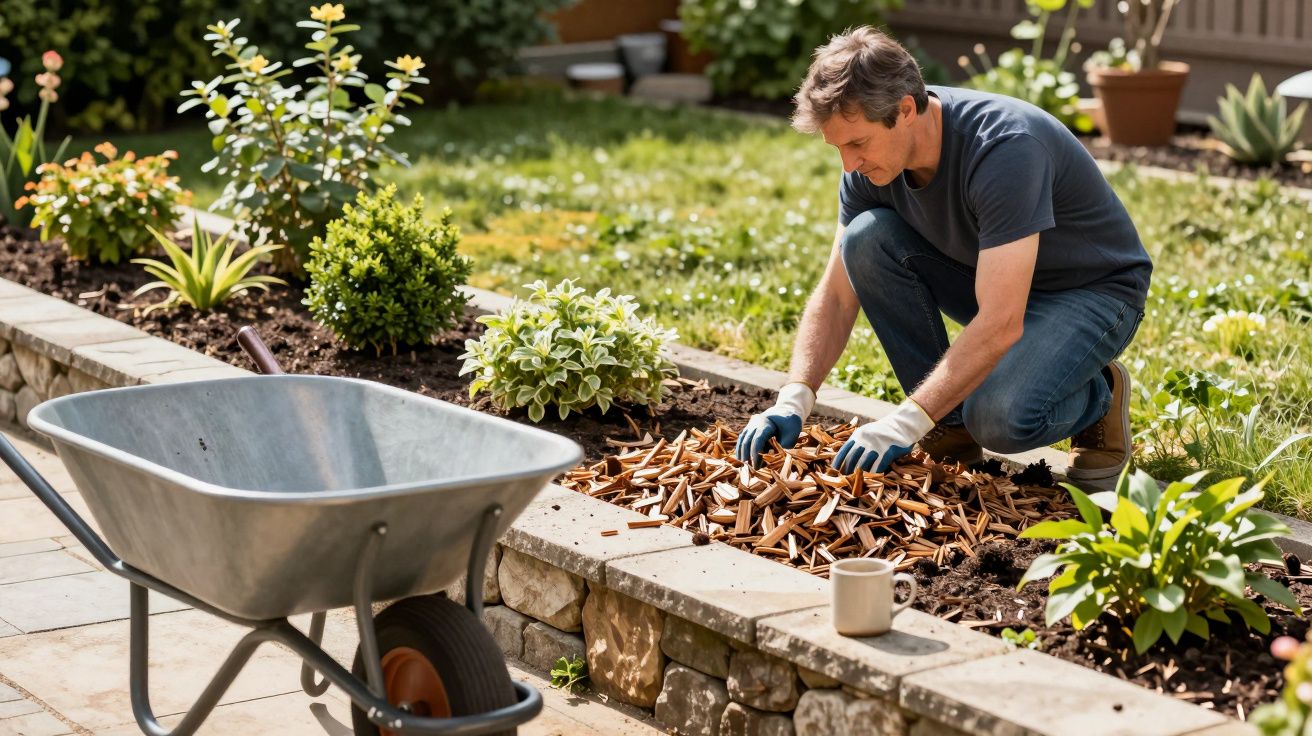
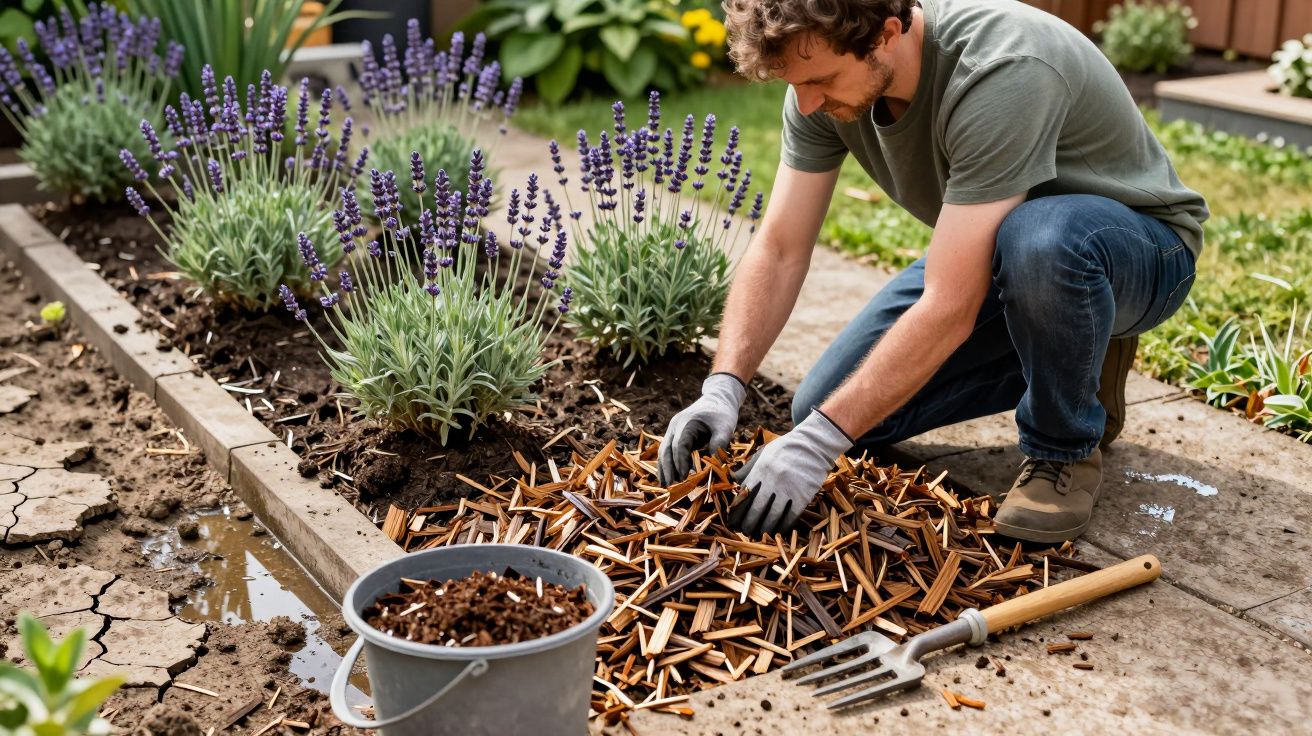
Bare soil is a maintenance trap. It dries, crusts, erodes, and invites weeds because nature hates a vacuum. Sustainable landscaping tends to keep the ground covered with mulch, green manures, or living plants, which stabilises moisture and feeds soil organisms.
But mulch isn’t glossy. It fades, shifts, gets kicked about, and breaks down at different speeds. Compost-rich beds also grow fast and full, which can read as “overgrown” if you’re expecting crisp spacing and constant deadheading.
What “healthy soil” can look like above ground
- Thick growth that hides the edges of the bed.
- A few self-seeded plants popping up where you didn’t plan them.
- Uneven surfaces as mulch decomposes and worms work.
None of that is failure. It’s the garden doing work you’d otherwise have to do.
Wildlife-friendly choices often clash with tidy habits
If you want pollinators, you need flowers over a long season. If you want birds, you need seeds, shelter, and a little mess. If you want fewer chemicals, you accept small levels of nibbling and imperfection.
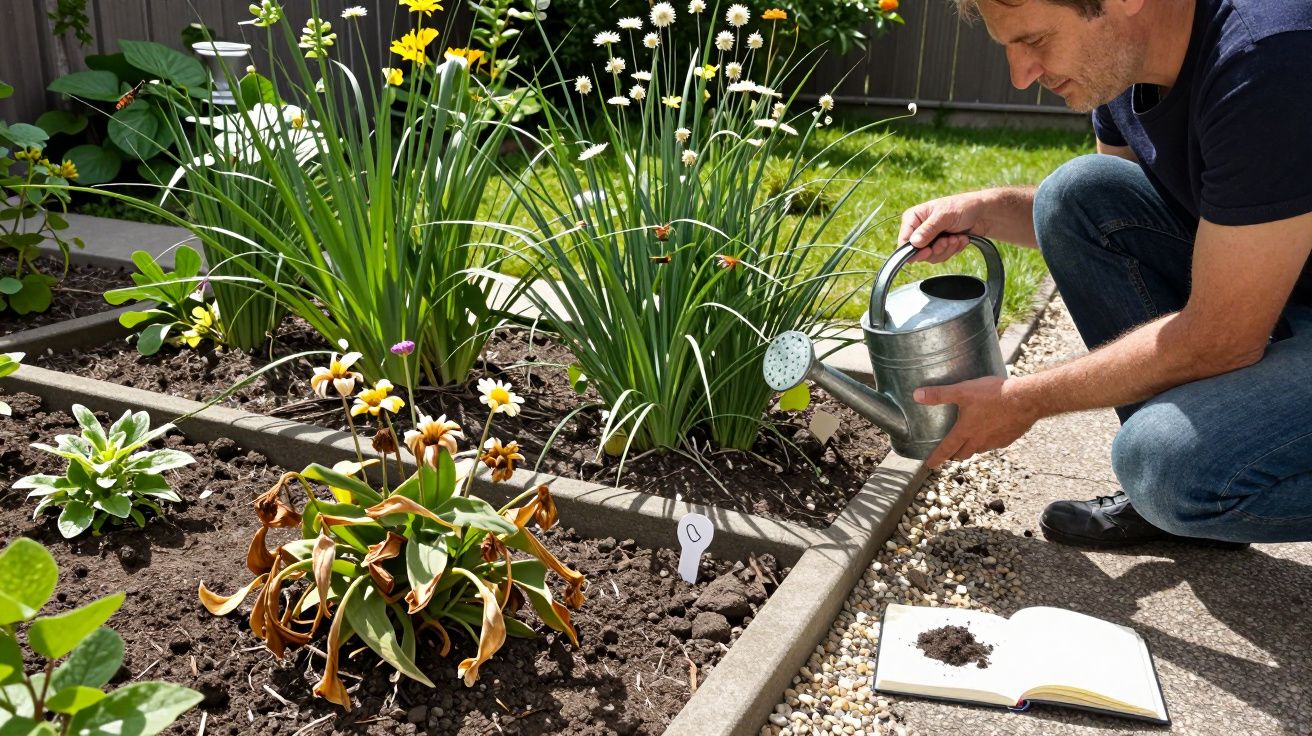
A greener garden can feel unfinished because it stops fighting every sign of life. Aphids might appear, then hoverflies. Slugs might take hostas, but leave tougher plants alone. You’re watching a balance form, not enforcing a sterile outcome.
The goal shifts from “no damage” to “no collapse”.
“Naturalistic” doesn’t mean “no design” - it means different design
Many naturalistic planting schemes rely on strong underlying structure, but it’s not always obvious in the first year. Plants need time to bulk up, and the composition improves as clumps expand and gaps close.
A useful way to think about it is two layers:
- Framework (the tidy layer): paths, mowing lines, evergreen shapes, repeating grasses, a clipped hedge, a crisp edge.
- Filling (the wild layer): perennials, bulbs, annuals, self-seeders, seasonal dieback.
If you skip the framework, the whole thing can read as abandoned. If you build it, the “wild” becomes a deliberate texture rather than visual noise.
Why year one looks especially incomplete
New sustainable beds are often planted smaller and spaced wider for long-term health. That avoids overcrowding and reduces disease, but it does mean visible gaps. Add a first winter dieback and it can feel like you’ve paid for emptiness.
This is also when weeds are most active, because the ground is still exposed between young plants. The most efficient response is not constant hand-wringing; it’s quick, repeated passes and more cover.
Three fixes that don’t betray the ethos
- Use a seasonal stitch: bulbs, annuals, or short-lived fillers to bridge early gaps.
- Mulch decisively: a consistent depth looks intentional and reduces weed pressure.
- Repeat a few “anchor” plants: repetition reads as design even when the mix is diverse.
The practical test: can you tell what’s deliberate?
A garden feels finished when it communicates intent. You can keep the ecological benefits and still reduce the “scruffy” impression by making the cues legible.
Try a simple checklist:
- Is there a clear route through it (mown path, stepping stones, defined access)?
- Are edges sharp where people meet the planting (drive, patio, lawn)?
- Are tall, floppy plants supported or paired with upright neighbours?
- Are seedheads grouped, not random, so they look like a choice?
Even one crisp element-a neat boundary, a clipped shape, a repeated grass-can “frame” the looser planting and make the whole garden feel cared for.
A greener definition of “finished”
The most sustainable gardens don’t aim for a showroom look in every month. They aim for low waste, low inputs, and high function: shade when it’s hot, soil that holds water when it’s dry, flowers when insects need them, and shelter when winter bites.
If your garden looks a bit in motion, that’s often the point. The trick is to manage the transition zones-edges, paths, and focal points-so the life-friendly parts look like design, not drift.
FAQ:
- Why does my naturalistic bed look messy in winter? Because many perennials are meant to stand, not be cut down immediately; stems and seedheads protect crowns, feed birds, and shelter insects. Add structure with evergreen shapes or a crisp path edge so it reads as intentional.
- Is “unfinished” just another word for low maintenance? Not quite. Sustainable gardens can be lower input, but they still need management-just less constant clipping and more seasonal editing (cut back, mulch, divide, and re-balance).
- How do I make it look intentional without going formal? Repeat a few key plants, keep boundaries sharp, and create clear movement lines. A simple mown strip or gravel path can make a diverse planting scheme look designed overnight.


Comments (0)
No comments yet. Be the first to comment!
Leave a Comment