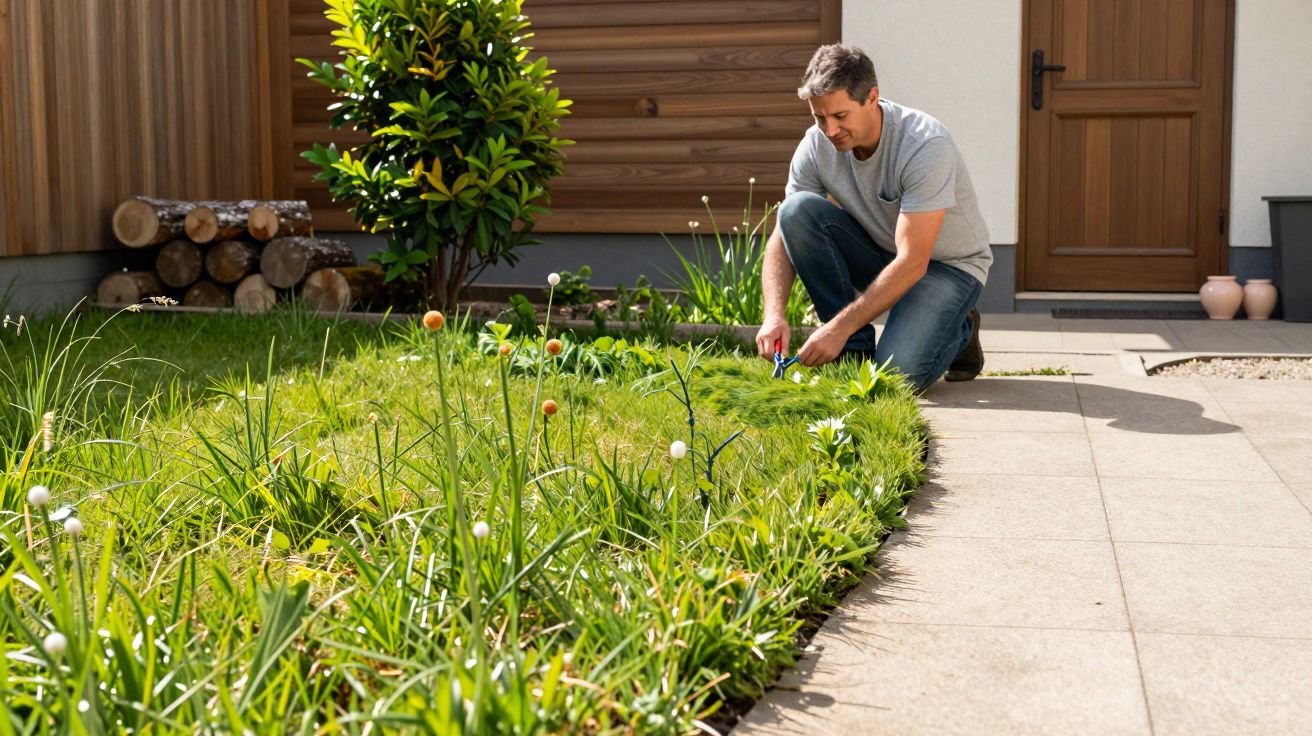
Wildness is easy to romanticise until it’s your own front garden, and the neighbours start looking at it like you’ve given up. Yet wildlife-friendly gardens built with natural landscape design often feel calmer than the neatest lawn-and-borders setup, even when they look a little scruffy at first glance. That matters because most of us don’t just want a garden that “performs” for a photo; we want one that takes the edge off daily life while still supporting birds, bees and everything else that quietly keeps a place alive.
The odd thing is this: the calmer a garden feels, the less it tends to rely on visible control. And once you notice that pattern, you start to see why “tidy” and “restful” are not the same thing.
Why tidy gardens can feel like work even when they’re beautiful
A clipped hedge, a weed-free border and a lawn with ruler-straight stripes can look impressive. They can also feel like you’re standing inside a to-do list. Every edge hints at what needs re-doing, every fallen leaf looks like a mistake, and every patch of bare soil becomes something you’re meant to “fix”.
This is not a moral failing or a lack of gratitude for gardens. It’s just how our brains read cues. High-order spaces often signal vigilance: keep it this way, maintain the standard, don’t let it slip.
A very tidy garden can be soothing to look at, but strangely demanding to be inside.
Wildlife-friendly gardens, on the other hand, tend to lower that pressure. The rules are looser. The look says “this is allowed”, which is exactly what your nervous system wants after a long day of being told to behave.
The hidden trick: eco gardens replace hard lines with soft signals
Natural landscape design doesn’t mean “do nothing”. It means making choices that feel like nature, rather than fighting it into geometry. You still design the space, but you design for flow, seasonal change and habitat, not constant correction.
A few subtle shifts create a completely different emotional read:
- Curved paths instead of straight ones, so your eye slows down.
- Groups of plants that mingle, rather than single-specimen “dots”.
- Repeated textures (grasses, seedheads, broad leaves) that feel cohesive even when untidy.
- Layers-groundcover, mid-height, taller plants-that mimic woodland edges and meadows.
Those are soft signals. They tell you the garden has a rhythm, not a strict dress code. And that’s why it can look messy up close yet still feel composed from a chair with a cup of tea.
What “messy” is actually doing for wildlife (and for you)
A lot of what reads as untidy is simply habitat. Leaves aren’t just leaves; they’re insulation for overwintering insects. Hollow stems aren’t dead bits to be cleared; they’re nesting tubes. A slightly shaggy hedge isn’t “letting it go”; it’s cover.
Once you start seeing the function, the look changes in your head. You stop scanning for faults and start noticing life.
Common “scruffy” features that are quietly doing a lot:
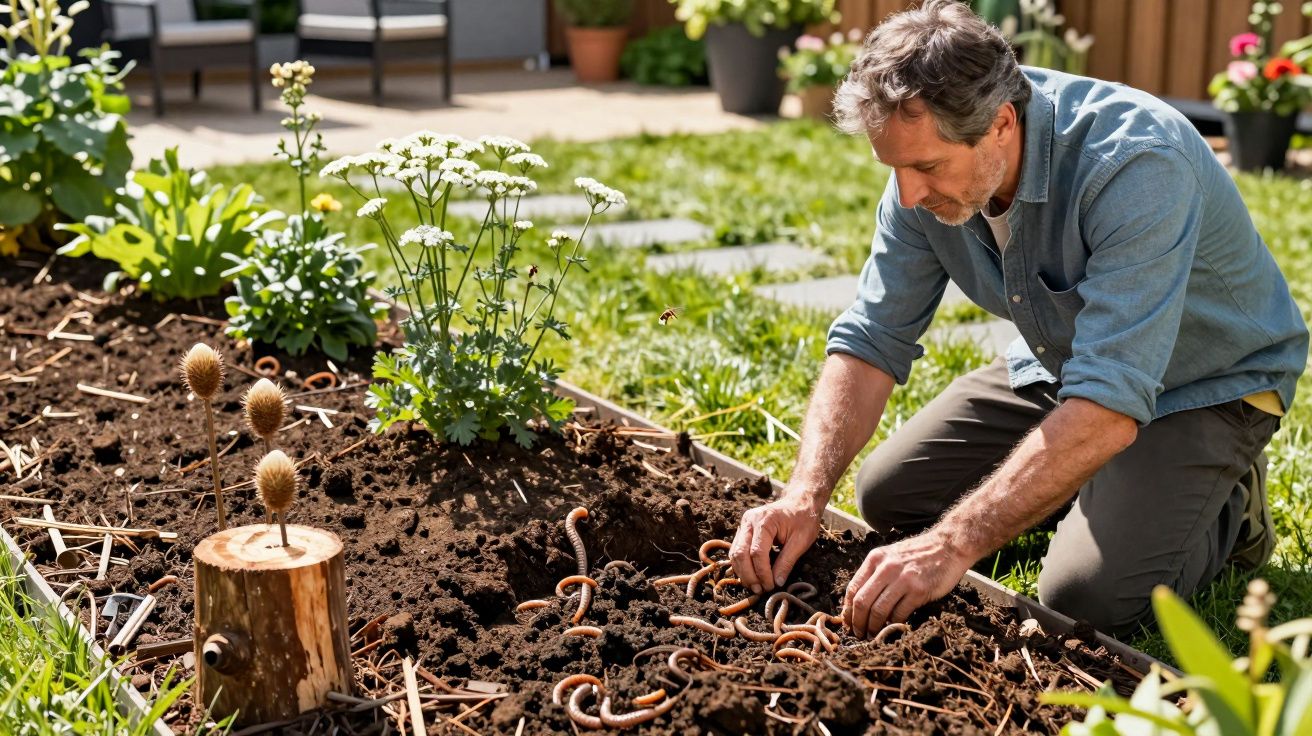
- Leaf litter under shrubs: shelter for beetles, moth pupae and fungi that feed the soil.
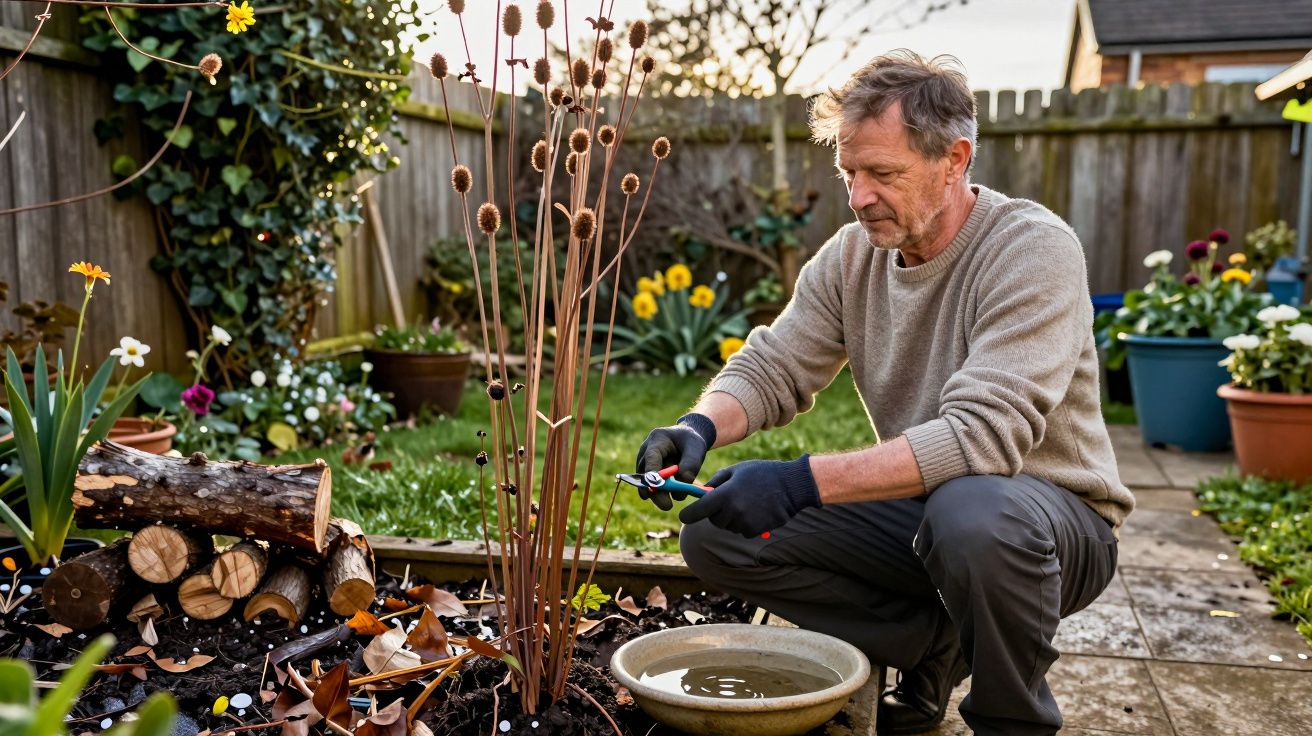
- Seedheads left standing: winter food for finches and structure for frosty mornings.
- Log piles or old branches: homes for insects and a hunting ground for robins.
- Long grass patches: corridors for frogs, toads and small mammals.
The calm comes partly from permission: you’re not failing at gardening; you’re making space for more than one species to exist.
The part people get wrong: calm doesn’t come from chaos
There is a version of “wild” that looks like abandonment, and that tends to feel stressful rather than soothing. The difference isn’t expensive materials or constant labour. It’s a few clear signals that say: this is intentional.
The “intentional” cues that keep things peaceful
If you want the relaxed feel without the raised eyebrows (including your own), focus on three anchors:
- A mown or mulched edge. A simple strip along a path or border makes long planting look deliberate.
- One clear route through the space. A path, stepping stones, or even a slightly trodden line gives the eye a plan.
- Repeat a small palette. Repeat two or three key plants or textures so the garden reads as a whole.
Think of it like wearing comfortable clothes that still fit. You’re not dressing up, but you don’t look lost.
The calm is not in neglect. It’s in reducing the number of things you have to police.
How to make a wildlife-friendly garden look “soft” rather than “scruffy”
If your goal is that eco-garden calm-alive, loose, but not chaotic-these small choices do more than any trendy feature.
Start with structure, then let the planting loosen
Structure is your quiet framework. It can be as simple as a few shrubs, a small tree, or a line of taller plants at the back that holds the space together.
Then let the middle layer be generous. This is where natural landscape design shines: plants overlap, self-seed, and fill gaps without you having to micromanage.
Use plants that age well
Some plants look charming as they fade; others just look tired. If you want a calmer winter garden without constant cutting-back, lean towards plants that hold their shape:
- Ornamental grasses (left standing until late winter)
- Sedums and other sturdy seedhead-formers
- Perennials with strong stems (many salvias, some asters)
- Native hedging and shrubs that give year-round bulk
You can still cut back. You’re just not forced into it the moment autumn arrives.
Give “wild bits” a frame
A meadow patch feels intentional when it sits next to something clearly maintained. A tiny area of long grass can work better than a whole lawn left to do whatever it likes.
Simple framing ideas:
- A neat rectangle of long grass with a mown border
- A pond with a tidy edge on one side and a wilder margin on the other
- A log pile tucked behind a clipped shrub, not dumped in the middle
It’s not about hiding the habitat. It’s about placing it.
The surprising mental shift: you stop fighting the seasons
Tidy gardens often demand that you erase seasonal mess. Eco gardens ask you to watch it happen. There’s a psychological difference between “I must clear this” and “this will become something”.
Leaves become mulch. Seedheads become food. Bare patches become spring flowers. When your garden’s story includes decay and return, it stops feeling like a constant lapse in standards.
And once that clicks, the calmer feeling is hard to unsee.
A small “calm check” you can do this weekend
If your garden currently feels a bit too wild for comfort, don’t start by ripping it out. Start by adding one or two intentional cues and see how your brain responds.
Try this:
- Cut a clean edge along one border.
- Define a path (even if it’s just a mown line through longer growth).
- Group three pots together near the door, all in the same material or colour.
- Leave the rest alone for two weeks and notice what moves in-bees, birds, butterflies, your own willingness to sit outside.
Wildlife-friendly gardens don’t feel calmer because they’re perfect. They feel calmer because they’re allowed to be alive, and you’re allowed to stop correcting them every time you step outside.




Comments (0)
No comments yet. Be the first to comment!
Leave a Comment