Most of us were taught to read a “good” garden as tidy borders, crisp edges, and plants that behave. Environmentally friendly garden design, especially when it leans on naturalistic planting schemes, often does the opposite on purpose: it builds living systems that cope with drought, pests, and heavy rain without constant inputs. That matters because a garden that looks flawless in May can become thirsty, fragile, and expensive by August.
The surprise is that the most sustainable choice can look unfinished at first glance. Not because it’s careless, but because it’s aiming for resilience rather than display.
Why “perfect” usually means high-maintenance
A perfect-looking garden is typically one that’s been forced into shape: clipped, swept, fed, sprayed, and kept in its lane. That approach can be beautiful, but it’s rarely neutral. It relies on regular watering, fertiliser, and intervention when the weather swings.
Eco-friendly design tends to ask a blunt question instead: what happens here if I stop trying to win? If the answer is “everything collapses,” the design wasn’t doing much ecological work in the first place.
There’s also a hidden tidiness tax. The more you remove leaf litter, seed heads, and “mess,” the more you remove shelter, food, and overwintering sites for the insects and birds that keep a garden balanced.
The aesthetic shift: from control to cooperation
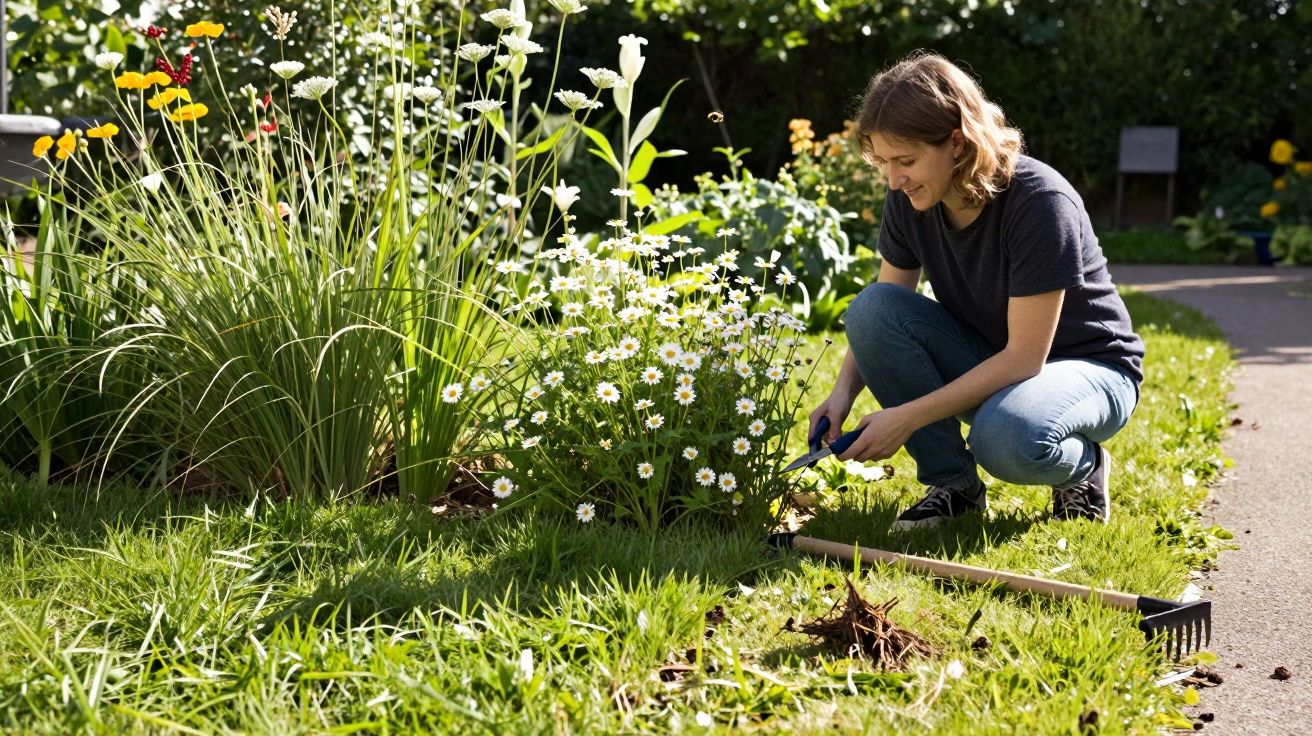
Naturalistic planting schemes copy how plants organise themselves in the wild: layered, slightly crowded, and seasonal. That can read as “scruffy” to anyone expecting individual specimen plants with bare soil between them.
But the logic is practical. Dense planting shades the ground, which slows evaporation and suppresses weeds. Mixed species confuse pests, while offering nectar and habitat for predators that do the pest control for you.
A garden designed for cooperation doesn’t try to hold one exact picture all year. It accepts that June and November will look different, and that change is part of the point.
What eco-friendly gardens stop doing (and why it helps)
A sustainable garden often rejects a few habits that are so common they feel like rules. It’s not dogma; it’s a trade: less “perfect” today for less work and more life tomorrow.
- Bare, raked soil is replaced with plants, mulch, or leaf mould because exposed soil bakes, erodes, and invites weeds.
- Uniform lawns shrink because they drink water and offer little habitat unless managed as meadow.
- Hard edges everywhere soften because wildlife needs transitions: low plants to taller ones, gaps, and cover.
- Weekly deadheading and cutting back becomes selective because seed heads feed birds and hollow stems house insects.
- One-plant, one-purpose beds become mixed because diversity stabilises the system.
The goal isn’t to make a garden look wild. It’s to make it act alive without you standing over it.
The “messy” elements that are actually doing the work
Some features look like neglect until you know what they’re for. In environmentally friendly garden design, these are often the highest-performing parts of the space.
Leaf litter and mulch
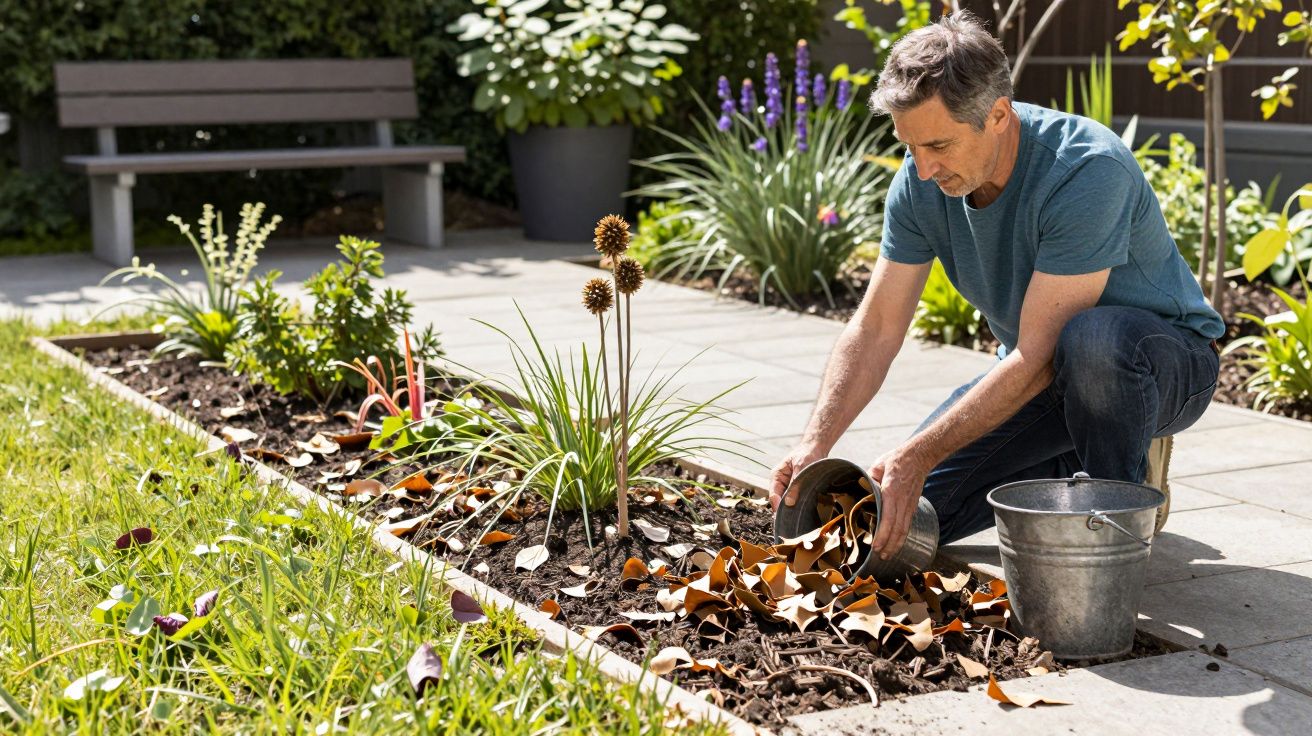
A thin layer of leaves under shrubs can look unkempt if you’re used to clean borders. Functionally, it’s insulation, moisture control, and slow fertiliser in one. It also protects the soil community that supports plant health.
If you want it to read as intentional, keep it behind a clear edge: a mown strip, a path, or a low line of planting. People accept “mess” better when it has a frame.
Seed heads and winter structure
Leaving stems and seed heads through winter can clash with the idea of a garden being “put to bed.” Yet that structure feeds finches, shelters ladybirds, and stops soil from being hammered by rain.
Cutting everything down early often creates the neatest winter look-and the emptiest one.
Slight competition between plants
Naturalistic planting schemes embrace a gentle jostle. Plants that touch and weave create a cooler, more humid microclimate at ground level, which reduces stress in heat and wind.
Perfection, by contrast, tends to isolate plants like ornaments. That spacing can make sense for show, but it often increases watering needs and leaves gaps for weeds to exploit.
A quick reality check: what “perfect” costs in resources
If you’re choosing between two styles, it helps to name the real inputs. You don’t need a spreadsheet to feel the difference, but a simple comparison makes the trade-offs clearer.
| “Perfect” look tends to require | Eco-friendly alternative tends to use | What you gain |
|---|---|---|
| Frequent irrigation | Drought-tolerant mixes, mulch, shade | Lower water use, steadier growth |
| Regular feeding | Compost, leaf mould, slower cycles | Healthier soil, fewer spikes/crashes |
| Sprays and rescues | Diversity and predator habitat | Fewer pest outbreaks over time |
The eco option isn’t zero-maintenance, but it’s maintenance that compounds. Each season improves the base instead of resetting it.
Designing so it looks intentional, not abandoned
A common fear is that sustainable choices will make the garden look like a missed weekend. The fix is usually not more tidying; it’s clearer signals.
- Mown or swept paths through looser planting
- Repeated plant groups (drifts) so the eye reads pattern, not chaos
- A limited palette with one or two “anchor” plants repeated
- Edges that are sharp even if the planting behind them is soft
- One focal point (bench, pot, small tree) that says “this is designed”
You can be wildlife-friendly and still visually calm. The trick is to keep one part disciplined so the wilder parts feel chosen.
The hardest part: letting the garden be in process
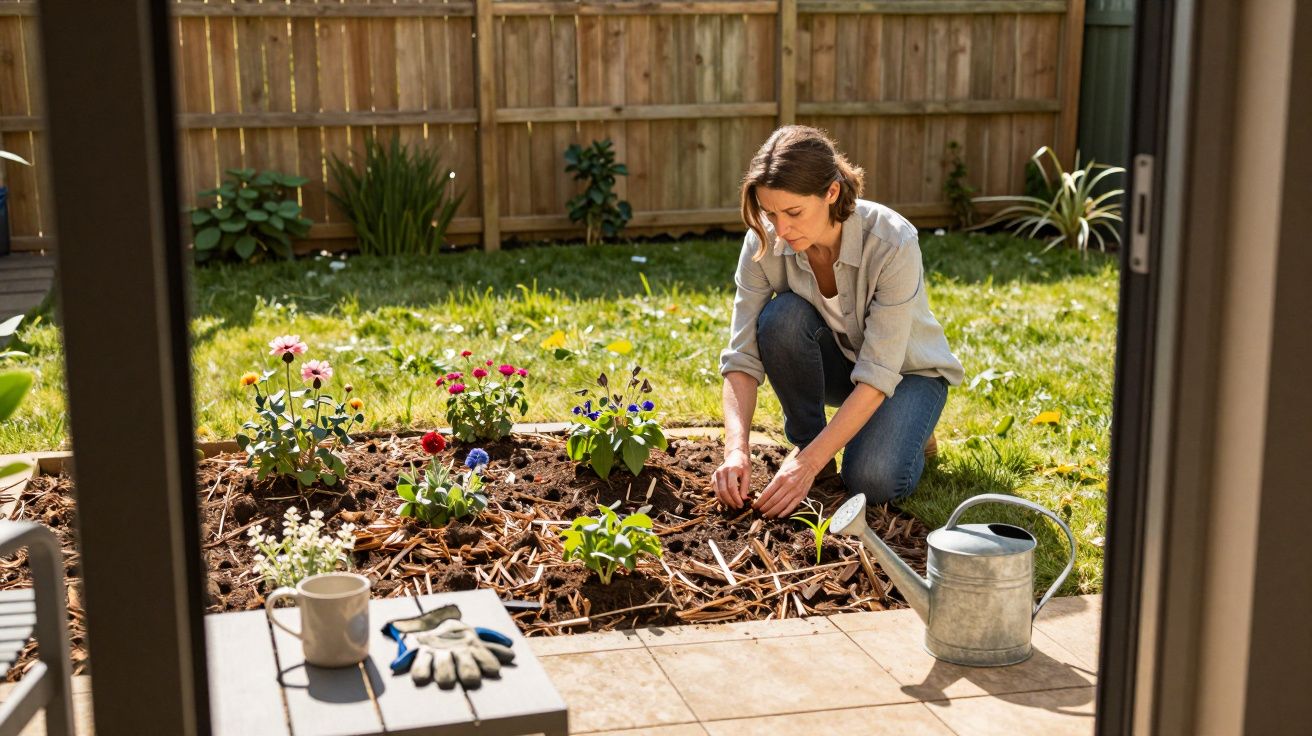
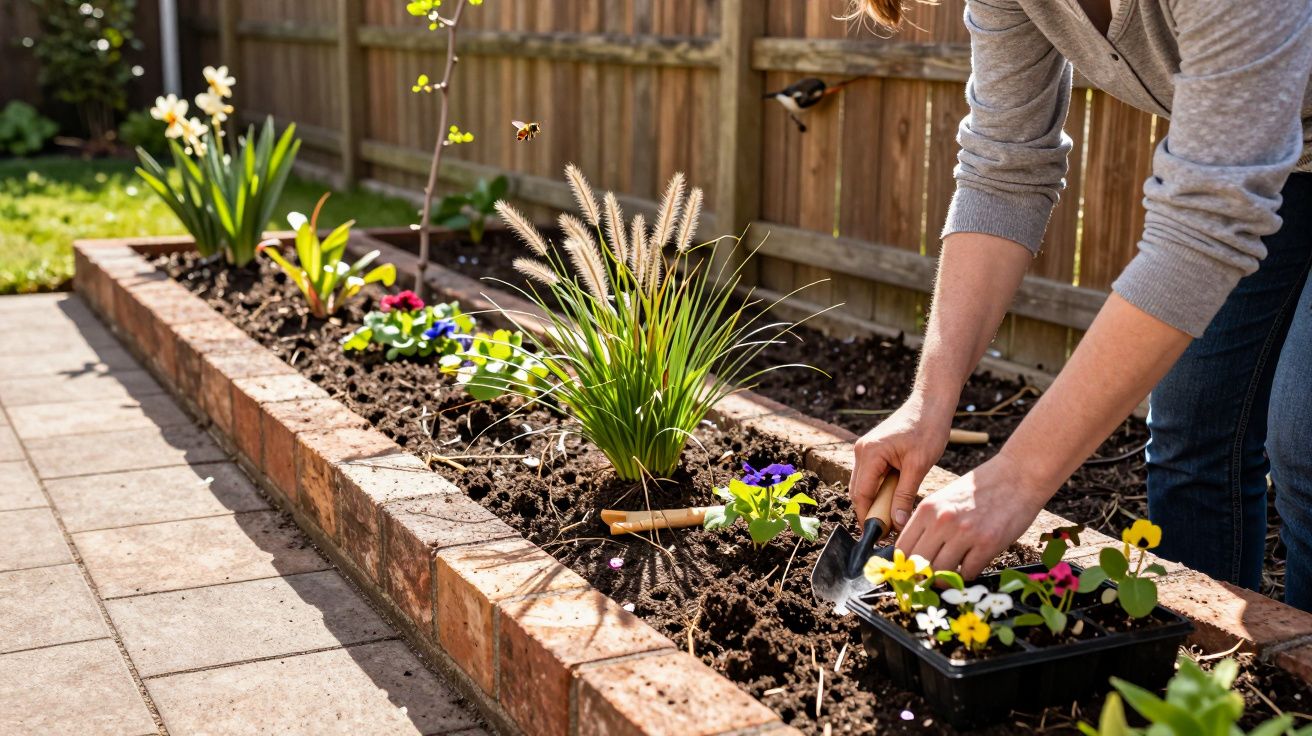
Eco-friendly gardens often look best in their second or third year, once plants knit together and the soil has recovered. Year one can be awkward: gaps, uneven height, and things that don’t flower on schedule.
That’s also when people over-correct. They pull “failed” plants too quickly, overwater to force growth, or revert to gravel and short-lived bedding for instant polish.
If you can tolerate the in-between phase, the garden usually pays you back with steadier performance and fewer emergencies.
A simple way to start without committing to a whole new style
You don’t need to redesign everything to move towards environmentally friendly garden design. Choose one area where perfection is costing you the most-water, time, or disappointment-and soften the rules there first.
- Replace one thirsty bed with drought-tolerant perennials and grasses.
- Let one corner keep its leaves under shrubs until spring.
- Trial a small naturalistic planting scheme around a path where it still feels “kept.”
- Swap weekly lawn perfection for a longer cut and a few daisy-friendly patches.
Sustainability in gardens is rarely a single grand gesture. It’s a series of choices that stop fighting the site, and start using it.

Comments (0)
No comments yet. Be the first to comment!
Leave a Comment