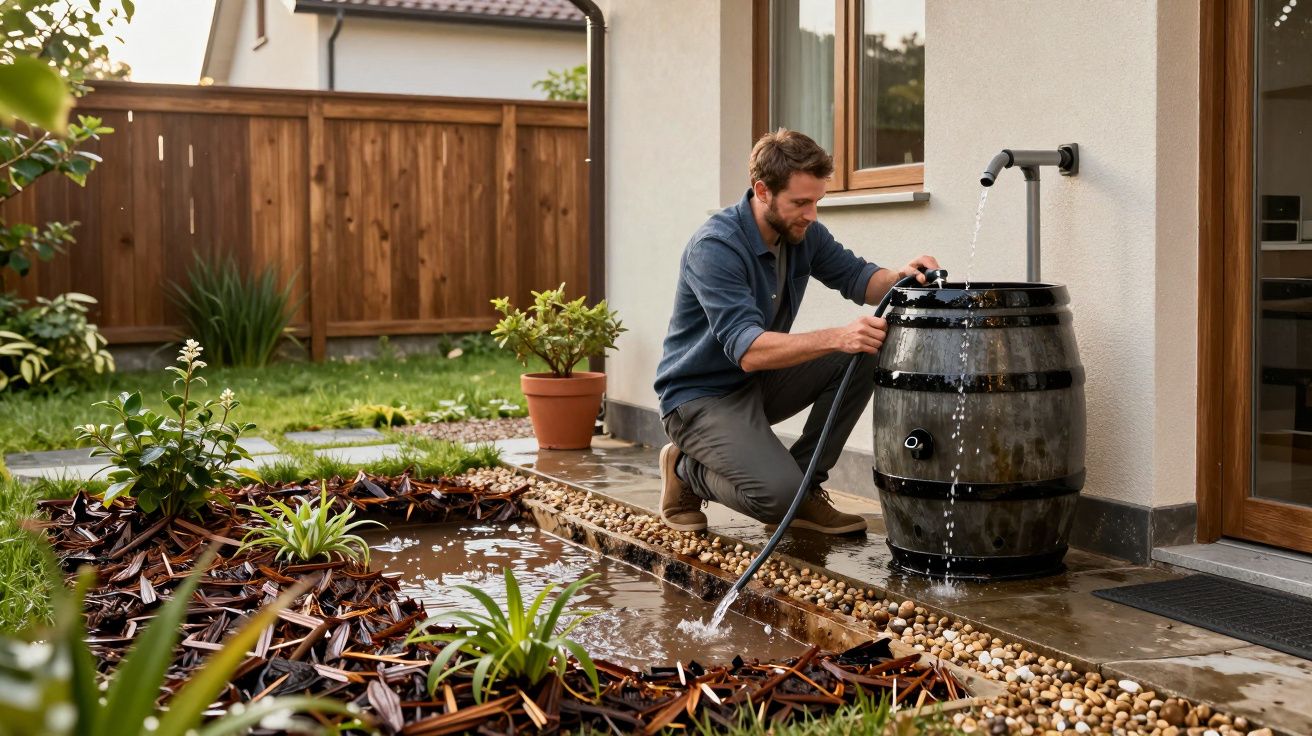
Rain is getting less polite. We’re seeing longer dry spells, then sudden downpours that bounce off patios, race to the nearest drain, and leave gardens both flooded and thirsty. Water-sensitive design, used in everything from small back gardens to new housing sites, is a practical form of climate change adaptation because it treats rainfall as something to hold, slow, and use-rather than a nuisance to eject.
Once you start looking at your plot like a tiny catchment, the logic clicks. Every roof, path and lawn is either helping water soak in, or shoving it somewhere else at speed. The resilient garden isn’t the one that “drains well”; it’s the one that manages water well.
Why “getting rid of water” is the old mindset
Traditional garden drainage aims for quick escape: hard surfaces, neat falls, a gully that whisks everything away. That works until it doesn’t-when intense rain overwhelms pipes, compacts soil, and turns borders into puddles over a sealed layer. Then, a week later, you’re hauling hoses around because nothing was stored in the ground where plants can reach it.
Climate-resilient gardens flip the story. They assume extremes are normal and design for two jobs at once: avoid waterlogging during heavy rain, and bank moisture for the next dry spell. The trick is slowing water down so gravity has time to do something useful.
The basic physics: slow, spread, soak, store
Rainfall becomes an asset when you control its speed and destination. You don’t need a landscape architect to understand the sequence; you just need to stop thinking of the surface as the whole garden.
A water-sensitive approach usually stacks a few simple moves:
- Slow: break up fast run-off from roofs and paving with rills, gravel strips, or planted edges.
- Spread: direct water into wider areas (lawns, beds, rain gardens) rather than one low point.
- Soak: improve infiltration with organic matter, deep rooting plants, and permeable surfaces.
- Store: capture water in the soil profile, in mulched beds, or in tanks for later use.
Do that, and even a sharp cloudburst becomes a top-up rather than a threat.
Start where the water actually lands: roofs and hard surfaces
In most homes, the roof is the biggest collector you own. During a downpour, it can dump a startling volume into one or two downpipes, which then hit a patio edge like a firehose. If you only change one thing, change where that downpipe goes.
Practical options, from simplest to most “designed”, include:
- Fit a water butt (or two linked together) and use it early in summer so capacity is free for storms.
- Add a downpipe diverter to feed a border or a shallow planted basin.
- Swap sections of paving for permeable paving or gravel with a proper permeable sub-base.
- Create a rain garden in a slight hollow where water can sit briefly and soak away.
None of this is about making the garden soggy. It’s about giving water a place to pause that isn’t your conservatory threshold.
The rain garden: a small dip that does big work
A rain garden sounds grand, but it’s often just a shallow depression filled with plants that tolerate occasional wet feet. In heavy rain it holds water for hours, not days. The rest of the time it behaves like an ordinary bed-except it stays greener for longer in dry weather.
A useful mental test is: can you picture the water path during a storm? If the answer is “it goes everywhere”, that’s a sign you need one intentional destination where water is allowed to collect briefly, safely, and away from the house.
What to plant where water arrives
You don’t need exotic species; you need the right plant in the right micro-zone. Mix structure (grasses, shrubs) with flowers for pollinators, and think in bands from wettest to driest.
- Bottom (wettest): moisture-tolerant perennials and grasses that won’t sulk after a soaking.
- Sides: plants that like consistent moisture but not standing water.
- Top edge: drought-tolerant choices that cope when the basin is dry.
The point isn’t perfection. The point is resilience: something will always be coping, even if the week is either all rain or no rain.
Soil is the real reservoir (and compaction is the real enemy)
Water-sensitive design is often sold as features-tanks, channels, fancy surfaces-but the unglamorous core is soil structure. Compacted soil sheds water like a roof, then bakes hard in summer. You get the worst of both seasons: run-off in winter, stress in summer.
A few high-impact habits:
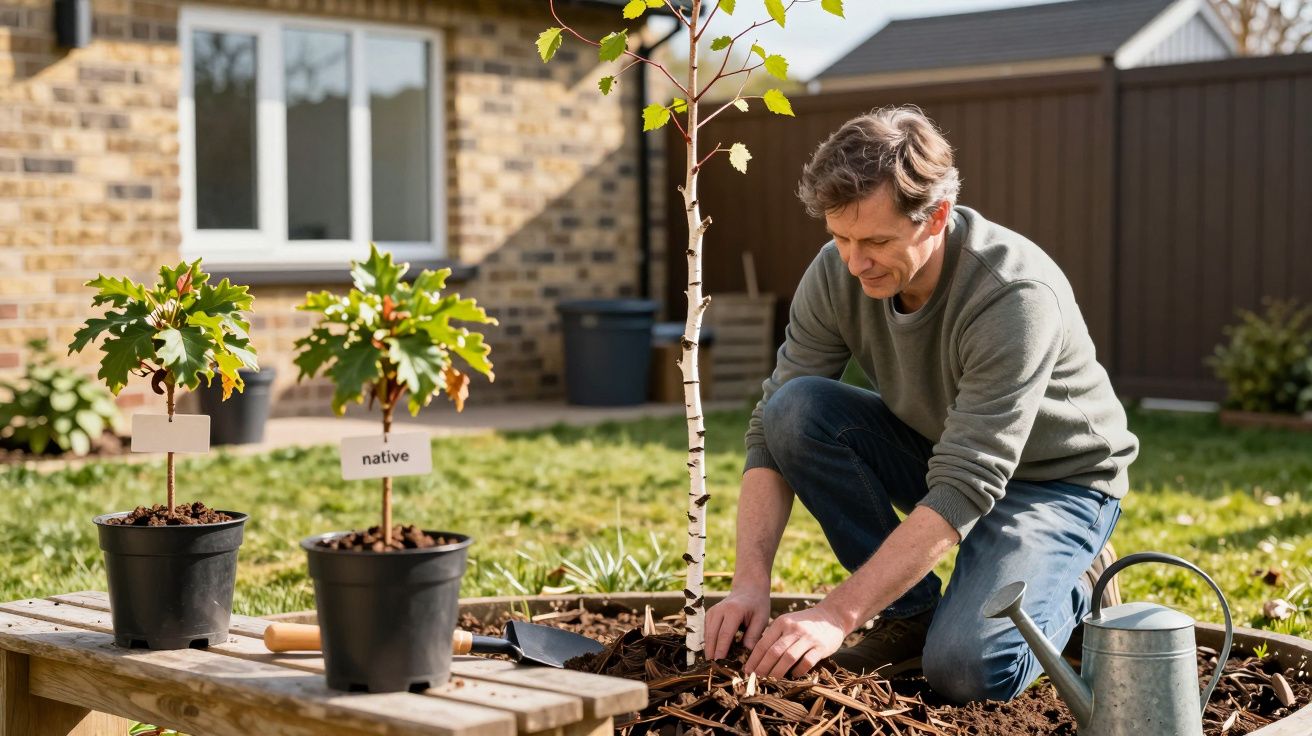
- Mulch generously (compost, leaf mould, well-rotted organic matter) to reduce evaporation and soften heavy rain impact.
- Avoid working wet soil; it’s when compaction is easiest to create and hardest to undo.
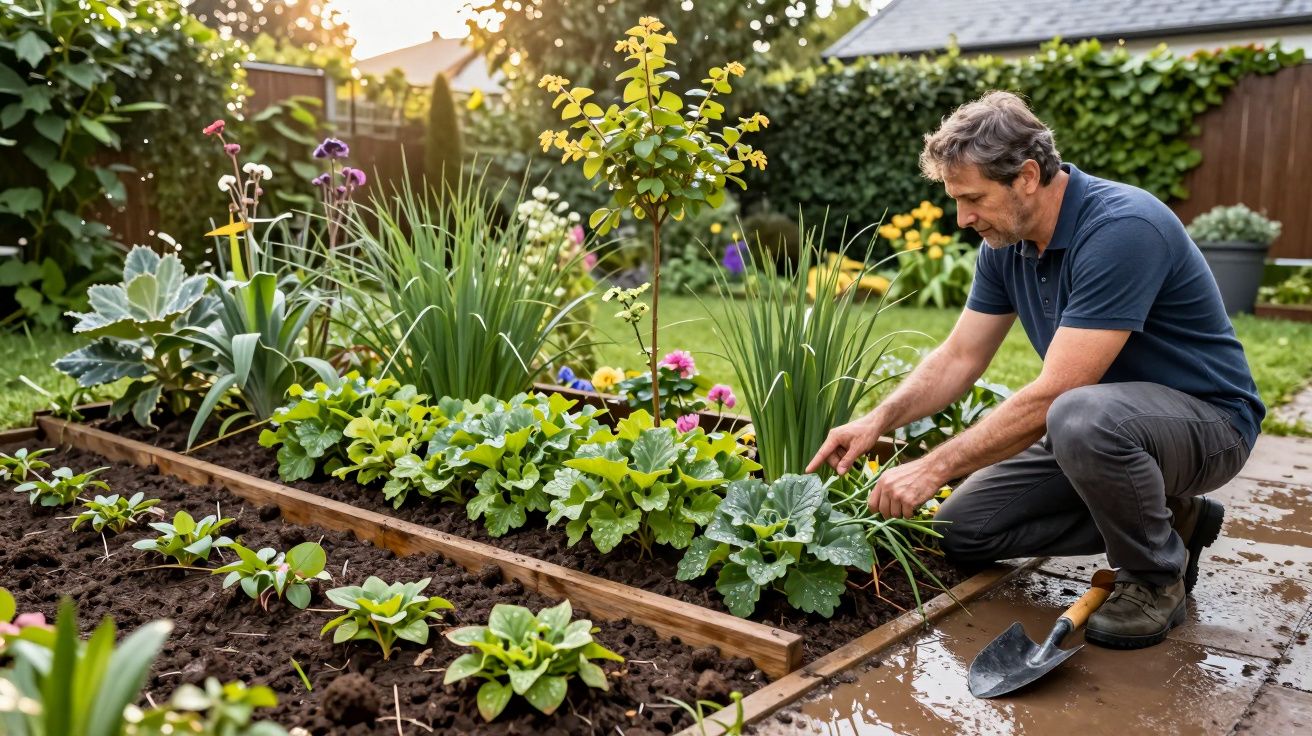
- Plant for roots: deep-rooters and groundcover help create channels for water to infiltrate.
- Let lawns breathe: aerate compacted areas and consider reducing small, shaded lawns that never truly dry.
You’re not trying to turn clay into sand. You’re trying to give clay a crumb structure so it can accept water in a hurry.
“But won’t this make my garden flood?” - how to keep it safe
A resilient garden still needs clear rules: keep water away from foundations, ensure overflow has somewhere to go, and don’t send problems to neighbours. The most common mistake is capturing water without planning what happens when the system is full.
A simple safety checklist helps:
- Keep intentional ponding areas well away from the house walls and below damp-proof course level.
- Build an overflow route (a shallow swale, a gravel strip, a second basin) so excess water has a controlled exit.
- Don’t rely on one feature: small distributed changes cope better than one dramatic low spot.
- If you’re unsure about drains or levels, get advice-especially for basements or steep sites.
The goal is calm behaviour in extreme weather: water slows down, spreads out, and leaves on your terms.
A quick “rainfall as an asset” plan for an ordinary garden
If your garden is average-sized and your time is limited, you can still do the essentials. Think in weekends, not masterplans.
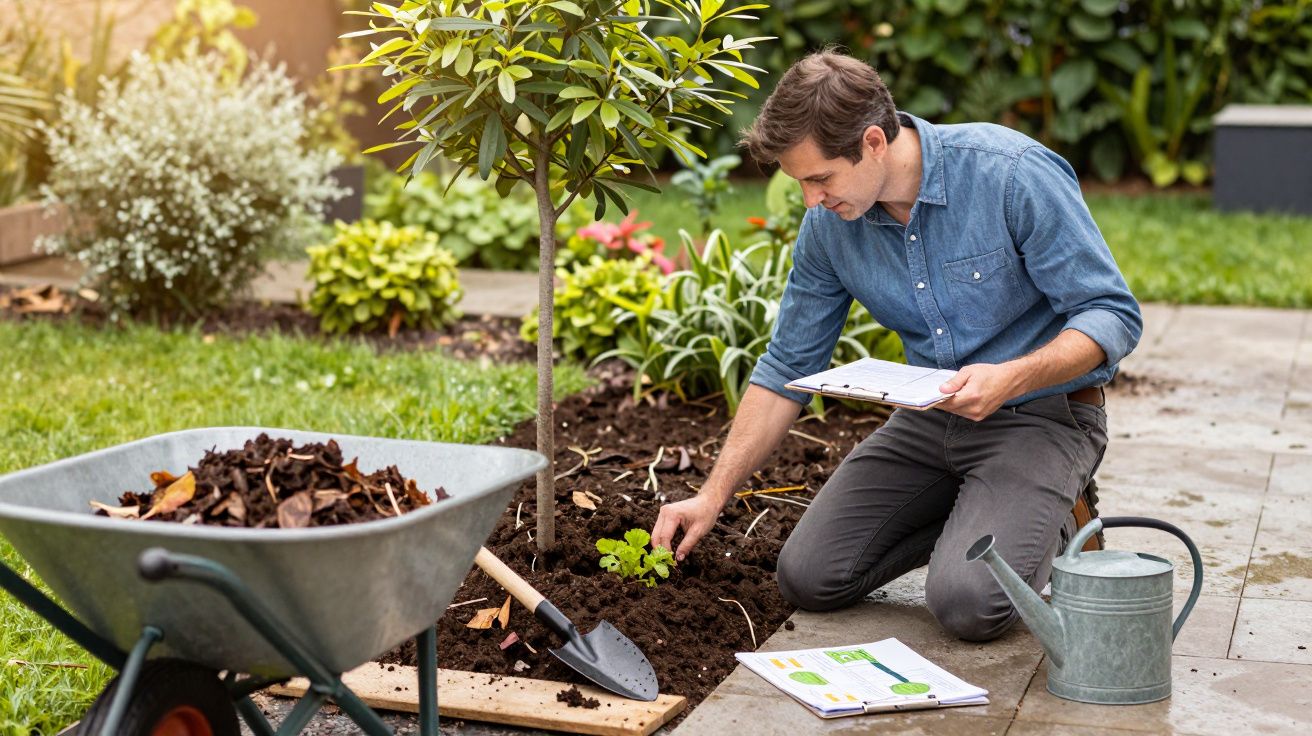
- Watch one heavy shower and note where water pools and where it races. That’s your map.
- Disconnect one downpipe into a butt or a planted area (with overflow planned).
- Make one permeable swap: a strip of gravel, a permeable path section, or a bed expansion.
- Improve one soil zone with mulch and plants that hold structure through winter.
- Add one “allowed-to-be-wet” area: a rain garden, a broad border, or a low lawn section.
Small moves compound. They also make the garden feel better to live with: less panic when the forecast turns grim, less firefighting when July turns dry.
| Garden problem | Water-sensitive fix | What you gain |
|---|---|---|
| Patio run-off and puddles | Permeable strip + planted edge | Less slip risk, more infiltration |
| Waterlogged corner in winter | Rain garden with overflow route | Controlled ponding, fewer soggy beds |
| Hose dependence in summer | Water butt + mulched beds | Stored water, steadier moisture |
The quiet benefit: rainfall becomes reliable, not random
The real promise of climate-resilient gardening isn’t that you’ll never see mud or drought stress again. It’s that your garden stops swinging wildly between extremes because you’ve built in buffers. You’ve made space for water to behave like part of the system, not an intruder.
In that sense, treating rainfall as an asset is less about gadgets and more about attitude. You’re not fighting the weather; you’re designing with it-one downpipe, one patch of soil, one careful dip in the ground at a time.
FAQ:
- Is water-sensitive design only for new builds? No. It’s often easiest to retrofit: a water butt, a rain garden, more permeable surfaces, and better soil structure make a visible difference in established gardens.
- Will a rain garden turn into a bog? It shouldn’t. A well-placed, shallow basin is designed to drain within hours to a day after heavy rain; if it stays wet for days, you may need a different location or an overflow/infiltration tweak.
- Do I need permeable paving everywhere? Usually not. Target the biggest run-off areas first (often driveways and patios) and combine permeable sections with planted areas that can accept overflow.
- What’s the fastest win for summer drought resilience? Mulch and soil improvement. Better soil stores more water, reduces evaporation, and helps plants cope when rain disappears for weeks.

Comments (0)
No comments yet. Be the first to comment!
Leave a Comment