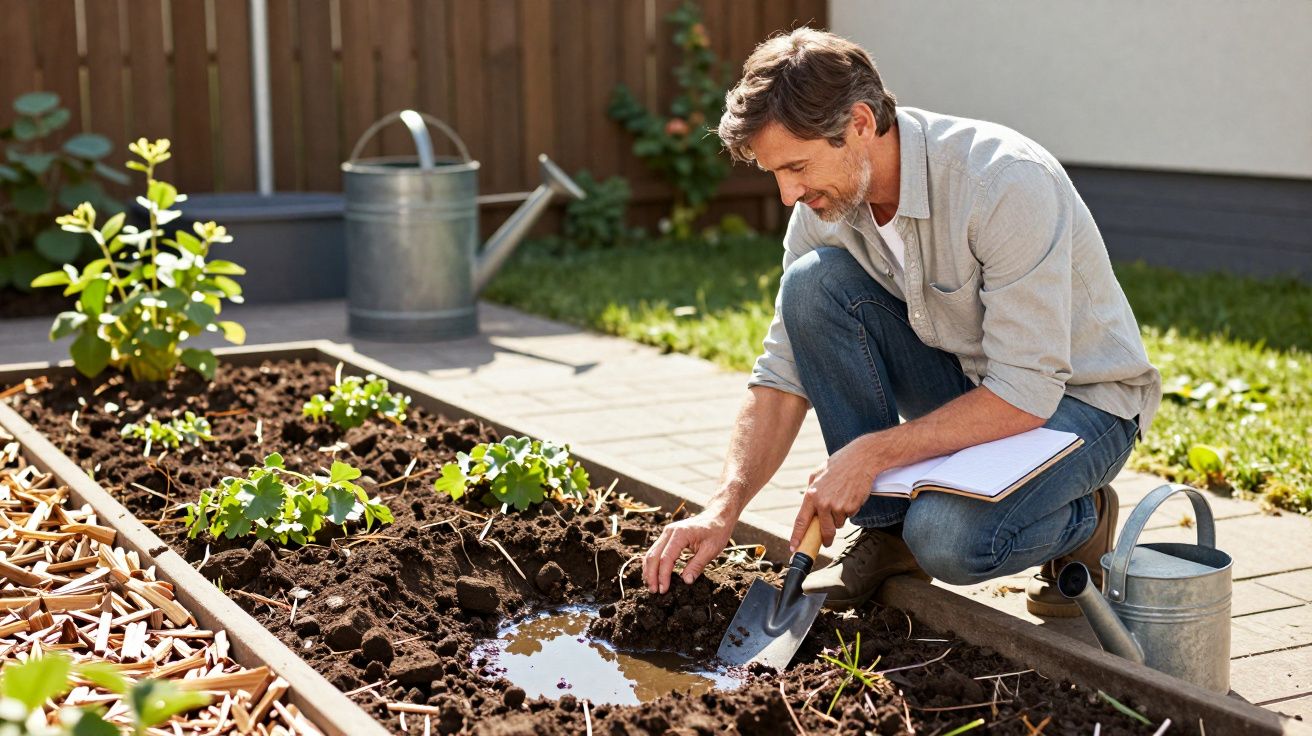
You can build climate-resilient gardens with good intentions, a few tough plants, and a watering can you promise not to overuse. But the first year has a way of editing your plans. It pushes you from “what survives the weather?” into long-term ecological planning: what can hold shape, shade, soil life, and wildlife when conditions keep shifting.
The surprise is that the biggest change isn’t the weather. It’s you. After twelve months of watching what actually happened-where water pooled, which spots baked, which plants sulked-you stop chasing quick fixes and start designing for momentum.
The first year is a stress test, not the finished garden
Year one is when everything is loud. New plants are establishing roots, soil is still learning how to hold water, and you’re still learning how the site behaves across seasons. Even a “drought-tolerant” border can look thirsty if it went in during a dry spring and never got that first deep rooting.
Most people react by adding more. More compost, more watering, more plants to fill gaps. Some of that is necessary. A lot of it is noise.
The first-year goal is not perfection. It’s data.
Why priorities shift after the first year
Once a garden has been through at least one summer and one winter in your care, the questions change. You stop asking what looks good this weekend and start asking what reduces your workload and risk next year.
Three shifts tend to happen at once:
- From plant shopping to site engineering: shade, wind, drainage, paths, and access become the real levers.
- From “drought-proof” to “water-smart”: it’s not just dry spells; it’s sudden downpours, runoff, and dry wind.
- From tidy borders to living systems: mulch, groundcover, fungal networks, and habitat become part of the aesthetic.
You still care about flowers. You just stop letting flowers be the strategy.
The hidden wins of year one (even when it looks messy)
If you did nothing else, you probably learned your garden’s microclimates. The north-facing corner that never dries. The strip by the fence that acts like an oven. The spot where slugs appear as if booked in advance.
That knowledge is priceless because it makes your next decisions cheaper and calmer. It also helps you avoid the classic mistake: assuming a plant failed because you chose “the wrong one”, when the real issue was soil structure, exposure, or competition.
What to measure before you change anything
Pick two or three observations and write them down. Keep it boring and specific.
- Where does water sit for more than 24 hours?
- Which areas require emergency watering to prevent collapse?
- What stayed surprisingly green without help?
- Where did you struggle to access for weeding, harvesting, or pruning?
A simple notebook beats a perfect planting plan.
The second-year focus: soil, structure, and shade
In year two, climate-resilient gardens usually move away from constant plant replacement and towards foundational work. Not glamorous work. The work that makes everything else easier.
Soil: stop feeding plants, start building sponge
If your first year required lots of watering, the solution is rarely “water more”. It’s helping the soil hold water and stay aerated at the same time.
Practical moves that tend to pay back fast:
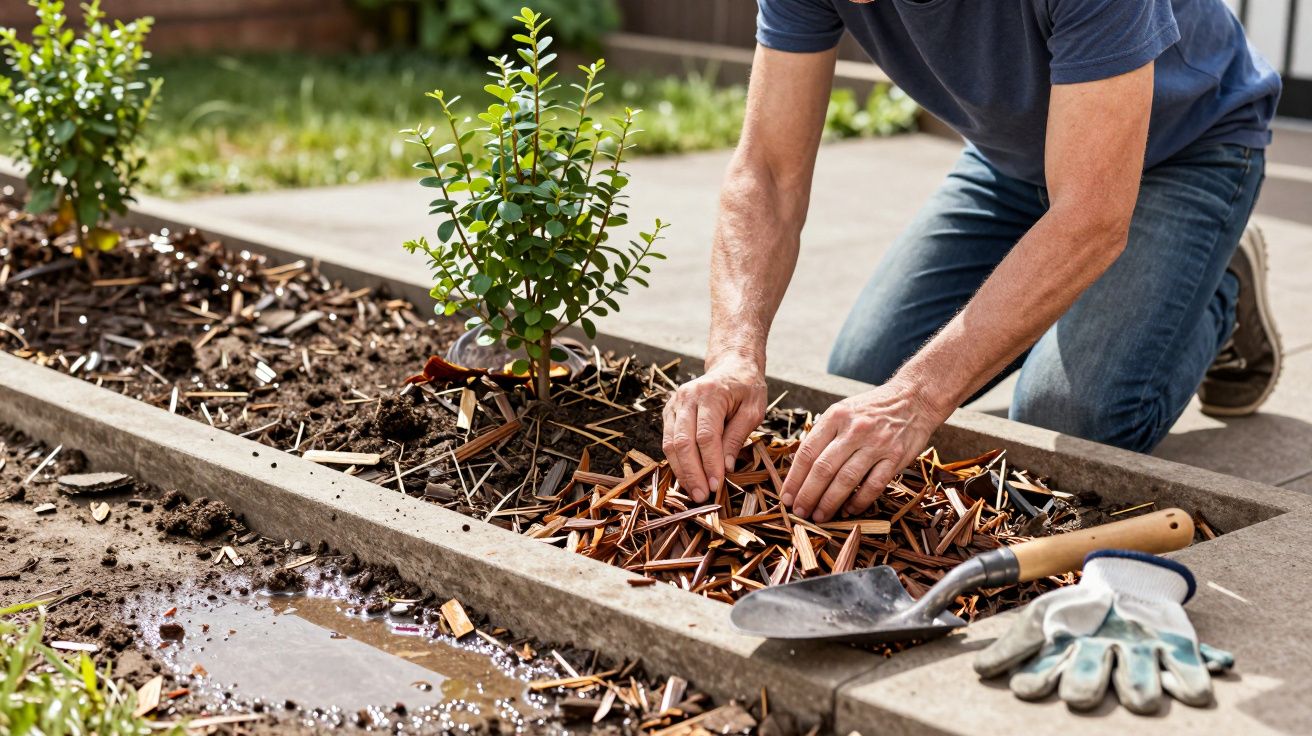
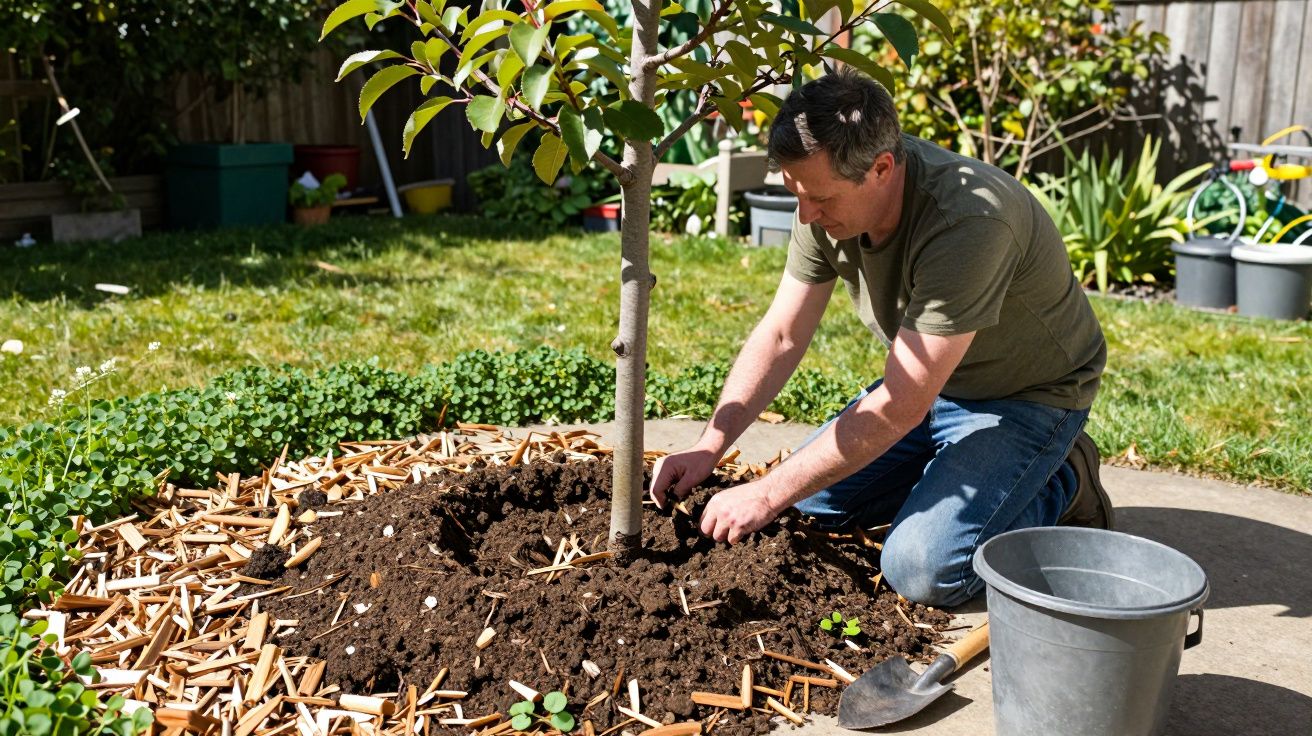
- Add a 2–5 cm mulch layer (leaf mould, woodchip, composted bark) to reduce evaporation and protect soil life.
- Use compost strategically in planting pockets and around hungry perennials, not as a thin “dusting” everywhere.
- Disturb the soil less. Constant digging breaks structure and dries it out.
If your garden is on clay, mulch and patience do more than repeated turning. If it’s sandy, organic matter is the difference between “drains well” and “can’t hold anything”.
Structure: make water behave
After year one, you can usually see how rain actually moves. That’s your cue to do small, targeted interventions.
- Redirect runoff with a shallow swale or a slight regrading.
- Add a rain garden in the lowest spot that already collects water.
- Install water butts where they’ll actually be used, not where they look neat.
A climate-resilient garden isn’t one that never needs watering. It’s one that makes watering predictable and efficient.
Shade: the most underrated climate tool
In hotter summers, shade becomes infrastructure. A small tree, a pergola with a climber, or even a taller hedge can change the garden’s water demand and plant options.
The shift after year one is that people stop treating shade as a problem to “fix” and start using it as a design material. Afternoon shade over the most stressed bed can halve your intervention.
Planting strategy changes: fewer heroes, more teams
Year one invites hero plants: the ones you hope will carry the look. Year two is when you notice that the survivors often succeeded because they had the right neighbours and ground cover.
Aim for plant communities that do jobs:
- Deep roots to access lower moisture (many grasses, Mediterranean shrubs, some perennials).
- Groundcover to cool soil and block weeds (creeping thyme, wild strawberry, hardy geraniums).
- Seasonal spread so something is always stabilising the bed (evergreen structure plus rotating flowering interest).
The point isn’t to copy a wild habitat perfectly. It’s to borrow its logic: cover the ground, stagger growth, and avoid bare soil.
If a bed is still mostly bare by the end of year one, it will ask for constant inputs. Cover is resilience.
Maintenance flips from “save everything” to “manage trade-offs”
The first year is full of rescue missions. By the second, you’ll likely do fewer emergency interventions and more preventative routines. That’s not laziness; that’s competence.
A useful maintenance rhythm for year two:
- Water deeply, less often, to encourage rooting.
- Mulch once or twice, not every weekend.
- Edit plants hard: move what’s unhappy, propagate what’s thriving, and stop apologising for what doesn’t suit the site.
There’s also a psychological shift. You stop taking plant losses personally and start treating them like feedback.
Quick checklist: what to prioritise in year two
- Fix one water issue (runoff, pooling, or storage), not five.
- Increase groundcover so less soil is exposed.
- Add one piece of shade or wind buffering where stress is highest.
- Standardise irrigation habits (soaker hose, timed sessions, or deliberate hand-watering zones).
- Keep a small “trial strip” for experiments instead of gambling on a whole bed.
Small, repeatable improvements beat a big redesign you can’t maintain.
The long view: resilience is a relationship, not a label
Climate-resilient gardens aren’t a one-off install. They’re a set of choices that get easier as the garden matures: deeper roots, better soil structure, more shade, and a clearer sense of what your site can support without constant bargaining.
After the first year, the garden stops being a project you push. It becomes a system you steer. That’s the moment long-term ecological planning stops sounding abstract and starts feeling like relief.




Comments (0)
No comments yet. Be the first to comment!
Leave a Comment