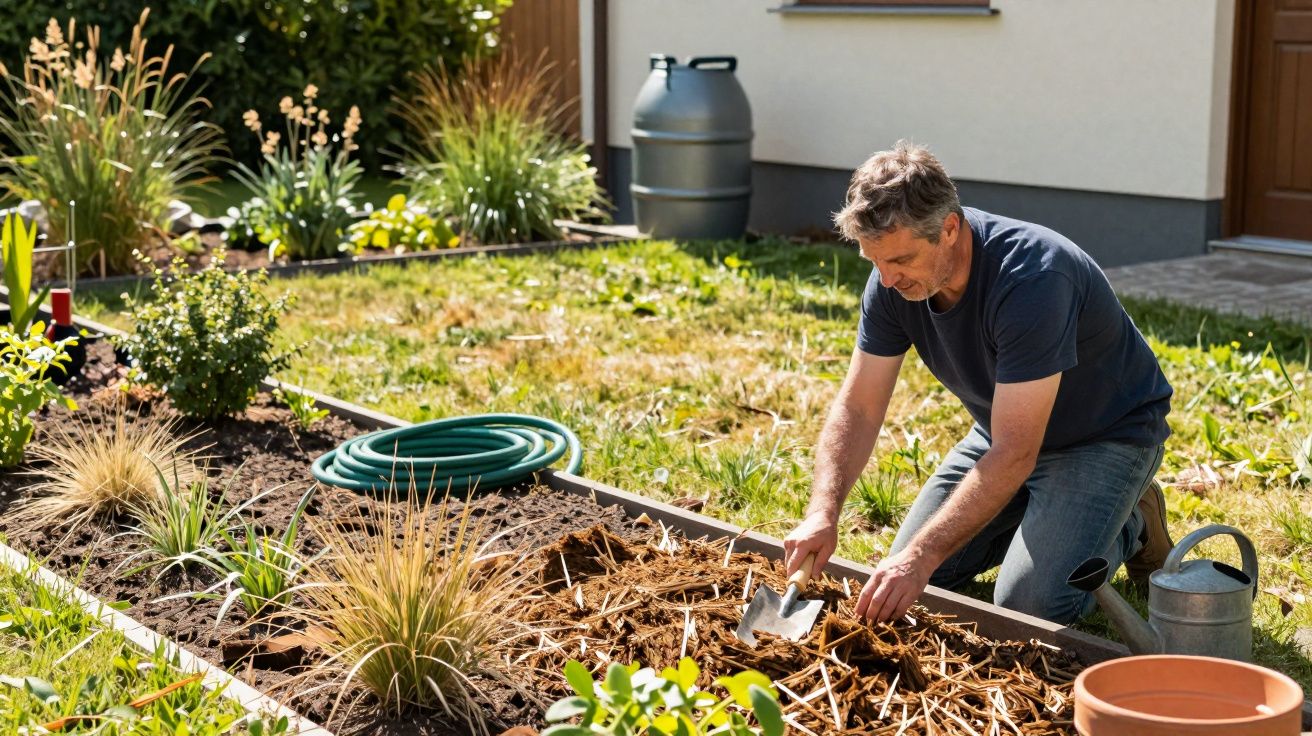
You can spot climate-resilient gardens most clearly in summer, when a neighbour’s lawn goes crisp and sulky while everything else looks oddly calm. In sustainable landscaping, that calm is the point: designs that keep working through heat, heavy rain, hosepipe bans, and the weeks when you simply don’t have time. Lawns can still exist, but the most reliable gardens rarely depend on them.
A lawn asks for consistency - steady moisture, steady growth, steady mowing - at the exact moment the weather is becoming less steady. It’s not that grass is “bad”. It’s that a big, central carpet of it is a fragile strategy when conditions swing.
The lawn problem isn’t aesthetics. It’s the system.
Lawns behave like a single crop. Same species, same height, same shallow root zone, and usually the same expectations: green, soft, neat, unbroken. That works brilliantly in a mild, predictable climate with regular rainfall and spare weekend hours.
In a climate that lurches, monocultures wobble. A fortnight of heat can turn a lawn into straw; a month of rain can invite moss and compaction; one missed mowing cycle and it’s suddenly “out of control” in the way a border never is. The maintenance isn’t just work - it’s vulnerability.
There’s also a quiet dependency built in. Many lawns only look like lawns because of irrigation, fertiliser, weed control, edging, and repeated mowing. Take away one input and the whole surface shows it, because there’s nowhere for the eye to rest.
What climate-resilience looks like on the ground
The most resilient gardens don’t aim for one perfect surface. They spread risk. They mix textures and heights, build deeper root systems, and leave room for plants to do what they’re built to do.
Think of it as designing for the “bad weeks”:
- Heat: shade, mulch, deep roots, and fewer thirsty, shallow-rooted expanses.
- Downpours: surfaces that soak water up, plus planting that slows and holds it.
- Drought restrictions: less reliance on regular watering to keep a large area “presentable”.
- Busy life: borders that still look intentional when you don’t touch them for a month.
A lawn can be part of that, but it struggles as the main act.
The tiny mistake: treating grass like the default
The common pattern is inherited: new house, new garden, and the centre is automatically lawn because that’s what gardens “have”. Then comes the loop - reseed, feed, water, mow - and the low-level frustration when it never quite matches the picture in your head.
The shift is to stop asking, “How do I keep the lawn perfect?” and ask, “What do I want this space to do in July and November?” A lawn is one answer among many, not the automatic base layer.
Once you make that mental switch, the layout starts changing naturally. Paths appear where people actually walk. Seating moves into shade. Planting takes up space because it’s doing a job, not just filling edges.
A resilient garden layout you can steal
You don’t need to rip everything out. Most gardens become more climate-proof with a few structural moves that reduce dependence on turf while keeping the space usable.
1) Shrink the lawn to the part you genuinely use
Keep a patch that earns its keep: kids’ play, picnics, dog zoomies, a visual “breather”. But make it smaller and easier to water well when needed.
A good test is honest wear. Where it’s always muddy or always scorched, grass is telling you it’s not the right tool.
2) Replace “empty green” with mixed, tough planting
Borders aren’t fragile if you stop treating them like ornament. Choose plants with a range of root depths and flowering times. Mix grasses, perennials, and shrubs so something is always coping, even when something else sulks.
Aim for layers:
- Ground cover to shade the soil
- Mid-height perennials for seasonal colour
- A few shrubs for structure and wind buffering
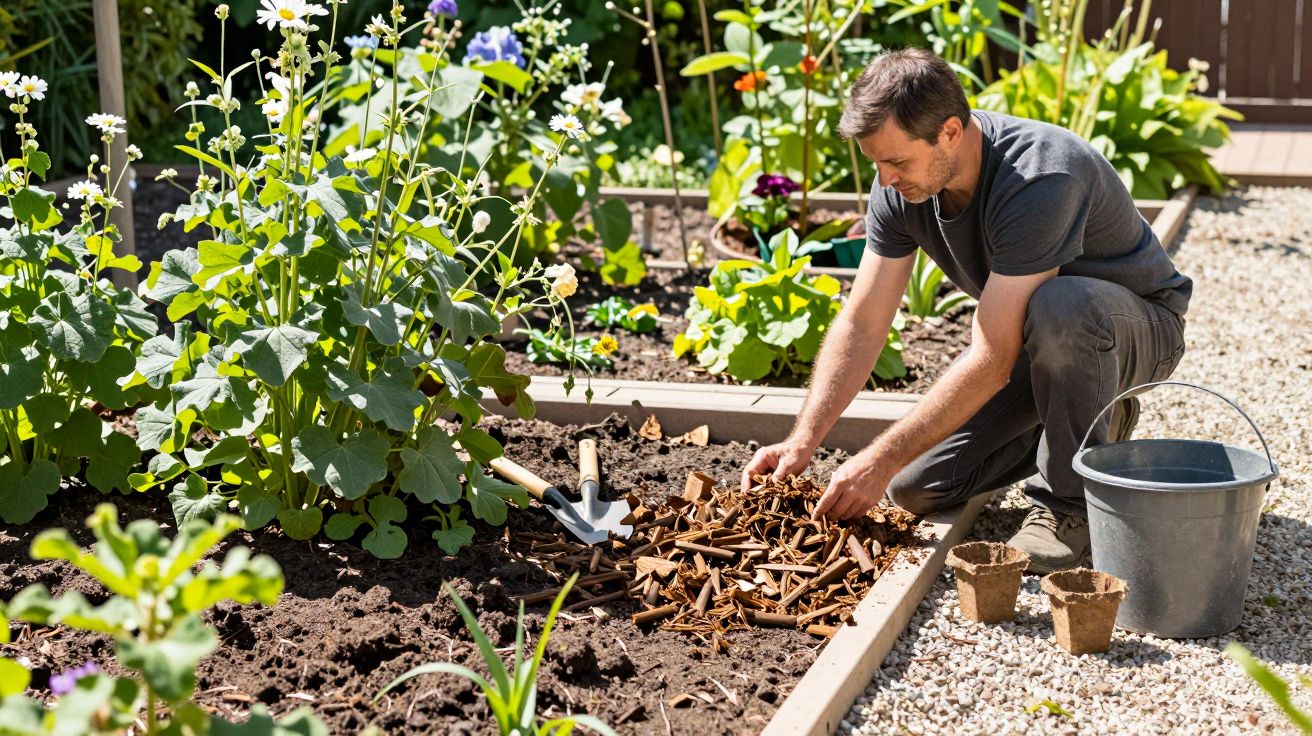
3) Mulch like you mean it
Mulch is the boring hero of climate-resilient gardens. It reduces evaporation, softens soil temperature swings, and cuts the weeding that makes people give up.
A 5–8 cm layer of composted bark or garden compost around established plants is often the difference between “always wilting” and “surprisingly fine”.
4) Build water into the design (not just the hose)
Resilience comes from how water moves and sits.
- Add a water butt to catch roof runoff.
- Use permeable paths (gravel, permeable paving) so rain goes into the ground.
- Create a shallow “rain garden” dip where water can collect briefly after storms.
Lawns can handle some rain, but compacted turf often sheds it. Planting beds, with improved soil, tend to absorb far more.
A quick example: the “70/30 garden” approach
Imagine a typical back garden that’s 70% lawn, 30% borders. Flip it.
Keep 30% as lawn (a defined rectangle or oval that’s easy to mow), and turn the other 70% into purposeful space: planting, paths, a seating area, a small tree for shade, maybe a gravel strip where the ground is always parched.
The result is strangely immediate. The garden looks fuller, less fussy, and more stable - because it’s not relying on one surface to carry the whole visual load.
If you do keep a lawn, make it the resilient kind
Sometimes you need grass. Fine. Just don’t set it up to fail.
- Raise the mowing height in summer. Longer blades shade the soil and cope better with heat.
- Feed the soil, not just the grass: top-dress with compost, aerate compacted areas.
- Accept seasonal colour: in dry spells, aim for “alive” rather than “green”.
- Consider alternatives for small lawns: fine fescues, low-input mixes, or even clover blends where appropriate.
A lawn that’s allowed to be slightly imperfect often becomes far more resilient than one forced into constant performance.
The real win: fewer inputs, more steadiness
The appeal of lawns is emotional as much as practical. A neat green plane says “sorted” when life feels messy. But in a changing climate, that plane can turn into a weekly negotiation with weather, time, and water.
Climate-resilient gardens trade a bit of uniformity for a lot of stability. They look intentional even when you miss a week. They absorb rain without drama. They stay cool enough to sit in. They keep going.
And that’s the quiet truth: sustainable landscaping isn’t about giving things up. It’s about building a garden that doesn’t demand heroics to remain a garden.
FAQ:
- Do I have to get rid of my lawn to make the garden climate-resilient? No. The most effective change is usually reducing the lawn to the area you genuinely use and designing the rest to cope with heat and heavy rain.
- What’s the fastest upgrade I can do this weekend? Mulch planting beds, raise your mowing height, and add a simple water butt if you can capture roof runoff.
- Will a lawn always need watering in summer? Not always, but large, high-performance lawns often do if you want them consistently green. A smaller, slightly taller-cut lawn can ride out dry spells much better.
- What should replace grass in a dry, sunny spot? Gravel with drought-tolerant planting, ground covers, and deeper-rooted perennials or shrubs tend to cope better than turf in relentless sun.
- Does replacing lawn mean more maintenance? Not necessarily. Once established, layered planting with mulch often reduces mowing, watering, and weeding compared with trying to keep a big lawn pristine.




Comments (0)
No comments yet. Be the first to comment!
Leave a Comment