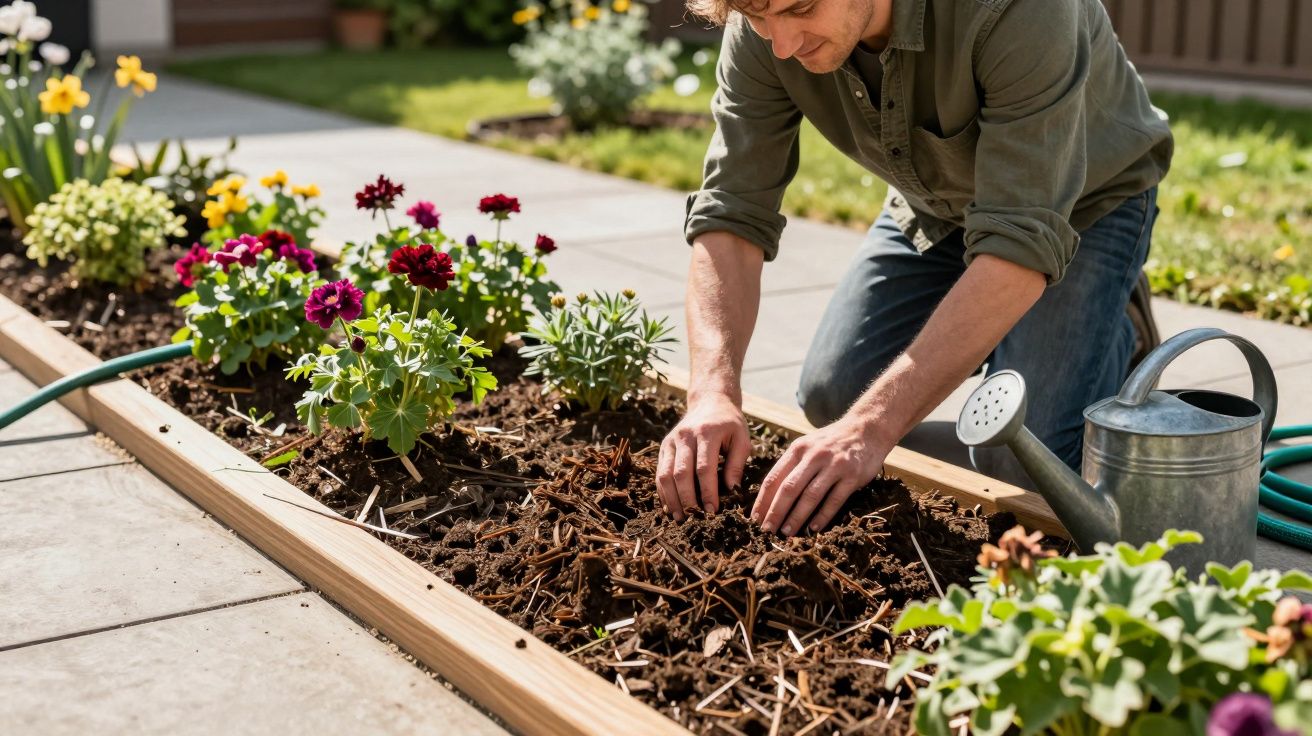
Low maintenance is sold as a promise: a garden that looks finished while you do nothing. In reality, low-maintenance landscapes only stay calm when they’re built on eco-friendly garden design principles - the sort that makes weeds, watering, pests, and seasonal chaos less likely in the first place. If you’re tired of spending weekends “catching up”, it matters because the right kind of low maintenance feels like less work and fewer compromises.
I learned the hard way that “easy” often means “fragile”. A thirsty lawn, fussy borders, and a patio full of pots can look tidy for a fortnight, then demand constant rescue. A sustainable garden does the opposite: it gets easier as it settles in.
The biggest myth: low maintenance isn’t no maintenance
The quiet truth is that every garden has needs. The question is whether those needs arrive as small, predictable habits or as panic jobs that eat whole Saturdays.
“Low maintenance” usually fails when the design fights the site: sun-loving plants in shade, thirsty planting in dry soil, bare ground that invites weeds, or a layout that makes every job awkward. Sustainable gardens reduce the frequency and stakes of intervention, rather than pretending intervention won’t happen.
The goal isn’t a garden that never changes. It’s a garden that doesn’t punish you for missing a week.
What actually makes a garden feel low maintenance
People often blame themselves - “I’m not a gardener” - when the real issue is the system. Low maintenance comes from a few boring, structural choices that keep paying you back.
1) Fewer plant “types”, more repetition
A border with thirty different species looks like a hobby. A border with five species repeated looks like a plan, and it’s easier to manage because each plant has similar needs and predictable behaviour.
Repetition also helps you spot problems early. When one clump looks off-colour or chewed, you notice it, and you fix it before it spreads.
2) Soil that holds water, but drains well
Sustainable low maintenance starts under your feet. Compost, leaf mould, and keeping soil covered does three unglamorous things:
- Reduces summer watering by improving moisture retention.
- Makes weeding easier because the soil stays friable.
- Supports healthier plants that shrug off pests and disease.
If your garden constantly needs feeding, it’s often because the soil food web is starving. Feed the soil and you stop chasing symptoms.
3) Ground cover that crowds out weeds (without taking over)
Bare soil is an invitation. In low-maintenance landscapes, you want living cover or a mulch layer nearly everywhere, especially between shrubs and perennials.
Good options depend on your site, but the principle is the same: choose plants that knit, not plants that sprint. If you’re relying on membrane and gravel, you’re often buying yourself a short-term tidy that turns into long-term weeding through stones.
4) Watering design: slow, targeted, and occasional
“Eco-friendly” doesn’t mean letting things die; it means matching planting to rainfall and using water well. Drip lines, soaker hoses, and watering basins around young shrubs reduce waste and reduce time because you stop spraying everywhere.
A low-maintenance garden is one where watering is a rare deep soak, not a daily ritual with a hose.
The plants that sell “low maintenance” (and the ones that actually deliver it)
There’s a difference between plants that tolerate neglect and plants that make neglect expensive later.
Reliable choices tend to share a few traits
They’re long-lived, not too thirsty once established, and they behave predictably. In many UK gardens that often means a mix of:
- Shrubs for structure: e.g., hebes, choisya, dogwood (picked for size, so you’re not forever pruning back mistakes).
- Tough perennials: e.g., geraniums (hardy types), nepeta, achillea, astrantia depending on moisture.
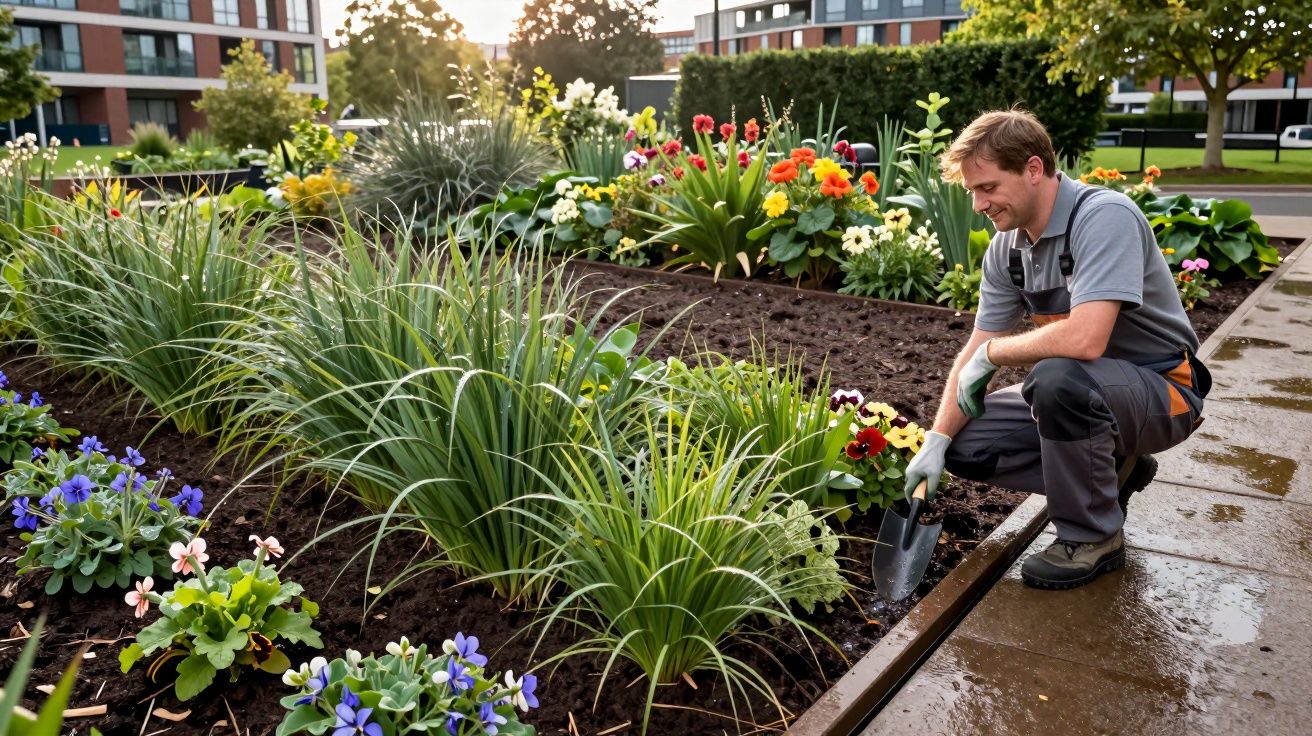
- Grasses and sedges: for movement without constant staking and deadheading.
- Bulbs woven through: for seasonal interest without extra bed space.
The trap is chasing “instant impact” with plants that need constant clipping, feeding, watering, or winter protection. If a plant only looks good when you micromanage it, it isn’t low maintenance - it’s just high maintenance on a timer.
A quick reality check before you buy
Ask two questions at the label and you’ll dodge most regret:
- What does it look like when it’s not perfect? (Some plants age gracefully; others collapse messily.)
- How big is it really, in five years? (Most “maintenance” is correcting spacing mistakes.)
“Low maintenance” work still exists - it just changes shape
Sustainable gardens don’t remove tasks; they swap frantic chores for calmer ones.
Here’s what tends to replace weekly tidying:
- Seasonal cut-back instead of constant deadheading.
- Top-dressing with compost instead of heavy feeding regimes.
- Occasional editing (dividing, moving, thinning) instead of ongoing rescue.
- Spot-weeding rather than war.
If that sounds like semantics, it isn’t. The workload becomes more predictable, and predictable is what makes a garden feel easy.
A simple way to design for low maintenance: reduce edges and decisions
Every edge is a job: lawn edges, fiddly curves, tiny beds, scattered pots. Every decision point is a job too: “Do I water this?”, “Does this need feeding?”, “What’s eating that?”
Low-maintenance landscapes often look calmer because they are calmer. Fewer materials, fewer micro-zones, fewer precious plants, and clearer access for the jobs you can’t avoid.
A useful rule is to design so that the most common tasks are the easiest to do:
- Paths wide enough for a barrow.
- Taps and water butts where you’ll actually use them.
- Planting deep enough that you can mulch properly.
- Borders shaped so you can strim or edge without gymnastics.
The sustainable “sweet spot”: establish well, then do less
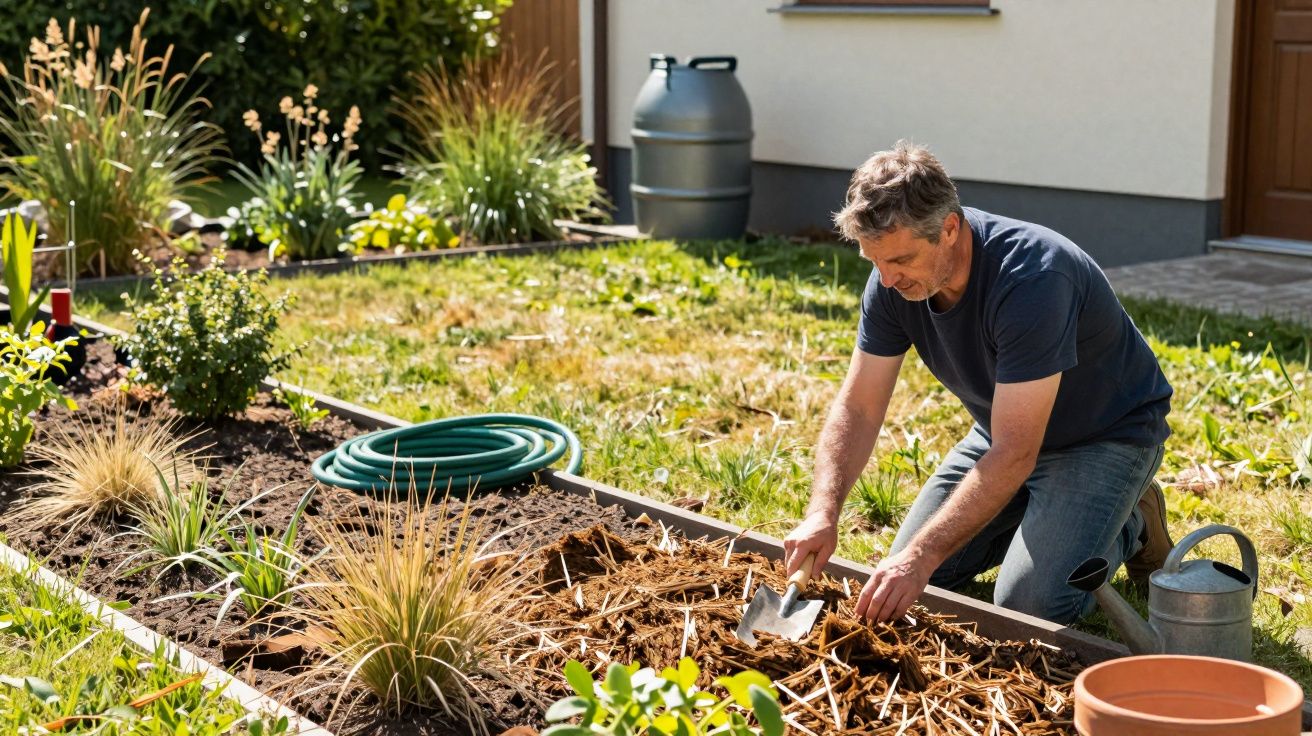
The paradox is that low maintenance starts with a little effort up front. The most eco-friendly gardens are often the ones that commit to establishment: watering deeply in year one, mulching properly, and resisting the urge to constantly replant.
After that, you let the system thicken. Plants shade the soil, roots improve structure, and your “maintenance” becomes more like steering than rowing.
The easiest gardens aren’t the ones with the fewest plants. They’re the ones where the plants do most of the work.
FAQ:
- Is gravel ever low maintenance? Sometimes, but only when it’s part of a complete system (solid edging, the right aggregate depth, and planting that shades gaps). Gravel without a living cover usually becomes a weed trap over time.
- Do I need to avoid lawns for a low-maintenance garden? Not necessarily. Smaller, well-shaped lawns with clear edges can be straightforward; large, thirsty lawns or fussy curves tend to increase work.
- What’s the most eco-friendly shortcut to “low maintenance”? Keep soil covered: a thick organic mulch or a well-chosen ground cover reduces watering, weeding, and soil stress in one move.



Comments (0)
No comments yet. Be the first to comment!
Leave a Comment