Sustainable landscaping is no longer a niche choice reserved for show gardens; it’s how many people now plan, plant and maintain outdoor spaces without wasting water, soil or money. In 2026, the same approach is being sharpened to build climate-resilient gardens that cope with hotter summers, intense downpours and longer dry spells. The shift matters because the “right” garden is increasingly the one that stays healthy with fewer inputs, not the one that looks perfect for a week.
A neighbour used to say their garden was “low maintenance” because it was mostly paving and a few pots. Then the heatwaves hit, the pots crisped, the paving amplified the temperature, and every rainstorm sent water rushing to the drain. The new version of low maintenance looks different: more shade, more sponge-like soil, and plants chosen for the weather you actually get.
The 2026 principles changing how gardens are designed
The big change is that eco landscaping has stopped being a list of nice-to-haves. It’s becoming a practical design brief: hold water when it pours, store moisture when it’s dry, and keep the garden cool enough to function.
These principles show up again and again in modern projects, from tiny terraces to new-build plots. The details differ, but the logic is the same: let nature do more of the work.
1) Design for water like it’s a budget
Gardeners used to talk about “drainage” as if water was a problem to get rid of. In 2026, the question is where the water goes, how slowly it moves, and how much of it you can keep on site without causing damp issues.
Start with the basics: observe where puddles sit, where the ground cracks, and which areas bake. Then choose one or two interventions that make the whole plot easier to manage.
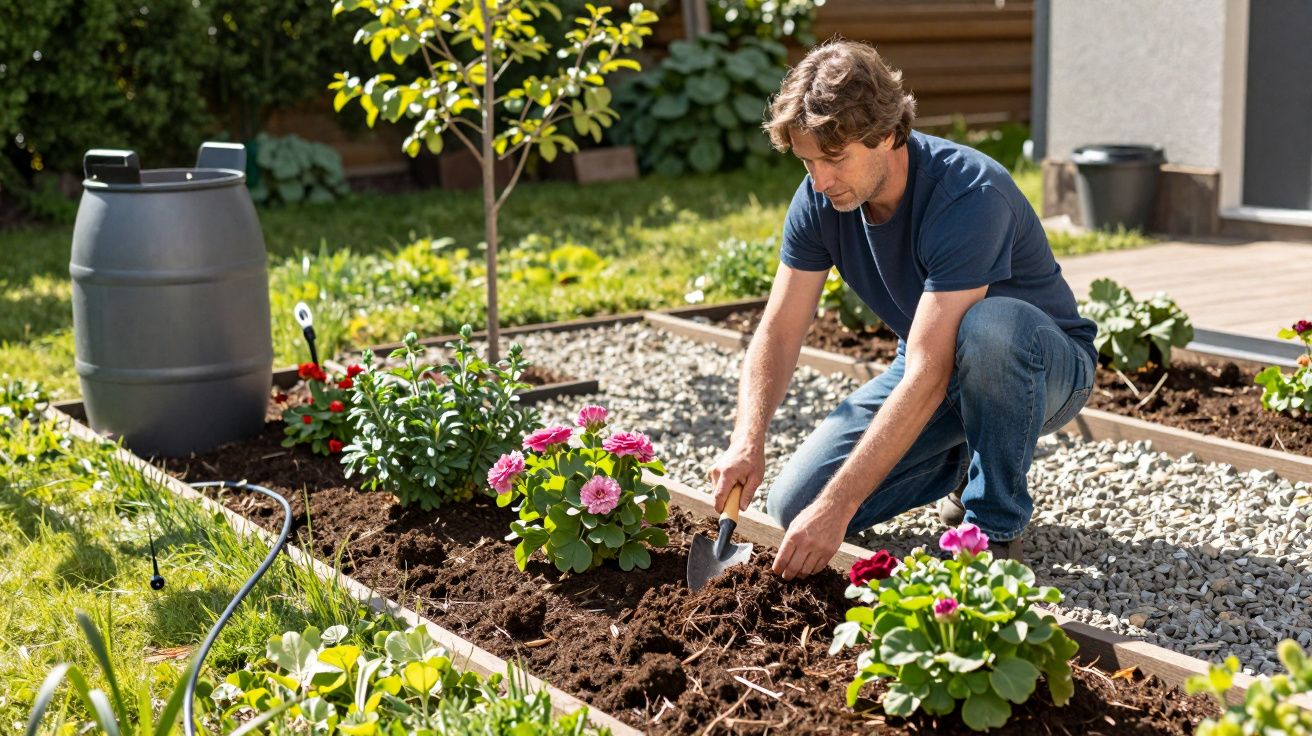
- Add rainwater storage sized to your habits (butts for hand-watering, larger tanks if you run irrigation).
- Swap some hard surfacing for permeable paths (gravel, resin-bound, permeable block systems).
- Use shallow swales or slight dips to guide water into planted areas rather than straight to a gulley.
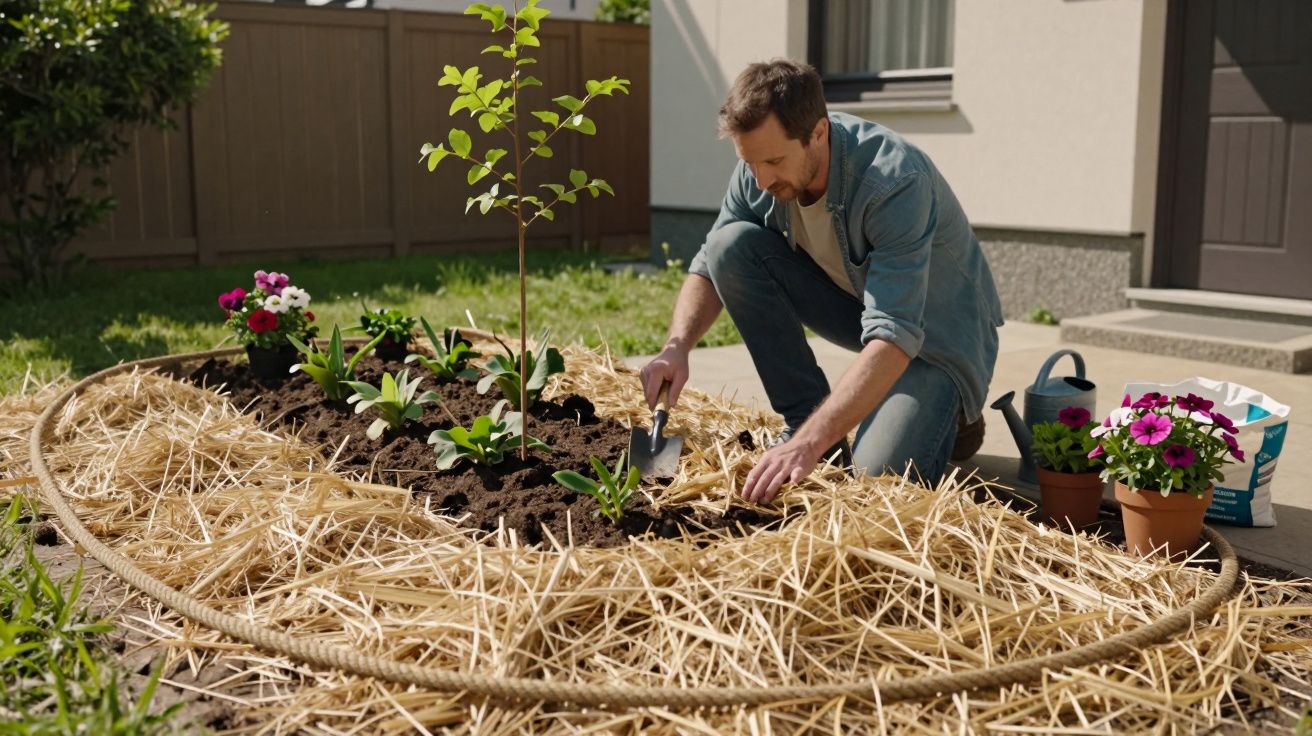
- Mulch soil to reduce evaporation and soften the impact of heavy rain.
The goal isn’t a “no watering” garden. It’s a garden where watering is occasional, targeted, and efficient.
2) Treat soil as living infrastructure
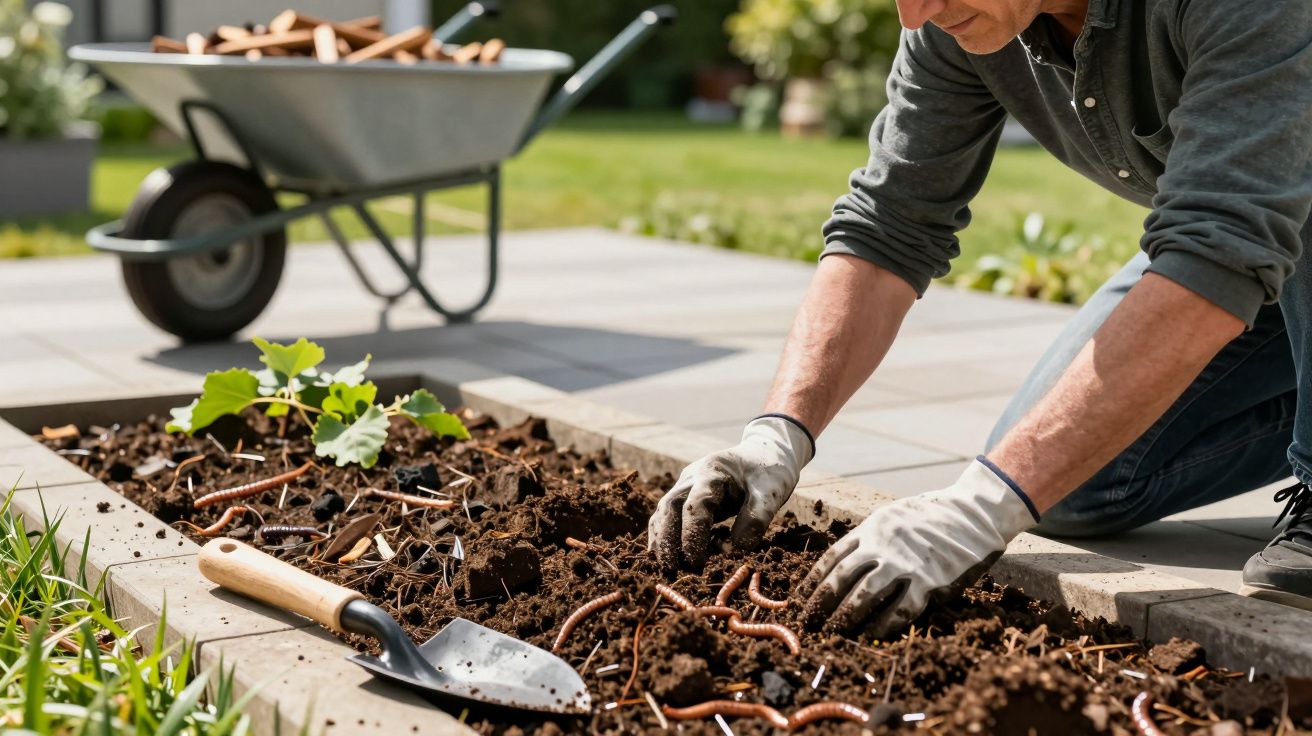
The quickest way to make a garden resilient is to stop treating soil like a backdrop. Healthy soil acts like a sponge: it absorbs rainfall, stores nutrients, and buffers plants through stress.
The 2026 trend is less digging, more feeding. People are moving away from constant turning and towards building structure from the top down, especially in borders and veg beds.
What actually helps (without overcomplicating it)
- Apply compost annually as a top-dressing rather than digging it in.
- Keep soil covered with plants or mulch to protect microbes and reduce erosion.
- Avoid walking on wet soil; compaction turns “free drainage” into puddling.
- Use leaf mould where possible: it improves water-holding without making soil heavy.
If you’ve inherited thin, tired soil, don’t panic. One season of consistent mulching often changes how the garden behaves in summer more than any expensive plant swap.
3) Plant for extremes, not averages
Climate-resilient gardens aren’t just “drought tolerant”. They need to handle swings: wet springs, sudden heat, windy spells, and winter saturation.
The plant palettes trending in 2026 are broader and more mixed. Instead of relying on a single fashionable look, designers are combining structural plants, deep-rooted perennials, and groundcovers that knit the soil together.
- Choose plants with different root depths, so they don’t all compete in the same layer.
- Prioritise proven performers in your microclimate (coastal wind, urban heat, frost pocket).
- Use groundcover to shade the soil and reduce weeding, especially under shrubs.
- Include some deciduous shade: summer cooling without blocking winter light.
A simple tell: if a border looks great only when watered on schedule, it’s not resilient yet. A resilient border looks “fine” even when you miss a week.
4) Reduce lawn dependence (without losing green space)
Lawns aren’t banned; they’re just being used differently. In 2026, the eco move is to keep lawn where it earns its keep (play, seating, pets) and replace the rest with planting that cools, feeds insects, and doesn’t need weekly cutting.
If you like the open feel of grass, you can still have it. The shift is toward smaller, better lawns and more edges, shade and texture around them.
Quick upgrades that make a lawn less thirsty
- Raise mowing height and mow less often in summer.
- Leave clippings (mulch mowing) to feed the soil.
- Edge lawns into planted borders to reduce the total area.
- Consider mixed “eco lawns” (grass + low flowers) where footfall is light.
5) Create shade and shelter as a design feature
Heat management is becoming a core part of sustainable landscaping. Shade isn’t only for comfort; it reduces evaporation, protects soil life, and stops plants from constantly being on the edge.
This is why you’ll see more layered planting: trees (where appropriate), tall shrubs, and climbers working together. Even small gardens can use pergolas, living screens, or a single multi-stem tree to change the microclimate.
A cool garden is usually a quiet garden: less wind scorch, fewer emergency waterings, fewer plants struggling.
6) Swap “tidy” for habitat-strategically
The 2026 approach is not to let everything grow wild. It’s to place “mess” where it performs: under hedges, behind borders, in corners that are hard to mow, and around water sources.
Small habitat decisions add up quickly:
- Leave seedheads over winter and cut back in spring.
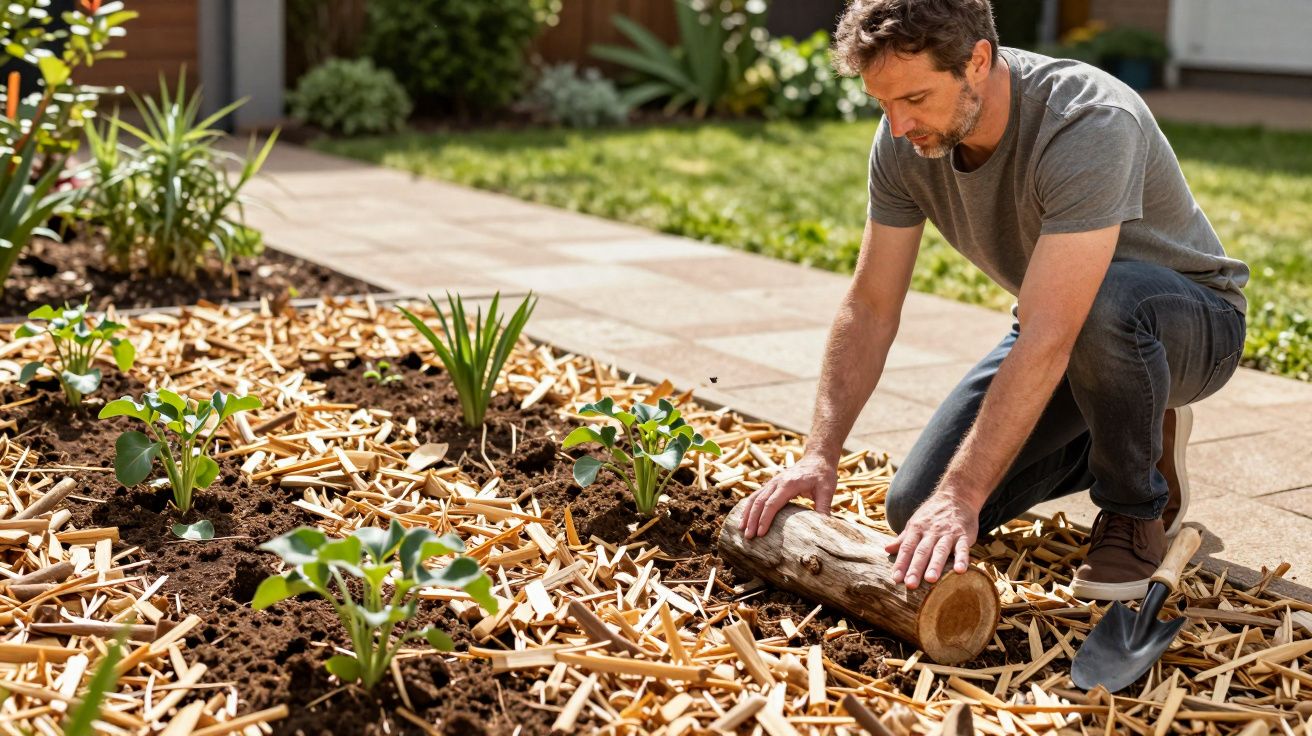
- Keep a log pile off the ground in a shady spot.
- Plant long-flowering species in clusters rather than one of everything.
- Reduce night lighting; if you need it, use motion sensors and warm tones.
The result is often a garden that looks more intentional, not less-because structure comes from paths, edges and repeat planting, not from constant clipping.
A practical 2026 blueprint for a typical back garden
If you want a simple way to apply the principles without redesigning everything, think in zones. Keep one “use” zone, one “cool” zone, and one “wild” zone.
- Use zone (near the house): permeable paving, pots grouped for easier watering, a small lawn or seating area.
- Cool zone (mid-garden): layered planting, one shade element (tree/pergola), thick mulch.
- Wild zone (back/edges): native hedge or mixed shrubs, log pile, long-season flowers, minimal mowing.
This layout helps in real life because it matches how you move through the space. It also concentrates effort where you benefit most, instead of spreading maintenance thinly everywhere.
The mistakes people are still making (and how to avoid them)
The common thread is chasing a look without building the basics. A garden can be full of “eco” plants and still fail if the soil is compacted and the water runs off the surface.
- Installing permeable materials without fixing sub-base compaction underneath.
- Choosing drought-tolerant plants, then planting them into dry, unmulched soil and expecting miracles.
- Removing all “weeds” in winter, then wondering why there are fewer pollinators in spring.
- Over-relying on irrigation instead of improving soil water storage.
A small change in method-mulching consistently, mowing higher, capturing rain-usually saves more time than a big one-off purchase.
FAQ:
- Is sustainable landscaping more expensive upfront? It can be if you add rainwater tanks or re-lay surfacing, but many of the core wins (mulch, compost, mowing changes, plant choices) cost less than a typical “makeover” and reduce ongoing bills.
- Do climate-resilient gardens mean only Mediterranean plants? No. The best results usually come from mixed planting tailored to your site: some drought-tolerant species, some moisture-tolerant ones, and enough structure and groundcover to protect soil.
- What’s the fastest change I can make for summer heat? Add shade and mulch. Even one small tree or pergola plus a 5–8 cm mulch layer can noticeably reduce stress and watering needs.
- Can I keep a lawn and still be eco? Yes. Keep it where you use it, raise the mowing height, feed the soil, and convert low-use edges to planting that supports insects and holds moisture.



Comments (0)
No comments yet. Be the first to comment!
Leave a Comment