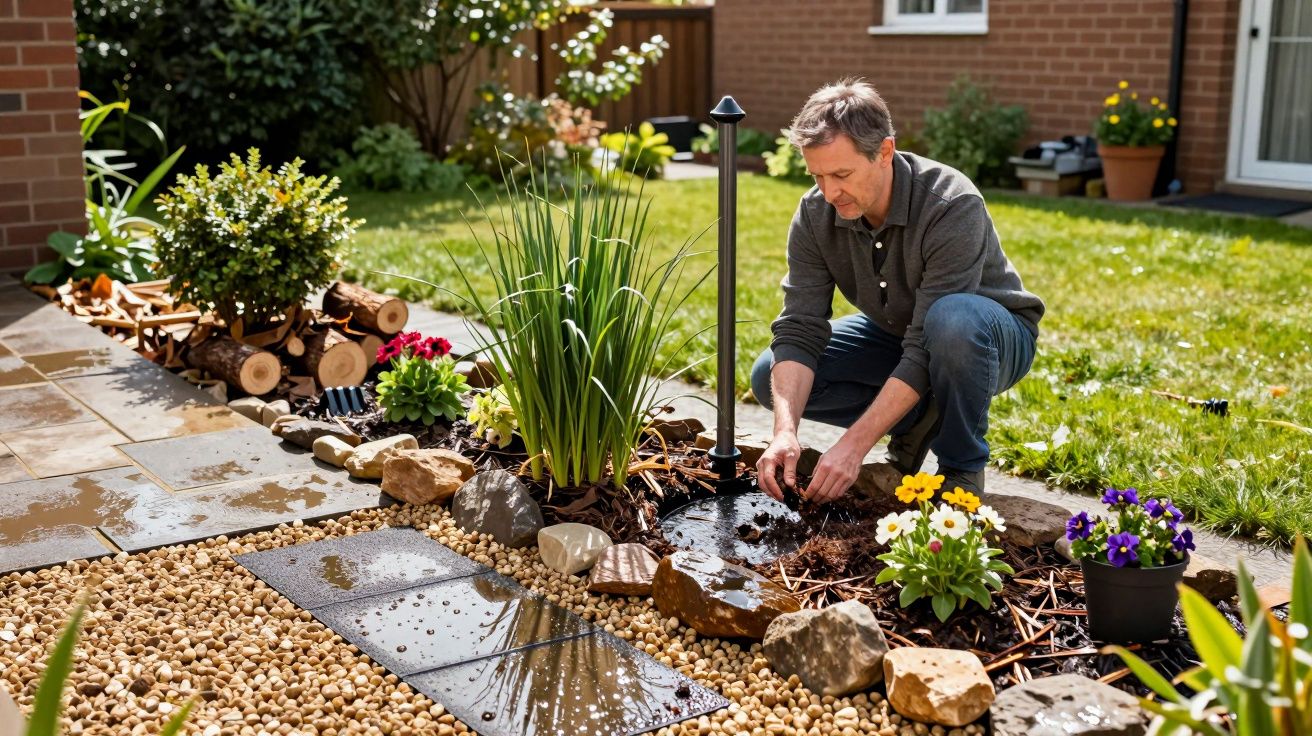
You can spot sustainable landscaping the moment you step into a UK front garden that feels calmer, cooler, and oddly alive underfoot. It’s showing up in urban greening projects too, where councils and community groups need planting that survives heat, heavy rain, and tight maintenance budgets. These choices matter because they cut water use, reduce flooding risk, and make everyday spaces kinder for wildlife without turning your plot into a “rewilded” muddle.
What’s changing isn’t taste so much as priorities. People still want colour and structure, but they also want soils that hold together, plants that don’t collapse in a dry spell, and features that do more than look good on day one.
The eco-garden shift: from neatness to resilience
The most sustainable gardens in Britain aren’t the wildest; they’re the ones that waste the least effort. They keep the ground covered, keep water moving where it should, and treat “mess” (leaf litter, dead stems, logs) as habitat and soil-making material rather than failure.
A useful rule of thumb is to design for the week you’re not there. If a choice only works when you’re watering daily, feeding weekly, and cutting back constantly, it’s probably not an eco choice-it’s a labour contract.
1) Permeable paving that lets rain do its job
Hard landscaping is where many gardens either help or harm their street. Swapping sealed surfaces for permeable ones is a quiet upgrade: rain filters down instead of rushing into drains, and puddles become less dramatic.
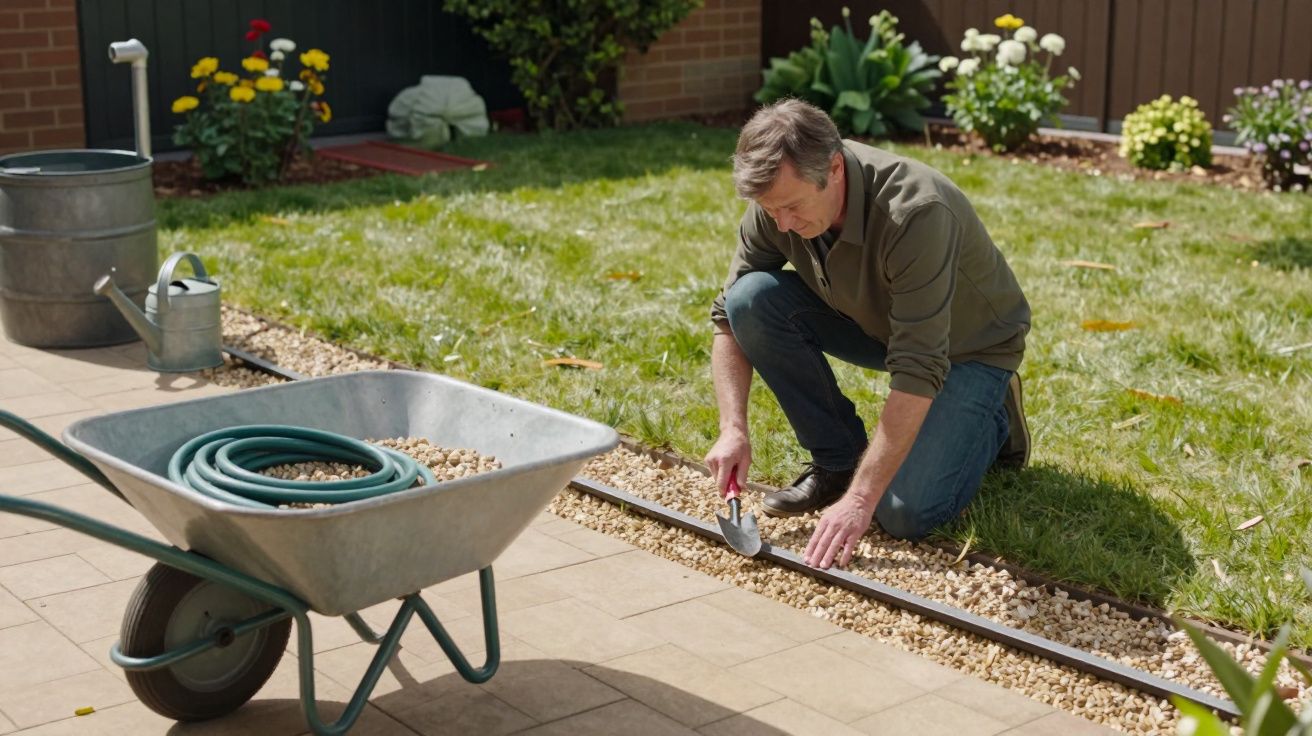
Options that work well in UK conditions: - Gravel over a stabilising grid (good for driveways, easier on tree roots). - Permeable block paving with a porous sub-base (tidier look, higher install cost). - Reinforced grass systems for occasional parking (best where cars aren’t daily).
The test is simple: if water can’t soak in, it will speed up and end up somewhere else’s problem.
2) Rain gardens and simple SuDS features
Rain gardens sound like a specialist feature, but at their core they’re just shallow basins planted with species that cope with both wet feet and dry spells. They’re increasingly common in urban greening projects because they scale: one curbside rain garden can take pressure off a whole stretch of road during cloudbursts.
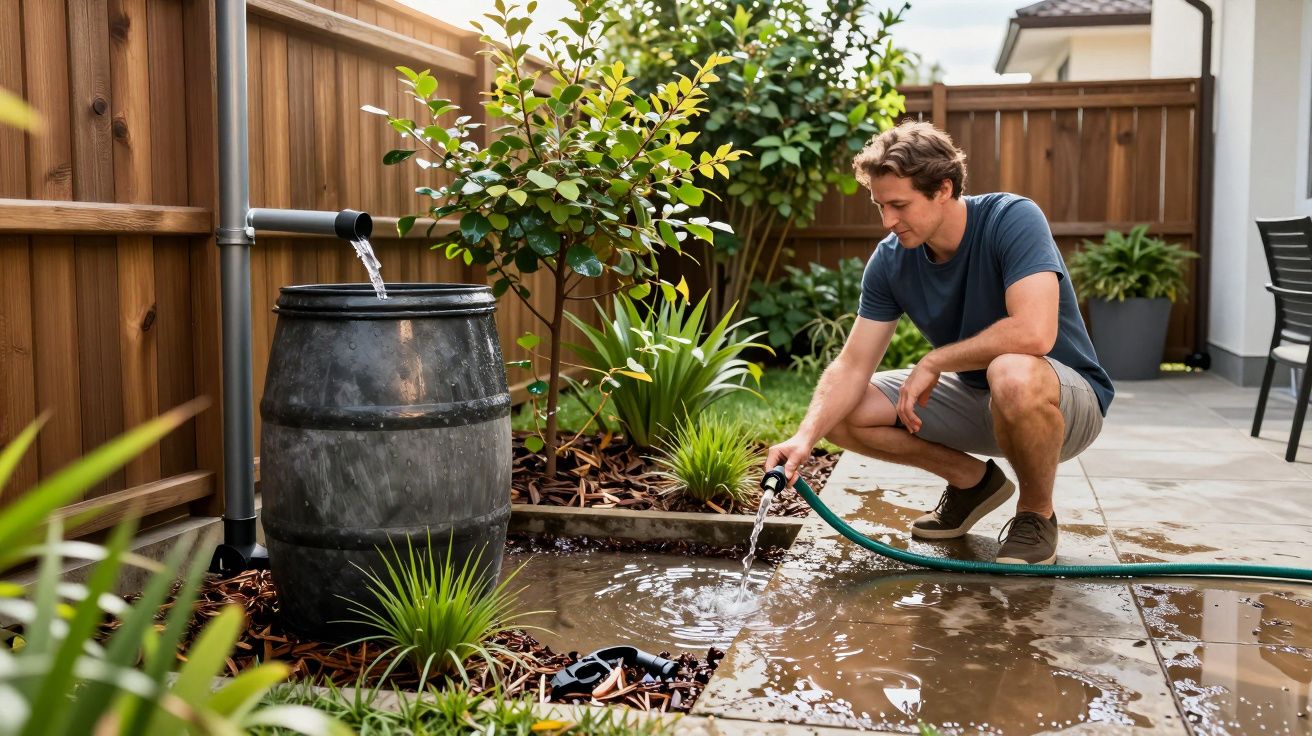
Keep it practical: - Site it where downpipes or hard surfaces naturally drain. - Use a gentle slope and an overflow route that won’t flood your house. - Plant in layers: tougher grasses/sedges at the wettest point, flowering perennials on the edges.
Plants that often suit UK rain-garden conditions
- Purple loosestrife, meadowsweet, marsh marigold (damp zones)
- Iris (some varieties), devil’s-bit scabious (middle)
- Yarrow, knapweed, geraniums (drier rim)
3) Native-and-near-native planting, with a longer flowering season
“Native” is sometimes treated like a moral badge. In reality it’s a toolkit: many UK insects and birds recognise native plants as food and shelter, and natives often fit local soils and weather patterns with fewer inputs. The smart twist is to combine natives with near-native or climate-ready species that extend nectar and seed through longer seasons.
Try designing by months, not by beds. If nothing flowers after July, pollinators go hungry just when their colonies need fuel.
A simple seasonal aim: - Early: snowdrops, hellebores, willow catkins - Mid: foxgloves, knapweed, daisies, herbs - Late: ivy flowers, sedum, asters, late scabious
4) “Leave the leaves” zones and deadwood habitats
The tidiest gardens often have the emptiest soils. Leaf litter feeds fungi, sheltering insects that feed birds, and it reduces evaporation like a natural mulch. Deadwood does something similar, but slower: it becomes a pantry and a nursery, not rubbish.
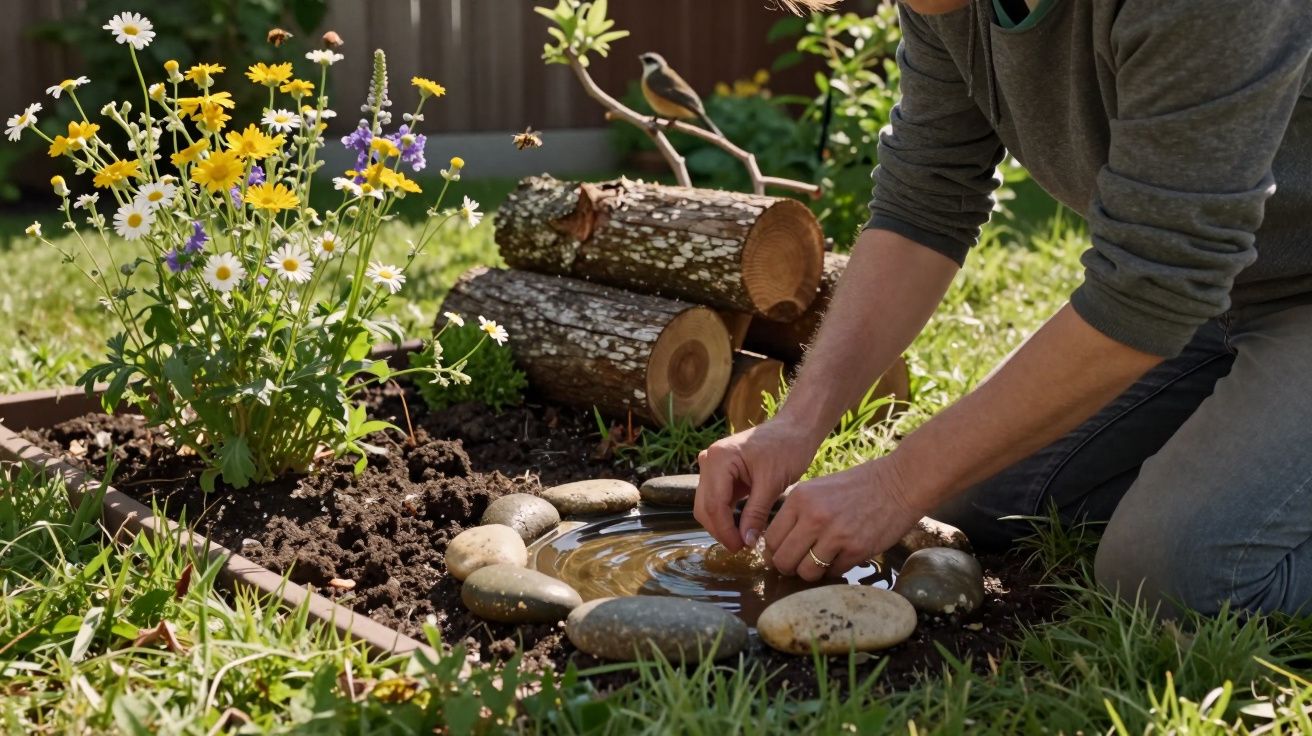
If you want the ecology without the chaos, make it deliberate: - Keep one “messy corner” behind a shed or under shrubs. - Stack logs in shade for beetles and fungi; stack some in sun for solitary bees. - Cut stems in late winter, not autumn, so hollow stems can host insects.
5) Water-wise design: shade, mulch, and fewer thirsty lawns
In much of the UK, the problem is less “no rain” than “rain at the wrong time”. Drier springs and hotter summers punish shallow-rooted planting and exposed soil. You can design your way out of constant watering by lowering evaporation and choosing plants that cope.
High-impact swaps: - Trade large lawn areas for mixed borders, groundcovers, and paths. - Use woody mulch under shrubs and trees; use leaf mould around perennials. - Add shade where you can: a small tree can change a whole microclimate.
If you keep a lawn, keep it smarter
- Raise the mower height in summer.
- Accept a brown spell; it often recovers.
- Overseed with drought-tolerant mixes rather than chasing a perfect carpet.
6) Peat-free growing, and fewer inputs overall
Peat-free compost has improved, but it still rewards better technique: don’t let pots dry out to dust, and don’t expect seedlings to thrive on neglect. The bigger eco win is stepping back from the idea that every plant needs constant feeding and perfect soil.
Think in systems: - Compost your own garden waste so nutrients cycle on-site. - Use slow-release organic matter (compost, leaf mould) rather than quick fixes. - Let some plants self-seed where they’re happy; it’s free resilience.
7) Small trees, hedges, and layered planting for cooler streets
A single tree in a front garden can cool a façade, soften noise, and create habitat-benefits that compound across a neighbourhood. In tighter plots, multi-stem trees and native hedges bring the same layered structure without blocking light like a dense fence.
Good structural choices for many UK gardens: - Hazel, crab apple, rowan (wildlife-friendly, manageable) - Amelanchier (reliable, good in small gardens) - Mixed hedge: hawthorn, field maple, holly, dog rose (varied shelter and food)
In towns, this becomes part of a wider pattern: gardens, verges, pocket parks, and school grounds acting as one connected network rather than isolated patches.
Quick guide: match the eco choice to the problem you’re solving
| If your garden struggles with… | Best eco upgrade | Why it works |
|---|---|---|
| Surface water and puddling | Permeable paving + rain garden | Slows and stores runoff |
| Summer scorch and constant watering | Mulch + shade + tougher planting | Reduces evaporation, improves soil |
| Low wildlife activity | Native layering + deadwood/litter zones | Adds food and shelter year-round |
A simple way to start (without redoing everything)
Pick one “infrastructure” change and one “habitat” change. Infrastructure is water and surfaces; habitat is soil cover and planting.
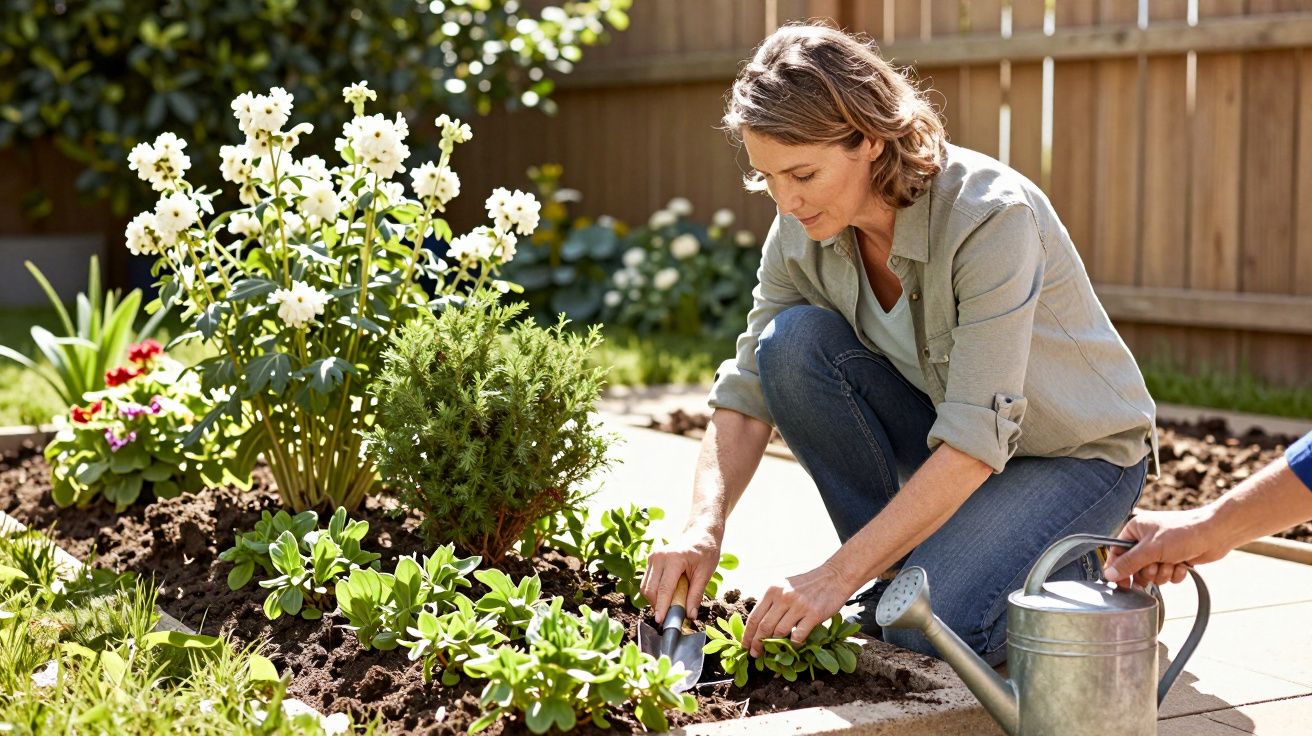
- This month: add a leaf-mould or woodchip mulch ring under shrubs.
- Next season: replace one sealed area with permeable gravel or a planted strip.
- By next year: add a small tree or hedge section to create height and shade.
Small moves compound. The garden gets easier, not harder, as it matures.
FAQ:
- Do eco gardens have to look wild and untidy? No. You can keep strong edges and clear paths while letting leaf litter, seedheads, and deadwood exist in designated places.
- Is permeable paving worth it in a small garden? Yes, especially on drives and patios. Even a few square metres that soak water reduces runoff and helps nearby planting.
- Are rain gardens only for big plots? Not at all. A modest basin linked to a downpipe can handle a surprising amount of water if it has an overflow route.
- What’s the easiest wildlife win with the least effort? Stop over-clearing: leave some leaves, delay hard cut-backs until late winter, and keep one small log pile.
- Does peat-free compost actually work? Yes, but it rewards steady moisture and good mulching. Pair it with leaf mould or homemade compost to improve texture and water holding.


Comments (0)
No comments yet. Be the first to comment!
Leave a Comment