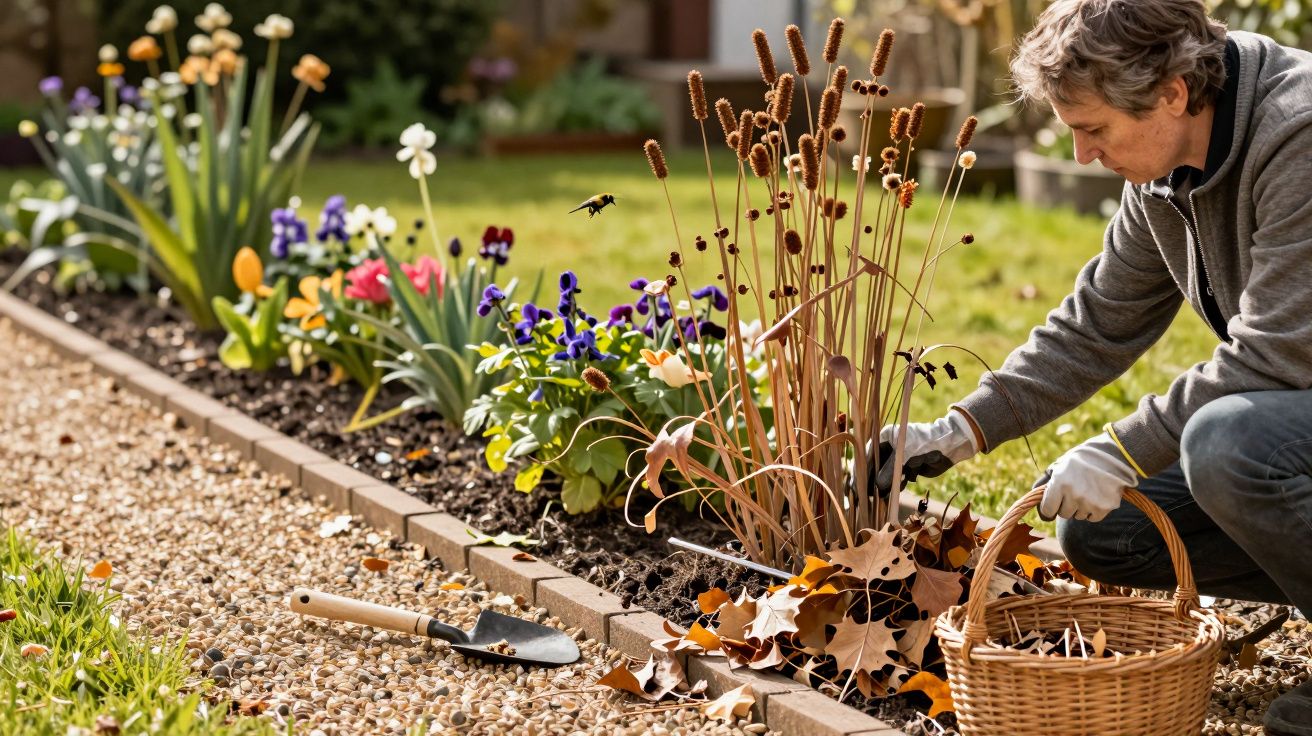
The complaint usually starts at the fence line. You’ve got native plants in the front garden, and you’ve been trying to do the “right” thing with landscaping guided by biodiversity, but the borders look a bit… scruffy. Stems lean, seedheads go brown, leaves fall where they land, and the whole thing refuses to sit neatly in rows like a catalogue spread.
You notice it most in late summer and again in winter, when the rest of the street looks clipped and controlled. Your patch looks like it’s taking its time. And quietly, that “untidy” choice is doing more work than a perfect lawn ever will.
The messy bit most gardens are missing
Wildlife doesn’t need a grand rewilding project. It needs micro-habitats: somewhere to hide, somewhere to feed, somewhere to breed, and somewhere to survive a hard week of weather.
A tidy garden removes those places by accident. When you deadhead everything, cut everything back to stubs, sweep every leaf and clear every hollow stem, you delete the little structures insects and birds rely on. You end up with a garden that looks finished, but functions like a waiting room.
The “untidy” planting choice is simply this: leave structure in place. Let some native plants stand, seed, flop and fade naturally, and don’t treat every brown bit like a failure.
Why “untidy” native plants help biodiversity (without you doing more)
This isn’t about letting the whole garden go feral. It’s about keeping the useful mess.
- Seedheads become food for finches and sparrows when winter is lean.
- Hollow stems become nesting tubes for solitary bees and other beneficial insects.
- Leaf litter becomes a nursery for beetles, moth pupae and the things birds feed their chicks.
- A rough canopy and mixed heights give cover from cats and harsh weather.
- Longer flowering windows happen when plants self-seed and shuffle around slightly each year.
In other words: the “untidy” bits are not waste. They’re infrastructure.
Keep a little structure, and the garden stops being decoration and starts being habitat.
The one shift that makes it work: plant for life-cycles, not just looks
A border designed only for neatness peaks for a few weeks and then begs to be “cleared up”. A border designed around landscaping guided by biodiversity holds value across seasons, including the unfashionable ones.
A simple way to think about it is to aim for three layers:
- Flowers for pollinators (spring to late summer)
- Seed and shelter for autumn and winter
- Low disturbance in spring while insects emerge and birds nest
Native plants make this easier because local wildlife already knows what to do with them. They’ve evolved together, like a lock and key you don’t have to force.
What “untidy” actually looks like (so it doesn’t look like neglect)
Most people aren’t afraid of wildlife. They’re afraid of looking like they’ve given up.
The trick is to keep a few “signals of care” while you leave habitat in place:
- Mow or edge a clear path through longer growth.
- Keep one area clipped and one area looser (even a 70/30 split works).
- Add a simple border edge-brick, timber, or a crisp line of gravel.
- Leave seedheads standing, but remove truly rotten, collapsed mush that smothers everything.
That combination reads as intentional. You can have the ecological value without the raised eyebrows.
A quick shortlist of native plants that do the most with the least fuss
You don’t need a rare meadow mix. Start with reliable native plants that provide nectar, seed, and structure.
- Oxeye daisy and field scabious for long pollinator value
- Red campion for shade and early season colour
- Yarrow for tough, drought-leaning spots and flat landing pads for insects
- Bird’s-foot trefoil (brilliant in poor soil) for bees and butterflies
- Hawthorn or blackthorn (if you’ve got room) for blossom, shelter, and berries
If you already have native plants, the “upgrade” may be nothing more than changing how you cut back.
The timing rule that saves most of the biodiversity
A common gardening rhythm is the big tidy-up in autumn. It feels satisfying: everything cleared, bare soil showing, winter “sorted”.
For biodiversity, autumn is when you remove the pantry and demolish the hotel in the same afternoon.
Try this instead:
- Autumn: leave stems and seedheads; only remove what blocks paths or goes slimy.
- Winter: let leaf litter sit under shrubs and in borders (move it, don’t bin it).
- Spring: wait until consistent mild weather before cutting back (many gardeners use a “late April” mindset, but your local temperatures matter more than the calendar).
You’ll still get a clean reset. You just delay it until the garden’s smallest residents have actually used what you left for them.
If you only do one thing this week
Pick one corner-half a square metre is enough-and make it your “leave it” patch. Let seedheads stand, let leaves settle, and don’t disturb it until spring. You can always expand later, once you notice who turns up.
It’s a quiet kind of satisfaction. You look out on what seems like a slightly scruffy border, and realise it’s not unfinished at all. It’s busy.
| Small change | What you leave | Who it helps |
|---|---|---|
| Keep seedheads | Standing stems through winter | Finches, sparrows, insects |
| Keep leaf litter | Leaves under shrubs/borders | Beetles, moths, frogs/toads |
| Delay cut-back | Stems until spring warmth | Solitary bees, ladybirds |
FAQ:
- Do native plants always look messy? No. Many can be managed neatly; the biodiversity boost comes from leaving some structure (seedheads, stems, leaf litter) rather than forcing everything into a constant “freshly tidied” state.
- Will leaving stems attract pests? A balanced garden tends to attract predators too (birds, ground beetles, lacewings). Avoid leaving piles of soft, rotting material tight against the house, but a border full of standing stems is generally a net positive.
- What if neighbours complain it looks neglected? Keep clear edges, a mown strip, or a path. One deliberate “tidy” element makes the wilder area read as a choice rather than a lapse.
- Can I do this in a small garden or just pots? Yes. Even a few native plants in containers, plus a small “leave it” patch (or a corner under a shrub), provides food and shelter in an otherwise tidy space.
- When is the safest time to cut everything back? When the weather has warmed and insect activity is clearly underway. If you’re unsure, cut in stages and leave some stems standing until later in spring.





Comments (0)
No comments yet. Be the first to comment!
Leave a Comment