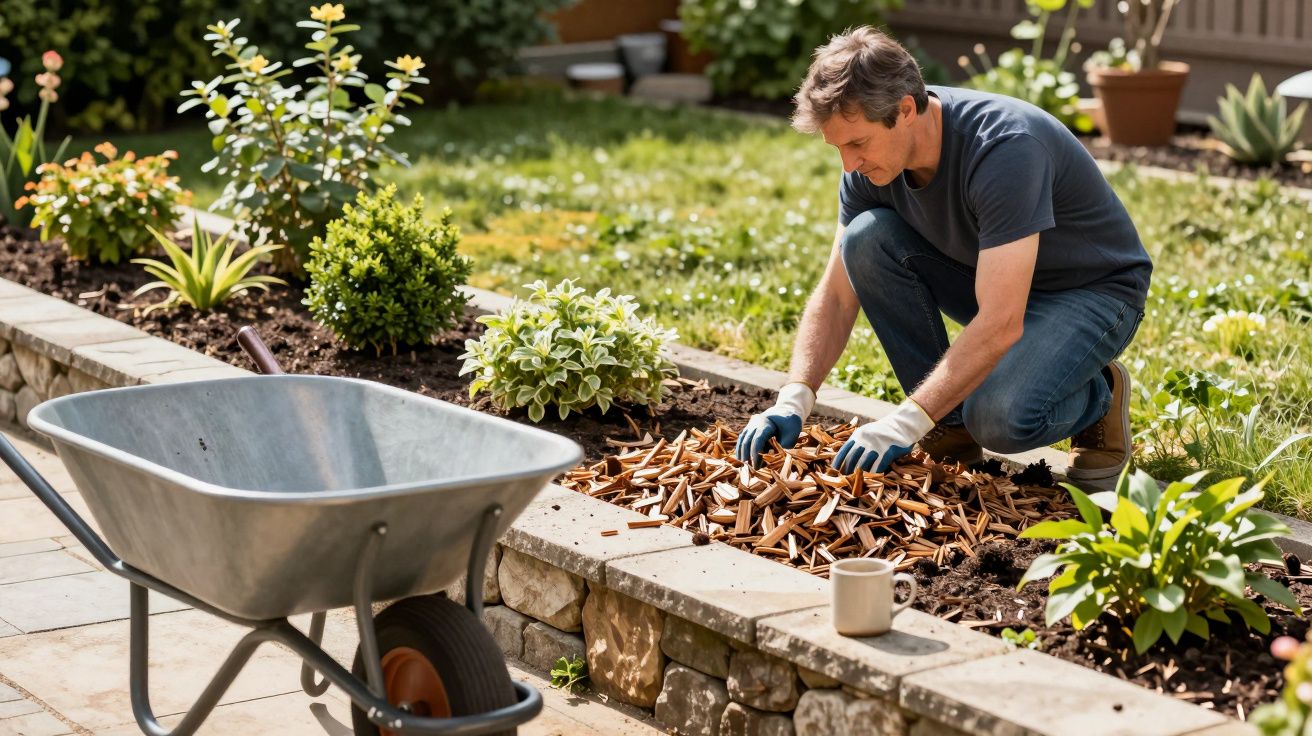
It usually starts with a weekend plan and ends with a wheelbarrow of jobs. Sustainable landscaping offers a different bargain: design your plot so it settles into balance, and the garden asks less of you each season. For people building low-maintenance gardens, the most reliable “set it and forget it” move is swapping fragile, thirsty planting for a living ground layer that does the work in your absence.
I first noticed it on a street where every front garden looked newly “done” each spring, then tired by August. One house didn’t follow the cycle. The borders looked calm, the soil stayed covered, and the owner’s only visible tool was a mug.
The choice that keeps paying you back: cover the soil, then stop fighting it
The intervention-heavy garden is usually the same story in different outfits: bare soil, hungry plants, and a constant need to correct. We dig, we weed, we water, we feed - and we act surprised when nature returns the favour with more growth than we asked for.
A soil-covering approach flips the rhythm. Instead of treating the ground as an empty stage, you keep it dressed: with mulch, dense planting, or groundcover that stitches gaps together. It looks like a style choice. In practice, it’s a workload choice.
Once the soil is shaded and protected, three things change at once: moisture stays put, weeds struggle to germinate, and temperature swings soften. That’s the “reduces intervention year after year” part - the garden becomes less reactive, and so do you.
Why bare soil is the real maintenance trap
Leaving soil exposed is like leaving a fridge door ajar. Everything costs more to keep stable. Sun and wind pull moisture out fast, and the surface crusts or compacts, which makes watering less effective the next time you try to fix the problem.
Bare soil is also an invitation. Weed seeds don’t need much - a bit of light, a bit of warmth, and a gap no one has claimed. When you hoe them out, you often bring more dormant seeds to the surface, resetting the game.
Covering the soil doesn’t mean smothering life. It means replacing an endless cycle of correction with a simple baseline: the ground is always protected by something other than your future labour.
Mulch versus “living mulch”: two routes, one principle
There are two common ways to keep the ground covered, and both work. The best option depends on how quickly you want results, how tidy you like things to look, and how much you enjoy editing plants.
1) Organic mulch (fast relief, minimal planning)
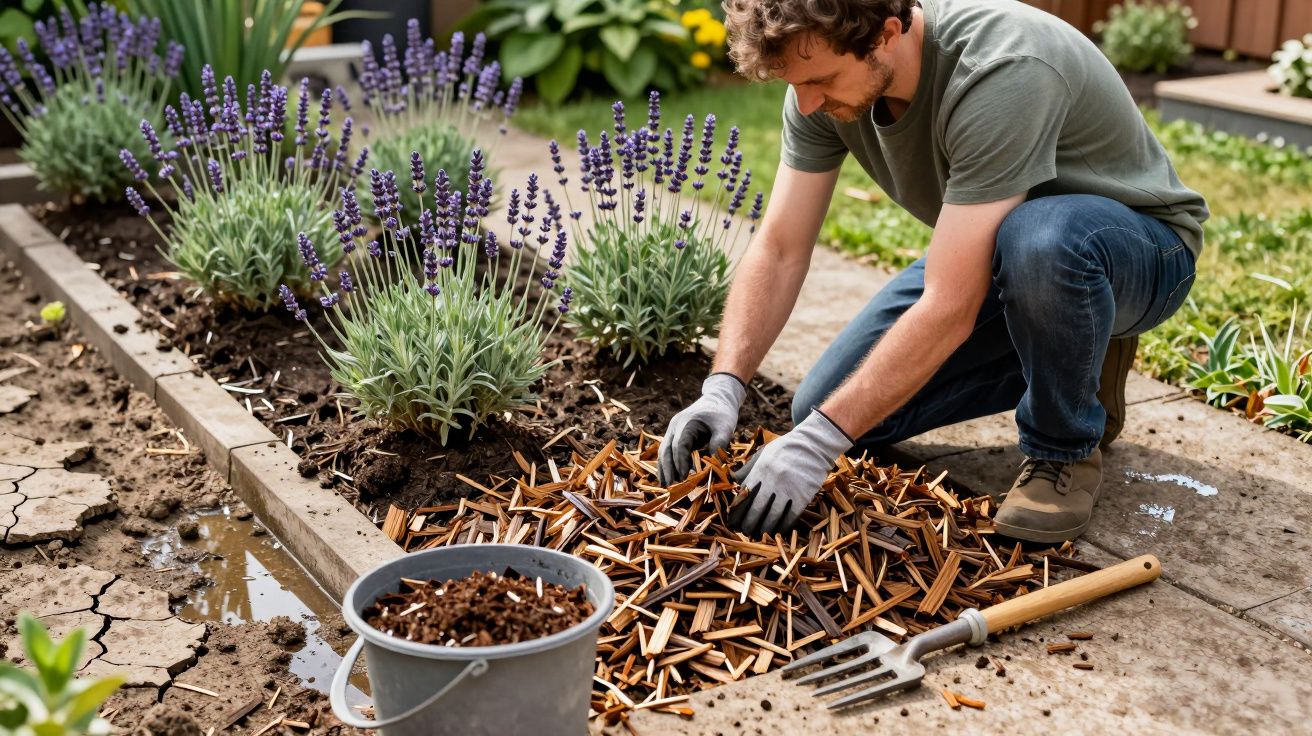
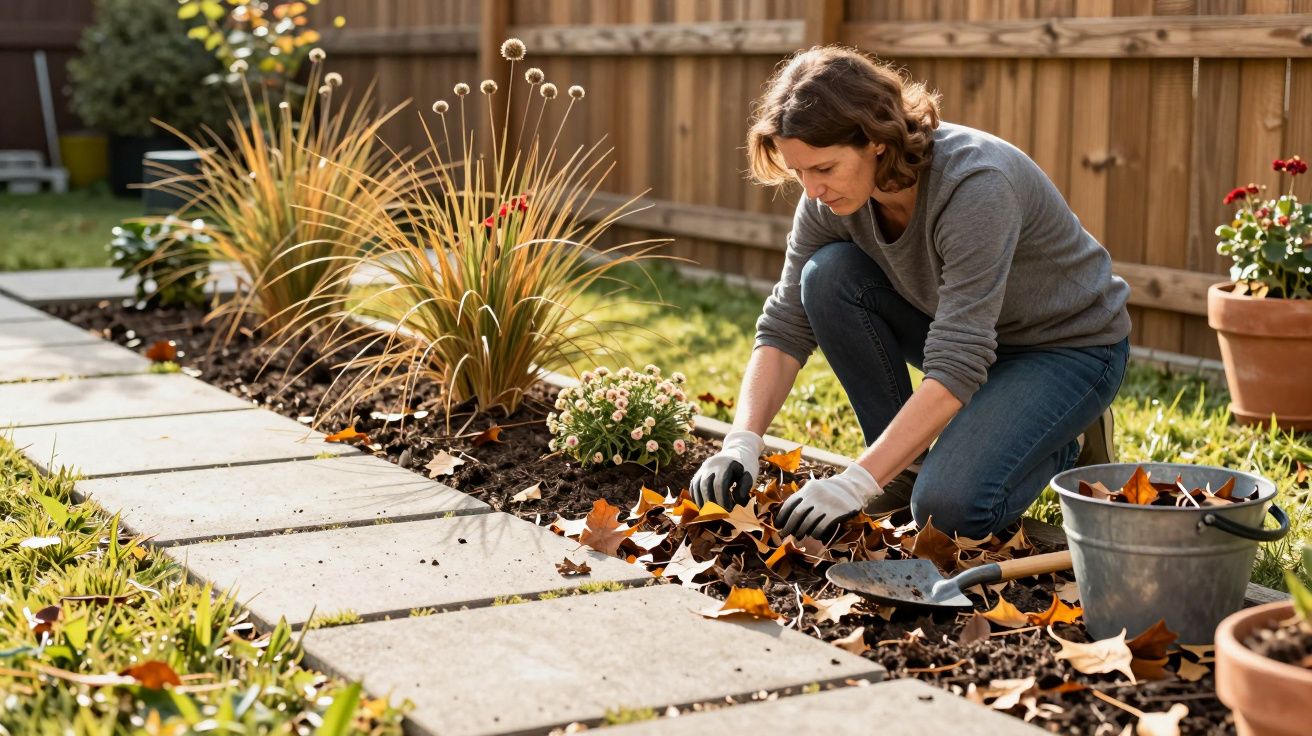
A layer of woodchip, leaf mould, composted bark, or well-rotted compost acts like a physical umbrella. It blocks light to weed seedlings and slows evaporation, while feeding soil life as it breaks down.
- Best for: new beds, newly planted shrubs, areas you want to stabilise quickly
- Watch for: topping up yearly (though less as the garden knits together), keeping mulch off plant crowns, and avoiding piling against stems
2) Groundcover planting (slower start, less work later)
Dense, low plants do the same job as mulch, but they’re self-renewing. They shade the soil in summer, soften heavy rain impact, and knit the surface so weeds struggle to land and take hold.
- Best for: borders you want to “close” over time, slopes where mulch can wash, and gardens aiming for wildlife value
- Watch for: choosing the right plant for the right place - groundcover fails when it’s treated as a universal solution
The maintenance trick is not magic species. It’s continuity: fewer gaps, fewer emergencies.
The quiet mechanics: how soil cover reduces jobs over time
A covered bed changes what you have to do, and when. You still garden, but the tasks stop arriving as panicked corrections.
- Watering: moisture loss drops because the sun isn’t hitting bare ground all day
- Weeding: the “seedling carpet” thins out, and what does appear is easier to pull from softer, cooler soil
- Feeding: organic mulch breaks down into a slow, steady supply, rather than feast-and-famine fertilising
- Soil structure: worms and microbes do more of the digging than you do, especially when you stop turning everything over
This is also where the year-after-year payoff shows up. In year one you’re setting the system. In year two you’re mostly maintaining the cover. By year three, you’re choosing improvements rather than chasing problems.
A practical template for low-maintenance gardens
If you want an approach you can apply without redesigning the whole plot, start with one bed and treat it as a trial. The goal isn’t perfection; it’s reducing exposed soil to near zero.
Step-by-step (one weekend, then lighter touch)
- Remove obvious perennial weeds (bindweed, ground elder, bramble roots). Be thorough here; it’s the only “hard” part.
- Add organic matter (a thin compost layer is enough) and water the soil if it’s dry.
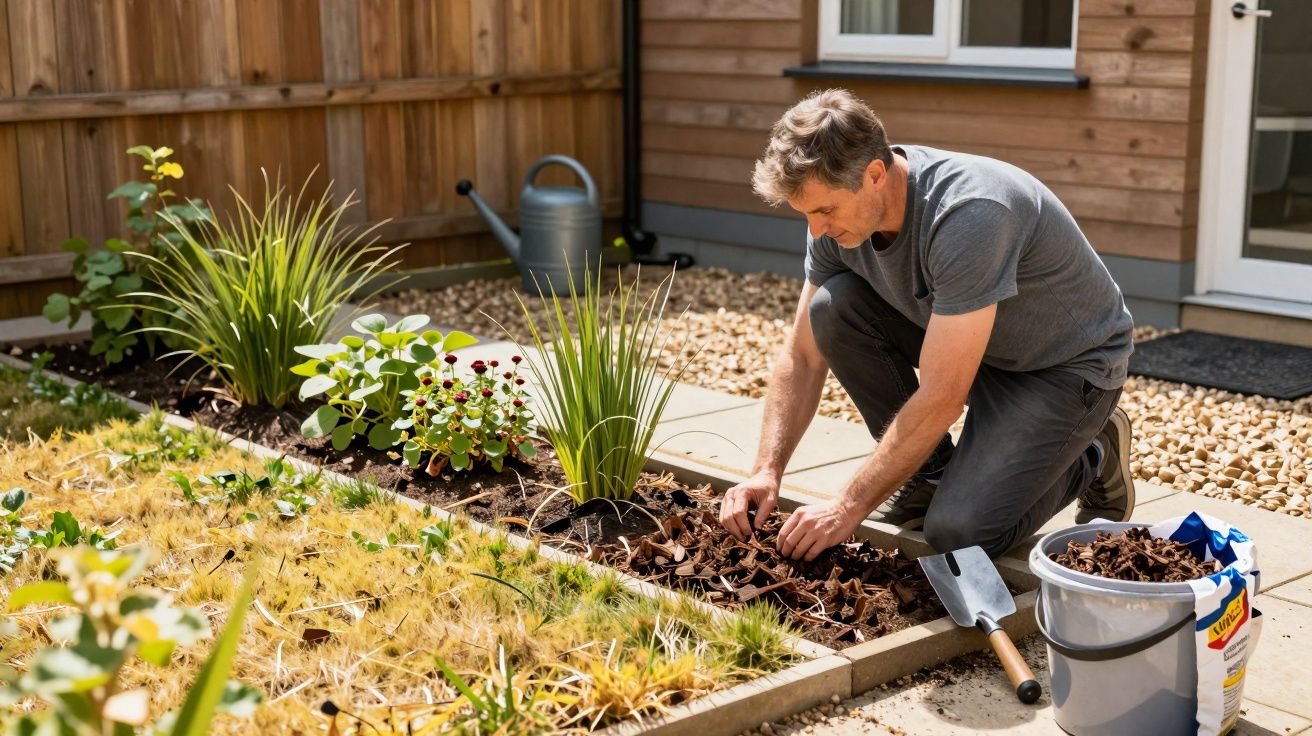
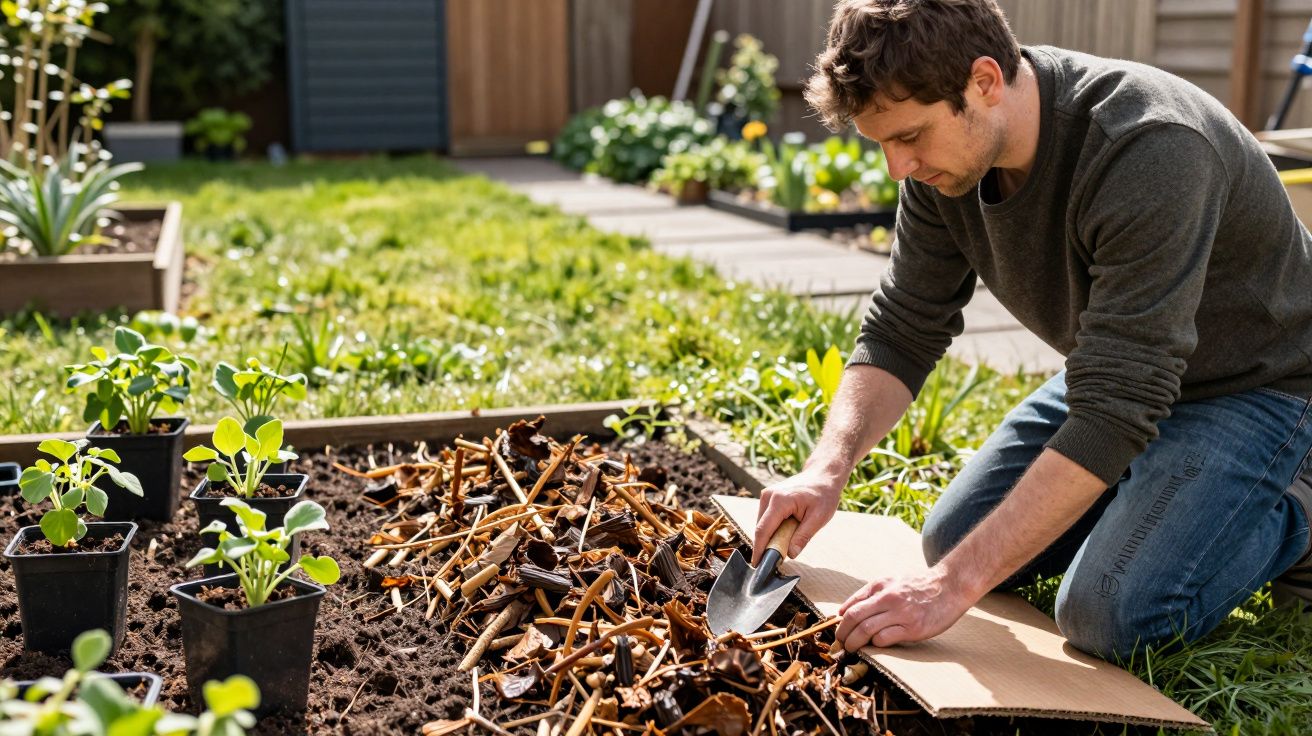
- Choose your cover: either mulch at 5–8cm, or plant groundcover at sensible spacing, then mulch between plants.
- Edge the bed clearly so it looks intentional - crisp edges buy you patience while things knit together.
- Review in six weeks: pull any weeds that sneak through before they seed, and patch any gaps.
A small bed handled this way often convinces people faster than any before-and-after photos. The difference is felt in July, not just seen in April.
Picking groundcovers without creating new work
Groundcover becomes “maintenance” when it’s mismatched: sun lovers in shade, thirsty plants in dry soil, or vigorous spreaders in a small border with delicate neighbours. Choose for conditions first, aesthetics second.
A simple decision guide helps:
| Situation | What to look for | What to avoid |
|---|---|---|
| Dry, sunny borders | drought-tolerant, low, dense growers | anything that sulks without weekly watering |
| Shade under shrubs | shade-tolerant, good leaf cover | plants that need full sun to thicken up |
| Slopes or banks | fibrous roots, quick coverage | loose mulch-only solutions in heavy rain areas |
If you’re unsure, mix approaches: plant groundcover in clusters and keep mulch between them until they meet. That transition period is where most people give up; plan for it and it becomes just another season.
The one mistake that keeps gardens intervention-heavy
Many gardens fail at “low maintenance” for a simple reason: they’re designed around bare gaps. Space looks tidy on day one, but it’s debt. Nature will fill it, and if you don’t decide what fills it, weeds will.
So don’t aim for emptiness. Aim for coverage.
A garden that’s always covered - with plants, with mulch, with a living layer - asks for editing, not rescuing. That’s the kind of work you can fit into real life, and keep doing for years without burning out.
FAQ:
- Is mulching just hiding weeds? No. A proper layer blocks light to new seedlings and improves soil structure, but you still need to remove tough perennial weeds first.
- Which is better: mulch or groundcover? Mulch gives fast results and is easy to adjust; groundcover takes longer but reduces yearly top-ups. Many low-maintenance gardens use both.
- Will groundcover take over my border? It can if you pick overly vigorous plants for a small space. Choose varieties suited to your conditions and be ready to edge or thin once or twice a year.
- Do I need weed membrane? Usually not. Membranes can trap debris that turns into soil on top, allowing weeds to root anyway, and they reduce the soil’s ability to breathe and improve over time.

Comments (0)
No comments yet. Be the first to comment!
Leave a Comment