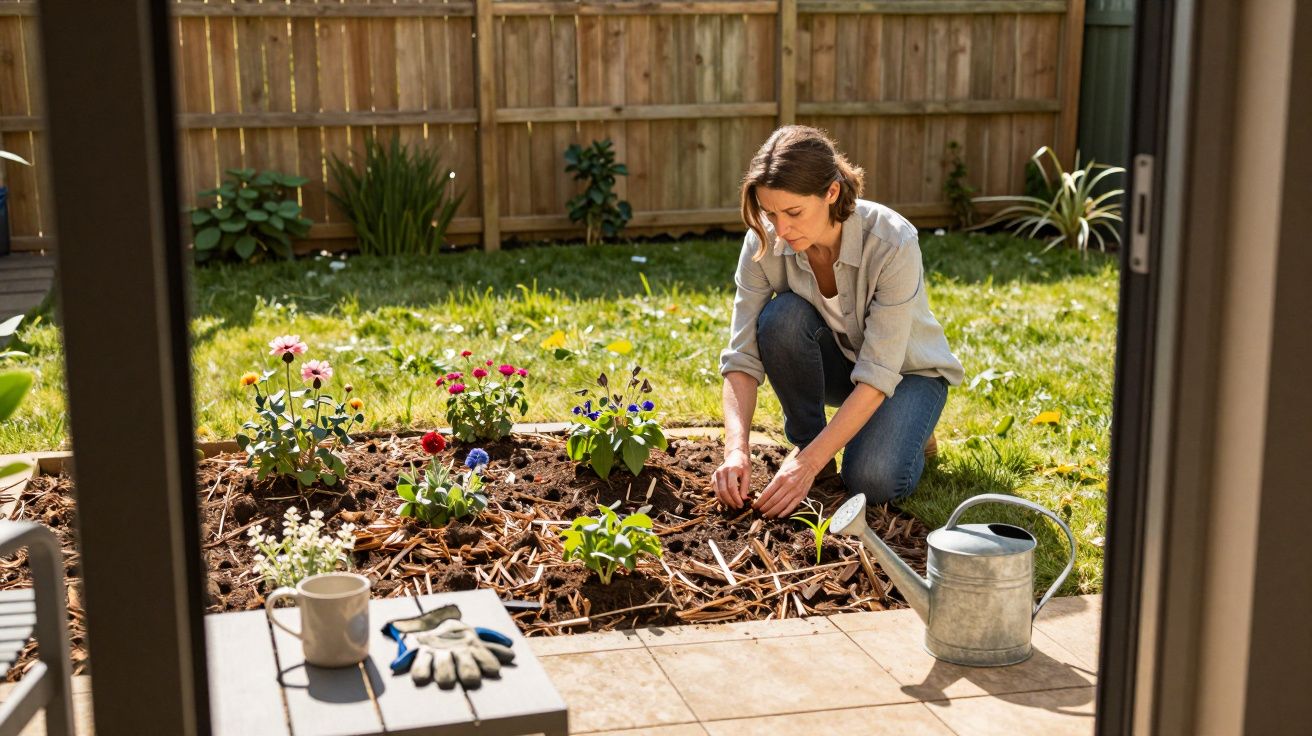
You stand at the back door with a mug going cold, looking at the garden as it is: green, familiar, a little needy. Climate-resilient gardens are often pitched as the sensible answer to hotter summers and wetter winters, and they fit neatly into landscaping with a focus on the future, where today’s choices are meant to reduce tomorrow’s stress. The catch is that, at first, they can look like more work for less reward-and that’s exactly why many people give up too soon.
It’s not that the idea is complicated. It’s that the payoff arrives late, quietly, after a few seasons when the weather does what it does now: swings hard, stays extreme longer, and punishes anything that only thrives in the “normal” we used to plan for.
The garden choice that feels disappointing in year one
The first year of a climate-resilient garden can feel oddly flat. You replace thirsty bedding plants with deeper-rooting perennials, swap a perfect lawn edge for mixed groundcover, and suddenly the space looks less “finished”. The soil may be bare in places. The planting looks sparse. Friends ask, kindly, if you’re still “in the middle of it”.
That’s because resilience isn’t instant decoration; it’s infrastructure. Roots are building downwards. Soil life is rebalancing. Microclimates-shade, shelter, moisture pockets-are being created, not bought.
A familiar example: you take out a strip of lawn that always goes straw-coloured in July and replace it with drought-tolerant planting and mulch. For the first summer, you still water more than you expected, and the weeds arrive like they’ve been invited. It’s tempting to decide it didn’t work. But what’s really happening is establishment, which always looks like inconvenience before it looks like stability.
What “pays off later” actually means
Later doesn’t mean a decade. For many UK gardens, it means two to three growing seasons-sometimes one full year if the starting soil is healthy and you plant at the right time. The dividends show up as fewer emergency jobs, fewer panicked purchases, and fewer “why is everything dying at once?” moments.
A resilient garden pays you back in four practical ways:
- Water resilience: plants with deeper roots and better soil structure cope longer between watering.
- Storm resilience: ground that’s mulched and planted absorbs heavy rain rather than shedding it.
- Heat resilience: shade layers and living groundcover reduce scorch and evaporation.
- Time resilience: you stop firefighting, because the garden is doing more of the work itself.
The strange part is that you can’t buy these benefits ready-made. You have to let the system settle. And if you’re used to immediate impact-new patio, new fence, instant “after photo”-that delay can feel like failure.
The hidden engine: soil, not plants
Most “sustainable” garden talk stays above ground because it’s visible. But the real switch is below the surface. Climate-resilient gardens succeed when the soil holds water when it’s dry, drains when it’s wet, and feeds plants slowly without constant inputs.
That means you end up doing less of the glamorous shopping and more of the unglamorous layering:
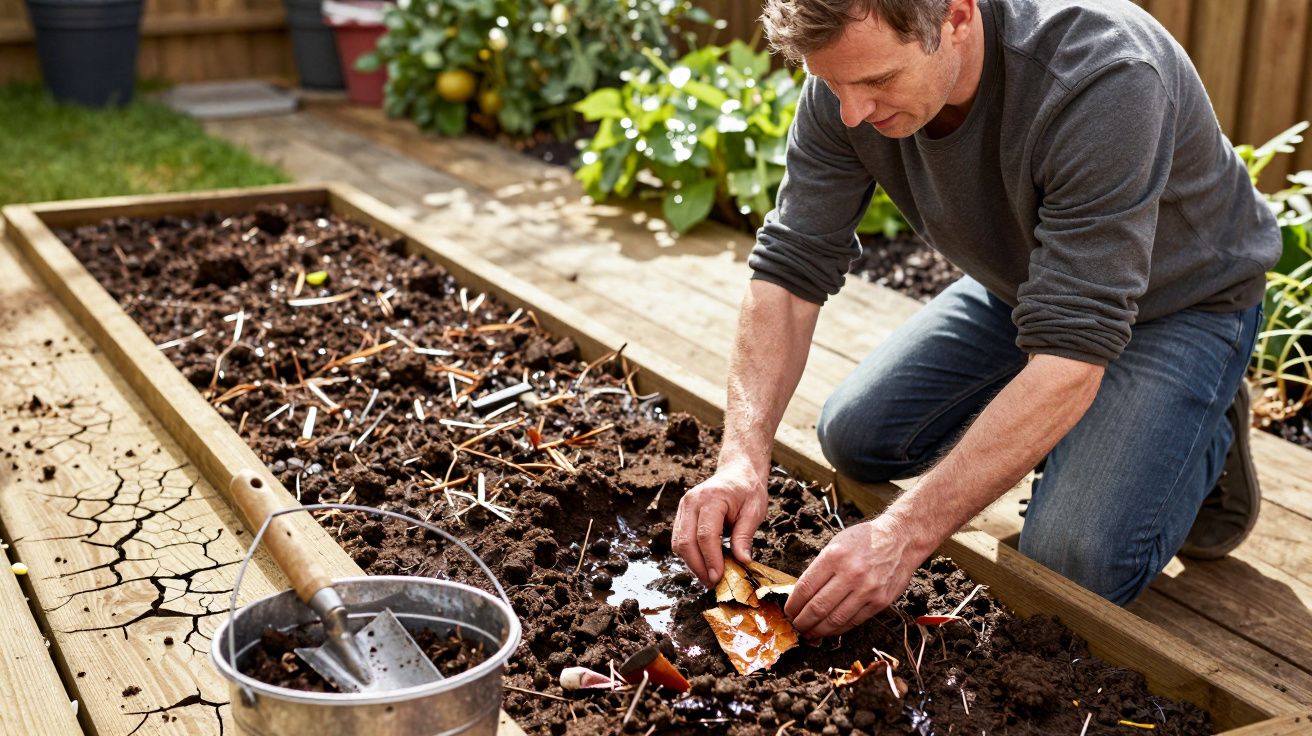
- Add compost in thin, regular doses rather than digging everything over.
- Keep soil covered with mulch or plants, not bare.
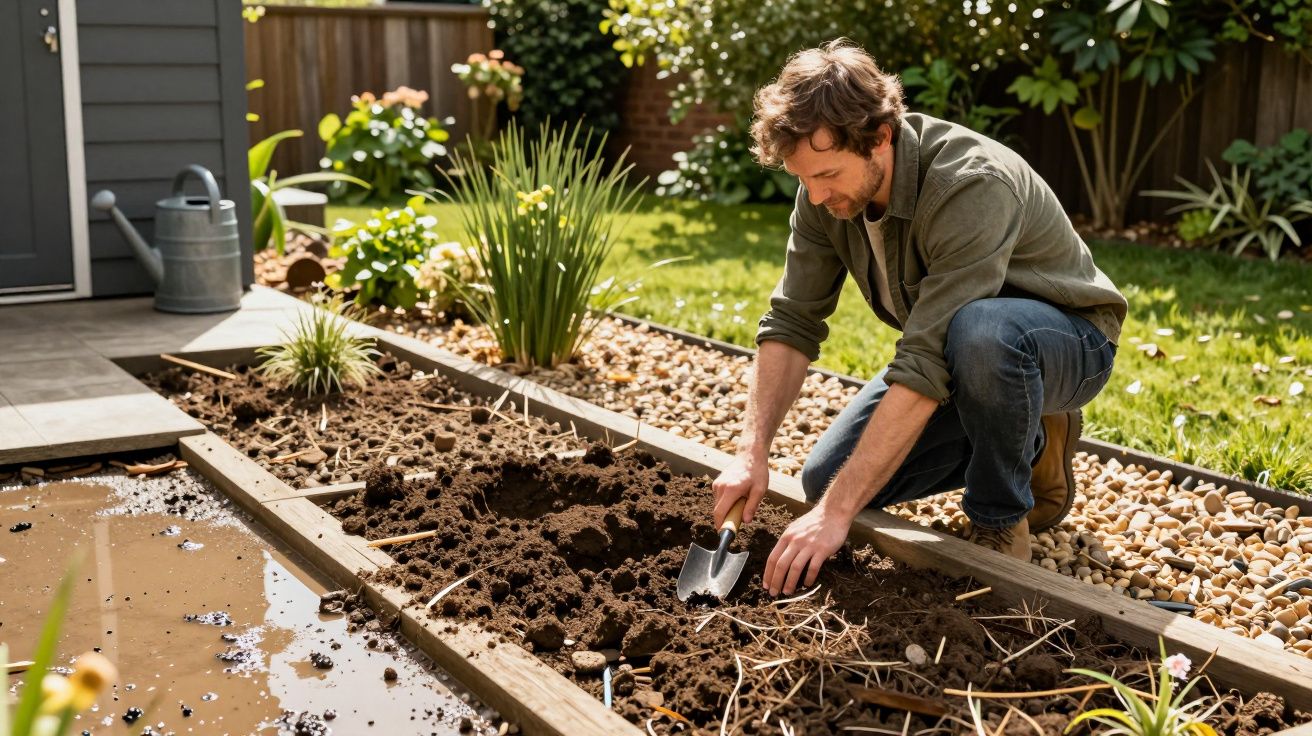
- Avoid compacting wet ground (it closes the pores rain needs to soak into).
- Use fallen leaves as a resource, not a mess to remove.
Soyons honnêtes: tidiness is a habit. Many of us were taught that bare soil and clipped edges look “looked-after”. A future-focused garden often looks a bit looser up close, because it is prioritising function-moisture, habitat, temperature buffering-over instant crispness.
How to build it without making the garden worse for a year
The easiest way to fail is to change everything at once. You remove, replace, and redesign in a single spring, then spend the summer watering stressed plants in stressed soil while trying to keep weeds down. Better is staged change: keep what already works, and reinforce it.
A realistic approach looks like this:
- Pick the pain point first. The baked lawn corner, the flooded border, the wind-tunnel patio.
- Change the conditions, not just the plants. Mulch, compost, windbreak planting, a small swale, a water butt connected properly.
- Plant for layers. A small tree or tall shrub for shade, mid-layer perennials, and groundcover to seal moisture in.
- Water for establishment, then taper. Deep watering less often teaches roots to go down rather than hover near the surface.
- Leave a “normal” patch. One bed or container that stays purely ornamental keeps morale up while the rest matures.
If you want a simple rule: design for the worst week, not the average day. In the UK now, that worst week might be 32°C and dry with hosepipe restrictions, or it might be 48 hours of heavy rain that turns paths into runnels. Planting that only copes with the average will keep demanding rescue.
What to plant when you’re thinking two summers ahead
Plant choice is local, and it’s worth checking what thrives in gardens near you that are a bit neglected (those are accidental resilience trials). But the pattern is consistent: favour plants that are adaptable, perennial, and structurally useful.
Good bets often include:
- Deep-rooting perennials that don’t collapse after a hot spell once established.
- Shrubs that provide shelter and reduce wind-drying across beds.
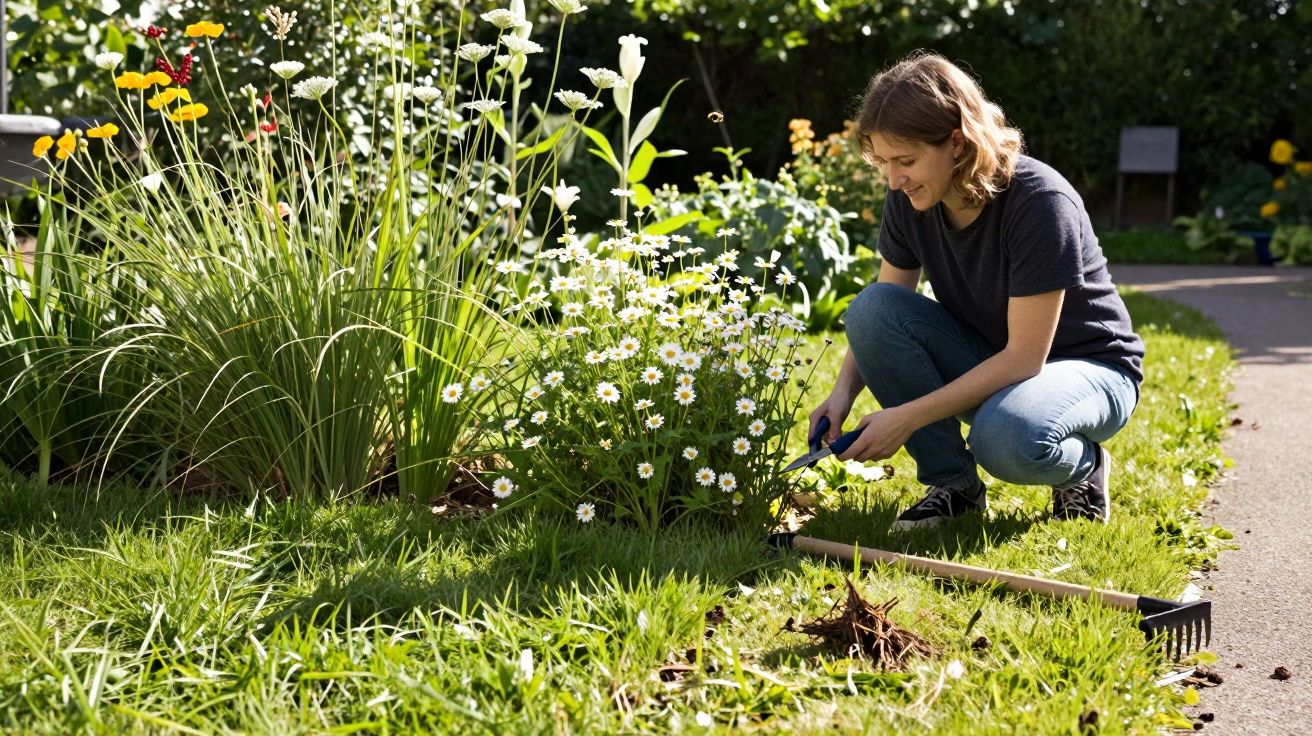
- Groundcover that knits soil and shades it-living mulch beats bare earth every time.
- Mixed planting rather than monocultures, so one pest or weather event doesn’t wipe everything out.
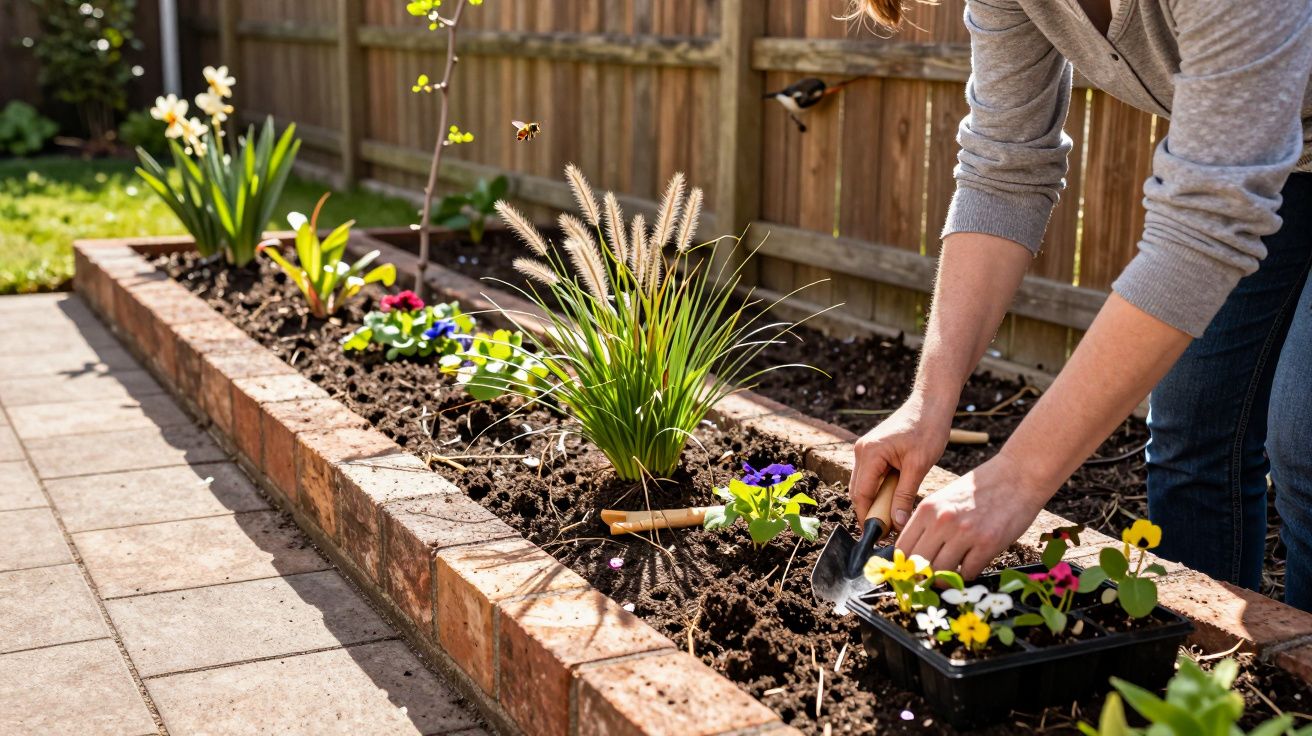
Be careful with one trap: “drought-tolerant” doesn’t mean “no water ever”. Many tough plants still need attentive watering in their first season, especially on free-draining soils or in raised beds where moisture disappears quickly.
The quiet benefits you notice only when weather turns
The real satisfaction arrives on a day you’d normally dread. There’s a heatwave forecast and you don’t move pots into shade like a frantic stagehand. There’s a deluge and you don’t watch water sheet off compacted ground, taking bark mulch with it. You walk outside, and the garden looks steady.
You also start to notice second-order wins. Fewer green waste runs. Fewer bags of compost bought in a panic. More insects, more birds, more “something is happening” in corners that used to be dead space. It’s not magic; it’s a system behaving like a system.
“A garden isn’t a collection of plants,” one designer likes to say. “It’s a water-and-soil problem you can solve beautifully.”
| Shift | What you do | What you get later |
|---|---|---|
| Cover soil | Mulch + groundcover | Less watering, fewer weeds |
| Plant layers | Tree/shrub + perennials | Cooler beds, less scorch |
| Slow change | One area at a time | Fewer setbacks, steadier results |
FAQ:
- Is a climate-resilient garden just a gravel garden? No. Gravel can be part of it, but resilience is about soil health, plant choice, and how water moves through the space-not a single surface finish.
- How long before it looks “done”? Often 2–3 seasons. Year one can look sparse; year two fills in; year three tends to look intentional and settled.
- Will I still need to water? Yes at first, especially in the establishment year. The goal is less frequent, deeper watering over time-not zero water from day one.
- Does it work in small gardens or rented homes? It can. Containers with drought-tolerant mixes, water butts, shade planting, and groundcover in borders all help without major construction.
- What’s the biggest mistake people make? Changing plants without changing conditions-bare soil, compacted ground, and poor drainage will defeat even “tough” plants.


Comments (0)
No comments yet. Be the first to comment!
Leave a Comment