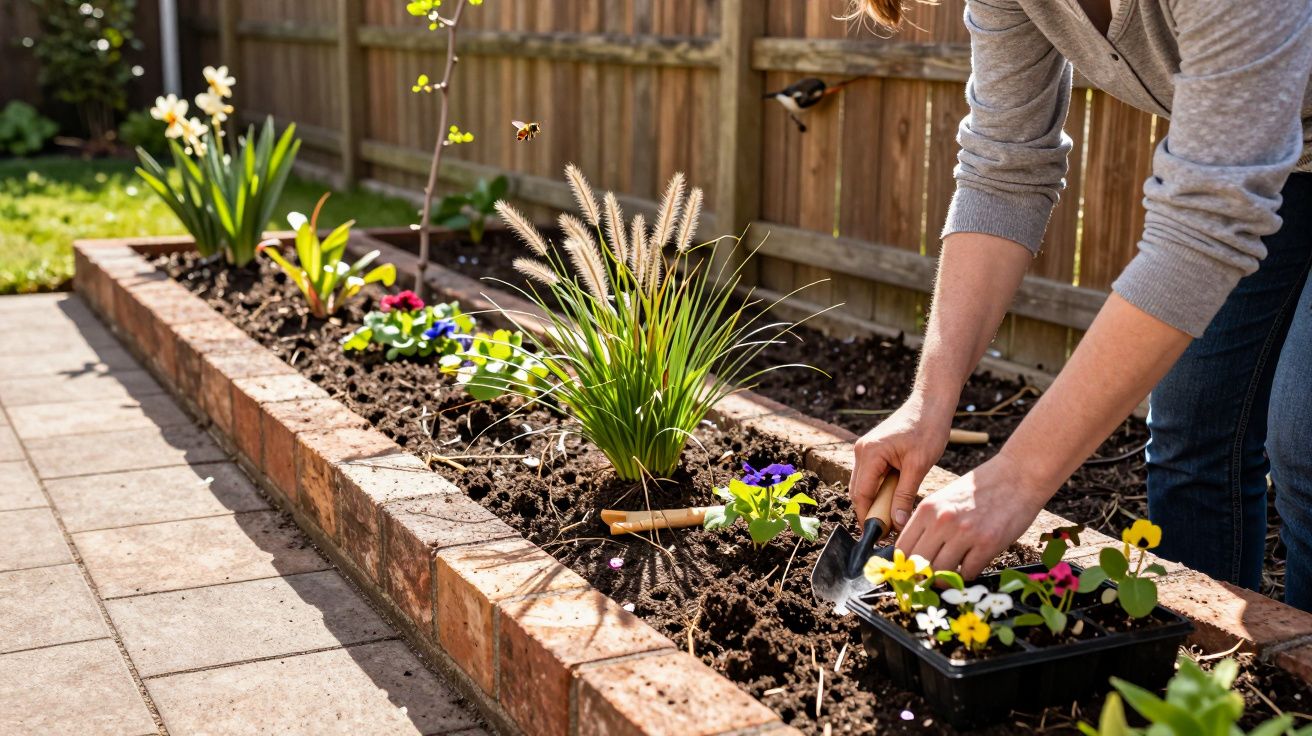
A front garden can look “tidy” and still feel oddly quiet: fewer birds at dawn, fewer bees in summer, fewer small movements in the borders. Biodiversity-led landscaping, paired with deliberate habitat creation, is a way of designing outdoor spaces so plants, soil life and wildlife can actually function together rather than merely decorate a boundary. It matters because one small choice in what you plant can ripple through the whole food web, changing what survives there-and what doesn’t.
The surprising part is how often the hinge-point is modest: swapping a strip of sterile groundcover for a patch of native, mixed-height plants. It doesn’t shout. It just starts feeding and sheltering the right organisms, in the right sequence, for longer each year.
The “small choice” that changes everything
A lot of gardens fail ecologically for one simple reason: they offer flowers for a few weeks and then nothing, or greenery with no usable nectar, seed, or cover. The small biodiversity choice that quietly reshapes an entire outdoor ecosystem is to replace a single-species planting (or hard surfacing) with a native, layered mini-habitat: grasses, flowering perennials, and one shrub, all chosen to span the seasons.
That patch becomes a workhorse. It provides pollen, then prey, then shelter, then overwintering sites-often on the same square metre.
Why native, mixed-height planting works
The mechanism is not mystical; it’s logistics. Native plants tend to match local insects’ life cycles, and insects are the currency of the garden: they feed birds, bats, hedgehogs, amphibians, and countless predators you never see. Mixed height matters because different species use different “floors” of the garden-ground layer, stems, seedheads, canopy edge.
A flat lawn is one floor. A layered border is a whole building.
When you add structure and season-long food, you don’t just “attract wildlife”. You stabilise it.
A quick story from a quiet corner of a garden
A homeowner in the Midlands described a back border that never really settled: aphids exploded on roses, birds visited briefly, and the soil baked hard in dry spells. They didn’t redesign the whole plot. They removed a narrow strip of bark mulch and planted a mix of native knapweed, yarrow, birds-foot trefoil, a few tussocky grasses, and one hawthorn whip near the fence.
By late summer, they noticed fewer dramatic pest spikes, more small birds using the border as cover, and the soil staying damper after rain. Nothing looked “wild” in the messy sense; it simply looked fuller, and it behaved differently.
What’s happening under the surface
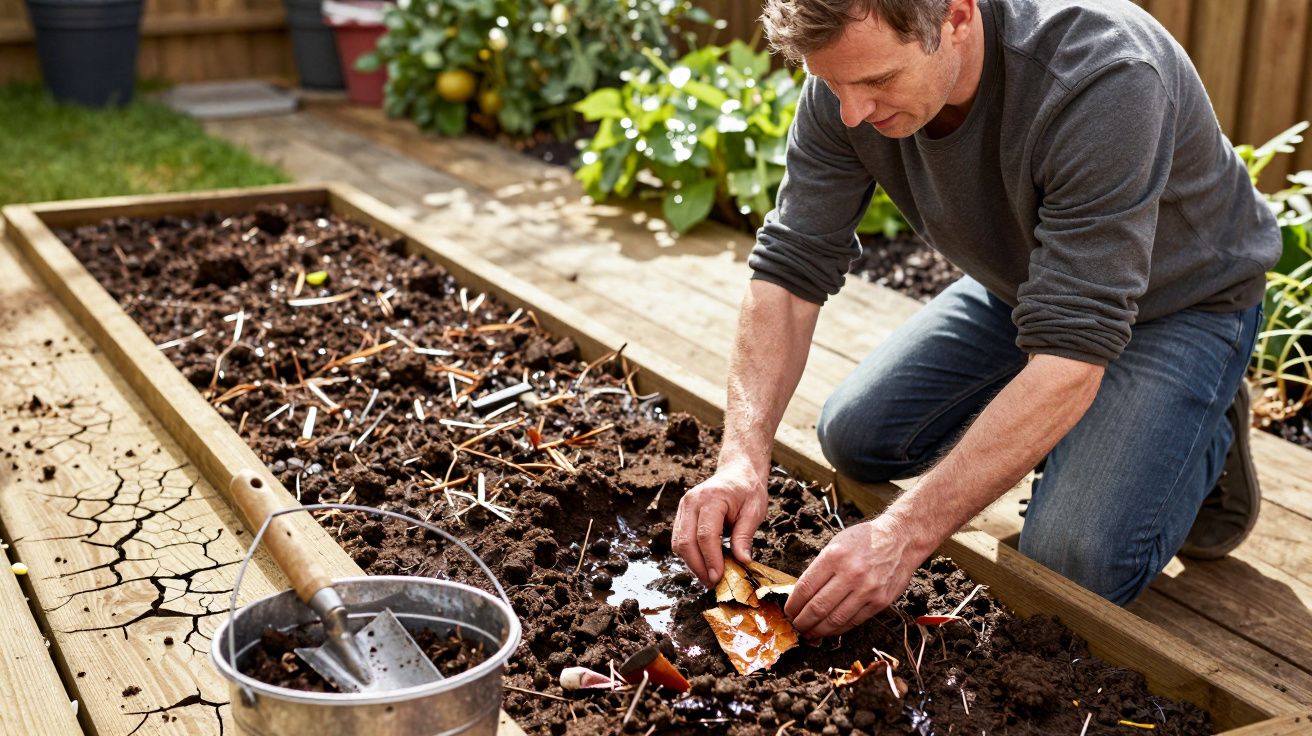
Most people judge a garden by what’s visible: blossom, colour, neat edges. Ecosystems run on what’s beneath: root exudates, fungal networks, decomposers, and the moisture cycle. A diverse planting sends different sugars into the soil, feeding a wider range of microbes, which improves soil structure and water retention.
That, in turn, changes plant health. Healthier plants generally mean fewer emergency interventions-less spraying, less feeding, less panic-pruning-so the system becomes even friendlier to insects and the creatures that rely on them.
The ripple effect in plain terms
- More plant types means more insect types, because many insects are specialists.
- More insects means more predators (ladybirds, lacewings, hoverflies, spiders).
- More predators means fewer boom-and-bust pest outbreaks.
- More cover means more nesting and safer movement for small wildlife.
- Better soil structure means plants cope better with heat and heavy rain.
This is why a single patch can alter the feel of an entire garden within a season or two.
The simplest “starter patch” that still counts
You don’t need a meadow. You need a patch that behaves like one.
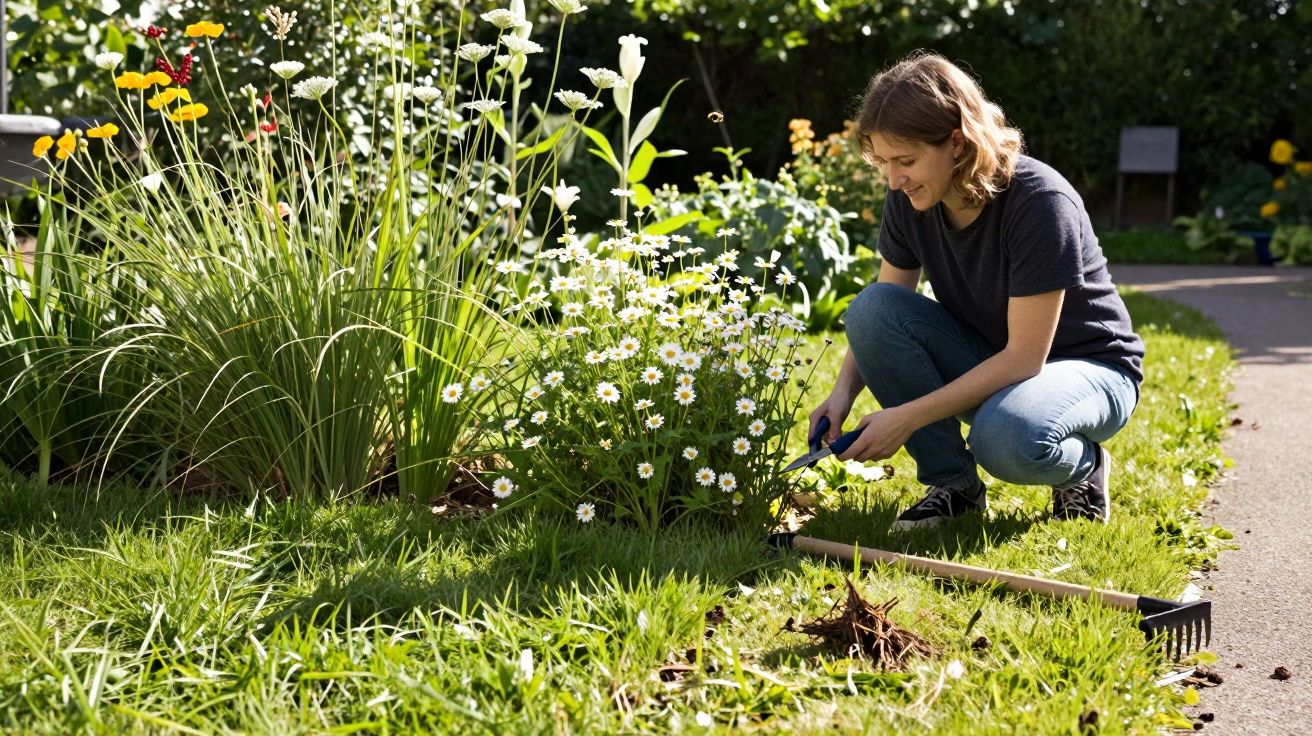
A practical minimum is roughly 1–2 m², planted densely, with at least:
- 3 flowering natives (aim for different flowering windows: spring/summer/autumn)
- 1 clumping grass or sedge for structure and overwintering cover
- 1 small shrub (or a hedge segment) for shelter and berries later on
If you only do one thing: keep some stems and seedheads standing through winter. That’s where eggs, larvae and shelter often are, and it’s where the next year starts.
Common “biodiversity fixes” that don’t quite work
Some choices look green but function like plastic in ecological terms. The garden stays hungry.
| Choice | Why it under-delivers | Better swap |
|---|---|---|
| Single-species bedding | Short bloom, low structure | Mixed native perennials + grass |
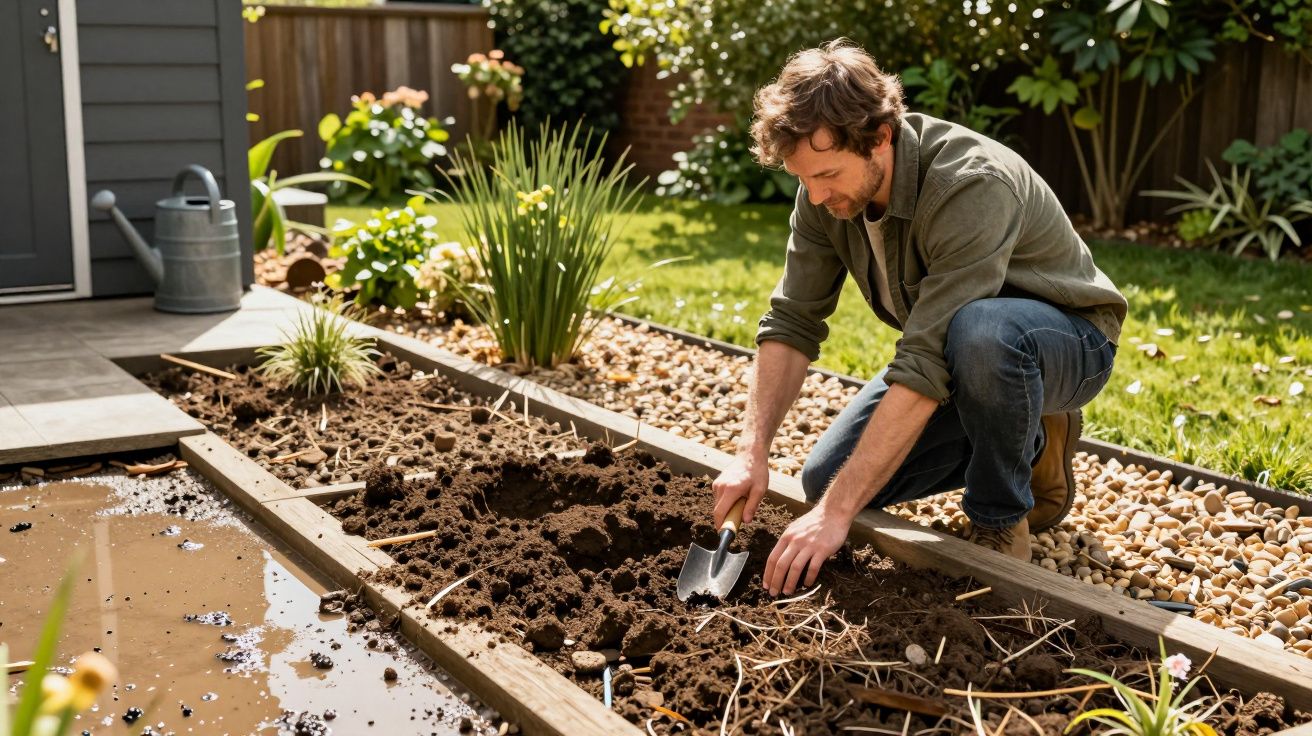
| Decorative gravel with a few pots | Heat, dryness, little shelter | Planted patch with mulch/leaf litter |
| Highly double flowers | Nectar/pollen inaccessible | Single, open flowers |
This isn’t about banning aesthetics. It’s about ensuring your prettiest metre also does a job.
How to implement it without losing control of the space
Biodiversity-led landscaping works best when it’s intentional. The fastest way to keep it looking “designed” is to set clear boundaries and repeat simple shapes, while letting the planting inside those shapes be ecologically rich.
- Edge the patch with brick, timber, or a clean spade-cut line.
- Plant in groups of 3–5 for each species to avoid a scattered look.
- Mulch with leaf mould or compost (not thick bark) to feed soil life.
- Water for the first season, then reduce inputs as roots establish.
- Leave a small “mess zone” (log pile, leaf pile, or a tucked-away corner) to support habitat creation without advertising itself.
The one-week check that tells you it’s working
You don’t need surveys and spreadsheets. In calm weather, stand by the patch for five minutes, once a week, for a month.
Look for three signals:
- Different insect sizes, not just one type of bee.
- Predators (hoverflies, ladybirds, spiders) turning up without you adding them.
- Use as cover-small birds dipping in, not only landing on top.
If you see variety building, the system is starting to feed itself.
FAQ:
- Will this attract “pests” as well as pollinators? It may attract more insects overall, but a diverse patch also supports predators and parasitoids that help keep outbreaks from dominating.
- Do I have to stop tidying completely? No. Keep edges crisp and paths clear; just delay hard cut-backs until spring and leave some stems/seedheads over winter.
- What if I only have a patio or tiny yard? Use containers with mixed native flowering plants and a grass/sedge, and add a small log pile or leaf tray in a corner for habitat creation.
- Is “native” essential? It’s the most reliable starting point for local food webs. Non-natives can still help, but natives tend to support more specialist insects and therefore more wildlife overall.



Comments (0)
No comments yet. Be the first to comment!
Leave a Comment