Rain gardens are often pitched as a neat fix for puddles and downpipe overflow, but in water-sensitive design they’re doing a quieter job: teaching a site how to behave when rain arrives too fast. You see them in front gardens, car parks, school grounds, and beside roads-anywhere hard surfaces send water sprinting to the nearest drain. They matter because the same feature that handles runoff can also lower maintenance headaches, improve street comfort, and make a place feel looked-after rather than “managed”.
The twist is that the best-performing rain gardens aren’t just a planted dip in the ground. They include one small, unglamorous detail that decides whether the system clogs, stinks, or quietly gets on with it.
The feature that changes everything: a shallow “forebay” you can clean
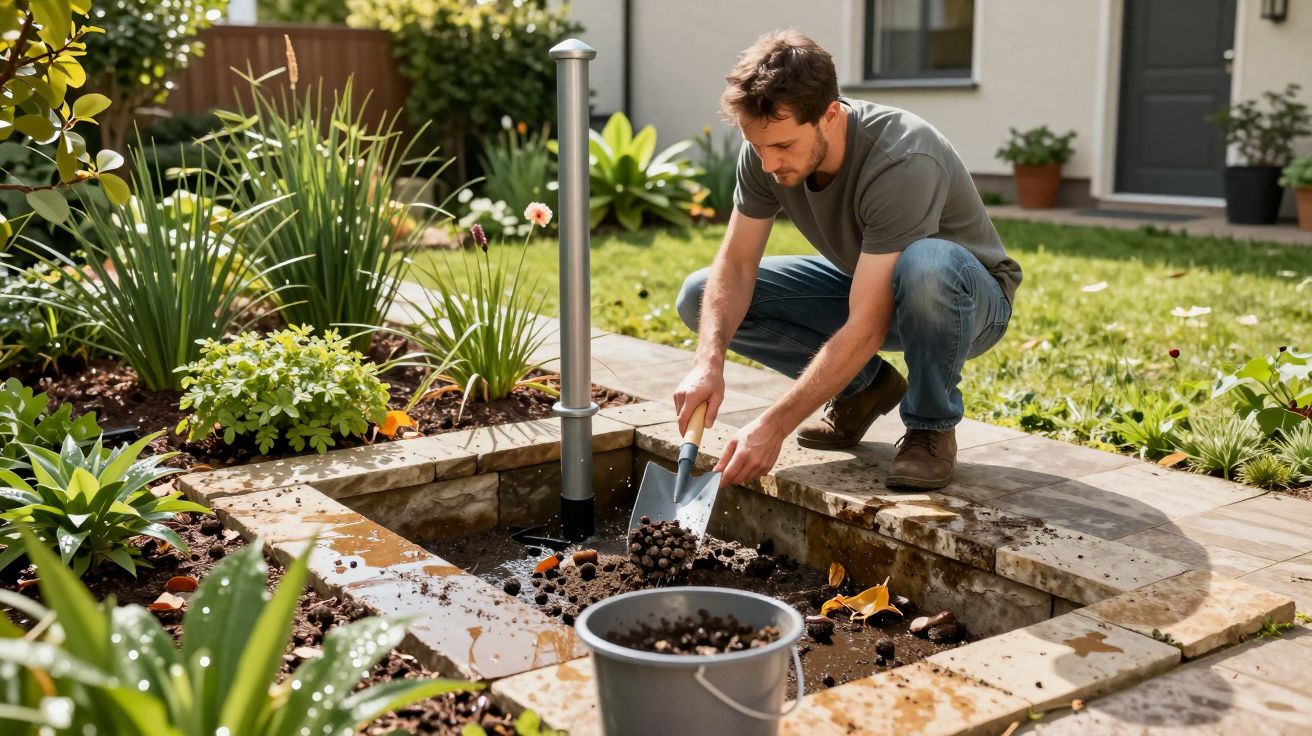
Call it a forebay, a sediment trap, a silt pocket-whatever the label, it’s a short section at the inlet where stormwater first enters and drops its grit. Think of it as the doormat before the living room: most of the mess comes off here, not in your nicest carpet.
Without this pre-treatment zone, the rain garden’s surface can seal over. Water starts to pond for too long. Plants sulk. Mosquito complaints follow, even if the real culprit is poor infiltration, not the garden itself.
A forebay flips the script. It gives silt and litter somewhere predictable to land, so maintenance becomes a quick, targeted tidy rather than a full rebuild.
The goal isn’t “no sediment”. The goal is sediment you can find again.
Why it solves more than water
Drainage is the headline benefit, but the forebay is where the knock-on wins appear, because it protects the whole system from slow failure.
First, it reduces clogging, which means the rain garden keeps infiltrating rather than turning into a permanent wet patch. That protects nearby paving and reduces algae slicks that make paths feel unsafe. It also cuts the temptation to “fix” the garden by removing plants and adding gravel-an expensive downgrade that usually performs worse.
Second, it makes maintenance legible. When crews (or a homeowner) can see where the debris is supposed to collect, they’re more likely to maintain it. People avoid vague jobs; they’ll do clear ones.
Third, it improves water quality without extra kit. Most of the heavy stuff-sand, road grit, tyre dust bound to particles-settles early. The planted zone then gets to do what it’s good at: filtering finer particles and taking up nutrients.
- Less ponding time after storms
- Fewer blocked inlets and surprise overflows
- Cleaner planting zones and longer plant life
- Easier inspections after leaf fall and winter grit season
What it looks like in practice (and where it goes wrong)
On a street retrofit, the inlet is often a kerb cut. The forebay can be a slightly deeper pocket just inside that opening, lined with robust stone or a small apron that won’t erode. In a front garden, it might be a small gravel-lined dip under the downpipe, with a defined edge so you can scoop it clean.
The common mistake is making it too subtle. If the forebay looks exactly like the rest of the bed, sediment spreads out, clogs the surface evenly, and you’re back to guesswork. Another mistake is using loose decorative gravel everywhere; it migrates, it traps litter, and it invites the “just top it up” cycle that slowly buries the soil.
A better rule is simple: make the forebay visually obvious, physically accessible, and sacrificial. It’s meant to be disturbed.
A simple way to design it without overthinking
You don’t need a complicated specification to get most of the benefit. You need a clear inlet, a defined drop zone, and an overflow path that won’t panic when the storm exceeds the garden’s capacity.
Here’s a practical checklist that works for small residential rain gardens and many larger schemes:
- Give water a clear entry point. One inlet is easier to manage than three mysterious trickles.
- Create a defined sediment zone. A shallow pit or short strip right at the inlet, finished in stone or tough planting.
- Keep it reachable. If you can’t get a shovel in, you won’t maintain it.
- Protect the overflow route. A level spillway to lawn or a drain inlet so big rain doesn’t scour the bed.
- Choose plants that tolerate both wet and dry. Rain gardens swing between extremes; the planting must too.
Let’s be honest: most failures aren’t because the concept is wrong. They’re because nobody planned for the gritty, boring stuff that arrives with the first autumn storm.
What to check after the first three heavy rains
Early checks prevent the slow decline that makes people distrust “green” drainage. You’re looking for clues that the system is behaving as intended.
- Is sediment collecting in one place? Good-clean that place.
- Does water drain within a day (often within hours)? If not, the surface may be sealing.
- Are leaves matting across the inlet? Install a simple grate or widen the entry apron.
- Is there scouring or a little channel forming? Add stone at the inlet or adjust the grade.
If the forebay fills quickly, that’s not a design failure; it’s a message. It means the catchment is dirty, the upstream surface is eroding, or there’s construction runoff. The forebay is doing its job by revealing the problem.
Quick snapshot: forebay vs no forebay
| Detail | With a forebay | Without a forebay |
|---|---|---|
| Where silt goes | Predictable, near the inlet | Everywhere, including the surface |
| Maintenance | Small, regular scoops | Infrequent, disruptive rebuilds |
| Performance over time | More consistent infiltration | Gradual clogging and ponding |
The quiet social benefit: it changes how people treat the space
A rain garden that ponds for days reads as neglected, even if it was built with good intentions. People step around it, complain about mosquitoes, and assume the council (or the owner) has stopped caring. A rain garden that drains well reads as purposeful landscaping, and that perception buys you tolerance during storms.
The forebay helps deliver that. It creates a visible “service point” where maintenance happens, which means the rest of the garden can look calm and planted rather than churned up and patchy. In public sites, that’s the difference between “nice idea” and “keep doing more of this”.
FAQ:
- Is a forebay only for big roadside rain gardens? No. Even a small front-garden rain garden under a downpipe benefits from a defined sediment-and-leaf collection spot.
- How often do I need to clean it? Usually after heavy storms and during leaf-fall. If you’re scooping monthly, check for upstream erosion or construction sediment.
- Will a forebay stop all clogging? It won’t stop fine particles, but it dramatically reduces the coarse grit that seals surfaces fastest. Pair it with good soil media and a clear overflow.
- Can I just use gravel as the forebay? You can, but keep it contained and shallow. Loose gravel everywhere tends to migrate and trap litter; a defined stone apron or lined pocket is easier to clean.





Comments (0)
No comments yet. Be the first to comment!
Leave a Comment