You notice it in the places that used to be easy: pots that baked fine last summer now crust over by June, then sit saturated for a week after a single heavy downpour. If you’re growing drought-tolerant plants as part of climate change adaptation, the boring truth is that your soil mix matters as much as your plant list. A planting mix that can take heat, wind, and sudden rain without swinging from “dust” to “bog” saves time, money, and losses.
The surprise is that you don’t need an exotic product. You need a mix that holds moisture in small pockets, sheds excess water fast, and keeps air around roots when weather goes weird.
Why “just compost” fails in extremes
Compost is brilliant - until it’s the only thing doing the job. In hot spells, compost-heavy pots can dry into a water-repelling crust. In wet spells, the same fine texture can slump, compact, and stay cold and soggy around roots.
Weather extremes expose two weak points fast:
- Poor re-wetting after drought (water runs down the sides and out the bottom).
- Low air space after downpours (roots sit in a depleted-oxygen mush).
The fix is structure. Think “sponge plus gravel”, but in gardening terms.
The mix that rides out heat and deluges
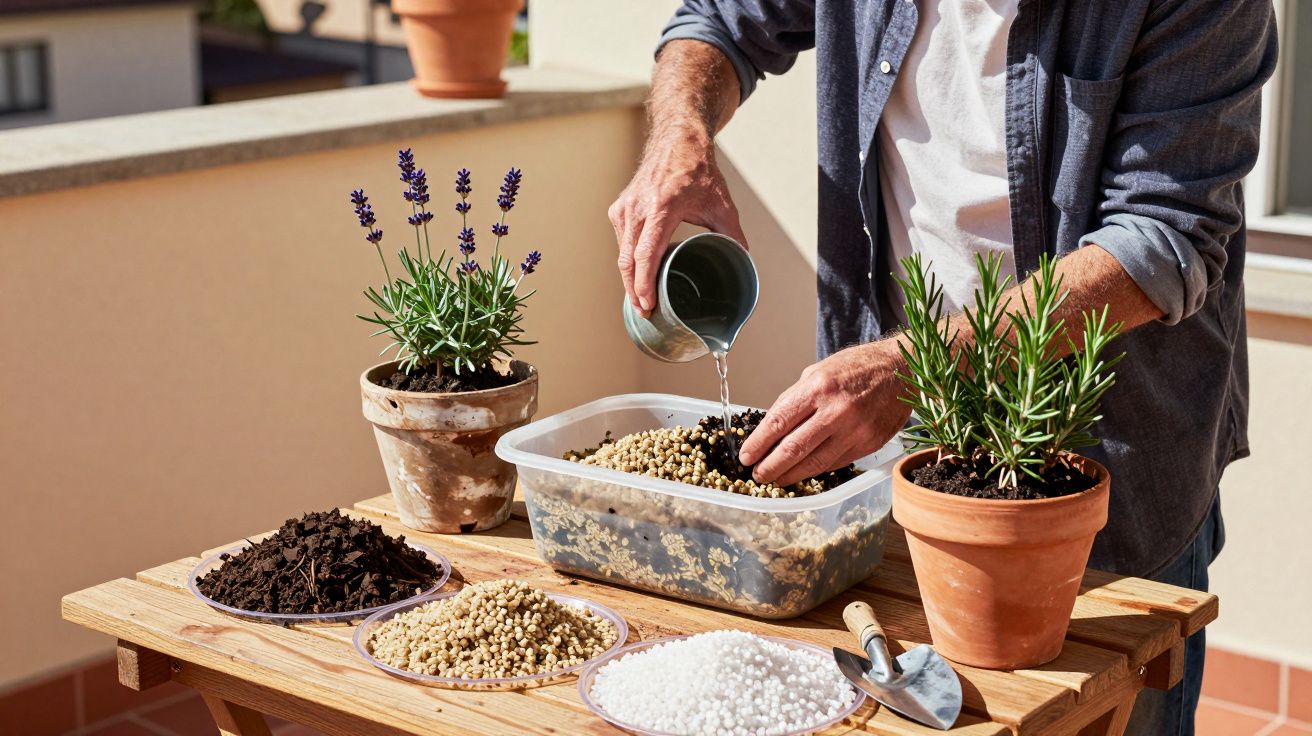
This is a reliable, container-friendly blend for drought-tolerant plants (and it works in raised beds too). It’s designed to stay open, re-wet easily, and drain before roots sulk.
A simple ratio that behaves
- 50% peat-free multi-purpose compost (or a good peat-free potting compost)
- 25% horticultural grit or perlite (drainage + air)
- 25% coir or leaf mould (re-wetting + steady moisture)
If you’re planting into a raised bed rather than pots, swap some of the grit/perlite for sharp sand and add a little extra organic matter. Containers need the lighter materials; beds can lean heavier.
The aim isn’t “dry soil”. It’s soil that can be wet without being suffocating - and dry without turning to stone.
How to mix it (and the small step people skip)
Most mixes fail at the same moment: the first deep soak after a dry week. If the compost is already bone-dry, it can resist water like a cheap raincoat.
Do this once, properly:
- Tip your components into a tub or barrow and mix dry.
- Add water slowly and turn it through until it’s evenly damp, not claggy.
- Fill pots, tap them down lightly, then water again to settle.
That pre-moistening step makes the first heatwave far less dramatic.
Where it shines: a quick real-life use case
A sunny patio in August is brutal: reflected heat, wind shear, small soil volume. This mix gives drought-tolerant plants a buffer without turning them into soft, thirsty divas.
It’s especially good for:
- Mediterranean herbs (rosemary, thyme, oregano)
- Sedums and other succulents that hate sitting wet
- Lavender (in pots, where drainage is everything)
- Salvias and many hardy, drought-leaning perennials
You still water - just less often, and with fewer “panic soaks” that wash nutrients straight out.
Small upgrades that make it even more resilient
You don’t need a long shopping list. Add one or two extras based on your conditions.
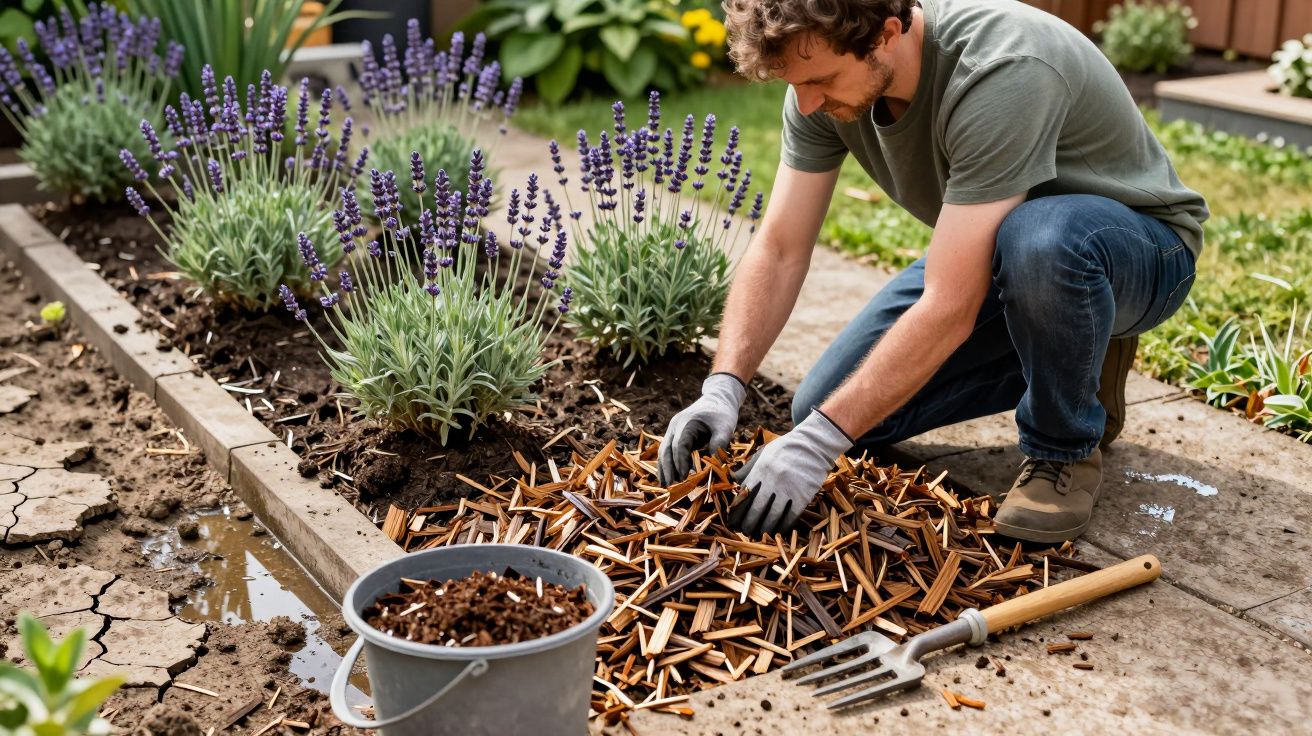
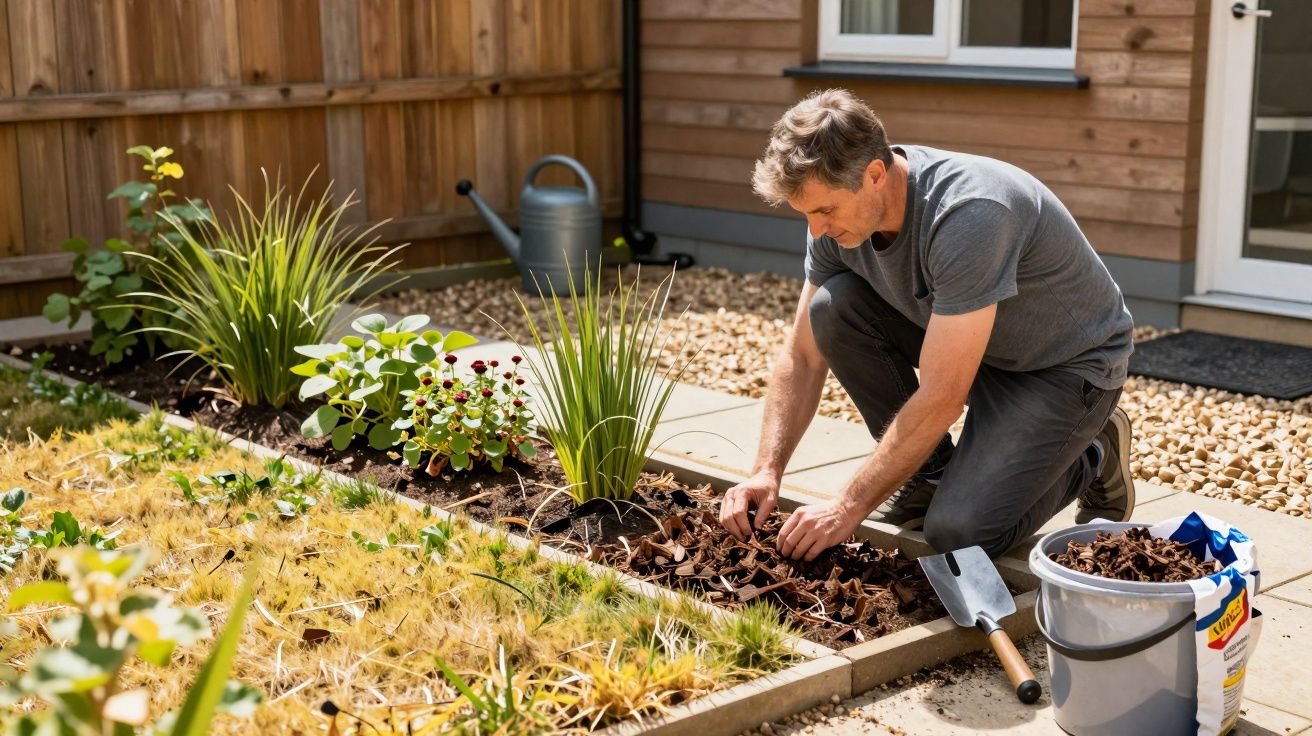
- A thin mulch layer (gravel for Mediterranean plants; bark for mixed borders) to cut evaporation and blunt temperature spikes.
- A slow-release fertiliser for pots, because gritty mixes drain well and nutrients move with the water.
- Worm castings (a handful per pot) if your peat-free compost is low in life and structure.
- A wetting agent only if you regularly forget watering and your pots turn hydrophobic.
What to avoid: loading the mix with topsoil in containers. It makes things heavier and often reduces drainage just when you need it most.
The “water like Finland ventilates” rule
One habit makes this mix work better: water in short, decisive sessions instead of constant little sips. A proper soak encourages deeper rooting and lets the airy components do their job as the excess drains away.
What to avoid is the gardening equivalent of a window left ajar all day: frequent tiny waters that never wet the root zone, yet keep the surface crusty and stressed.
A quick rhythm that suits extremes
- Water early, deeply, then let the top couple of centimetres dry.
- In heatwaves, check pots daily - but don’t auto-water unless the pot feels light.
- After storms, don’t “top up” out of habit. Let oxygen back in.
Red flags the mix needs adjusting
Even good mixes need tuning for your microclimate. Watch what the plant tells you.
- Water runs straight through instantly every time: add a little more coir/leaf mould.
- Pots stay wet for days and growth stalls: increase grit/perlite and reduce compost fraction.
- Surface bakes hard and cracks: mulch, and pre-moisten the mix next time.
| Problem you see | Likely cause | Simple tweak |
|---|---|---|
| Hydrophobic, hard-to-wet pot | Compost too dry/fine | Add coir; pre-moisten before potting |
| Soggy roots after rain | Not enough air space | Add more grit/perlite |
| Wilting daily in sun | Pot too small / no buffer | Bigger pot; add coir; mulch top |
FAQ:
- Is this only for drought-tolerant plants? No. It’s broadly useful for any pot that faces sun and irregular rain, but it particularly suits plants that hate wet feet yet still need steady moisture between waterings.
- Can I use sand instead of perlite? In raised beds, yes (sharp sand). In containers, perlite or grit usually performs better because it keeps the mix lighter and more open.
- Will this make plants “lazy” and less drought-hardy? Not if you water sensibly. The goal is resilience, not constant damp; soak, then let the mix breathe so roots develop properly.
- Do I need to buy a specific branded product? No. Focus on texture and components. A decent peat-free compost plus a drainage material and a re-wetting material gets you most of the way there.
Comments (0)
No comments yet. Be the first to comment!
Leave a Comment