You don’t notice it in the first week, because natural ground cover looks like a surface choice: tidy, green, maybe a bit rustic around the edges. But it’s also a soil regeneration decision, and it plays out quietly under your feet in borders, around fruit trees, across veg beds and along awkward slopes where bare earth never stays bare for long. Get it right and the ground starts behaving like a living sponge; get it wrong and you can spend years fighting compaction, weeds and that tired, dusty look that never quite shifts.
Most of us choose ground cover for the obvious reasons-less weeding, fewer splash marks on walls, something that makes the garden feel “finished”. Then a dry spell hits, or a winter of rain, and the soil tells the truth about what’s happening underneath.
Why the “cover” matters more than the plant label
Soil health is not just nutrients. It’s structure, oxygen, fungal networks, worms, moisture and the ability to buffer extremes without collapsing into either mud or dust. Natural ground cover is one of the fastest ways to influence all of that, because it decides what hits the soil surface every day: sun, raindrops, wind, foot traffic, and the constant drip of organic matter.
Here’s the plain mechanism. When soil is left exposed, raindrops break aggregates (those little crumbs of structure) and the fine particles settle into a tight crust. Water runs off instead of sinking in, roots struggle for air, and microbes do less of the “free labour” you were hoping compost would cover. A good cover interrupts that cycle: it softens rainfall impact, shades the surface, feeds biology, and keeps temperatures from swinging so hard.
If you’ve ever dug two spadefuls-one from a bare patch, one from under a long-established cover-you’ve seen it. One is pale, claggy, and reluctant; the other is darker, crumbly, and smells faintly sweet, like woodland.
The decision that changes everything: living cover or dead mulch
People lump all ground cover together, but the long-term soil outcome depends on one fork in the path: do you want a living, rooted carpet, or a “dead” layer of organic mulch? Both can regenerate soil, but they do it in different ways, and the wrong one in the wrong place is where problems quietly begin.
Living cover (plants that stay and spread)
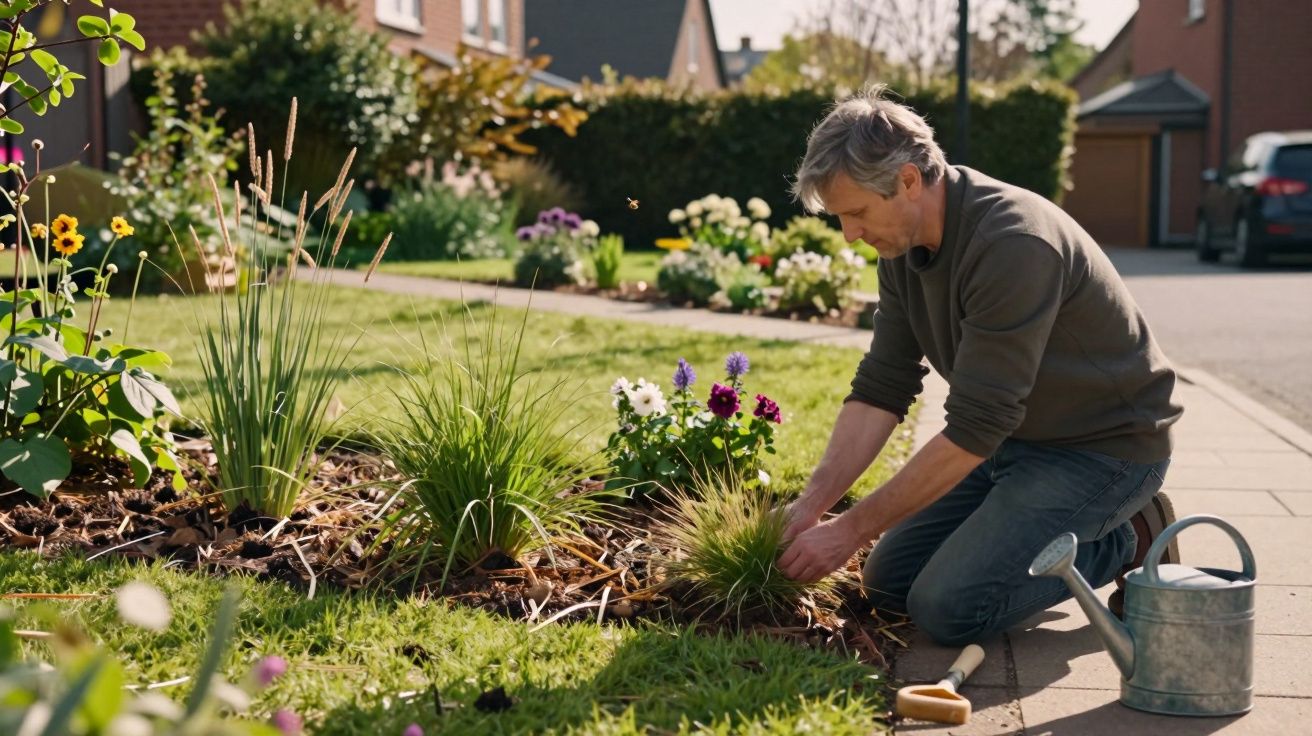
A living cover-clover, creeping thyme, chamomile, low sedums, native strawberries, even a managed “weedy” mix-keeps roots in the ground. Those roots leak sugars that feed microbes and fungi, and they create tiny channels that help water infiltrate. Over time, this is how soil starts to behave like soil again rather than like potting compost that’s run out of luck.
But it comes with a trade-off: living covers compete. In a young hedge line, around a newly planted tree, or in a bed where you’re trying to establish hungry perennials, a thick carpet can steal moisture and nitrogen at exactly the wrong moment.
Dead mulch (chips, leaf mould, composted bark, straw)
A mulch layer is more like a blanket. It reduces evaporation, buffers temperature, suppresses annual weeds and slowly turns into food for fungi and worms. In most gardens, this is the easiest route to steady soil regeneration because it asks less maintenance and doesn’t fight your main plants for resources.
The catch is texture and depth. Too fine, too wet, too thick, and you can create a slug hotel or a sour, airless layer that smells “off” when you lift it. Too thin and it’s just decoration.
A quick test: what problem are you solving first?
Before you buy anything, name the primary pain in the space. Not the aesthetic goal-the actual stress point that keeps repeating. Choose your cover to address that first, then finesse later.
- Soil bakes hard in summer → mulch wins (chips/leaf mould), or a drought-tolerant living cover after plants establish.
- Soil puddles and stays wet → living cover can help if you avoid smothering; deep wood chip mulch can be brilliant on paths but risky in heavy shade.
- You’re planting young shrubs/trees → mulch ring now, living cover later (leave a clear collar).
- You’re on a slope → living cover often wins for erosion control, with mulch as a temporary stabiliser.
- You need pollinators and biodiversity → living cover (flowering, mixed) is the quiet upgrade.
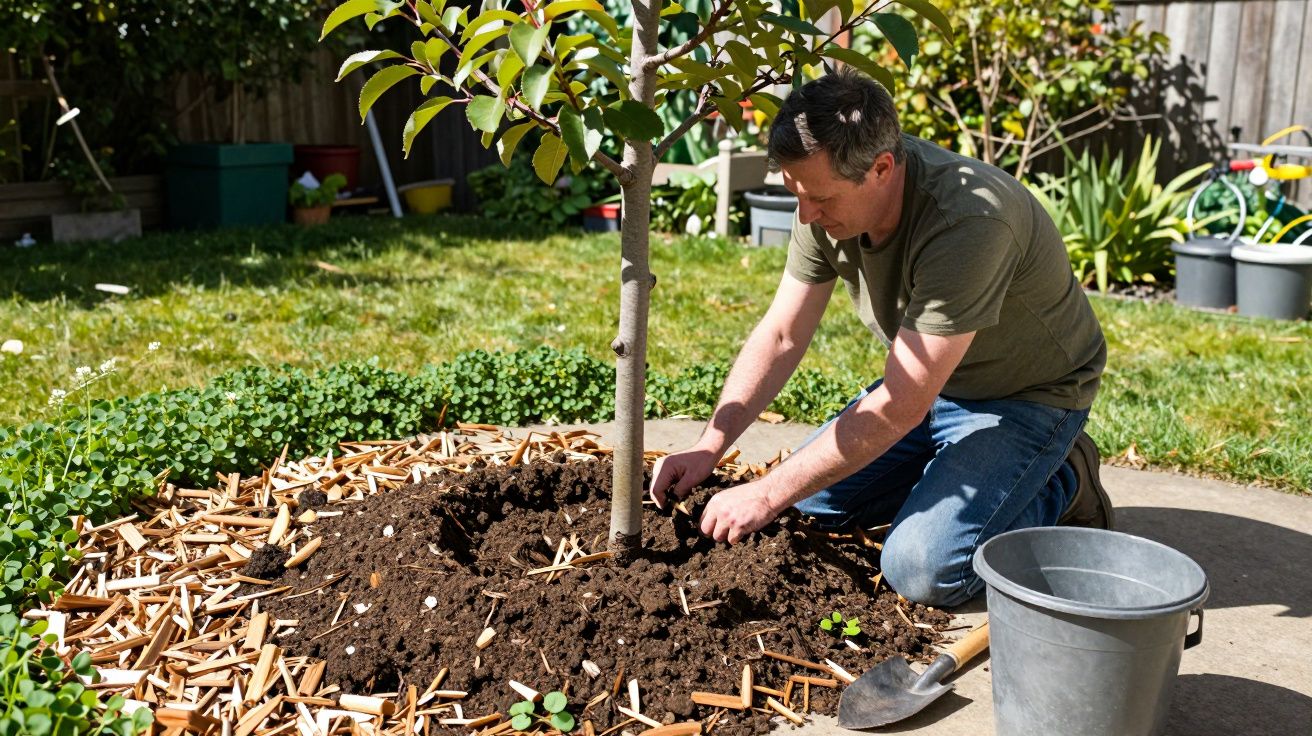
In one Leeds back garden, Tom mulched his new apple guild with composted bark right up to the trunk because it “looked neat”. Two wet winters later, the bark stayed damp, the collar softened, and the tree sulked. He didn’t need a different tree-he needed a different ground-cover decision: clear space at the base, mulch outwards, and let living plants take over once the root zone was stronger.
The “two-zone” approach that avoids most regrets
If you want a rule that works in most UK gardens, use two zones: a mulch collar for establishment, then living cover beyond it. It sounds almost too tidy to be true, but it mirrors how soils build resilience: protected surface, active roots, steady feeding.
Keep a clear collar around trunks and crowns.
Roughly 10–20 cm for perennials, 20–30 cm for shrubs, and 30–60 cm around young trees (adjust for size). This is where rot and competition do the most damage.Mulch the next ring.
Aim for 5–8 cm deep of wood chip, leaf mould, or well-rotted compost (not fresh manure). Top up little and often rather than dumping a mountain once.Let living cover own the outer zone.
Choose plants that match light and foot traffic. In sun: thyme, selfheal, clover mixes; in shade: sweet woodruff, ajuga, violets; in damp shade: mind the slugs and keep it open.Leave “inspection gaps”.
A few small bare windows make it easy to check moisture, smell, worms, and whether the soil is actually improving rather than just hidden.
This is the boring bit that saves you years: it separates “feeding the soil” from “strangling the plant”.
Common traps that look fine for a month (then cost you a season)
A lot of ground cover mistakes aren’t dramatic. They’re the slow kind: the bed looks lovely, then things just don’t thrive, and you can’t quite say why.
- Mulch against stems: it holds moisture where you need airflow, inviting rot and pests.
- Weed membrane under “natural” cover: it blocks organic matter from integrating with soil and creates a shallow-rooted, thirsty layer on top.
- One material everywhere: chips on heavy clay in deep shade can stay wet; straw in windy sites disappears; living cover in dry new plantings can outcompete.
- Over-tidying: removing every leaf because it looks messy can starve the system you’re trying to regenerate.
Let’s be honest: no one keeps a perfect mulch depth year-round. The goal is not perfection; it’s keeping the soil surface protected most of the time, and keeping roots and microbes steadily fed.
What “good” looks like after a year
If your natural ground cover choice is helping soil regeneration, you’ll notice it in small, non-photogenic ways. Water sinks in rather than skating off. Weeds shift from a constant carpet to occasional visitors. When you lift a patch of mulch or part the cover, the soil underneath is darker, cooler, and threaded with fine roots and fungal strands.
And when you dig, the spade goes in with less argument. That’s the long-term win: soil that cooperates.
| Point clé | Détail | Intérêt pour le lecteur |
|---|---|---|
| Living vs dead cover | Roots (living) build channels; mulch (dead) buffers and feeds fungi | Stops you choosing by looks alone |
| Two-zone method | Clear collar + mulch ring + living outer zone | Protects plants while regenerating soil |
| Avoid membranes | Let organic matter meet soil, not plastic | Improves infiltration and biology over time |
FAQ:
- Is clover always good ground cover? It’s great for biodiversity and can add nitrogen, but it can compete with young plants in dry spells. Use it beyond an establishment mulch ring, not right up to new shrubs.
- What’s the best mulch for soil health in the UK? Coarse wood chip for fungal-dominant soils (trees/shrubs), leaf mould for general soil building, and compost for targeted feeding-used in thin layers so it doesn’t seal over.
- Should I use weed membrane under bark or gravel? Usually no. It blocks integration and can create shallow rooting and water run-off. A thick organic layer, topped up, tends to perform better long-term.
- How deep should mulch be? Typically 5–8 cm for wood chip or leaf mould. More than that can stay wet and anaerobic in shade; less often won’t suppress weeds or buffer moisture.
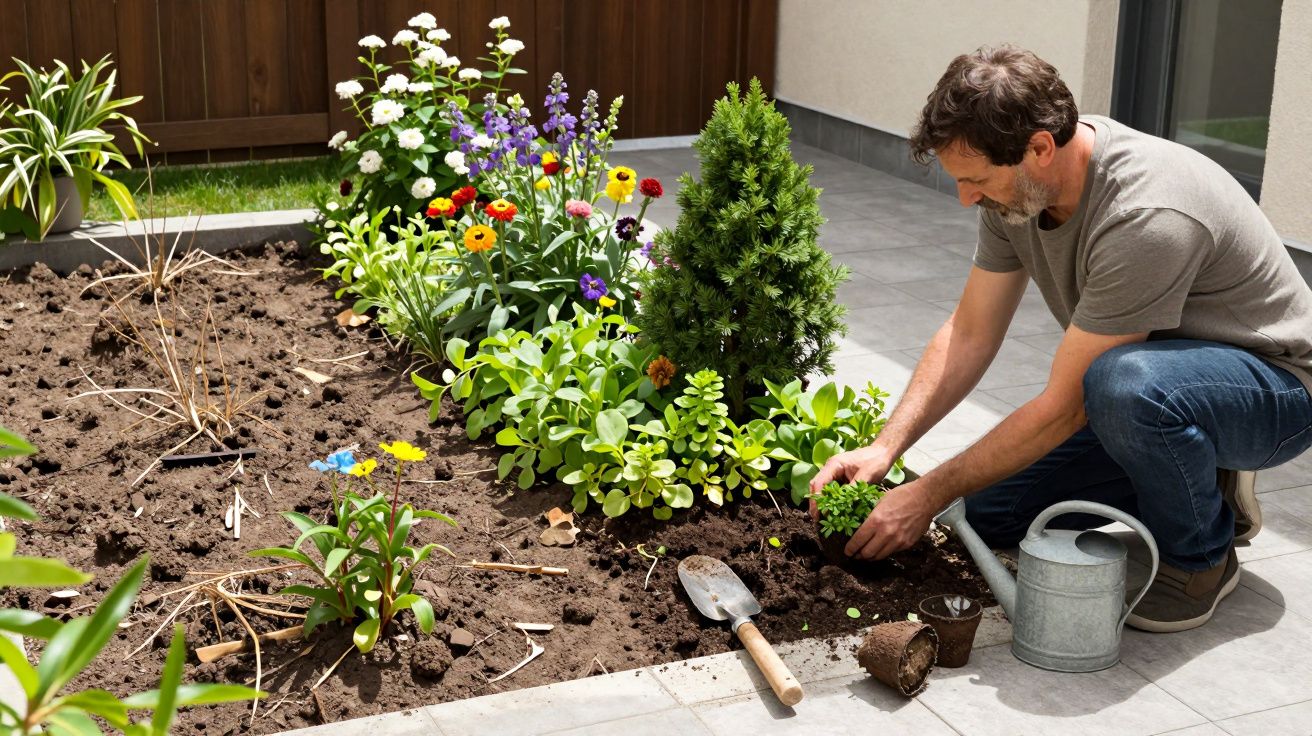
- Can I switch from mulch to living cover later? Yes. Mulch first to stabilise moisture and biology, then plug-plant living cover once your main plants are established and the soil surface is softer and more workable.




Comments (0)
No comments yet. Be the first to comment!
Leave a Comment