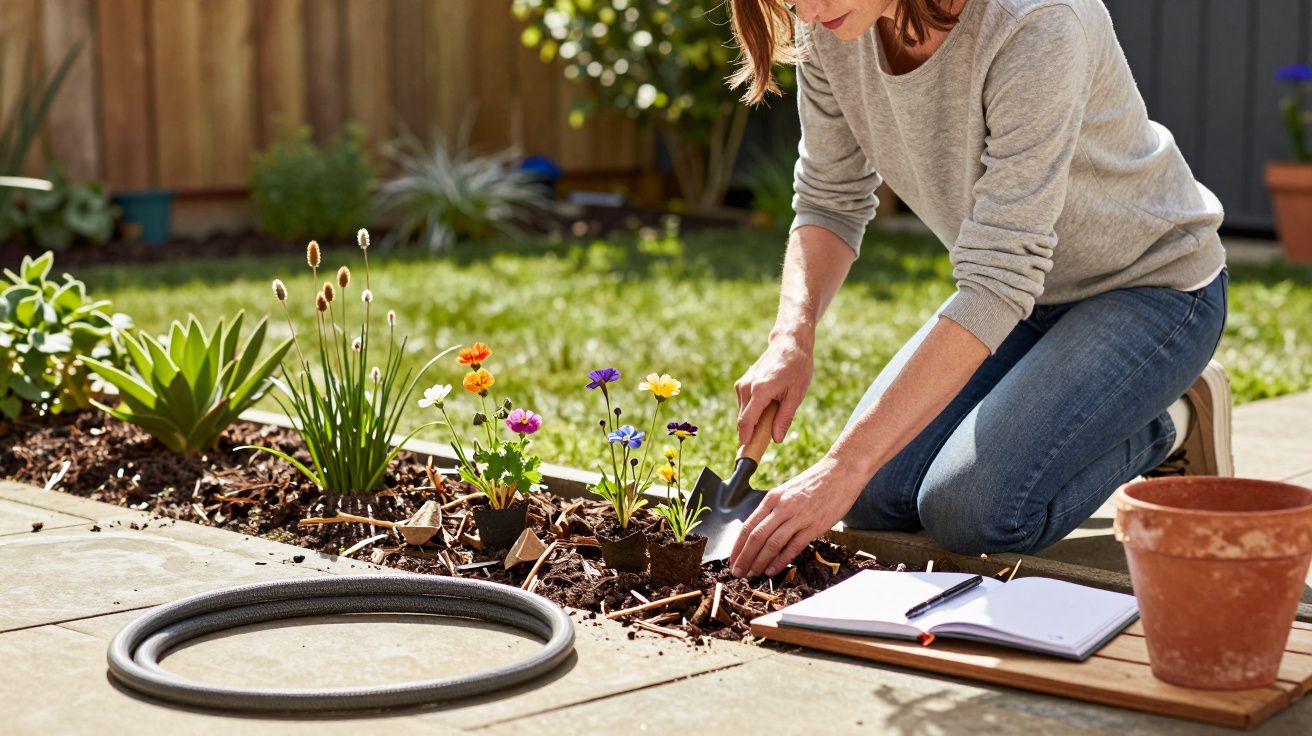
You don’t notice it on planting day, when the compost is fresh and everything looks equally promising. But choosing native plants for low-maintenance gardens changes what you’re really tending: not a collection of needy individuals, but a small, self-supporting system that understands your weather and your soil. The pay-off isn’t flashy-it’s fewer emergencies, fewer “why is this sulking?” moments, and a garden that looks more like it belongs.
A neighbour once told me they wanted “a garden that doesn’t argue back”. What they meant was: no more sprinting outside with a hose in June, no more feeding schedules, no more replacing the same unhappy shrubs every other spring. Native planting is the closest thing to that truce most of us will get.
The decision most people think is aesthetic (but isn’t)
Native planting is often pitched as a style choice: meadow-ish, a bit looser, more “wild”. In practice it’s a maintenance decision, because it shifts the baseline. These plants evolved with your rainfall patterns, your temperature swings, your pests, and the particular ways British winters linger.
That doesn’t mean natives never need help. It means the help you give is less like life support and more like gentle steering.
The central idea is simple: keep the joy of a garden, stop fighting the place you live.
What “maintenance” really becomes with native plants
A conventional mixed border can feel like a rotating set of obligations: water, feed, stake, spray, replace. A native-led garden still needs attention, but the tasks change shape. You spend less time keeping things alive and more time keeping things legible.
Here’s what tends to drop away first:
- Emergency watering: deep roots and seasonal timing do a lot of the work once established.
- Constant feeding: natives generally cope with average soils; overfeeding often just makes them flop.
- Pest panic: you still get aphids and mildew, but you also get more predators and balance.
- High turnover planting: fewer “this looked nice at the garden centre” regrets.
And here’s what replaces it:
- Establishment care: the first year matters; after that, you’re mostly guiding.
- Editing instead of rescuing: cutting back, lifting and dividing, thinning-tidy interventions.
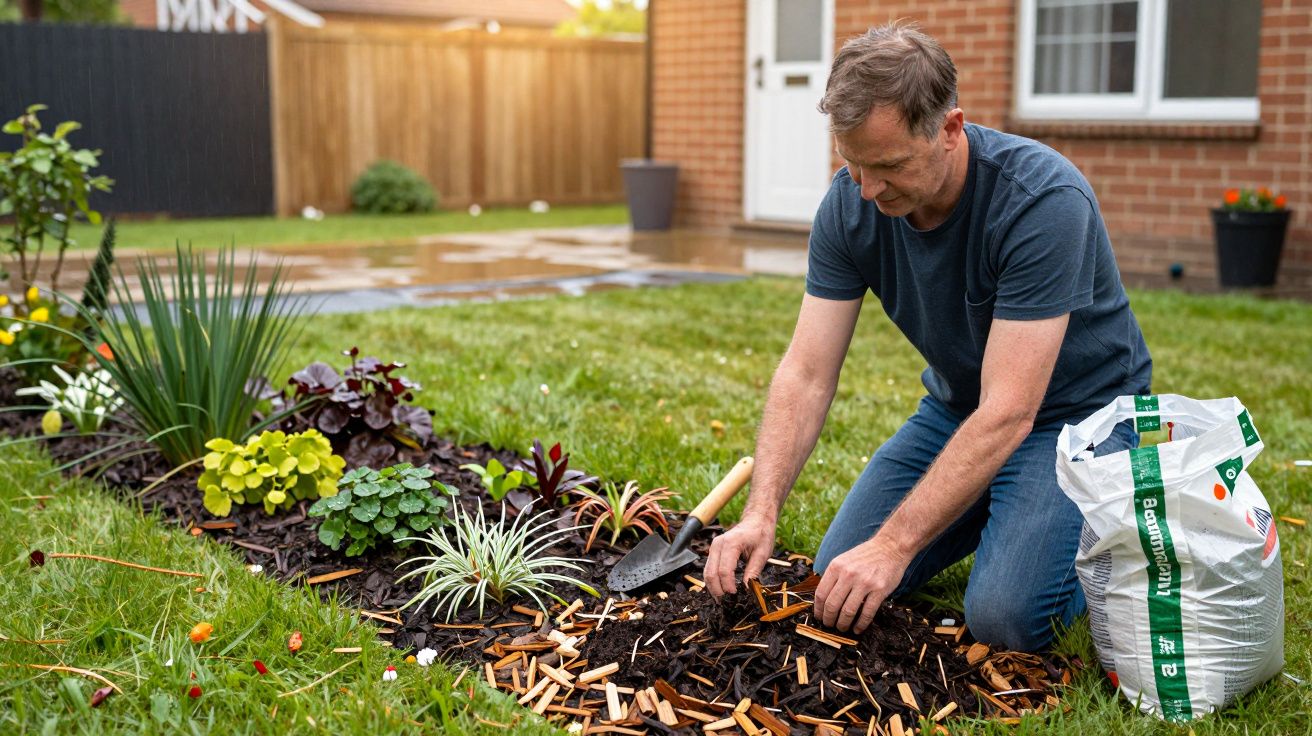
- Mulching with purpose: to suppress weeds and hold moisture, not to prop up weak plants.
The two-year truth nobody puts on the label
Native plants don’t always give instant gratification. Year one can look sparse, especially if you’re used to mature pots dropped into place for an immediate show. Year two is when the root system starts behaving like it owns the ground, and the garden begins to feel steadier.
If you plant natives and then treat them like bedding-regular feeding, frequent shallow watering, fussing every week-you can accidentally train them into dependence. The shift happens when you let them settle and do what they were built to do.
A useful rule of thumb
- Year 1: water deeply, weed diligently, accept that it’s a build stage.
- Year 2: reduce inputs, watch what spreads, begin gentle shaping.
- Year 3+: maintenance is mostly seasonal: cut back, thin out, top up mulch.
How natives make low-maintenance gardens feel calmer
There’s a psychological benefit people don’t talk about much: you stop second-guessing the garden. With plants that suit your conditions, fewer things look “wrong” all at once. Leaves yellowing in August can be normal drought response, not a crisis. A messy patch in March might be habitat, not failure.
Native planting also changes the rhythm of the year. Instead of expecting constant peak display, you start noticing smaller shifts-seedheads, winter structure, the way early insects find the first flowers. That attention makes the garden feel productive even when it isn’t loudly blooming.
The practical planting choices that make the biggest difference
You don’t have to turn the entire plot into a nature reserve. The maintenance win often comes from a few key swaps-especially in the places that currently demand the most from you.
1) Match the plant to the stress point, not the Pinterest photo
- Dry, sunny edges: lean into drought-tolerant natives rather than fighting with thirsty ornamentals.
- Damp patches: choose plants that don’t resent wet feet instead of trying to “fix” the soil every year.
- Windy corners: use tougher, locally adapted structure rather than brittle showpieces.
2) Plant in communities, not specimens
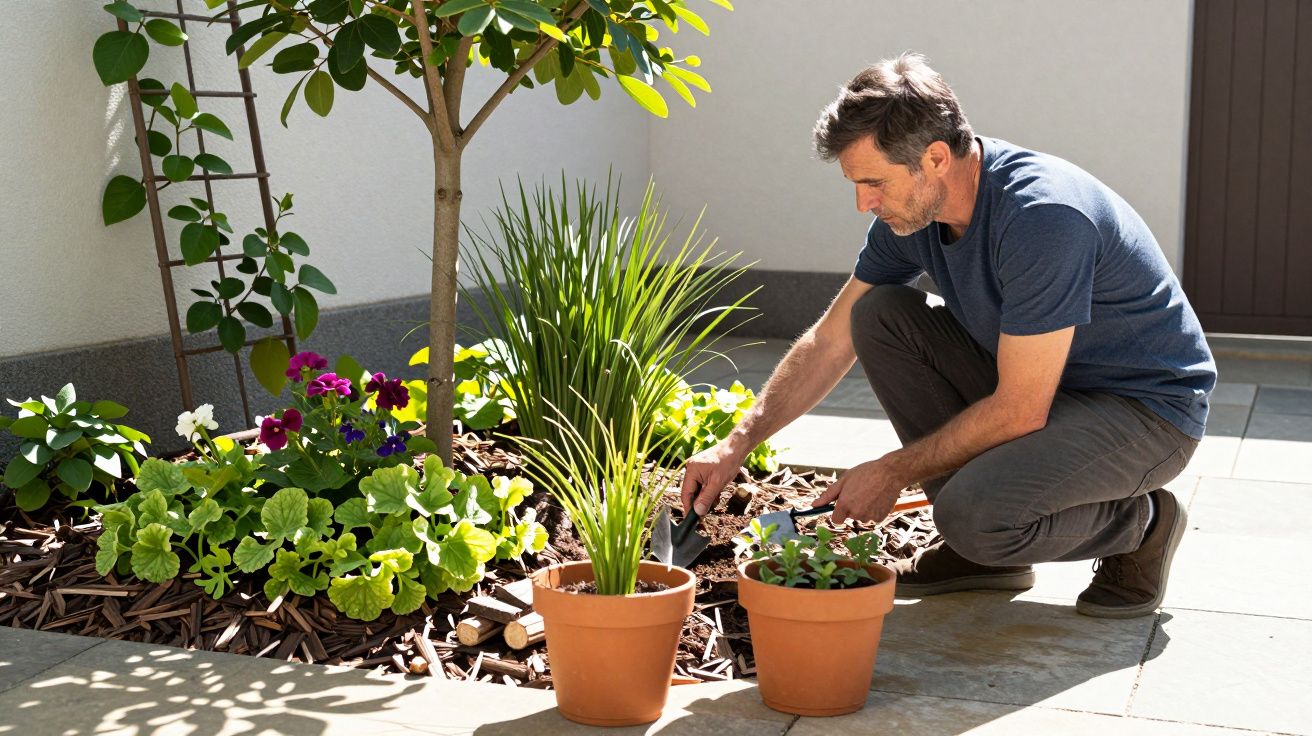
A single plant surrounded by bark can look tidy, but it behaves like an isolated object: weeds move in, moisture evaporates, and you end up hovering. Planting in groups-ground layer, mid layer, taller layer-shades soil and reduces the open space where problems start.
3) Let some things finish their cycle
One of the quiet cheats of low maintenance is not clearing everything the moment it fades. Leaving seedheads and stems through winter reduces replanting, feeds birds, shelters insects, and gives you structure when the garden would otherwise look bare.
“Native” doesn’t mean “no work”: staying realistic
There are a few ways people accidentally sabotage the low-maintenance promise:
- Planting too densely, too soon: it looks full, then becomes a wrestling match.
- Over-mulching and under-weeding in year one: weeds love a head start.
- Assuming every native suits every garden: “native” is regional; conditions still matter.
- Chasing perfection: a living garden always has bite marks and odd gaps.
If you want a neat garden, you can still have one. The trick is choosing the right kind of neat: defined edges, clear paths, repeated plant groups-order in the framework, not constant control in the planting.
A simple way to start without redoing everything
If you’re curious but wary, treat it like an experiment rather than a conversion. Pick one bed or one problem area and rebuild it with natives suited to that exact spot. Give it two seasons, then compare your workload honestly.
A practical starter plan:
- Choose one stressful area (too dry, too damp, too windy, always weedy).
- Remove the worst offenders (plants that sulk, scorch, or demand weekly input).
- Plant a small palette repeatedly (fewer species, more of each).
- Mulch and water well for the first year-then taper off.
- Keep notes: what self-seeds, what flops, what stays sturdy.
The maintenance change doesn’t arrive as a miracle. It arrives as a summer where you realise you haven’t had to intervene much at all.
FAQ:
- Are native plants always better for low-maintenance gardens? Often, but not automatically. They’re lower maintenance when they match your specific conditions (soil, light, moisture) and you allow a proper establishment year.
- Will a native garden look messy? It can, unless you build in structure. Crisp edges, paths, and repeated blocks of planting make even “wild” species read as intentional.
- Do I still need to water native plants? Yes at first. Water deeply through the first growing season (sometimes two in very dry sites), then reduce as roots establish.
- Can I mix natives with non-natives? Yes. Many low-maintenance gardens are mixed; the key is avoiding high-demand plants that force you into constant feeding, watering, or spraying.


Comments (0)
No comments yet. Be the first to comment!
Leave a Comment