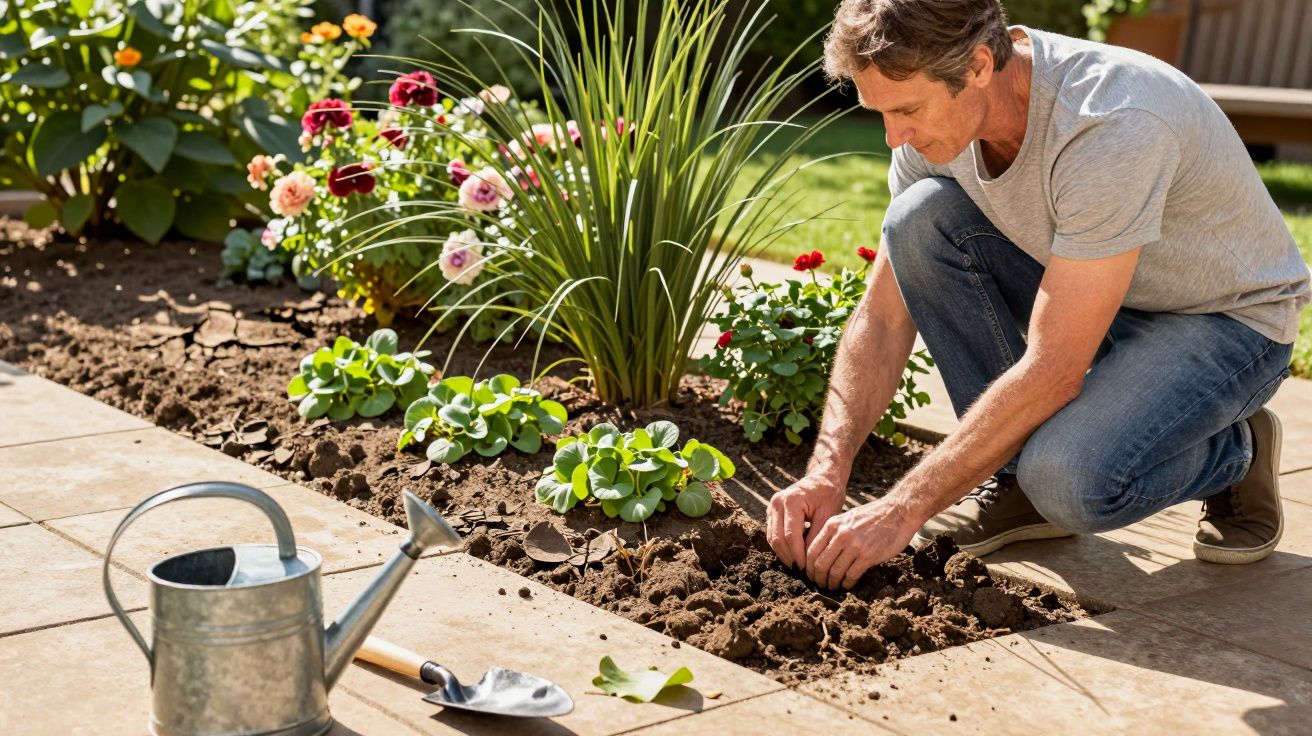
It was after the second heatwave that I noticed the gap. The border looked “full” on a normal day, but under weather extremes it behaved like a sieve: the soil baked hard, the water ran off, and the plants that were meant to cope simply… didn’t. That’s when mixed planting layers started to make sense - not as a design trend, but as a practical way to keep a garden steady when the forecast stops behaving.
Because the slightly messy look is the point. A layered planting scheme holds onto moisture, breaks the wind, shades the soil, and gives you backups when one type of plant struggles. It’s less about perfect spacing, more about building a small, living buffer.
The “messy” layer that acts like garden insulation
Mixed planting layers means growing plants in overlapping heights and roles: groundcovers under perennials, grasses through shrubs, spring bulbs beneath summer canopy, climbers along a fence line. Instead of one flat plane of flowers, you build a stacked system.
In real terms, it works like insulation. The top layer takes sun and wind; the middle layer slows down air movement and reduces evaporation; the bottom layer covers bare soil so it doesn’t turn into a hot plate. When rain does come, it hits leaves first, drips down more slowly, and has time to soak in rather than bouncing off compacted ground.
You’ve probably seen this in old cottage gardens and thought, lovely, but chaotic. The quiet twist is that “chaos” is often why those gardens cope better when conditions swing.
What actually changes during weather extremes
Extreme weather stresses plants in predictable ways: drought pulls moisture out faster than roots can replace it; sudden downpours strip soil and splash disease upwards; high winds tear leaves and snap top-heavy stems; late cold snaps catch tender shoots.
Mixed planting layers doesn’t stop the weather. It reduces the impact at plant level.
- During heat: leaf cover shades the soil and lowers surface temperature, which protects fine roots and soil life.
- During heavy rain: dense planting slows water, reducing run-off and erosion, and helping infiltration.
- During wind: shrubs and tall perennials act as baffles, meaning smaller plants aren’t constantly dehydrated by moving air.
- During cold snaps: a more stable microclimate forms close to the ground, and exposed soil is less likely to heave and crack.
It’s not magic. It’s physics, plus more roots in more places.
How to build layers without turning the border into a jungle
Start small: one bed, one border, even one side of a path. The goal isn’t to cram plants in; it’s to remove big gaps of bare soil and single-height planting that leaves everything exposed.
A simple three-layer blueprint
- Bottom layer (soil cover): low plants that spread and knit the surface together.
- Middle layer (bulk): your main flowering perennials and grasses.
- Top layer (structure): shrubs, small trees, or tall perennials that take the brunt of sun and wind.
If you’re standing in the bed and you can see lots of open soil, you’ve got an opportunity. Bare soil is where you lose moisture fastest and where rain hits hardest.
Plant choices that make layering easier (UK-friendly)
You don’t need rare species. You need plants that behave well and do their job.
- Groundcover: creeping thyme, hardy geraniums, ajuga, lamium, sedum (sun), epimedium (shade)
- Mid layer: salvias, echinacea, astrantia, verbena bonariensis, nepeta, grasses like miscanthus or deschampsia
- Structure: hazel, cornus, pittosporum (milder areas), viburnum, hydrangea, rosemary (sheltered), small crab apples
Aim for a mix of root types too. Fibrous-rooted grasses hold soil; deeper-rooted perennials can tap moisture lower down. Together they share the workload.
The maintenance shift nobody tells you about
Layered planting often reduces the kind of maintenance that drains you. Less bare soil means fewer weeds germinating, and shaded ground holds onto watering longer. You spend less time rescuing stressed plants and more time doing small, quick edits.
The trade-off is that you stop chasing “perfect edges” every week. Some plants will lean, self-seed, or thread through neighbours. If that makes you itch, choose tidier groundcovers and be stricter with spring cutbacks. The resilience doesn’t come from untidiness itself - it comes from coverage and diversity.
A good rule is to let plants touch but not smother. If one species starts eating the bed, edit it like you’d prune a hedge: firmly, without guilt.
A quick checklist to make it work this season
- Replace mulch-only gaps with living groundcover where you can
- Add one structural plant to break wind and create shade (even a large pot counts)
- Repeat a few reliable species rather than doing “one of everything”
- Water deeply less often, so roots chase moisture down
- Leave some stems over winter where appropriate: they slow wind and protect crowns
If you want one immediate win, start with the bottom layer. A covered soil surface is the difference between a border that swings wildly and one that stays calm.
| Point clé | Détail | Intérêt pour le lecteur |
|---|---|---|
| Layering = microclimate | Shade + reduced wind at ground level | Less drought stress, fewer scorched plants |
| More roots, more stability | Different root depths hold and access water | Better recovery after heat or storms |
| Coverage beats perfection | Fewer bare patches, slower run-off | Less weeding, less erosion |
FAQ:
- Is mixed planting layers just another name for “cramming plants in”? No. It’s planned overlap: plants can touch, but you still leave enough air flow and space for each to reach its mature size (with occasional editing).
- Will it make slugs worse? It can increase damp hiding spots. Counter it with airflow (don’t overpack), morning watering, and a few slug-resistant choices (many salvias, nepeta, hardy geraniums).
- Do I still need mulch if I use groundcover? Often less. A thin mulch helps while groundcover establishes, but once soil is shaded and rooted, the plants do much of mulch’s job.
- What’s the fastest way to add a bottom layer? Plug plants or divisions of hardy geranium, ajuga, lamium, or thyme. They knit in quickly and immediately reduce exposed soil.
- Does this help in containers too? Yes. Try a “thriller, filler, spiller” approach: one taller plant, mid-height bulk, and a trailing/covering plant to shade the compost.




Comments (0)
No comments yet. Be the first to comment!
Leave a Comment