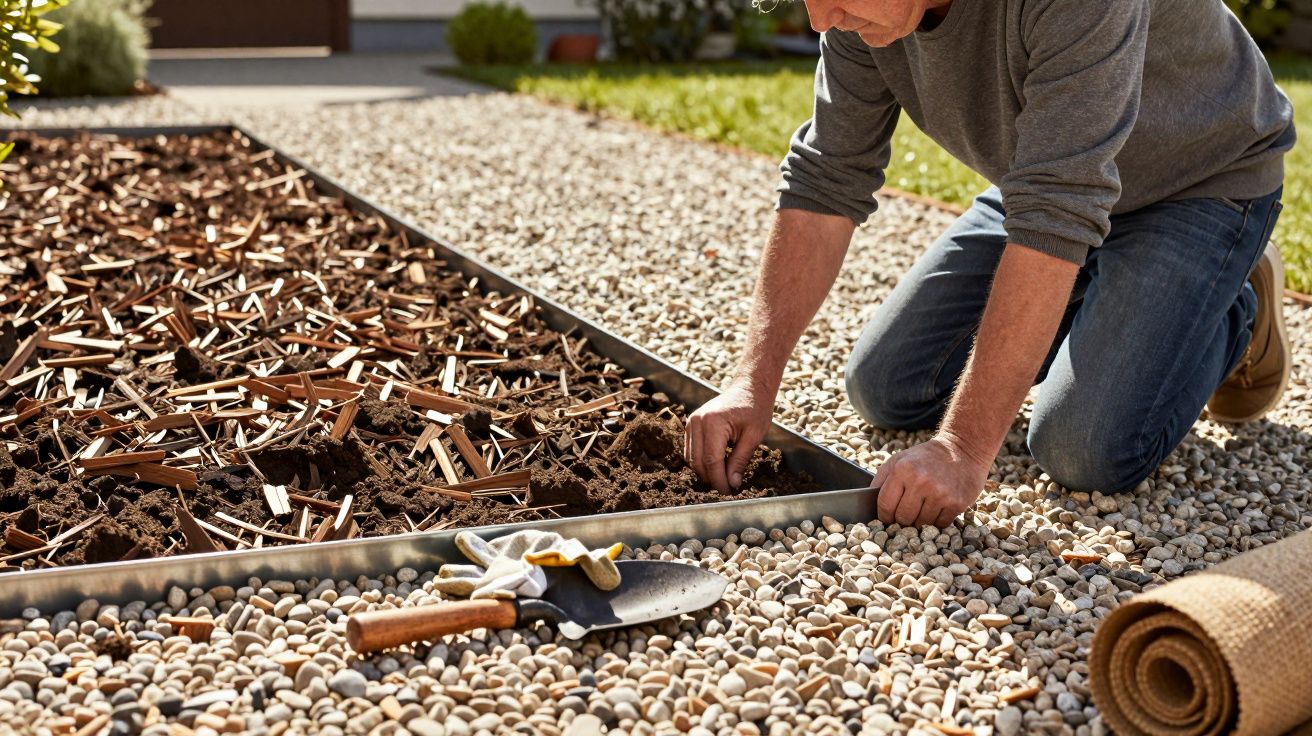
You can spot low-maintenance landscapes a mile off: tidy gravel, tough shrubs, a path that never seems to need edging. They often borrow from environmental practices-less water, fewer chemicals, fewer weekend hours lost to mowing-and that’s exactly why people love them. But the calm, “set-and-forget” look hides one decision that keeps coming back to collect interest.
It shows up the first summer a weed finds a seam, the first winter a puddle sits where you thought it would soak away, or the first time you realise the garden is easy… but strangely lifeless. The crucial choice isn’t the plant list. It’s what you put under everything.
The one decision that decides whether “low-maintenance” stays true
Most low-maintenance schemes fail in the same quiet way: the surface looks finished, but the structure isn’t. Gravel without the right base migrates like sand on a beach. Mulch without a plan turns into a seedbed. A paved area without proper falls becomes your new favourite puddle.
The decision is simple to say and annoyingly hard to undo: choose your ground layer and edges as if they’re permanent. That means deciding, up front, what kind of surface you’re committing to and how it will be held in place.
Low-maintenance is rarely about doing nothing. It’s about doing the boring parts properly once.
Gravel, mulch, or living cover? Pick the “maintenance you can tolerate”
People talk about low maintenance as if it’s one thing. In reality, you’re choosing which small job you’re willing to repeat: topping up, sweeping back, cutting back, or pulling out.
Here’s what each option tends to ask of you:
- Gravel (decorative aggregate): Occasional raking, leaf clearing, and topping up every few years. Weeds will arrive eventually; your job is making them easy to remove.
- Mulch (woodchip/bark): Annual top-up, a quick fork-through in spring, and vigilance near edges where it thins. Great for soil, but it breaks down on purpose.
- Living ground cover (thyme, sedum, geraniums, carex): Watering in year one, then seasonal trimming and gap-filling. Less “sterile tidy”, more “soft and forgiving”.
The mistake is mixing them without rules. A gravel strip next to mulch with no edging becomes a slow-motion migration. A living cover that’s expected to behave like gravel will disappoint you by being, well, alive.
A quick “if this, then that” guide
- If you want maximum neatness, choose gravel with hard edging.
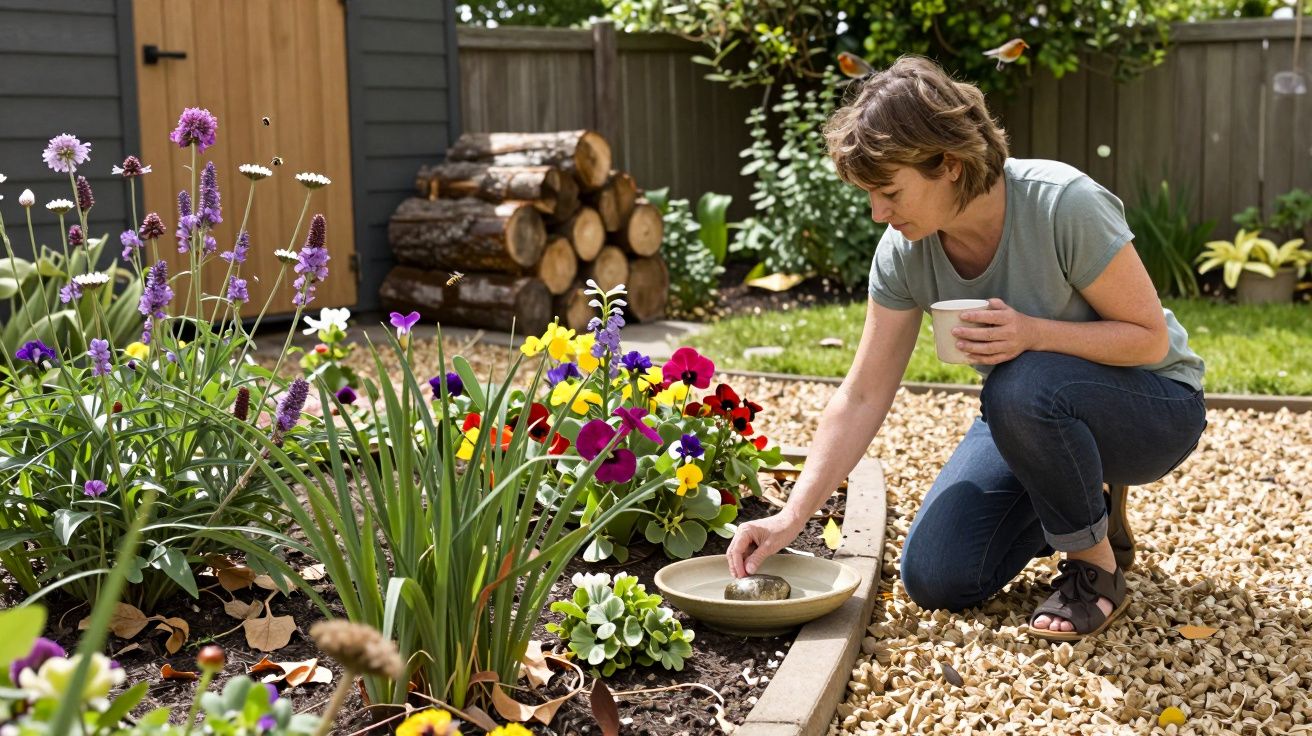
- If you want better soil and wildlife value, choose mulch or ground cover.
- If you want the least visible upkeep, choose ground cover and accept a slightly wilder look.
The base layer: where most “easy gardens” quietly go wrong
Stand in any newly-finished low-maintenance garden and you can usually tell what’s underneath by how it feels to walk on it. Spongy? The base is thin. Crunchy but shifting? No proper membrane or edging. Solid but always wet? Falls and drainage weren’t thought through.
A good base does three jobs:
- Stops sinking (by spreading load and separating materials).
- Manages water (so it drains or flows somewhere intentional).
- Controls weeds (not forever, but enough that you’re not fighting a jungle by July).
That’s why the “crucial decision” is really a bundle: membrane choice, sub-base depth, and edging detail.
Weed membrane: not all fabric is your friend
There’s a temptation to buy the cheapest roll and call it done. The problem is that thin, plastic-y membranes tear, lift, and create perfect pockets for windblown compost to collect. Then you’re pulling weeds out of a mat you can’t remove without taking the whole garden apart.
What tends to work better:
- Woven geotextile under gravel: permeable, tough, and less likely to turn into shredded confetti.
- No membrane under mulch in many beds: a thick mulch layer can be the weed control, and it lets you keep feeding the soil.
- Cardboard layer under mulch for a reset year: simple, cheap, and it disappears-especially useful if you’re aligning with environmental practices and trying to reduce plastics.
Edging is the quiet hero (and the thing you’ll curse if you skip)
Edging feels cosmetic until it isn’t. It’s the line that keeps gravel out of your borders, mulch off your path, and ground cover from becoming an ambitious annexation project.
If you want the garden to stay “finished” without constant fiddling, choose an edging you won’t have to renegotiate every month:
- Steel edging: clean line, lasts, bends into curves, holds gravel well.
- Stone setts or kerbs: heavier work, but brutally effective and visually classic.
- Timber edging: quick and warm-looking, but will rot and shift sooner than you think in damp soil.
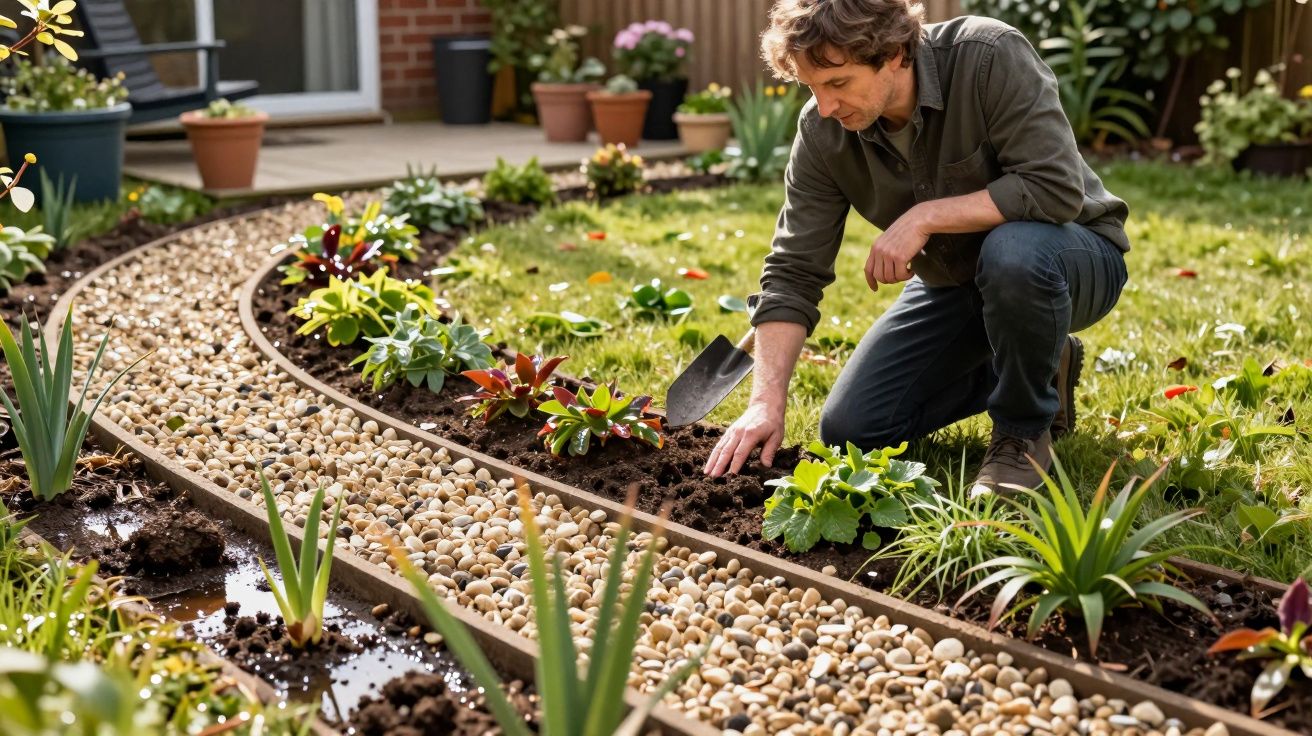
One more detail people miss: edging isn’t just a line, it’s a level. If gravel sits higher than the edging, it will travel. If mulch sits lower, it will thin at the border first.
The low-maintenance check you can do in five minutes
Before you commit, do a quick walk-through with a slightly suspicious mindset. Pretend you’re the weather.
- Where will heavy rain go in ten minutes?
- Where will leaves collect in October?
- Where will windblown soil land and germinate in spring?
- What happens when you wheel a bin across it in winter?
If you can point to a place where water will pool or debris will gather, you’ve just found the future maintenance job. Fixing that on paper is cheap. Fixing it after installation is where low-maintenance becomes high-regret.
A minimal plan that stays easy for years
If you want one reliable template, keep it boring and deliberate:
- Make one main surface (gravel or living cover) do most of the work.
- Give it a proper edge all the way round.
- Put effort into falls and drainage before you think about plants.
- Use plants as punctuation, not carpet: a few structural shrubs, grasses, and repeaters you can cut back once.
The irony is that the best low-maintenance landscapes look relaxed because they’re built like a small piece of infrastructure. Once the base and edges are decided well, the rest becomes genuinely simple: less watering, fewer inputs, and a garden that doesn’t demand your Saturdays to keep its shape.




Comments (0)
No comments yet. Be the first to comment!
Leave a Comment