Composting systems are often sold as a tidy way to deal with peelings and garden clippings, but the best ones quietly do more than feed a heap. Used well, they support soil regeneration by turning waste into a living amendment that rebuilds structure, steadies moisture, and invites biology back into tired ground. If you garden, keep houseplants, or simply want less in your bin, this matters because it shifts you from “disposing” to “replenishing” with very little drama.
The change doesn’t shout. It smells less. The blackbirds show up. Your beds stop crusting over after rain. Then one day you realise you’re not just making compost-you’re building a small system that makes your whole growing space easier to manage.
Why this kind of composting works beyond the compost pile
Most compost advice focuses on ratios and temperature, but the hidden win is consistency. A simple, repeatable composting system reduces the swings: too wet, too dry, too much effort, too much guilt. When inputs arrive steadily and the pile stays aerated, you get compost that’s stable enough to feed microbes without burning roots or collapsing into sludge.
That stability is the bridge to soil regeneration. Soil doesn’t recover because you applied “a fertiliser”; it recovers because you created conditions where fungi, bacteria, worms, and roots can do their work without stress.
Think of compost as a habitat builder, not a nutrient product.
The three-part system that supports more than soil
You don’t need a complicated setup. You need a flow that matches your life, your space, and your tolerance for mess. This three-part approach is the one that tends to stick.
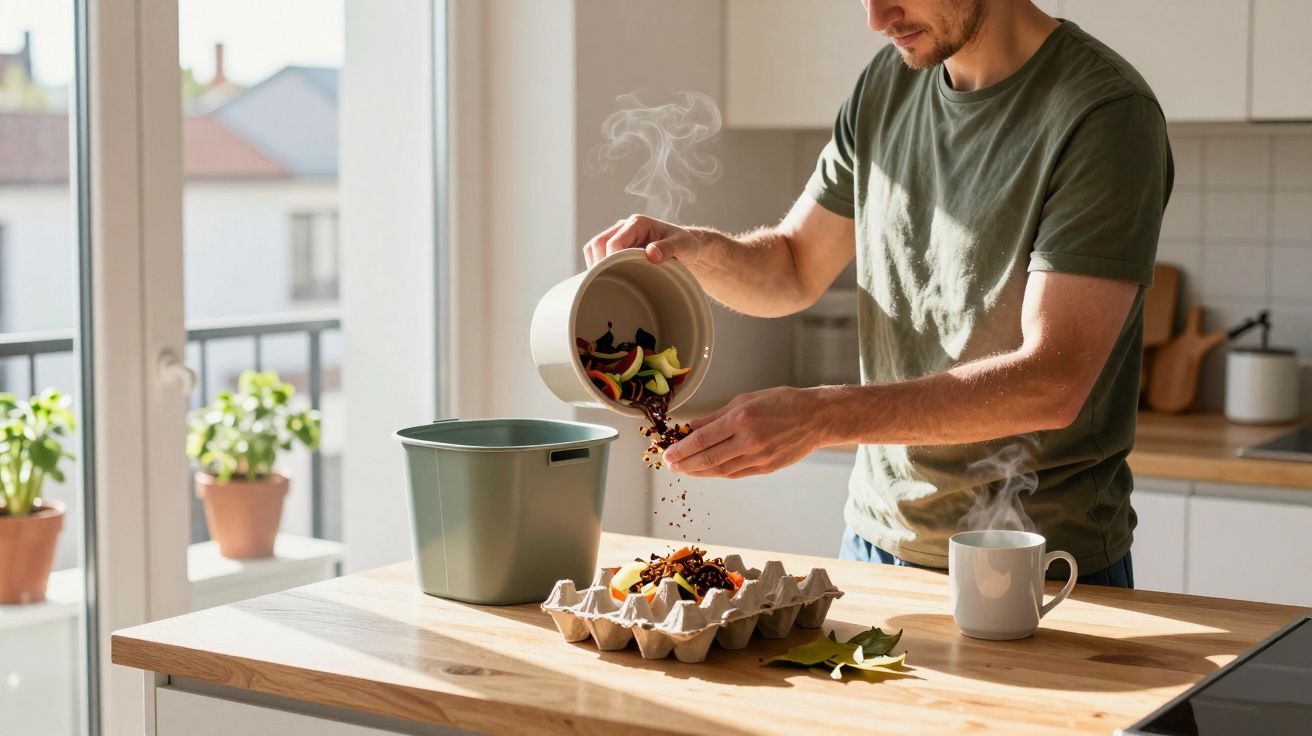
1) A kitchen caddy that makes the right behaviour automatic
If the container is easy to open, easy to line, and easy to rinse, you will use it. If it’s fiddly or leaky, you’ll “temporarily” put scraps in the general bin and forget until next week. Keep it small enough that you empty it often-frequent emptying prevents smells and fruit flies more reliably than any gadget.
Practical choices that help:
- A tight lid and smooth interior (no ridges that trap gunk).
- A bit of torn cardboard or egg box in the bottom to absorb moisture.
- A routine: empty it when you make tea, not when you “have time”.
2) An outdoor or balcony unit designed for airflow, not aesthetics
Aeration is the difference between a composting system that quietly ticks over and one that turns into a soggy negotiation. Bins with side vents, slatted bays, or tumblers all work if you can keep the contents fluffy. If your space is small, a sealed bokashi bucket can be a good pre-step, but it still needs a final destination (soil trench, compost bin, or a community heap) to finish properly.
A useful rule is “wet gets brown”. If you add lots of coffee grounds, food scraps, or fresh grass, add shredded paper, dry leaves, or ripped cardboard immediately, not later when it smells.
3) A curing corner, because finished compost needs a pause
Freshly “done” compost often looks ready before it is ready. A simple curing stage-another small bin, a builder’s bag with holes, or a covered pile-lets microbes finish stabilising the material. The payoff is compost that behaves: it doesn’t rob nitrogen, it doesn’t heat up in pots, and it smells like woodland rather than yesterday’s salad.
If you only change one thing, add this stage. It’s the quiet upgrade that makes the whole system feel calm.
How this supports soil regeneration in real, visible ways
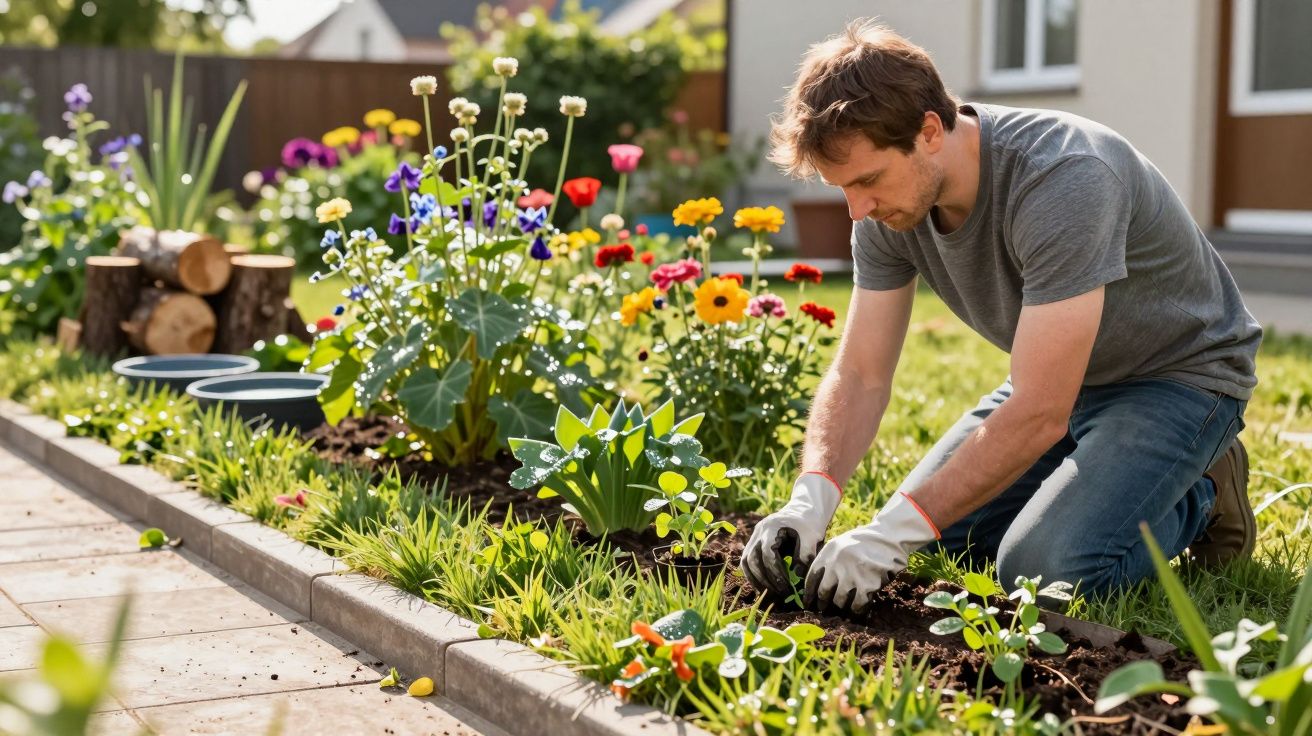
Healthy soil is not just dirt plus nutrients; it’s structure plus life plus water management. Finished compost helps on all three, particularly when you apply it as a thin, regular layer rather than a rare, heroic dump.
What you may notice over a season:
- Better crumb and fewer cracks: organic matter helps particles bind into stable aggregates.
- More consistent moisture: compost acts like a sponge and a buffer, reducing both drought stress and waterlogging.
- More roots in the topsoil: plants explore where conditions are safe, oxygenated, and biologically active.
- More worms and less “dead” smell: biology returns when there’s food and air, not just fertiliser.
The point isn’t perfection. It’s compounding. A small top-dress twice a year often does more for soil regeneration than one big intervention you can’t repeat.
The “no-drama” operating rules that keep it sweet
Composting fails when it becomes an argument with physics. These are the simple cues that keep your system steady without turning your week into a project.
- If it smells sour or rotten: add dry browns, mix, and increase airflow.
- If it’s dry and inactive: add a little water and more greens, then cover with browns.
- If you see flies: bury fresh scraps in the centre and cap with cardboard or leaves.
- If it’s cold in winter: keep adding small amounts; decomposition slows, but the system holds.
A small, consistent input schedule beats a perfect ratio you only manage once a month.
Quick snapshot: what to add, what to pause on
| Input | Best use | Watch for |
|---|---|---|
| Veg scraps, coffee, tea | Daily “greens” base | Cap with browns to prevent flies |
| Cardboard, leaves, paper | Moisture control + airflow | Avoid glossy inks and plastic tape |
| Grass clippings | Nitrogen boost, heats piles | Add in thin layers to stop matting |
The wider support you might not expect
A good composting system supports more than soil. It supports your home rhythm and your sense of agency: less bin smell, fewer collections, fewer “I should be doing more” spirals. It also supports your local environment by keeping organic waste out of landfill, where it generates methane under anaerobic conditions.
And if you share compost with neighbours, allotments, or a community garden, it becomes social infrastructure too-one of the rare sustainability habits that can feel practical rather than performative.
The win isn’t that you produce compost. The win is that you produce it reliably.
Two small add-ons that make the system stick
Make it a 30-day experiment:
- Pick one brown source (a cardboard stash, a leaf bag, a shredder routine).
- Tie emptying the kitchen caddy to one daily anchor (kettle, dog walk, school run).
Track only one thing: “Did I cap the greens?” When that’s automatic, everything else gets easier.
FAQ:
- Can I compost cooked food? In most home composting systems it’s best to avoid cooked food, meat, and dairy because they attract pests; use a bokashi bucket if you want to include them, then finish in a compost heap or soil trench.
- Do I need a tumbler to get good compost? No. Tumblers make turning easier, but any setup that maintains airflow and a greens-to-browns balance can produce excellent compost.
- How often should I add compost to beds for soil regeneration? A thin top-dress (about 1–3 cm) once or twice a year is a reliable, repeatable approach; let worms and rain work it in.
- Why does my compost go slimy? It’s usually too wet and compacted. Add dry browns, mix to introduce air, and avoid large wet clumps of grass or food waste.




Comments (0)
No comments yet. Be the first to comment!
Leave a Comment