The first time I noticed climate-resilient gardens, it wasn’t in a glossy show garden. It was on an ordinary street where sustainable landscaping had quietly replaced thirsty borders with plants that looked calm, even after a week of hot wind and a hosepipe ban. The point isn’t perfection; it’s reliability - a garden that keeps going when the weather stops playing fair.
You can feel the shift in how people talk about their plots. Less “what will look good in June?” and more “what won’t collapse in August?” It’s not dramatic, and that’s why it’s spreading.
The idea: plant for stress, not for a brochure
A climate-proof garden isn’t a style. It’s a set of choices that assume extremes will happen: sudden downpours, sharp dry spells, mild winters followed by late frosts, heat that lingers into September.
The quiet trick is to stop fighting your conditions and start designing around them. That means building soil that holds water when you need it, drains when you don’t, and planting in a way that doesn’t demand constant rescue.
A resilient garden doesn’t need you to panic every time the forecast changes.
What actually makes a garden “resilient”
It’s less about importing exotic plants and more about creating a system that can cope. The best ones tend to share a few unglamorous habits:
- Healthy soil structure: compost, leaf mould, and a refusal to leave bare ground.
- Right plant, right place: sun-lovers in sun, tough shade plants where it’s dry under trees.
- Layered planting: groundcover, perennials, shrubs - less exposed soil, less evaporation.
- Water directed, not sprayed: rain captured, mulch used, watering done slowly at the roots.
You’ll still get casualties, especially in the first year. But the overall feel changes: fewer crisps-at-the-edge leaves, fewer emergency trips with a watering can at dusk.
The small design move that changes everything
The move is this: swap a chunk of high-demand planting for a drought-and-deluge bed - a planted area designed to handle both dry spells and sudden rain.
It can be as small as a 1m x 2m border. You slightly reshape the ground, improve the soil, mulch it properly, and fill it with plants that don’t sulk when watering is irregular. If you want one element that does double duty, add a shallow “dip” at one end to catch storm water from a path or downpipe (a mini rain garden), then plant that zone with moisture-tolerant perennials.
It’s not a grand renovation. It’s one bed that behaves better than the rest, and once you’ve got one, you tend to make another.
A simple way to start this weekend (without redoing the whole garden)
1) Choose a problem patch, not your prettiest one
Pick the border that always looks worst: the strip by the fence that bakes, the corner under the tree, the bit the rain batters and then cracks like a biscuit.
That patch will give you fast proof. If it improves, everything else will feel possible.
2) Do the boring bit: soil and surface
You don’t need to dig to Australia, but you do need to stop treating soil like a plant holder.
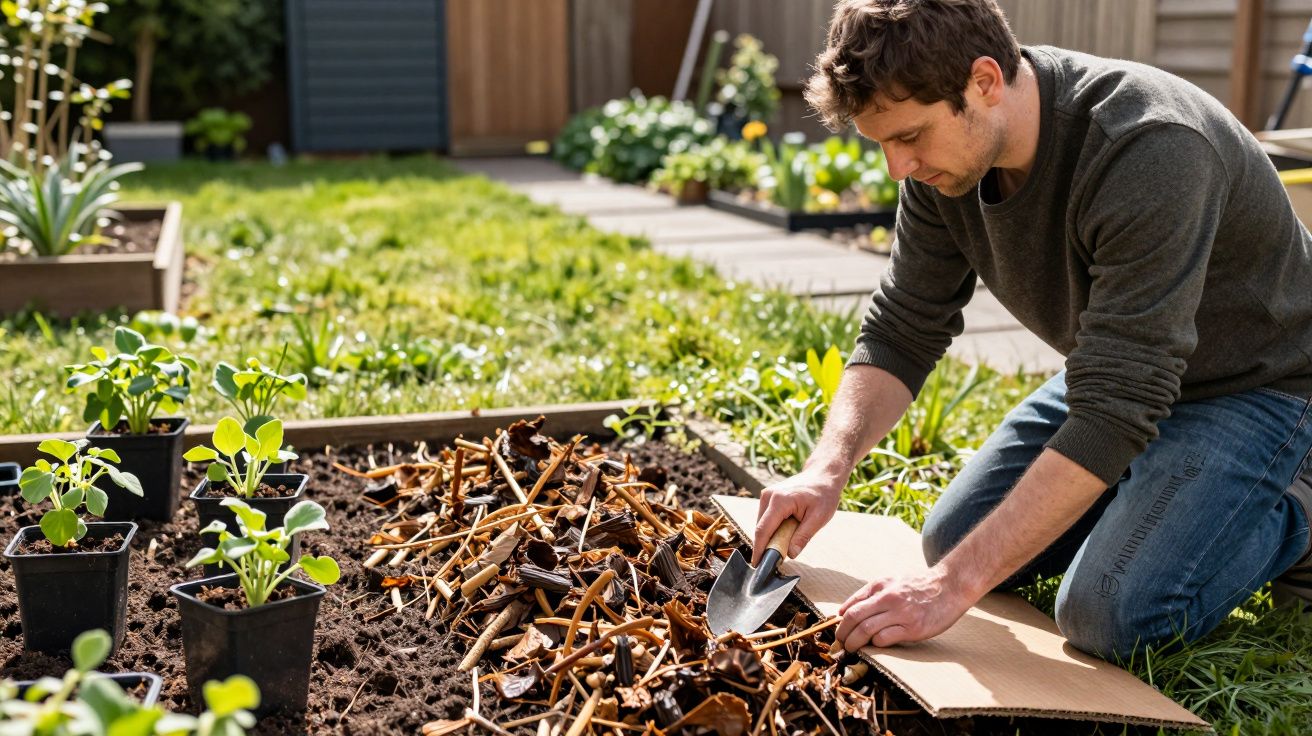
- Fork in compost (and a bit of grit if it’s heavy clay and puddles).
- Remove weeds properly, especially bindweed and creeping buttercup.
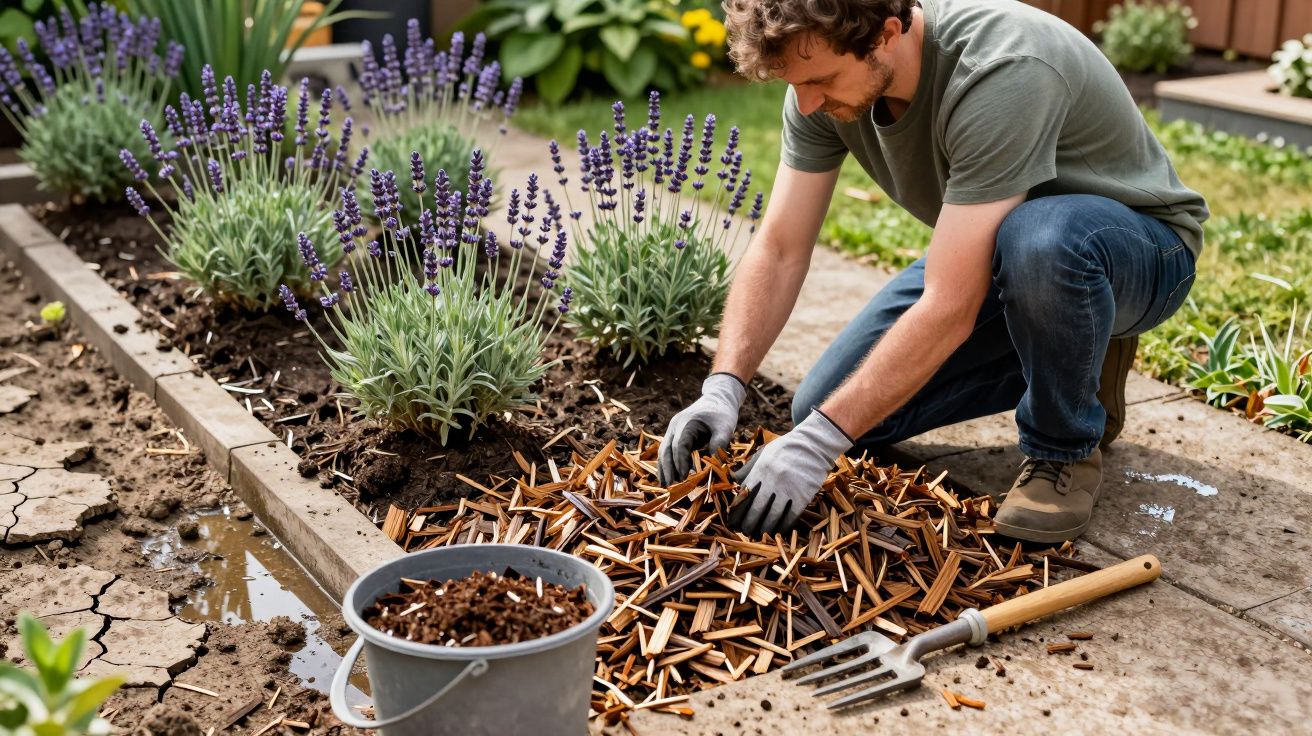
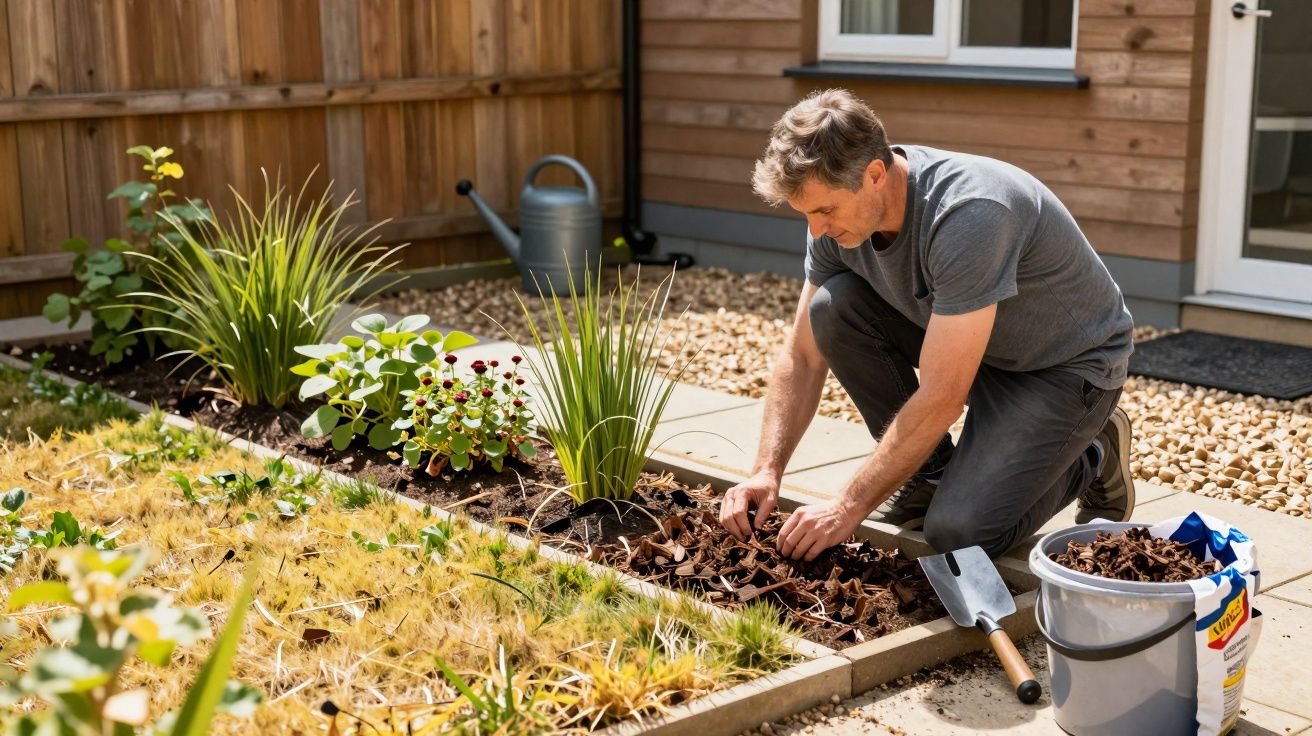
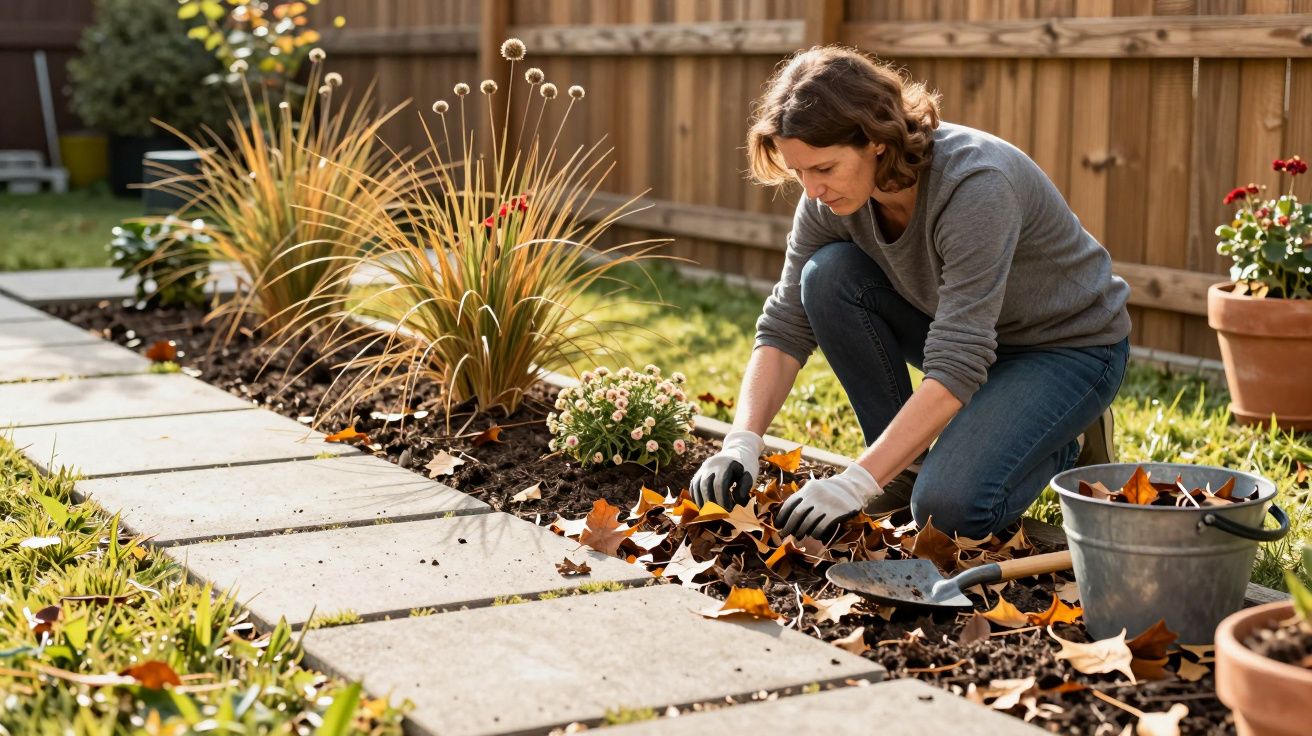
- Finish with 5–7 cm of mulch (woodchip for shrubs, composted bark, or leaf mould).
Mulch is the quiet hero. It cushions heat, slows evaporation, and softens the impact of sudden rain so water soaks in rather than skating off.
3) Plant in groups that help each other
This is where climate-resilient gardens feel different: fewer lonely specimens, more repeating drifts. Grouping reduces soil exposure and makes watering more efficient.
A reliable beginner mix (UK-friendly, not precious) looks like:
- Dry, sunny: lavender, salvia, eryngium, achillea, nepeta, rosemary, thyme
- Dry shade: epimedium, geranium macrorrhizum, hellebores, sarcococca, euphorbia amygdaloides (where suitable)
- Rain-garden dip / damp edge: iris sibirica, astrantia, ligularia, filipendula, carex (choose to suit your light)
If you’re unsure, copy what thrives locally. The street a few roads over is basically a free trial plot.
How it looks and feels over the first season
The first month can feel underwhelming because you’ve replaced “instant impact” with “future stamina”. Then you notice the small wins: fewer scorched leaves, less flop after heavy rain, and a steadier look through late summer.
What tends to change first is maintenance. The garden stops asking for constant attention and starts responding to occasional, sensible care - mulch topped up, plants cut back, watering only when it truly needs it.
Common mistakes (and the easy fixes)
Most failures aren’t about the plant list. They’re about expectations and a couple of habits that sabotage the whole point.
- Planting into dry, tired soil and hoping: even tough plants struggle if the soil is dust. Improve first.
- Leaving bare patches between plants: that’s where moisture disappears. Use groundcover or tighter spacing.
- Little-and-often watering: it trains shallow roots. Water deeply, less often, early morning if possible.
- Chasing “Mediterranean” without drainage: gravel gardens work when water can move through. In clay, build that drainage layer into the plan.
The cost angle (and why this is catching on)
Sustainable landscaping sounds like a big project until you realise it’s often about buying less: fewer seasonal bedding plants, fewer replacements, fewer bags of compost every spring to revive exhausted soil.
A climate-proof bed can be built in phases. One border this year, one next. The garden slowly shifts from “decorative and needy” to “decorative and capable”, which is exactly what people want when time, water, and certainty all feel tighter than they used to.
A quiet checklist for a garden that copes
If you want a quick gut-check, use this:
- Can you see bare soil from the path? Cover it.
- Do you rely on daily watering in summer? Change soil and plant choices.
- Does rain pool or run off? Add organic matter, reshape, or create a small soak-in dip.
- Are most plants single specimens? Repeat in groups; it’s prettier and tougher.
You don’t need to turn your plot into a gravel courtyard or a wildflower meadow. You just need one area that proves the new logic: design for weather you can’t control, and you’ll spend less time apologising to your plants.
FAQ:
- Do climate-resilient gardens look “dry” and spiky? They don’t have to. Resilient planting can be lush; the key is soil improvement, mulching, and choosing plants that cope with irregular watering.
- Will I still need to water in heatwaves? Yes, especially in the first year. The aim is fewer emergencies: deeper, occasional watering rather than constant maintenance.
- Can I do this in a small paved garden? Yes. Use large containers with water-retentive compost, mulch the surface, choose tough plants, and consider a small water butt to capture rain from a downpipe.

Comments (0)
No comments yet. Be the first to comment!
Leave a Comment