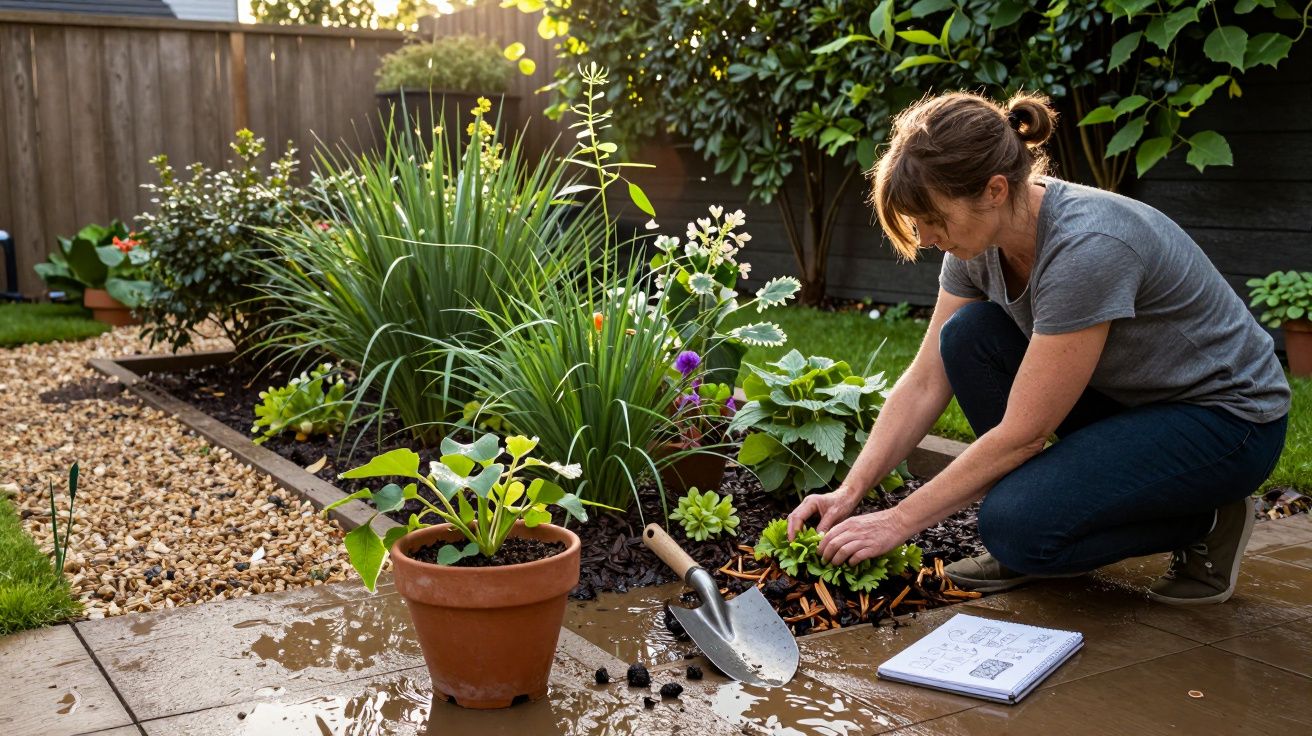
The week your lawn goes brittle and the patio pots scorch, it becomes obvious that gardening isn’t just decoration. Landscaping guided by biodiversity is a practical way to design gardens so they keep functioning through extreme weather - heatwaves, cloudbursts, late frosts - without you constantly firefighting. It matters because the same beds that look “neat” in a mild spring can collapse fast when the climate stops behaving.
You can feel the shift in small, annoying moments: the hosepipe ban email, the compost that won’t hold moisture, the border that turns into a puddle after one hour of rain. The old assumption - one perfect plant palette, one tidy groundcover - doesn’t survive those swings. Diversity does.
The quiet pivot: from pretty planting to resilient systems
In practical terms, this strategy is less about chasing rare species and more about building redundancy. If one plant fails in a dry spell, another still feeds pollinators. If one bed floods, another drains. You’re not aiming for a museum display; you’re building a living network.
Walk around after a storm and you’ll see the difference. A mixed hedge catches wind, slows runoff, and stays green when a single-species screen browns off. A border with layered roots holds soil where shallow-rooted annuals simply wash.
There’s a phrase I keep hearing from designers who’ve changed how they work: “Stop planting for the photo.” Plant for the week when the weather turns.
What “biodiversity-led” looks like on the ground
Start by thinking in layers, not labels. Canopy, understorey, shrubs, herbaceous, groundcover, and soil life all doing a job at the same time. A garden with multiple layers doesn’t just look fuller; it buffers temperature and moisture like insulation.
Then build variety where it actually counts:
- Different root depths to share water rather than compete for it.
- Different flowering times so insects aren’t stranded when one flush finishes.
- Different leaf shapes and structures to handle sun, wind, and heavy rain.
- Different “failure modes” - some plants go dormant, some reshoot, some self-seed.
A classic mistake is “diversity” that’s only cosmetic: ten species, all thirsty, all shallow-rooted, all from the same climate niche. It fails as a group.
A garden that can take a punch: the three stress tests
Think of extreme weather as three tests that arrive in any order: drought, deluge, and temperature whiplash. Biodiversity-led landscaping strengthens your odds across all three, but only if you match design to pressure points.
1) Drought: keep water in the soil, not on your bill
Drought resilience isn’t a single “dry border”. It’s a set of small choices that add up: shade, mulch, and roots that go down rather than out.
Practical moves that work in ordinary UK gardens:
- Swap big areas of thirsty lawn for mixed groundcovers and paths that let rain through.
- Use woody perennials and shrubs as “structure”, then fill gaps with tougher herbaceous plants.
- Mulch with composted bark or leaf mould, but keep it off the crown of plants to avoid rot.
- Plant in autumn so roots establish before summer stress hits.
The hidden win is soil. Healthy soil with fungal networks holds moisture longer and recovers faster after stress.
2) Deluge: slow, spread, sink
Heavy rain exposes gardens designed like hard surfaces: water rushes, soil caps, drains choke, and beds slump. Biodiversity helps because roots create pores and different plants intercept rain at different heights.
A simple way to think about it: don’t “get rid” of water; give it somewhere safe to pause.
- Create a shallow rain garden at the low point, planted with moisture-tolerant natives.
- Add swales (gentle channels) along contours to slow runoff.
- Use gravel and permeable paving so paths don’t become sluices.
- Keep ground covered year-round; bare soil is an invitation for erosion.
If your garden floods repeatedly, treat it like data. The water is telling you where your system is failing.
3) Whiplash: frosts after warmth, heat after rain
This is where mixed planting really earns its keep. A sudden late frost can wipe out tender growth; a sudden warm spell can push plants into early flowering, then stall. With a broader palette, you’re less dependent on one timing window.
- Include plants with different bud-break times (early, mid, late).
- Avoid placing the most tender species in frost pockets (low spots where cold air settles).
- Use hedges and mixed shrub belts as wind buffers; wind makes both cold and heat more punishing.
The goal isn’t to beat nature. It’s to stop one bad week becoming a season-long loss.
How to start without ripping everything out
Most people don’t need a redesign; they need a sequence. The most effective biodiversity upgrades are incremental and slightly boring - which is why they stick.
Try a three-step method: audit, diversify, connect.
- Audit: note where it bakes, where it puddles, where wind funnels, where plants repeatedly fail.
- Diversify: add 2–3 resilient species per problem area, focusing on function (roots, shade, flowering span).
- Connect: link habitats - hedge to border, border to pond, pond to log pile - so wildlife can move and recover.
If you only do one thing this season, do this: replace one monoculture patch with a mixed planting that includes a ground layer. You’ll feel the maintenance load drop.
“Resilience isn’t a plant list; it’s a pattern,” as one horticulturist put it to me, standing over a bed that had survived both a drought and a downpour without sulking.
The trade-offs people don’t say out loud
Biodiversity-led gardens can look “messier” for a while, especially if you’re used to crisp edges and empty soil. They also demand patience: shrubs take time, soil life takes time, and the best results often show up in year two, not week two.
There’s also a reality check on expectations. A biodiverse garden won’t make extreme weather disappear. It just gives you more cushions: more shade, more infiltration, more recovery pathways when something fails.
And that’s the point. In a climate that keeps changing the rules, you don’t need perfection. You need options.
| What to change | What it does | Why it helps in extremes |
|---|---|---|
| Mixed layers (trees/shrubs/groundcover) | Creates shade + reduces wind + protects soil | Buffers heat, frost, and drying winds |
| Permeable surfaces + rain garden | Slows and stores water on site | Cuts flooding and drought stress |
| Longer flowering season | Supports pollinators through gaps | Keeps ecosystem services stable |
FAQ:
- Do I have to use only native plants? No. Natives are often brilliant for local insects and resilience, but a mixed approach works: prioritise non-invasive plants that cope with your conditions and provide nectar, shelter, and structure.
- Will this make my garden harder to maintain? Usually the opposite after establishment. You may spend more effort upfront (mulching, planting, weeding), then less later because covered soil and stable planting reduces weeds and watering.
- What’s the quickest biodiversity win for a small garden? Add a mixed hedge or shrub border, keep soil covered with groundcovers, and include at least three flowering windows (spring, summer, late summer/autumn).
- How does this help with extreme weather specifically? Diversity spreads risk: different roots, timings, and tolerances mean one weather event won’t take everything down at once, and healthier soil absorbs both drought and heavy rain better.





Comments (0)
No comments yet. Be the first to comment!
Leave a Comment