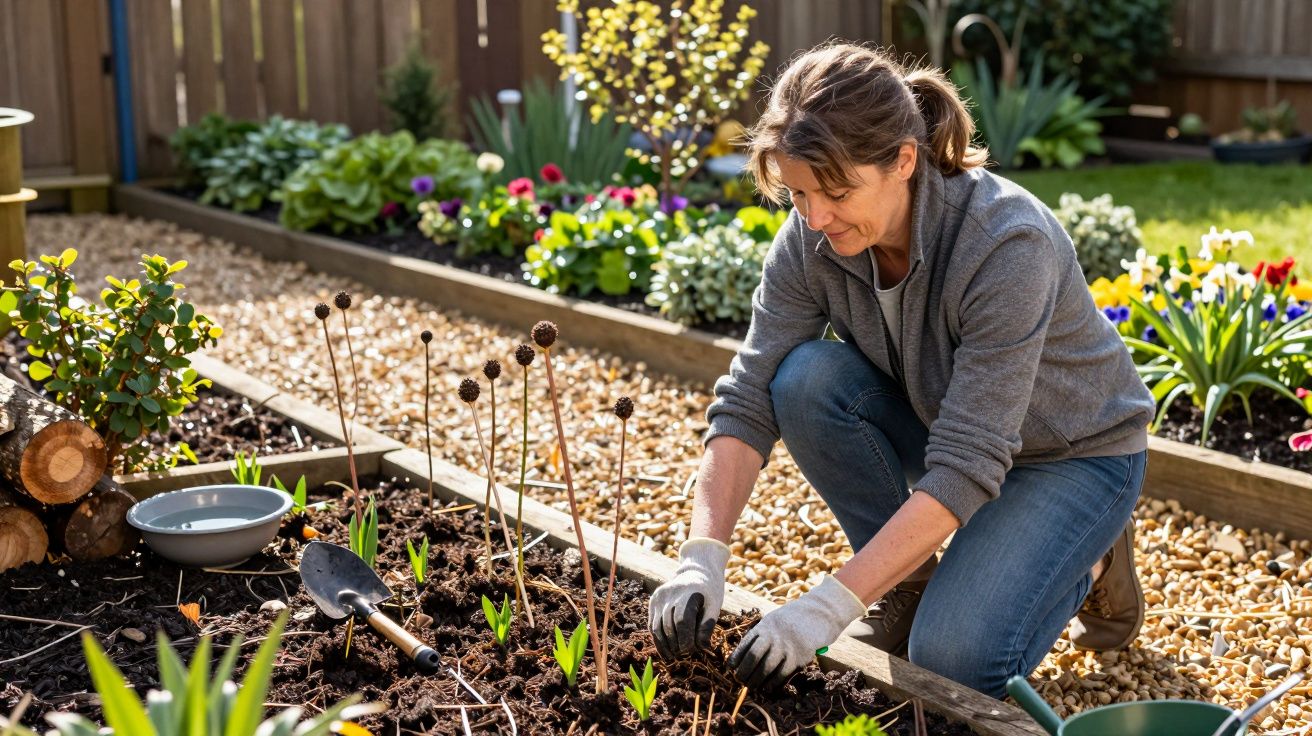
You can feel it in early spring: the urge to “tidy up” the garden before it gets away from you. Landscaping guided by biodiversity works differently, because it treats your plot as habitat first and decoration second, using seasonal biodiversity cycles as the timetable. The payoff is practical: fewer emergency fixes, fewer chemicals, and less weekend labour spent fighting the same problems on repeat.
I learned this the hard way after a few years of over-managing a neat border that never stayed neat. The more I weeded, clipped and fed, the more pests arrived, the more bare soil opened up, and the more the plants sulked through heat and rain. The shift wasn’t adding effort - it was swapping the goal from “control” to “balance”.
Why the “neat garden” needs constant rescue
A highly manicured garden often runs on inputs. You water because the soil is exposed, you feed because growth is forced, you spray because there’s no backup when one pest population spikes. It looks calm, but it’s fragile.
Biodiversity flips that. When you have layered planting, continuous flowering, and places for predators to live, problems still happen - they just don’t become crises as often. The trick isn’t perfection; it’s redundancy. If one plant struggles, something else is thriving, and the ecosystem keeps moving.
Think of it like cleaning a streaky mirror: it’s not only the surface you can see, it’s the invisible film you’ve created through daily habits. In gardens, the “film” is bare soil, monoculture planting, and seasonal gaps that leave wildlife with nowhere to go.
The biodiversity-focused choice that reduces intervention
The single most effective choice is to design for year-round habitat, not year-round tidiness. That means planting in layers (groundcover, perennials, shrubs, small trees where appropriate) and planning so something is always in flower, in seed, or providing cover.
You’re not trying to host every species. You’re trying to avoid dead zones - those weeks where nothing feeds pollinators, nothing shelters predators, and the garden becomes a blank canvas for weeds and pests to colonise.
What “year-round habitat” looks like in an ordinary UK garden
- A living mulch: groundcovers or low plants that shade soil and slow weed germination.
- A long flowering sequence: early (e.g., hellebores, spring bulbs), mid (perennials), late (sedums, ivy), plus herbs allowed to flower.
- Seed and structure left in place: stems, heads and grasses kept standing through winter for birds and overwintering insects.
- Water and refuge: a small dish, pond, log pile, leaf corner, or dense shrub that stays put.
None of this requires a wild meadow aesthetic. You can keep paths crisp and edges defined. The difference is you stop stripping the garden of the very systems that make it low-maintenance.
Seasonal biodiversity cycles: work with them, not against them
The easiest way to cut intervention is to time your actions to the garden’s biology. Seasonal biodiversity cycles are predictable, and once you respect them, you do less “undoing” later.
Spring: resist the urge to clear everything
In early spring, a tidy-up can remove the nursery before the residents have moved out. Hollow stems, leaf litter and old seedheads hold overwintering insects, and those insects become food for birds and natural pest control for your new growth.
Do this instead:
- Cut back in stages, not all at once, once nights are milder.
- Leave a small “mess zone” behind a shed or under shrubs.
- Top-dress beds with compost and let plants knit together, rather than hoeing bare soil weekly.
Summer: focus on resilience, not perfection
Summer intervention usually comes from stress: drought, mildew, aphids, and the panic of things looking “bitty”. A biodiverse garden spreads risk by keeping roots in the soil and shade on the ground.
A calmer summer routine:
- Water deeply and less often, aimed at the base, then let plants cope.
- Deadhead selectively: leave some flowers to set seed and feed wildlife.
- Accept a few chewed leaves; predators need prey to stick around.
Autumn: let the garden bank energy for you
Autumn is when you can set up next season’s low-effort success. It’s also when many gardeners accidentally remove future allies by over-pruning and “resetting” beds to bare soil.
Better autumn moves:
- Plant shrubs and perennials while soil is warm.
- Add leaves to beds as a mulch rather than bagging them.
- Leave seedheads and grasses standing; cut later, when they’ve done their job.
Winter: do less, but do it precisely
Winter is where biodiversity-led gardens look like they’re doing nothing - because they are. That still counts as active management, just smarter management.
Keep winter work targeted:
- Clear paths for safety and access.
- Prune only what truly needs it (crossing branches, damaged wood).
- Avoid turning soil unless you’re establishing something new.
A garden that “rests” in winter usually asks for less rescue in summer.
A simple setup plan (small, repeatable, and hard to mess up)
If you’re starting from a conventional border, you don’t need a redesign. You need a few structural changes that compound over time.
- Stop exposing soil: add groundcovers, self-seeders, or mulch until the bed is shaded most of the year.
- Add a predator base: shrubs, grasses, and persistent cover where beneficial insects can live when flowers aren’t out.
- Extend your flowering calendar: aim for at least three strong “waves” - early, mid, late.
- Leave some stems: treat last year’s growth as habitat, not waste.
Within a season or two, weeds ease because there’s less light hitting bare ground. Pests become less dramatic because predators have somewhere to stay. Watering becomes less urgent because soil is cooler and protected.
Quick check: are you accidentally creating work?
Use this as a glance test when you’re planning changes.
| If you often… | Try… | Why it cuts intervention |
|---|---|---|
| Hoe and weed weekly | Cover soil with plants or mulch | Less germination, fewer flushes |
| Spray for aphids | Increase shelter and flower diversity | More hoverflies, lacewings, birds |
| Replant gaps each year | Use perennials and structural shrubs | Fewer failures, steadier cover |
FAQ:
- Do I have to let my garden look wild to follow landscaping guided by biodiversity? No. You can keep clear edges, paths and clipped shapes; just keep habitat within the structure (layers, cover, and seasonal continuity).
- When should I cut back perennials if I’m leaving stems for wildlife? In stages from late winter into spring, once the worst frosts have eased and you can see fresh growth starting at the base.
- Will this attract “pests” closer to the house? It can attract more insects overall, but a balanced system typically reduces outbreaks. Keep dense habitat a little away from doorways, and maintain airflow around walls to avoid damp issues.
The quiet win here is psychological as much as practical. When your garden is built around seasonal biodiversity cycles, you stop feeling behind, because you’re no longer trying to freeze it in one perfect moment. You’re letting it do the stabilising work - and stepping in only when it genuinely needs you.





Comments (0)
No comments yet. Be the first to comment!
Leave a Comment