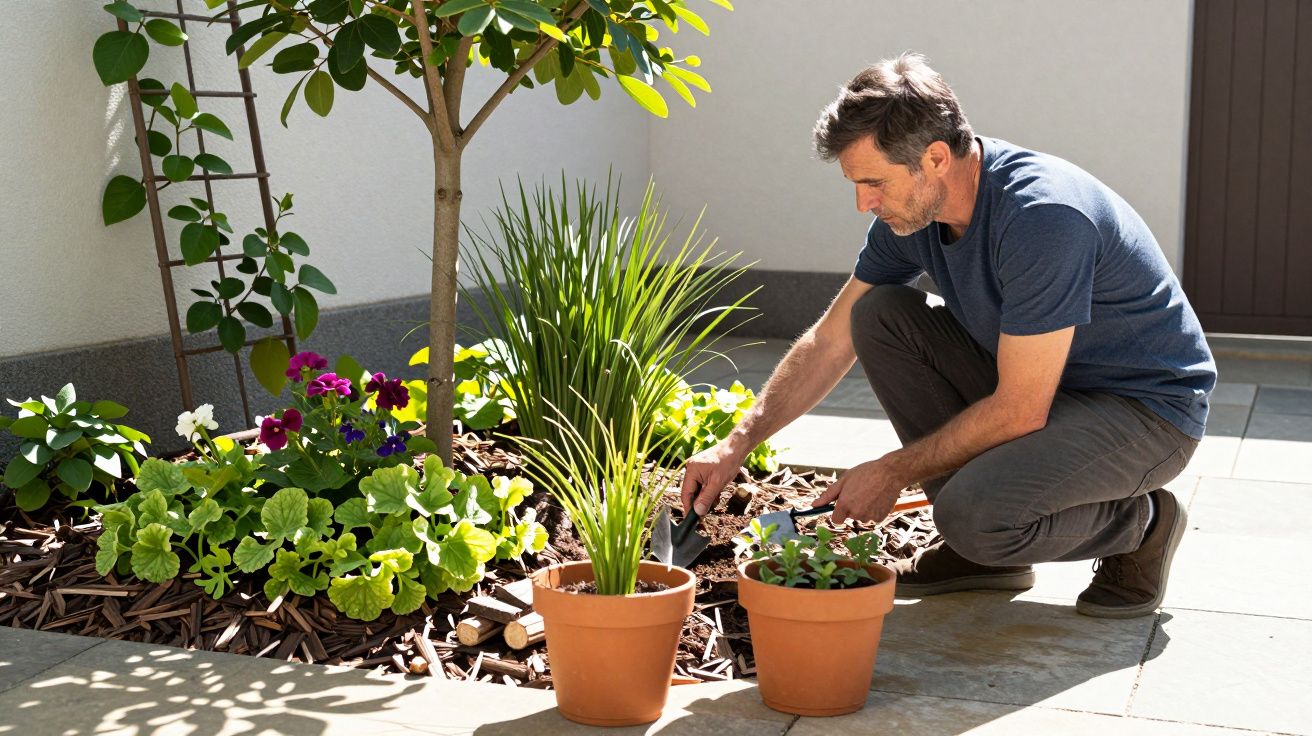
You can hear it in late summer: the hush that falls when a garden runs out of options. Landscaping guided by biodiversity and long-term ecological planning is the choice that decides whether that hush becomes decline or a new chapter, because it changes what your garden can do when the weather turns odd and the soil gets tired. It is used in real gardens-new builds, old terraces, communal courtyards-whenever people want something that matures rather than merely fills space.
Most planting plans optimise for the first photograph: tidy borders, instant colour, fast coverage. A biodiversity-led plan optimises for year ten, when the easy years have gone and the living systems are either helping you or charging you back, with interest.
The decision that makes a garden “age well”
A garden doesn’t really get older in calendar years. It ages in stresses: a dry spring, a wet winter, a new neighbour’s extension that steals light, a summer of hosepipe restrictions. Biodiversity shifts what happens next, because it gives the garden more ways to respond.
In a low-diversity garden, plants share the same vulnerabilities. When one thing struggles, everything looks suddenly thin. In a higher-diversity garden, decline tends to be patchy and temporary, because different roots, leaves, and lifecycles pick up the slack.
Gardens don’t fail all at once. They fail when they run out of redundancy.
What “biodiversity” means when you’re holding a trowel
It’s easy to picture biodiversity as “more species” and stop there. In practice, it’s a design brief: mix plant forms, flowering times, and root depths so the garden has multiple jobs covered at once-pollinator support, shade, soil structure, pest control, water movement.
That means thinking beyond the border and into the layers. A biodiverse garden isn’t necessarily wild-looking. It’s just built like a small ecosystem, with overlap and backup.
The layers that change everything
- Canopy and light makers: small trees, multi-stemmed shrubs, trained climbers.
- Mid-layer structure: shrubs and grasses that hold shape through winter.
- Ground layer: low plants that shade soil, reduce evaporation, and block weed germination.
- Seasonal burst: bulbs, annuals, self-seeders-short-lived colour that also feeds insects.
- Deadwood and “mess”: discreet piles, hollow stems, seed heads left until spring.
If you only plant one layer, the garden behaves like a single-note instrument. With layers, it becomes harder to “break”.
The hidden work: soil, roots, and the slow trades
Long-term ecological planning starts underfoot, because a garden is mostly soil with decoration on top. A biodiverse planting scheme changes the underground economy: different roots open different channels, exude different sugars, and host different microbes.
Over years, that can mean better crumb structure, less surface cracking, and a soil that drains when it should and holds moisture when it must. It also means you stop relying on constant correction-feeding, spraying, replanting-because the garden begins to do more of its own maintenance.
Signs your garden is building resilience
- Leaf litter disappears into the ground instead of sitting there like damp paper.
- You see more ground beetles, spiders, and birds hunting-quiet pest control at work.
- Dry spells cause slower, softer stress rather than sudden collapse.
- Weeds shift from “invasion” to “background noise” you can manage.
The goal isn’t a garden with no problems. It’s a garden that solves small problems before you even notice them.
Why the “low-maintenance” border often ages badly
A lot of modern landscaping sells low maintenance by reducing diversity: a drift of one grass, a ribbon of one shrub, a carpet of one groundcover. It looks calm, and for a couple of years it can be. Then pests or disease arrive, or one harsh season hits at the wrong moment, and you’re left with a big, obvious gap.
Even without a crisis, monotone planting tends to accumulate chores. Bare soil bakes and weeds. Overgrown shrubs need hard pruning. Lawns in the wrong place demand water and edging and apology.
Biodiversity doesn’t remove work; it changes the kind of work. You do more observing and smaller interventions, fewer dramatic rescues.
How to design for a garden you’ll recognise in ten years
You don’t need a meadow, a pond, and a PhD. You need to decide what your garden is for-and then choose plants that can share the load rather than competing for the same niche.
Start with three practical questions:
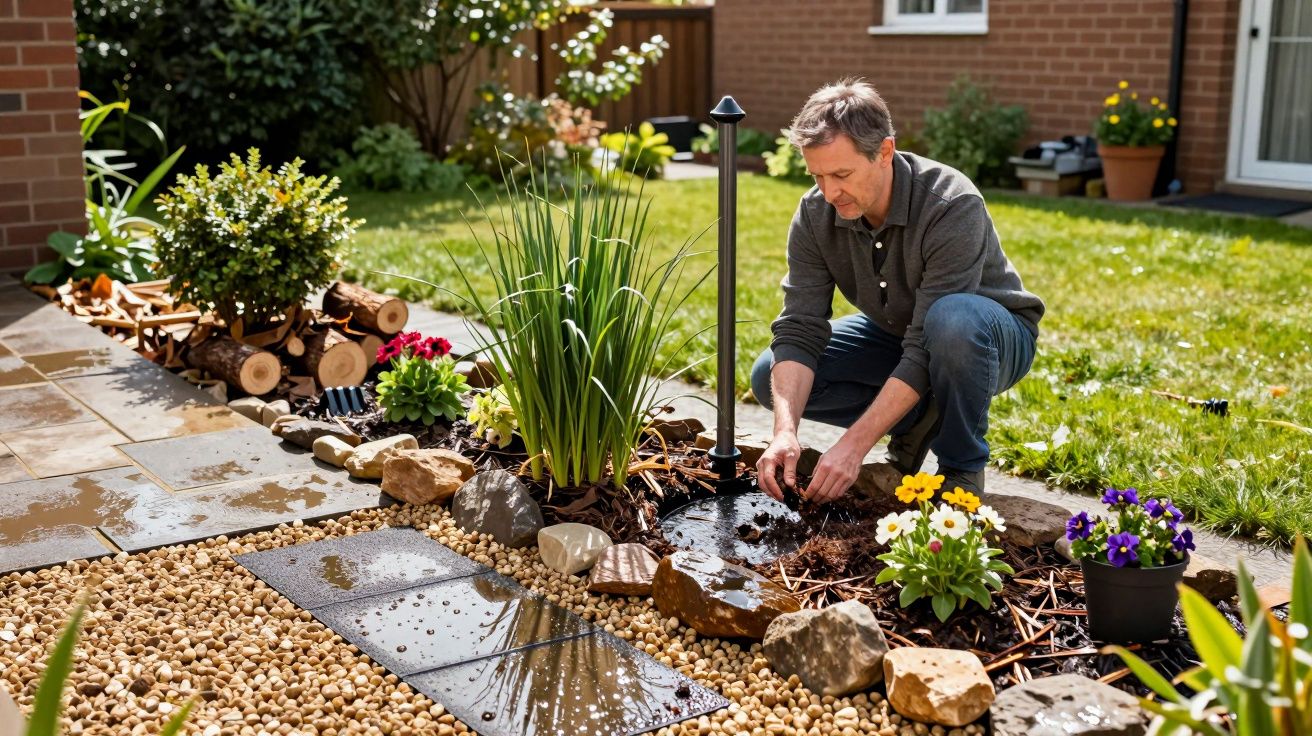
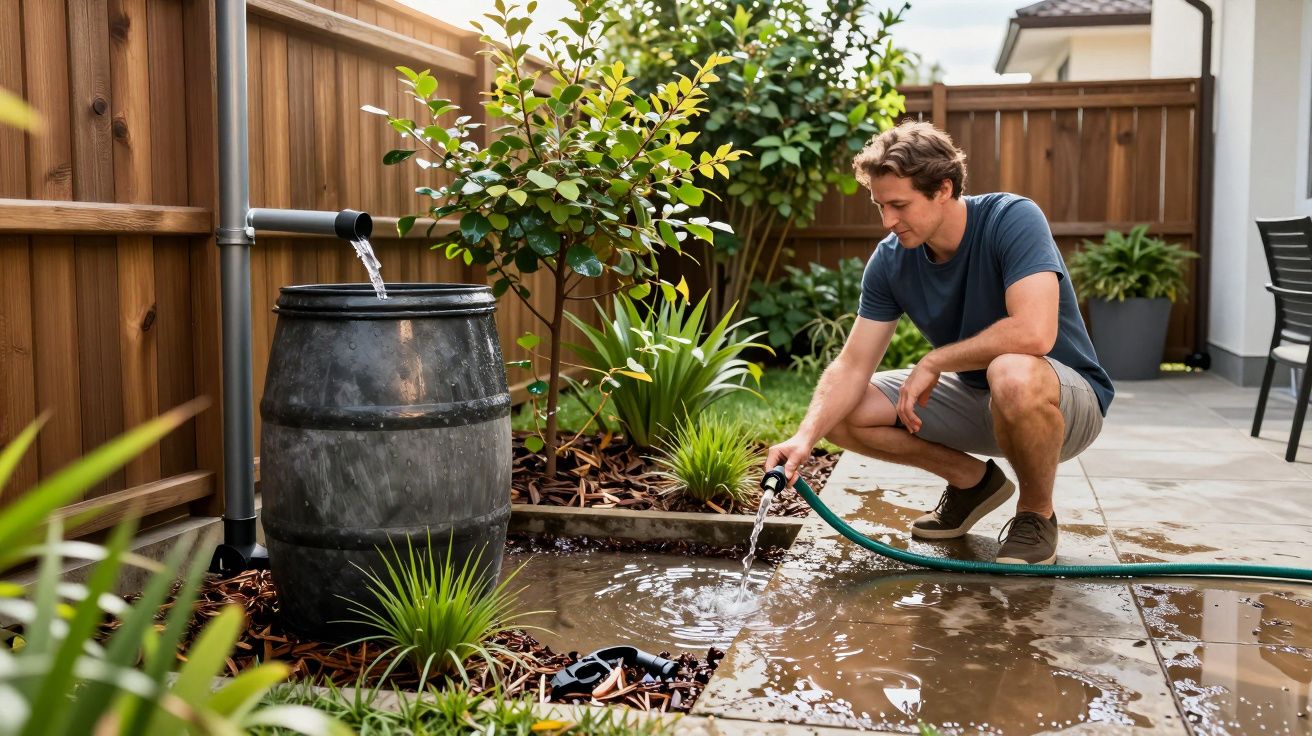
- Where does water go in a downpour? Design planting to slow it, soak it, and use it.
- Where does the sun fall in April, and in August? Choose for the real light, not the ideal one.
- What will you actually do in February? If you won’t dig and replant, don’t build a plan that depends on it.
A simple biodiversity mix that ages gracefully
- A small tree or large shrub for light shade and cooling (and leaf litter).
- Two to three shrubs with staggered flowering and berries.
- Two grasses or sedges for winter structure.
- Four to six perennials with different flower shapes (daisies, umbels, spikes, bells).
- One groundcover that is not invasive and doesn’t smother everything.
- A handful of self-seeders you’re happy to edit, not eradicate.
The trick is not maximal variety. The trick is functional variety: different roles, different seasons, different roots.
Two quick garden snapshots
A paved new-build courtyard gets planted with one glossy evergreen and a ring of gravel. It looks finished, then heats up every summer and needs constant watering, because there’s nothing to shade soil, nothing to hold moisture, and nothing to bring life back into the system.
A similar courtyard uses climbers on a trellis, a small multi-stem tree, groundcover underplanting, and a mix of flowering perennials. By year three it’s cooler, the watering drops, and the plants start to knit-less because someone worked harder, more because the design gave the garden a way to regulate itself.
The part people miss: editing is the maintenance
A biodiverse garden still needs a human hand. The difference is you’re not always adding; you’re often subtracting-thinning, lifting, dividing, cutting back at the right time, leaving seed heads when they’re doing winter work.
Think of it like steering rather than controlling. If you choose plants that can coexist, your main job becomes keeping any one species from taking the whole room.
Small rules that help
- Leave some stems and seed heads until spring, then cut back in a single pass.
- Mulch with compost, leaf mould, or woodchip where appropriate-feed soil, not just plants.
- Replace failures with a different function, not the same plant again.
- If a plant spreads, decide early: is it welcome, useful, and easy to edit?
What this means for the way gardens “feel” over time
A biodiversity-led garden tends to look better as it ages, because it gains texture and relationships. More birdsong. More movement. More small moments: a hoverfly on an umbel, a robin working the mulch, a late flower when you didn’t expect one.
It also tends to feel less brittle. Not perfect, but steadier. And in an era of unpredictable weather, steadier is the new luxury.



Comments (0)
No comments yet. Be the first to comment!
Leave a Comment