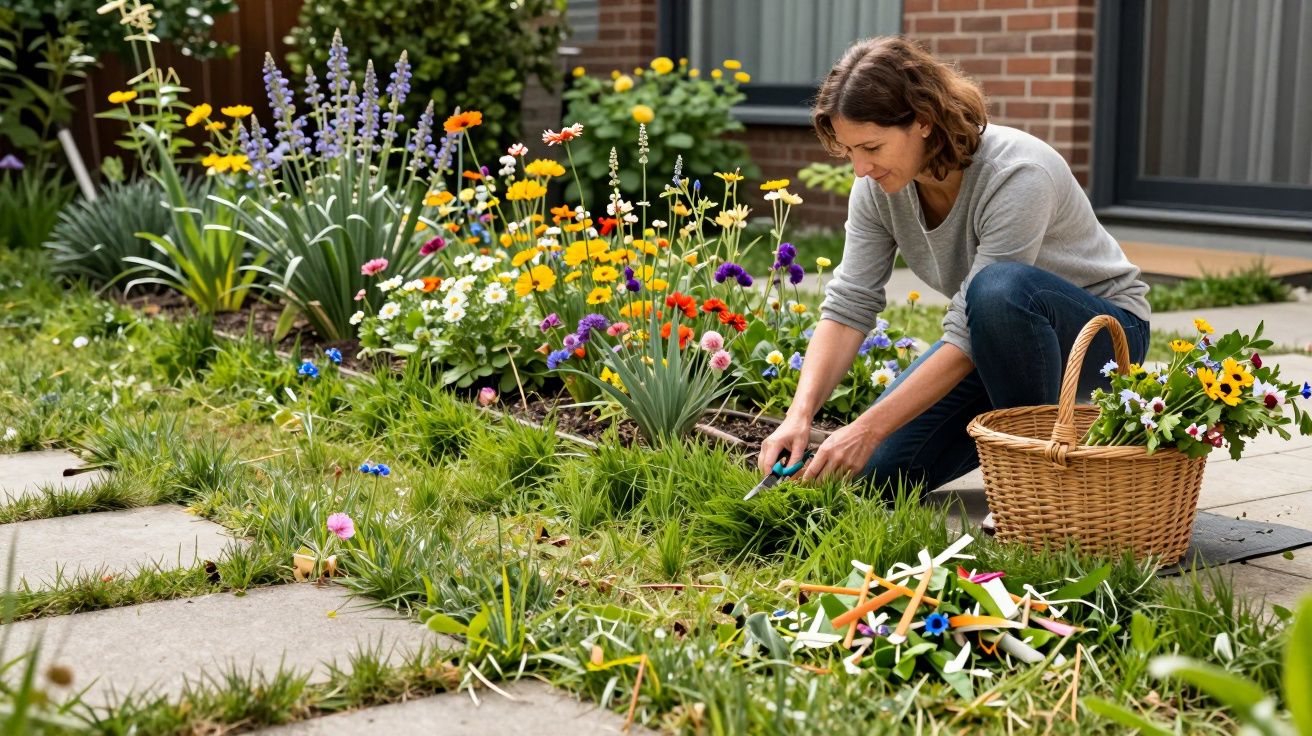
The glossy version of wildflower meadows sells a simple promise: stop mowing, scatter seed, and watch a soft, painterly field appear where your lawn used to be. Done well, it’s one of the clearest wins for landscaping guided by biodiversity, because it trades sterile green for nectar, seed, shelter and structure. Done badly, it becomes a weedy patch you can’t walk through, can’t explain to neighbours, and can’t easily reset without starting from scratch.
Most homeowners don’t fail for lack of effort. They fail because the trend is often marketed as “low maintenance”, when the truth is closer to “different maintenance”, timed to the seasons and the soil you’ve actually got.
The misunderstanding that causes most meadow failures
The biggest misconception is that a meadow is just “long grass with flowers” and will happen automatically if you stop cutting. That approach usually rewards the strongest plants already in the ground-often coarse grasses, nettles, docks and thistles-while the flowers you pictured never get a foothold.
A meadow is a designed plant community. It works when light reaches seedlings, soil fertility is managed, and the cutting regime favours flowers over grass. If you keep the lawn’s rich soil and simply stop mowing, you’re effectively feeding the competition.
A wildflower meadow isn’t created by neglect; it’s created by controlling what wins.
What people expect vs what a meadow actually needs
Homeowners tend to expect fast colour, tidy edges, and a “set-and-forget” result. A functioning meadow asks for patience, a bit of mess, and a clear plan for Year 1.
Here’s the mismatch in plain terms:
- Expectation: Flowers arrive in weeks and repeat all summer.
Reality: Annuals can pop quickly; perennial meadows build over 2–3 seasons. - Expectation: Less work than a lawn.
Reality: Fewer mows, yes-but more attention to timing, removal and establishment. - Expectation: Any “wildflower mix” works anywhere.
Reality: Soil type, moisture and sun decide what survives, not the packet photo.
The three levers that make or break a meadow
1) Soil fertility (yes, poorer is often better)
Meadow flowers generally prefer leaner soils. High nitrogen pushes grass growth, which shades out slower wildflower seedlings. This is why old hay meadows are so diverse: they’re repeatedly cut and the cuttings removed, slowly reducing fertility.
If you’re converting a fed-and-watered lawn, you usually need to lower fertility before you’ll see a stable mix. The most common options are:
- Remove the top layer of turf and some soil (the quickest reset).
- Repeatedly cut and remove clippings for a year before sowing.
- Avoid adding compost or fertiliser “to help it along” (it helps the wrong plants).
2) Light to the ground
Wildflowers are not good at germinating through a thick thatch of grass. If you broadcast seed onto an intact lawn, much of it never touches soil, dries out, or is eaten.
A reliable establishment method is boring but effective: create bare ground by removing turf or scarifying hard, then sow into a firm seedbed and keep it lightly watered until germination. The goal isn’t fluffy soil; it’s seed-to-soil contact.
3) Cutting at the right time (and taking it away)
The cutting regime is the steering wheel. Cut too often and you’re back to lawn. Don’t cut at all and you get rank grass and scrub, especially at the edges.
A typical rhythm for a garden meadow is:
- Year 1: A few cuts to 5–10cm when growth gets leggy, removing cuttings each time (this suppresses grasses and annual weeds).
- Year 2 onwards: One main cut after flowering and seed set, plus an optional spring tidy cut depending on growth.
- Always: Remove cuttings; leaving them feeds the soil and smothers seedlings.
“But I bought a native mix” - why packets disappoint
Seed mixes are often chosen by colour, not ecology. Some contain species that look great in a photo but don’t match your conditions, or they lean heavily on quick annuals that give a single-season show and then vanish.
Before you buy anything, answer three questions:
- Is the spot dry, average, or damp through summer?
- Is it full sun, part shade, or shade?
- Is the soil likely rich (former lawn beds, composted borders) or lean (sandy, stony, thin)?
If you can match the mix to those basics, you’ll get a meadow that looks intentional and supports more insects, instead of a one-year burst followed by grass takeover.
A practical way to make it look intentional (and neighbour-proof)
The easiest way to stop a meadow reading as “abandoned” is to frame it. A crisp edge gives you freedom to let the middle do what meadows do.
Small design moves that work:
- Mown border strip (a “picture frame” around the meadow).
- A path cut through it to invite walking and show you’re in control.
- A sign or simple note for visitors: “Meadow area - cut in late summer for pollinators.”
That last part sounds twee until you see how quickly it defuses complaints. People are surprisingly tolerant of shaggy growth if they know it’s deliberate.
The biodiversity angle most gardens miss
Landscaping guided by biodiversity isn’t only about flowers; it’s about lifecycle. A meadow that’s cut too “neatly” in autumn can remove shelter and overwintering habitat, while a meadow never cut can become a monoculture.
Aim for variety:
- Leave a small uncut corner over winter for cover.
- Add a log pile or rough grass strip nearby.
- Include a few earlier and later flowering species so nectar isn’t limited to a single month.
A meadow is a great start, but the real payoff comes when it’s part of a connected, mixed garden rather than a single gesture.
A simple “do this, not that” starter plan
If you want the trend without the regret, follow a short checklist that prioritises establishment over instant gratification.
- Do this: Start with a smaller patch you can manage well (even 10–20m²).
Not that: Convert the whole lawn and hope for the best. - Do this: Create bare ground and sow thinly.
Not that: Throw seed into long grass. - Do this: Cut and remove in Year 1 to control grasses.
Not that: Assume “no mowing” equals “meadow”. - Do this: Frame it with edges and paths.
Not that: Let it meet paving and borders with no definition.
A good wildflower meadow looks effortless in July. The trick is that the effort happened in March, and again in September, and it was targeted rather than constant.






Comments (0)
No comments yet. Be the first to comment!
Leave a Comment