Beneath the clipped lawn and the freshly laid paving, the most sustainable gardens are often doing their real work out of sight. Biodiversity-led landscaping uses long-term ecological planning to shape soil, water, and habitat so the garden becomes richer each season, not just prettier on day one. It matters because it turns your outdoor space into something that asks less of you-less watering, fewer chemicals, fewer replacements-while giving more back in pollinators, birdsong, and resilience.
At first, it can look oddly unfinished. Bare soil where you expected instant fullness, scruffy seed heads left standing, a log pile that reads like clutter until you notice the beetles. The feature isn’t an object you buy; it’s a trajectory you set.
The feature you can’t photograph in week one
People go looking for a signature piece: a pergola, a pond, a statement tree. In a biodiversity-led garden, the signature is time itself, expressed as layers-of leaf litter, of root networks, of insects and fungi finding footholds. You only really “see” it when the garden starts behaving differently.
You notice it in small data points. The soil stops crusting and starts crumbling. After heavy rain, water sinks rather than skimming across the surface. The planting needs fewer rescues because it’s learned the site.
What changes when you design for life, not just looks
Long-term ecological planning treats a garden like a living system with feedback loops. Instead of forcing constant perfection, you build conditions where the right organisms turn up and stay. That’s not a romantic idea; it’s a practical one, especially as summers get hotter and rainfall less predictable.
A few shifts tend to happen together:
- More continuity of cover: fewer bare patches, more ground shaded by plants or mulch.
- More structure: grasses, perennials, shrubs and small trees creating different “floors” for wildlife.
- More decay: deadwood, leaf litter and seed heads left as food and shelter, not “waste”.
- Less interruption: fewer deep digs, fewer chemical resets, fewer hard edges that need constant tidying.
The garden starts to look calmer, even if it’s wilder. You’re not fighting nature; you’re drafting it.
The quiet engine: soil that gets better every year
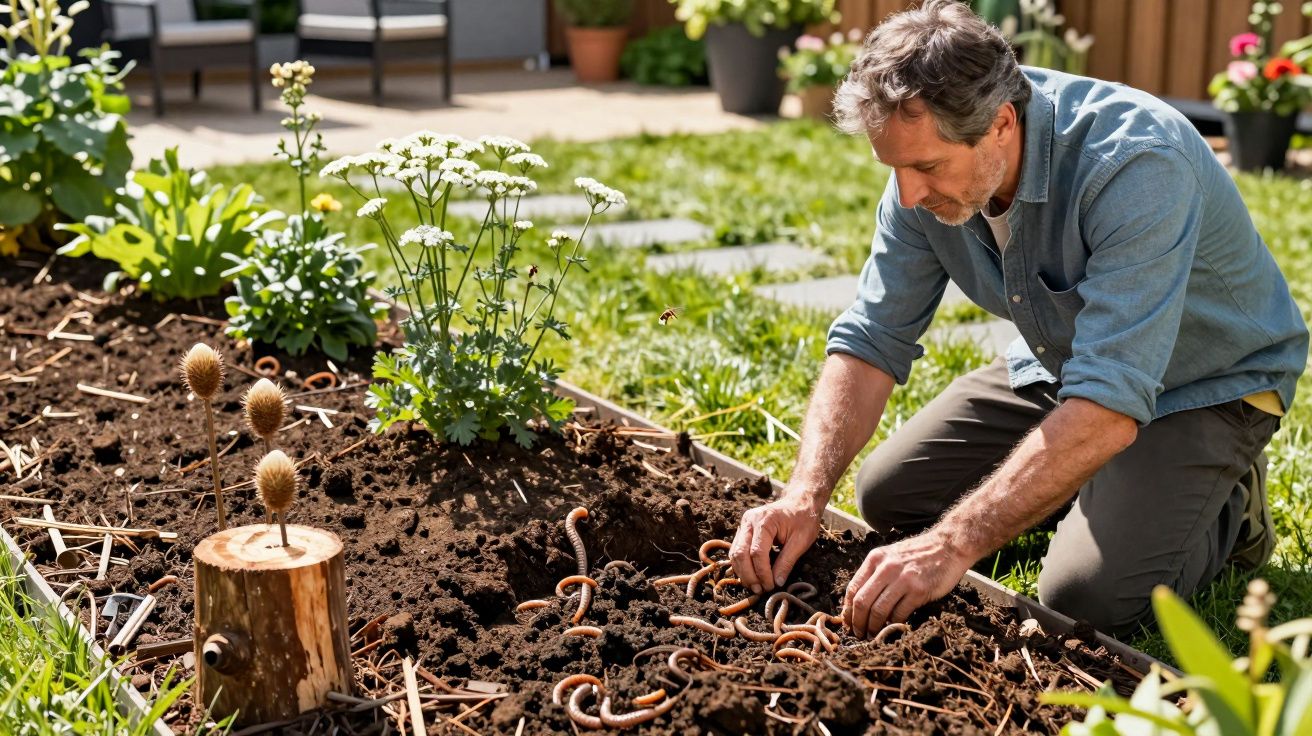
Soil is where the time-lapse happens. In year one, you might be improving texture with compost and mulch, but the real shift is biological: fungi threads, bacteria populations, earthworm tunnels, and the tiny predators that keep things in balance. When that engine kicks in, plants become less dependent on you.
A simple test: pull back the mulch in late spring. If you see a dark, sweet-smelling layer forming and plenty of crumbs and worm casts, you’re watching the “feature” appear.
A sustainable garden often looks like patience disguised as mess-until the soil starts doing the gardening for you.
A practical way to start without rebuilding everything
You don’t need a full redesign to move towards biodiversity-led landscaping. You need a sequence that protects soil, adds habitat, and reduces disturbance.
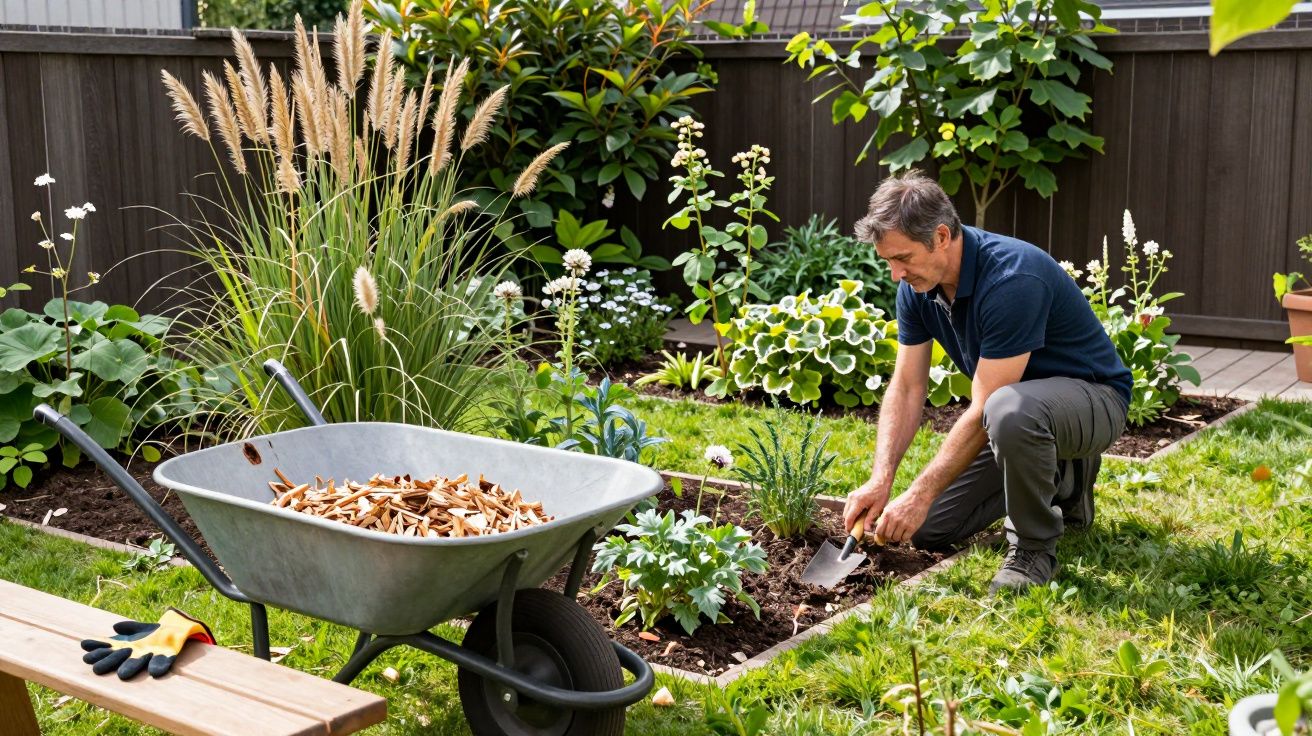
- Stop leaving soil naked: mulch beds, underplant shrubs, or sow a low, mixed groundcover.
- Plant in layers: combine spring bulbs, summer perennials, and autumn seed heads; add one or two shrubs for shelter.
- Keep some things standing: delay cutting back until late winter, when insects have finished overwintering.
- Add one “messy” habitat: a log pile in shade, a small stone stack in sun, or a brushwood corner.
- Reduce inputs: feed the soil, not the plant; water deeply but less often to encourage roots.
This is the part that feels too simple. It is simple-and that’s the point.
An example: the border that matures into a mini-ecosystem
In the first summer, a new border can feel sparse. You’ve planted plugs, the gaps show, and weeds test your resolve. By year two, the canopy begins to close and the weeding drops. By year three, you start spotting the unintended guests: self-seeded foxgloves, hoverflies hanging in the air, a blackbird flipping leaves for larvae.
Say you plant a drift of knapweed, yarrow, and native grasses, then add a couple of shrubs like guelder rose or hazel. In year one, it’s a promise. In year two, it’s a food court. In year three, it’s a network-predators following prey, birds following insects, and your maintenance turning from “fixing” to “editing”.
The visibility problem (and why it’s worth sticking with)
We’re trained to judge gardens immediately, like a showroom. But ecology has a lag: colonisation takes time, and stability takes longer. The temptation is to intervene too early-replace plants, over-tidy, re-dig-and reset the clock.
A better question than “does it look finished?” is “does it look more alive than last season?” If the answer is yes, you’re on track.
Points of vigilance to anticipate
- Don’t over-mulch against stems: keep mulch off crowns to avoid rot.
- Choose plants for your soil, not the other way round: right plant, fewer inputs.
- Watch nutrient levels: overly rich soil can favour lush growth over flowers (and reduce diversity).
- Accept some loss: a few failures are information, not a verdict.
- Leave escape routes: if you create a pond or deep planting, keep safe access for children and pets.
What to look for, season by season
The “feature” becomes visible in indicators rather than ornaments. Keep it grounded: notice function, not just form.
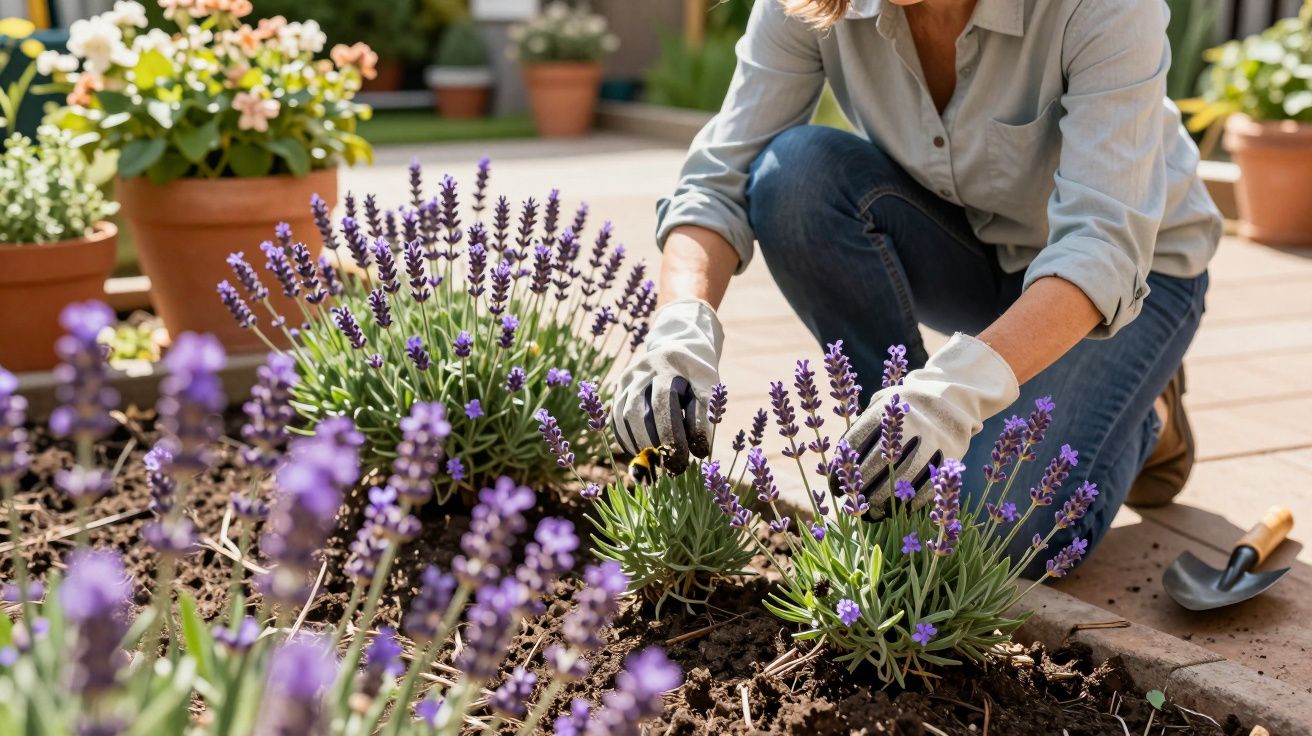
- Spring: more early pollen sources; bumblebees arriving sooner and staying longer.
- Summer: fewer aphid crises; more ladybirds, lacewings, and hoverfly larvae doing the control work.
- Autumn: seed heads feeding finches; leaf litter becoming habitat rather than a problem to solve.
- Winter: structure remaining-stems, grasses, evergreen shelter-so the garden isn’t a blank stage.
If you want proof, take the same photo from the same spot each month. The garden will show you its curve.
What to take with you after you close this tab
The sustainable garden feature that only becomes visible over time is the moment your space starts self-supporting: soil improving, water handled better, wildlife returning, and maintenance shifting from constant correction to light stewardship. Biodiversity-led landscaping isn’t about letting everything go; it’s about choosing where to be hands-off so the system can do its work.
Start with one bed, one corner, one change you can stick with. Time will do the rest-quietly, and then all at once.
FAQ:
- Do I have to let the garden get messy to support wildlife? Not everywhere. Keep paths and key sightlines crisp, and allow “mess” in designated habitat zones like log piles, seed-head borders, or a back corner.
- How long does it take to see results? You’ll often notice insect activity in the first season, better soil structure within a year, and a more stable, low-input garden after 2–3 years.
- Will this attract pests? It can attract more insects, but it also attracts the predators that keep them balanced. Diverse planting usually reduces boom-and-bust infestations over time.
- Is a pond essential for biodiversity? No, but it’s powerful. Even a small, chemical-free water feature (or a shallow dish refreshed regularly) can make a noticeable difference for birds and insects.
- What’s the single best first step? Stop leaving soil bare: mulch, underplant, or groundcover. It protects moisture, feeds soil life, and sets up everything else.




Comments (0)
No comments yet. Be the first to comment!
Leave a Comment