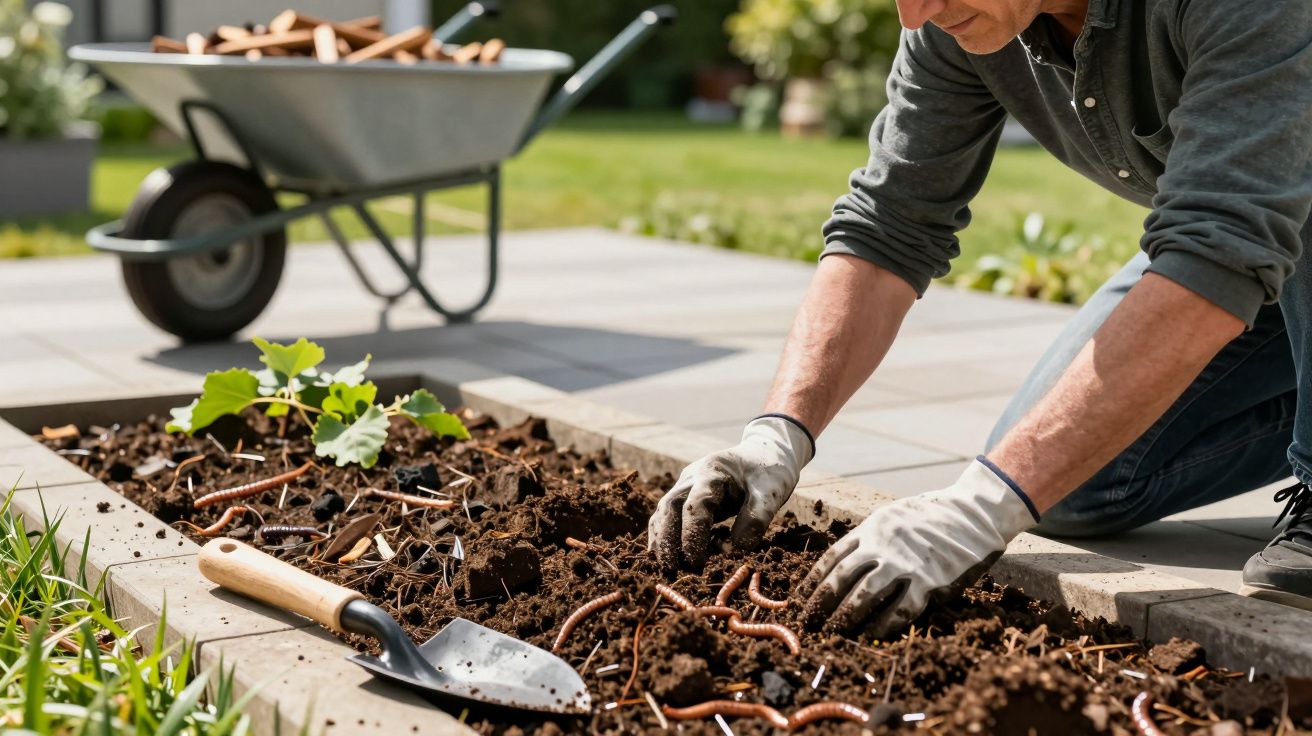
Soil regeneration is becoming the quiet ambition beneath modern gardens, even when the border looks perfectly ordinary from the patio. It’s turning up in sustainable landscaping plans as a practical way to grow healthier plants with less watering, fewer inputs and a bit more resilience when summers swing dry or winters turn soggy. The shift matters because most garden problems - tired lawns, fussy shrubs, endless feeding - start below the surface, where the soil has been compacted, stripped, or simply left hungry.
You don’t see it happen in a single weekend. You notice it months later: beds that stay crumbly instead of baking hard, a lawn that greens up without constant fertiliser, and plants that stop sulking the moment the weather stops behaving.
The “new garden” look isn’t the upgrade - the soil is
A lot of gardens are built like film sets. Fresh turf is rolled out, borders are filled with bagged compost, a few mature plants go in, and it all looks finished by Sunday afternoon. Then the first heatwave arrives, and the ground turns into a tight, thirsty slab that either repels water or holds it like a puddle.
That’s not bad luck. It’s physics and biology: topsoil gets scraped, heavy machinery squeezes out air, and the living network that normally cycles nutrients and water is disrupted. You can keep fighting that with feeding and watering, or you can rebuild the system so the garden starts doing more of the work itself.
Soil regeneration isn’t about “better compost”. It’s about restoring structure, life and balance so the soil behaves like soil again.
What soil regeneration actually means (in normal garden terms)
The phrase can sound grand, like something that belongs on farms and research plots. In a domestic garden it’s simpler: stop treating soil as inert dirt, and start treating it as a habitat.
Most regenerative approaches aim for three outcomes:
- more organic matter to hold moisture and nutrients
- better structure so roots can breathe and water can infiltrate
- more biology (worms, fungi, microbes) to break down material and feed plants steadily
It’s a slow build, but the wins are practical. When organic matter rises, soils buffer drought and heavy rain better. When structure improves, you stop getting that crusty surface that cracks in July and turns slimy in February.
The quiet culprits: compaction, bare ground, and “tidy” habits
Many of us inherited a style of gardening that looks neat but undermines the soil. Raking beds bare, digging everything over, and removing every leaf can leave the ground exposed and depleted. It also interrupts the fungi and worm channels that make soil sponge-like rather than brick-like.
Compaction is the biggest hidden issue, especially in new-builds or gardens that have been driven over during renovations. If you’ve got water sitting on the surface after rain, or a spade that goes in with a blunt thud, you’re not dealing with “bad soil” so much as squeezed soil.
A good rule of thumb: if you can’t push a trowel in without effort, neither can a young root.
The easiest upgrade: cover the soil like you mean it
Bare soil is a stress state. It overheats, dries, erodes, and invites weeds because nature hates emptiness. Covering it is the simplest regenerative move you can make, and it looks good quickly.
You’ve got three garden-friendly options:
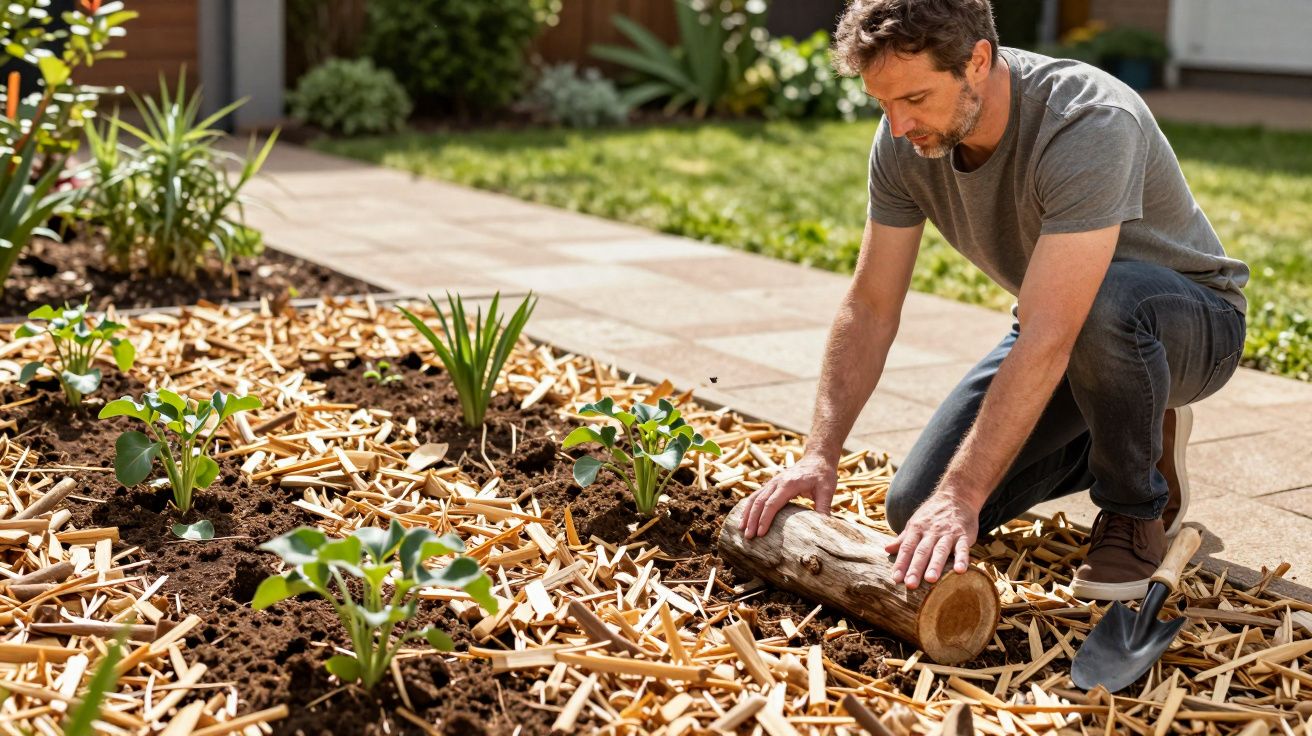
- mulch (woodchip for paths and shrubs; compost or leaf mould for beds)
- living cover (groundcover plants, low grasses, clover mixes)
- leaf litter (under hedges and in wildlife corners, where it becomes slow fertiliser)
Aim for a layer that protects the surface without smothering stems: roughly 5–7 cm for composty mulches, a bit more for woodchip around trees and shrubs (kept away from the trunk).
Compost helps - but the method matters more than the material
People often ask which compost is “best”. The truth is that compost works when it’s part of a system: added regularly, kept on the surface, and paired with less disturbance.
If you dig compost deep into the soil every spring, you can break up structure and burn through organic matter faster than it’s replaced. If you spread it like a blanket and let worms take it down, you’re feeding the soil food web in the way it prefers.
A simple routine that suits most gardens:
- Autumn: add compost or leaf mould to beds; leave healthy leaves in borders where practical
- Spring: top up thinly, then mulch around plants once the soil has warmed
- Summer: spot-mulch bare patches and keep soil covered after harvesting veg
This is the “quiet” part. It doesn’t feel dramatic, but it changes the texture of the ground season by season.
Dig less, but don’t do nothing
“No-dig” gets misread as “never touch the soil”. In reality it’s about choosing disruption carefully. If your soil is badly compacted, it may need one deliberate intervention before you switch to gentler maintenance.
If a border has been walked on for years, consider:
- broadforking (lifting and loosening without turning layers)
- aerating lawns (hollow tines or a garden fork, then top-dressing)
- adding organic matter on top rather than mixing it through
After that, protect what you’ve rebuilt. Create stepping stones in beds, keep wheelbarrows to paths, and avoid working soil when it’s waterlogged.
Sustainable landscaping is changing what we plant, too
Soil regeneration pairs naturally with sustainable landscaping because both prefer systems that hold together with fewer inputs. Instead of thirsty lawns and hungry borders that need constant feeding, the trend is towards planting that supports soil life and reduces stress.
You see it in choices like:
- perennial groundcovers to shade soil and reduce weeding
- mixed hedges and understory planting that drop leaves and build humus
- rain gardens and swales to slow water and let it soak in
- clover or mixed-species lawns that stay greener with less fertiliser
None of this requires turning your garden into a meadow (unless you want to). It’s more like choosing plants that behave well with the soil instead of demanding constant correction.
How to tell it’s working (without lab tests)
The proof shows up in small, slightly boring moments. Water stops sheeting off. The surface stays cooler. You pull a weed and the roots come out with soil that clings in crumbs, not in a hard plug.
Look for these signs over a season or two:
- more worms when you lift mulch
- fewer puddles and less run-off after rain
- soil that smells earthy, not sour or stagnant
- plants that cope better between waterings
- less “neediness” - fewer yellowing spells, fewer panicked feeds
If you want one simple check, do this: dig a small square, about a spade’s depth, and look for layers. Regenerating soil becomes darker near the surface, threaded with roots, and full of tiny channels.
A realistic “starter plan” for an ordinary garden
If you’re juggling time, money and a garden that still has to look nice, start small. Pick one bed, or one section of lawn, and treat it as the test patch.
- Week 1: stop leaving soil bare; add a mulch layer
- Month 1: reduce digging; create clear stepping routes to avoid compaction
- Season 1: add organic matter once or twice; plant groundcover to hold gains
- Season 2: adjust watering down slowly, letting roots learn to go deeper
The goal isn’t perfection. It’s a garden that gets easier to run, because the soil underneath is quietly getting better at being alive.





Comments (0)
No comments yet. Be the first to comment!
Leave a Comment