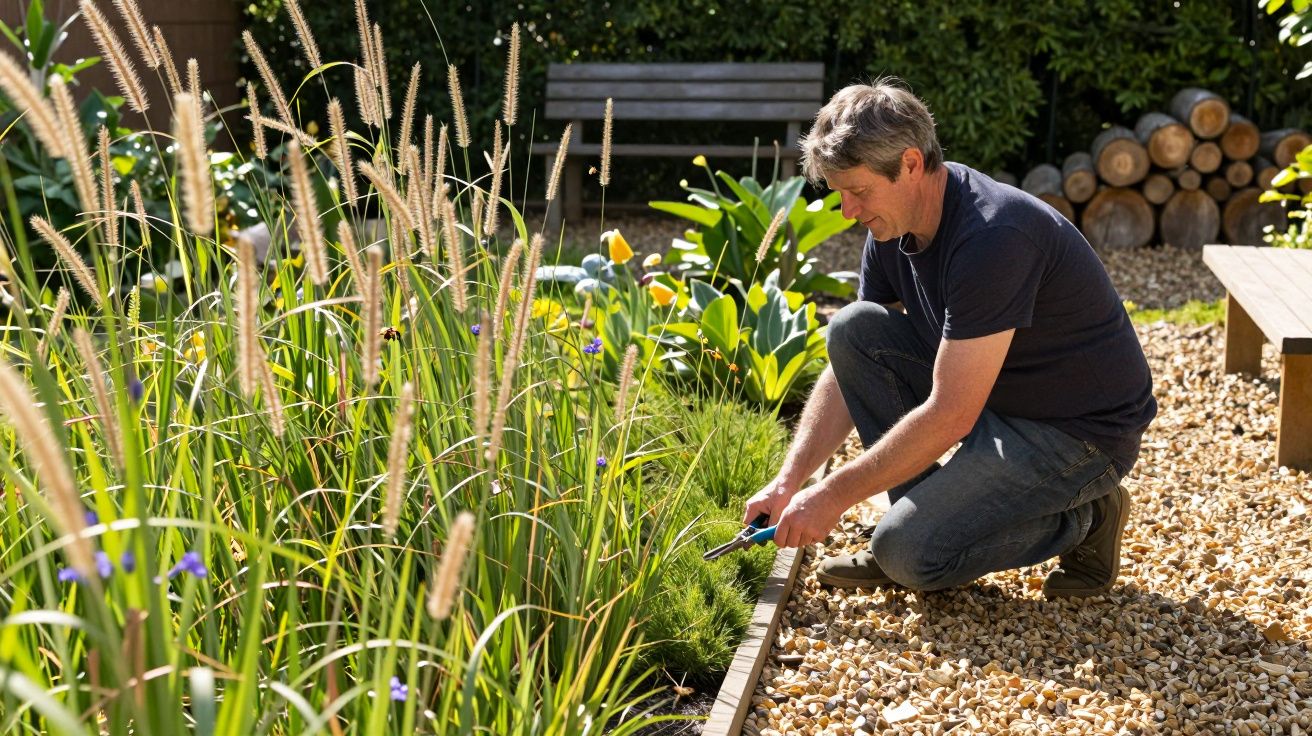
Rewilding concepts often arrive in a homeowner’s life through the back gate: a lawn that never stays green, borders that need constant feeding, a tired corner that keeps failing. Sustainable landscaping offers a different route - design a garden that works with local conditions, not against them - and it matters because it can cut maintenance, increase wildlife, and still look intentional.
Then comes the sticking point. People hear “rewilding” and picture abandonment: nettles to the knee, a garden you can’t use, a space you can’t explain to the neighbours. The real pivot usually happens later, when you realise it isn’t about giving up control.
It’s about changing what you control.
The fear: “If I let nature in, I’ll lose the garden”
Most gardens are built on a quiet promise: nothing will get out of hand. Edges stay sharp, plants behave, colour arrives on schedule. Even when a space is “low maintenance”, it’s often just maintenance moved elsewhere - to irrigation, feeding, mowing, and replacing anything that doesn’t comply.
So when someone suggests a meadow patch, a log pile, or leaving seed heads over winter, it can feel like a threat to the whole system. The worry isn’t just mess. It’s that your garden will stop being yours.
That’s why so many first attempts at rewilding start and end with a guilty-looking strip of long grass and a sense of failure.
The moment it clicks: rewilding is management, just with different levers
Talk to people who stick with it and you’ll hear the same kind of line: “I thought I was opting out. I was actually opting into a smarter kind of control.”
In practice, rewilding concepts are less about stepping back forever and more about choosing a few strong rules that do most of the work:
- Control the boundaries, not every square metre.
- Control the timing (when you cut, when you disturb soil, when you leave things alone).
- Control the inputs (water, fertiliser, pesticides) by reducing the need for them.
That’s why the most “rewilded” gardens that still feel beautiful are often the most deliberately framed. You can sense the hand of the gardener - it’s just not forcing everything into the same clipped shape.
The change is psychological: you stop trying to control every plant, and start controlling the conditions.
The boundary trick: make it look deliberate before it looks wild
The fastest way to make a wildlife-friendly area feel intentional is to give it a clear edge. Not because nature needs it, but because humans do.
A mown strip around a meadow patch, a gravel path through longer planting, or a crisp border (brick, timber, steel) tells the eye: this is a choice. It stops the space reading as “neglect”.
A simple three-step approach works in most UK gardens:
- Pick a contained zone (often 10–30% of the garden to start).
- Frame it with a path, mown edge, or low fence.
- Repeat one tidy element nearby: a bench, a pot, a clipped shrub, a straight-edged patio.
You’re not hiding the wildness. You’re giving it a stage.
What “control” looks like in a rewilded garden (and what it doesn’t)
The common misunderstanding is that rewilding means “never touch anything”. In reality, the best results come from light, regular intervention that mimics natural disturbance.
Here’s the difference homeowners feel in their hands:
- Old control: weekly mowing, constant deadheading, watering to keep plants alive in the wrong place, feeding to fix depleted soil.
- New control: one or two strategic cuts a year, selective weeding of aggressive invasives, targeted planting of natives, leaving habitat features in place.
That shift tends to produce calmer gardens. Not perfect, not uniform - but stable. And stability is what makes sustainable landscaping feel doable rather than worthy-but-exhausting.
The “don’t let it become a problem” list
A rewilded space can go sideways if you ignore a few practical realities:
- Invasives and bullies: bramble, bindweed, ivy, and some vigorous non-natives will take advantage of indecision.
- Nutrients: rich soil pushes coarse growth (tall, floppy grass) over flowers. Sometimes doing less means also stopping feeding and letting fertility drop.
- Access: if you can’t reach the shed, the washing line, or the compost, you’ll resent the whole idea.
Rewilding isn’t meant to remove your life from the garden. It’s meant to stop the garden demanding your life.
A homeowner’s starter plan: small, seasonal, and reversible
People do better when the first step doesn’t feel like a referendum on their identity. The most successful “conversion” plans are almost boring.
Try one season with three low-drama moves:
- Leave a patch uncut until late summer, then cut and remove the clippings (removing clippings is how you gradually reduce fertility).
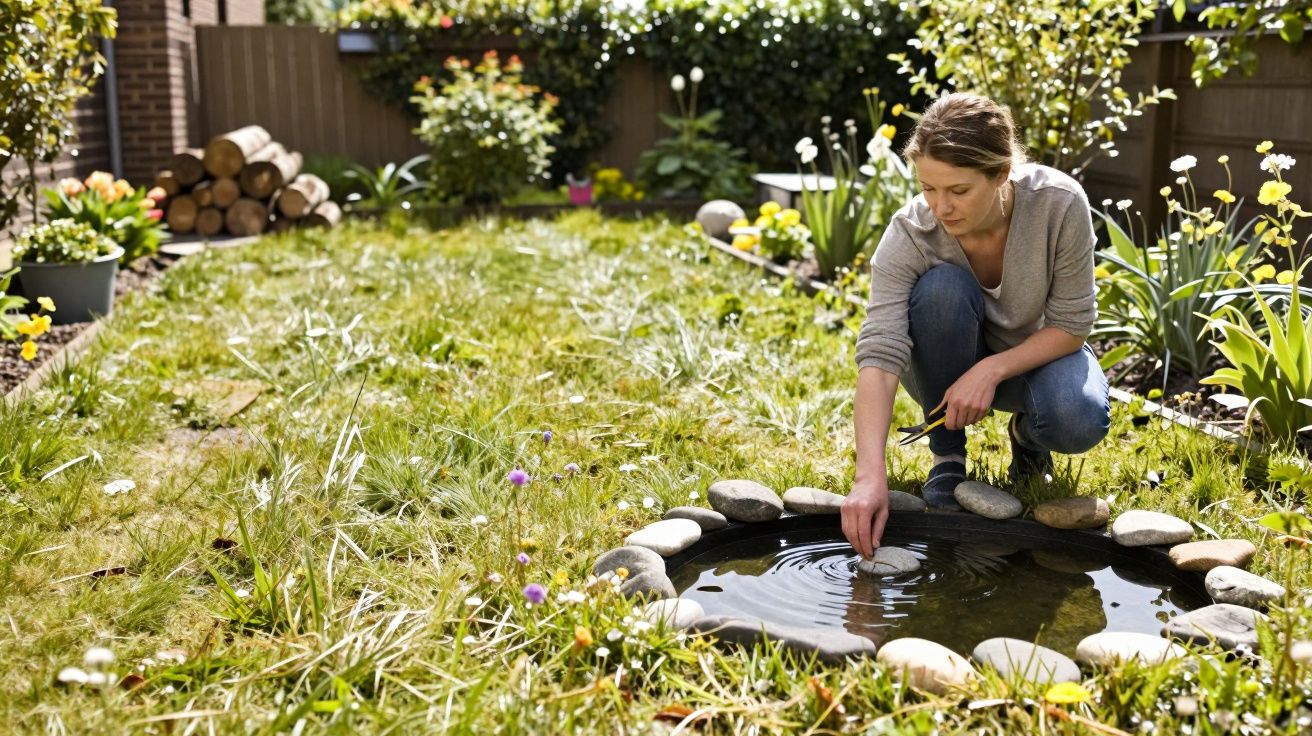
- Add structure for wildlife that looks tidy: a log stack tucked behind planting, a small pond with a clean edge, a bird box on a clear post.
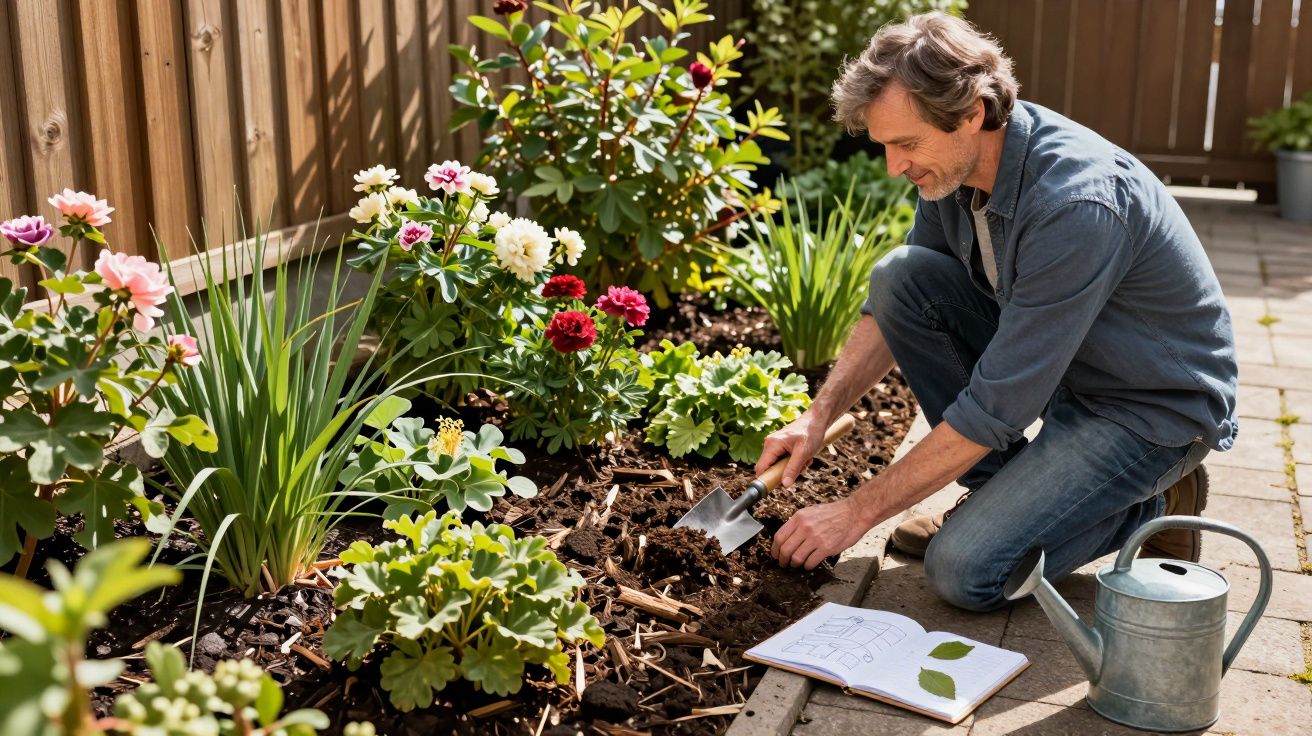
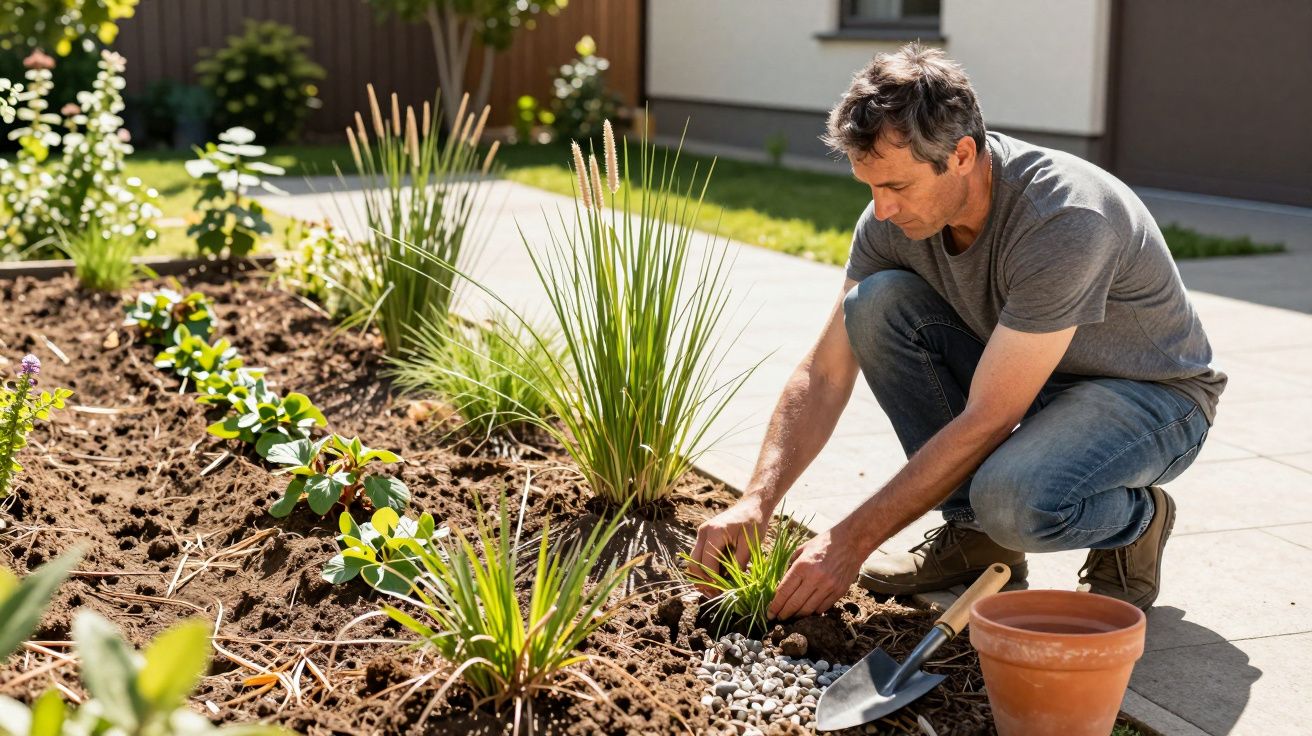
- Plant for succession: choose a few native or near-native plants that flower at different times, so the garden doesn’t peak for two weeks and then go flat.
If you hate it, you can dial it back. Most people don’t. They just adjust where the “wild” sits.
The quiet payoff: less work, more life, and a garden you can explain
There’s a particular relief when you stop fighting your site. Clay soil stops being a personal failing. Shade stops being “dead space”. A dry border becomes a place for resilient plants instead of a thirsty disappointment.
And then, usually, you notice the first proper signs: more bees in late summer, birds using the seed heads you didn’t cut, frogs turning up if there’s water. The garden starts feeling like a system rather than a display.
That’s the real moment homeowners realise rewilding isn’t about abandoning control. It’s about putting control where it counts - and letting the rest of the space do what it was always trying to do.
FAQ:
- Is rewilding just letting the garden grow over? No. It’s active management with lighter, smarter interventions - controlling edges, timing, and aggressive plants rather than micromanaging everything.
- Will a rewilded garden look messy? It can, unless you add deliberate cues: mown edges, paths, repeated tidy elements, and clear zones. Structure is what makes “wild” read as intentional.
- Do I need to use only native plants? Not strictly. Natives tend to support more local wildlife, but many gardens use a mix. The bigger win is reducing inputs and choosing plants that suit your conditions.
- What’s the simplest first step that won’t backfire? Create one framed patch (even a few square metres), leave it longer until late summer, then cut and remove clippings. Keep the boundary neat from day one.



Comments (0)
No comments yet. Be the first to comment!
Leave a Comment