Most people buy a house and inherit the same instruction: keep the lawn going. Yet sustainable landscaping is the moment many homeowners realise that a single, thirsty rectangle isn’t automatically the “tidy” option, especially as summers get drier and water bills rise. Residential eco gardens offer a practical alternative-spaces that still look intentional, but work harder for drainage, wildlife and day‑to‑day maintenance.
The change often starts with irritation rather than ideology. Patchy grass under shade, scorch marks after a warm spell, mud after a downpour, and that constant sense you’re one weekend behind. At some point the question lands: why am I propping up a plant community that doesn’t want to live here?
Why lawns fail first (and why that’s useful information)
Lawns are not “bad”; they’re just specific. They prefer even light, decent soil, regular moisture, and repeated cutting. Take away any of those and grass becomes a monthly repair project.
The silver lining is that a struggling lawn is giving you a site report for free. If it browns off quickly, you’ve got drought stress. If it thins under a tree, you’ve got shade and root competition. If it turns into a skating rink after rain, you’ve got compaction or poor drainage.
A lawn’s weak spots are usually your garden’s strongest clues: where it’s too dry, too wet, too shaded, or too heavily used.
Common “lawn problem” zones that are easier to redesign than to fight:
- Narrow strips by fences (hard to mow, often dry)
- Under trees (shade + roots + leaf litter)
- Along paths and play areas (compaction)
- By downpipes (water dumps, then dries out)
What sustainable landscaping looks like at home
The shift isn’t from “lawn” to “no green”. It’s from one uniform surface to a mix of surfaces that match how you actually use the garden.
A typical sustainable plan keeps a smaller, genuinely useful patch of grass-where you sit, play, or want open space-and replaces the rest with plants and materials that reduce inputs. Think mulch that protects soil, groundcover that outcompetes weeds, and shrubs or perennials that don’t need weekly attention.
The three‑part swap that changes everything
Most residential eco gardens end up with a similar structure:
- A defined usable area (small lawn, patio, or meadow‑style path)
- Planting that fits the conditions (shade plants in shade, drought plants in sun)
- A water plan (capture, slow, soak-rather than “hose and hope”)
That combination is what makes it feel calmer. You stop trying to force every corner to behave the same way.
Start with a small “conversion zone” rather than the whole plot
Overhauls fail when they’re too big, too fast. A better approach is to pick one area that causes the most work and convert it properly, so you can copy the method later.
Good first projects are usually:
- The strip along a driveway or fence
- The dead patch under a tree
- The soggy section near a downpipe
- A front garden corner you can see daily
Step‑by‑step: a simple lawn‑to‑bed method that holds up
This is the low‑drama route that avoids digging out half your topsoil.
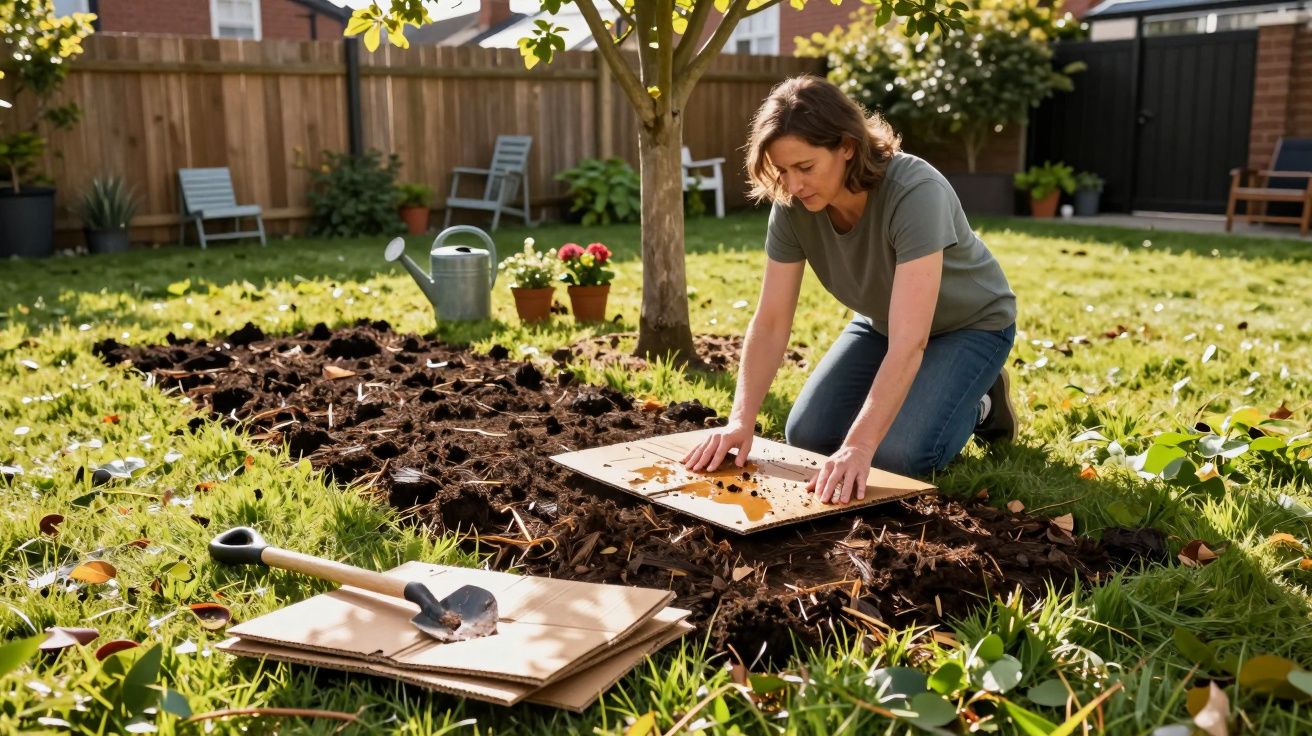
- Mark the area and decide where the edge will be (a crisp edge is what makes “less lawn” still look deliberate).
- Cut the grass short and remove any bulky weeds.
- Lay cardboard in overlapping sheets (no gaps), then wet it through.
- Add 7–10 cm of compost or topsoil, then 5–8 cm of mulch.
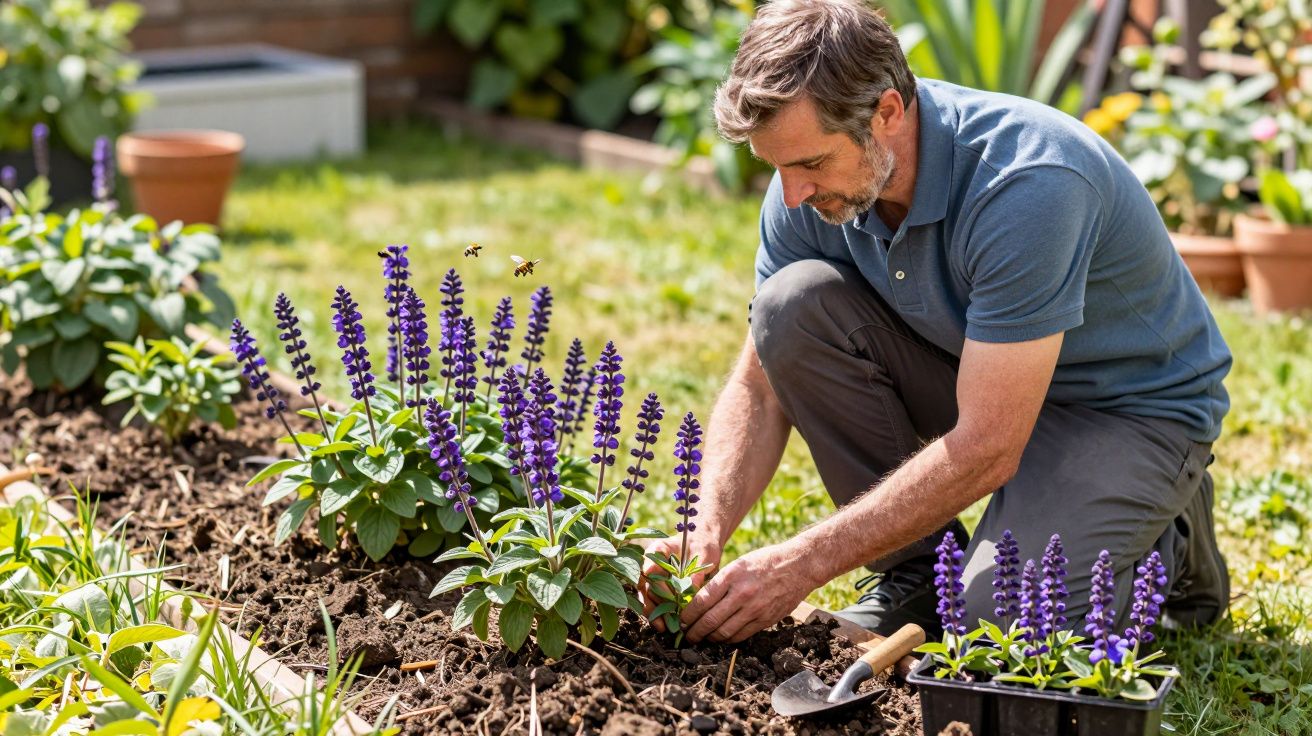
- Plant into the top layer, spacing plants a little closer than you think to reduce bare soil.
- Water for the first season while roots establish, then taper off.
The aim is not instant perfection. It’s to get soil covered, roots growing, and maintenance dropping month by month.
Choose plants like you choose furniture: for the room you actually have
Plant choice is where “eco” becomes “easy”. If you match species to light and moisture, you don’t need heroic watering, constant feeding, or regular replacements.
A quick rule of thumb for UK gardens:
- Hot, sunny, free‑draining: lavender, thyme, salvia, sedum, grasses
- Sunny but heavy/clayey: dogwood, hardy geraniums, daylilies, rudbeckia
- Dry shade (under trees): epimedium, hellebores, vinca, ferns (if soil isn’t bone dry)
- Damp areas: iris, ligularia, meadowsweet; consider a small rain‑garden pocket
If you like a clean look, repeat fewer plants in bigger groups. If you like a softer look, mix textures but keep a limited colour palette so it still reads as intentional.
Water, but make it smarter: slow it down and keep it in the soil
Lawns push you towards sprinklers: frequent, shallow watering. Beds let you do the opposite-less often, more deeply, with the soil protected.
Simple upgrades that suit residential eco gardens:
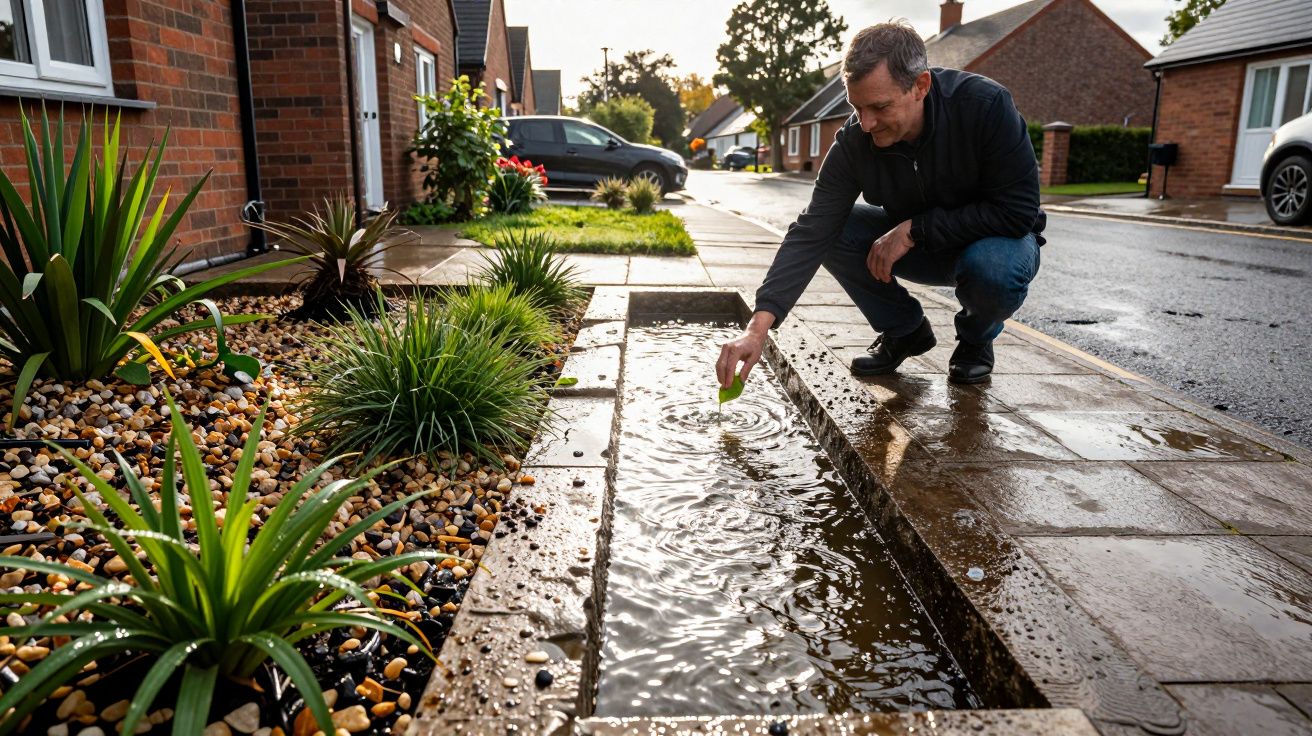
- Extend a downpipe into a water butt or a shallow gravel trench
- Mulch every spring (it’s less glamorous than new plants, and far more effective)
- Break up compaction with a fork in high‑traffic zones before planting
- Use groundcover as “living mulch” where you don’t want bare soil
If you’re dealing with flooding, the goal is not to “drain everything away”. It’s to create places where water can sit briefly and soak in without turning the lawn into a bog.
The surprising part: it can still look neat
People often keep lawns because they fear the alternative will look messy. In practice, the neatness comes from edges, pathways, and repetition-not from grass.
A garden reads as cared‑for when you can see the decisions. Crisp borders, a mown strip through a mini‑meadow, a defined seating area, or a line of stepping stones does more for “order” than another round of fertiliser.
Signs your redesign is working:
- You mow less, but the garden looks more “finished”
- Weeds decrease as soil stays covered
- Pollinators show up without you chasing them
- You water strategically, not constantly
A realistic mindset shift for year one
The first season is establishment. Even low‑maintenance planting needs some watering and weeding while it knits together. The payoff arrives when plants shade the soil, roots stabilise it, and the garden starts doing its own work.
If you keep one small lawn for actual use and convert the rest in stages, you get the best of both worlds: open space where you want it, and sustainable landscaping everywhere it used to be a weekly battle. That’s usually the moment homeowners stop asking, “How do I fix the grass?” and start asking, “What should this space do for me?”




Comments (0)
No comments yet. Be the first to comment!
Leave a Comment