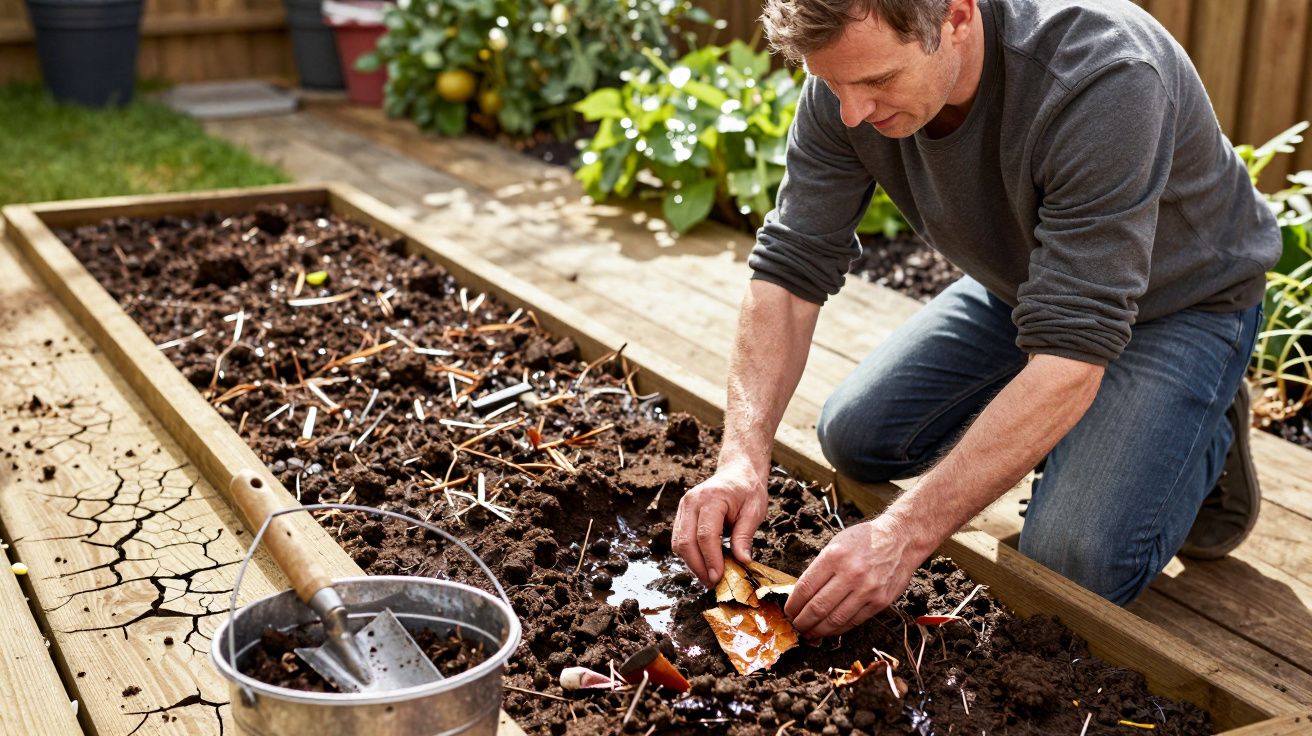
Soil regeneration rarely gets talked about in the same breath as climate-resilient gardens, yet it’s doing a lot of the heavy lifting behind the scenes. It’s what helps a border cope with a heatwave, what stops a lawn turning to dust in July, and what stops a downpour turning your beds into a muddy run-off.
You can swap plants, add irrigation, even put up windbreaks - and still feel like the garden is one extreme weather week away from falling apart. Often the missing piece isn’t a new variety. It’s the ground the whole thing is standing on.
The quiet layer that decides whether your garden copes or collapses
Walk into two neighbouring gardens after a fortnight of hot, dry weather and you’ll see it instantly. One looks tired but intact: leaves still holding shape, soil dark under the mulch, plants not panicking. The other looks crispy: cracked surface, water beading and running off when it finally arrives, and that brittle, stressed look that takes weeks to recover.
The difference is usually not effort. It’s function. Healthy soil acts like a battery and a sponge at the same time: it stores water, buffers nutrients, and keeps roots supplied even when the weather is being rude.
When soil loses structure - from repeated digging, bare surfaces, compaction, or a steady diet of quick-feed and nothing else - it stops behaving like a living system. It becomes a thin medium you have to constantly prop up. In a stable climate, you can get away with that. In an unstable one, you feel every weakness.
The hidden job of soil: water management, without the drama
Most people think “drainage” is a property problem and “watering” is a summer chore. In reality, soil is your drainage system and your watering can - if you let it be.
In heavy rain, good soil structure creates pores and channels that pull water down instead of letting it sheet across the surface. In drought, the same structure holds moisture in tiny spaces where roots and microbes can access it slowly, rather than losing it all to evaporation in two sunny afternoons.
A gardener in Reading described it like this after improving a clay bed for two seasons: the first year, water sat on top; the second year, it vanished in minutes; by the third, the plants stayed calmer between waterings. Nothing about the weather changed. The soil did.
Here’s the part that’s easy to miss: resilience isn’t just “more water”. It’s predictable water. Roots cope far better with steady supply than with cycles of flood-and-forget.
The ‘regeneration’ bit: what actually changes under your feet
Soil regeneration isn’t one product or a single weekend project. It’s the steady practice of rebuilding organic matter, protecting soil life, and restoring structure so the ground can do its own work again.
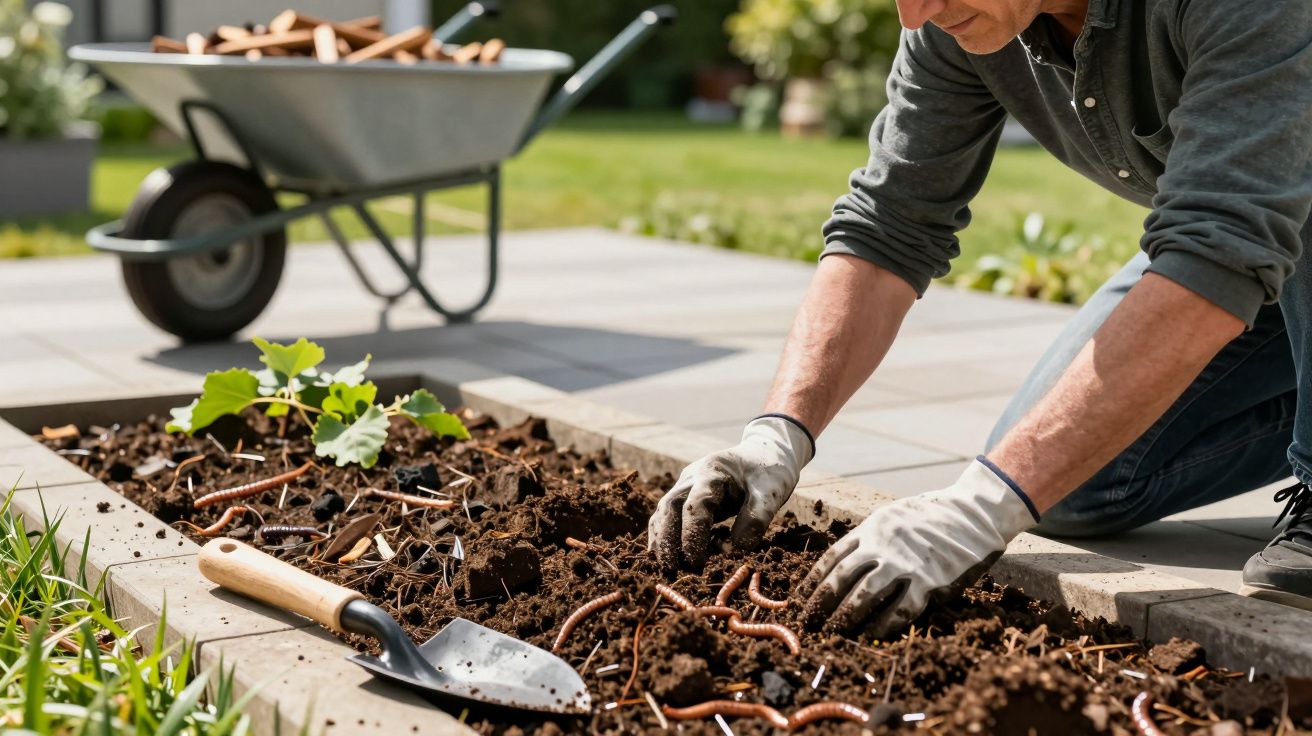
Under a healthy surface, fungal strands glue tiny particles into stable crumbs. Worms pull leaf litter down, leaving channels that act like micro-drains. Bacteria cycle nutrients in forms plants can use when they need them, rather than all at once in a flush that washes away.
When you regenerate soil, you’re not “feeding plants” so much as rebuilding the team that feeds them. That’s why the results show up as fewer problems: less wilting, fewer pest spirals, fewer mysterious failures after storms.
The simple garden shift: treat soil like a filter, not a floor
A lot of gardens are run like tidy rooms: bare soil, sharp edges, frequent disturbance, everything raked and reset. It looks controlled, but it’s fragile.
The resilient approach is closer to how a good entrance hall works in winter: you build a system that expects mess and handles it. You keep the soil covered, you reduce disturbance, and you give organic material somewhere to go besides the green bin.
A practical “soil-first” setup tends to include:
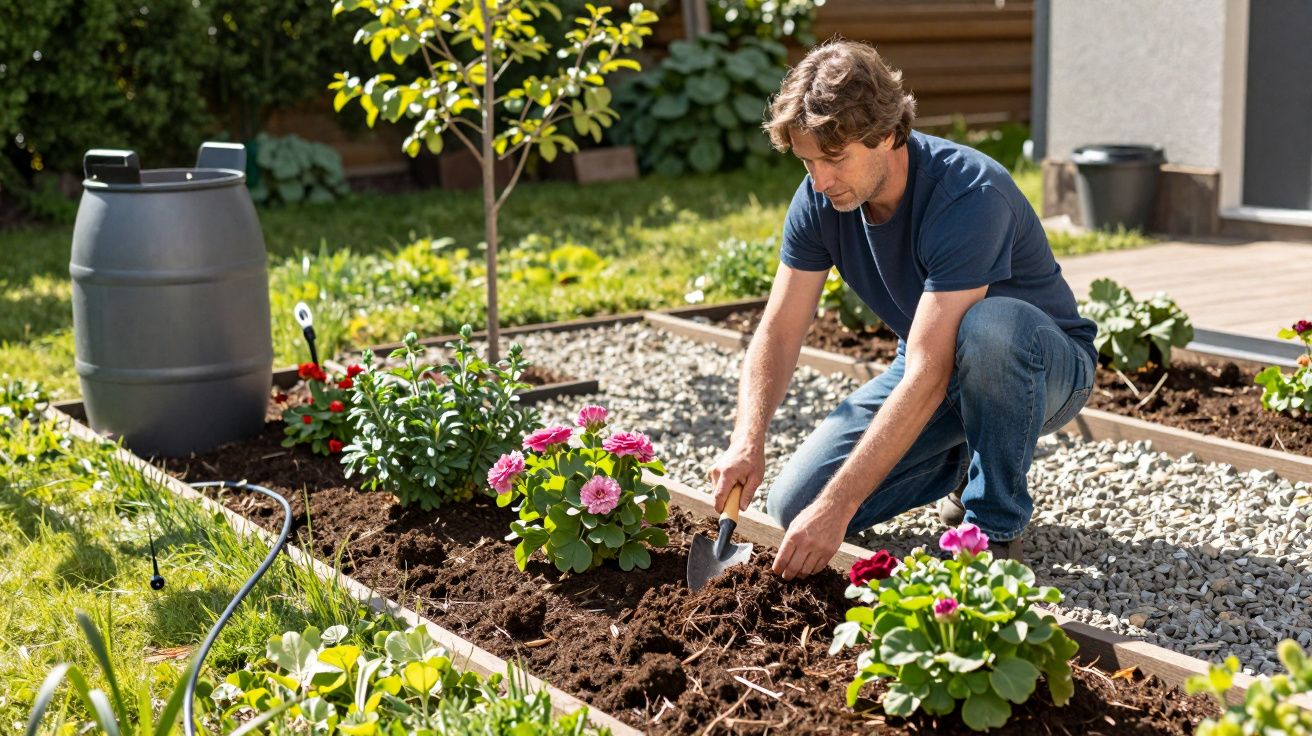
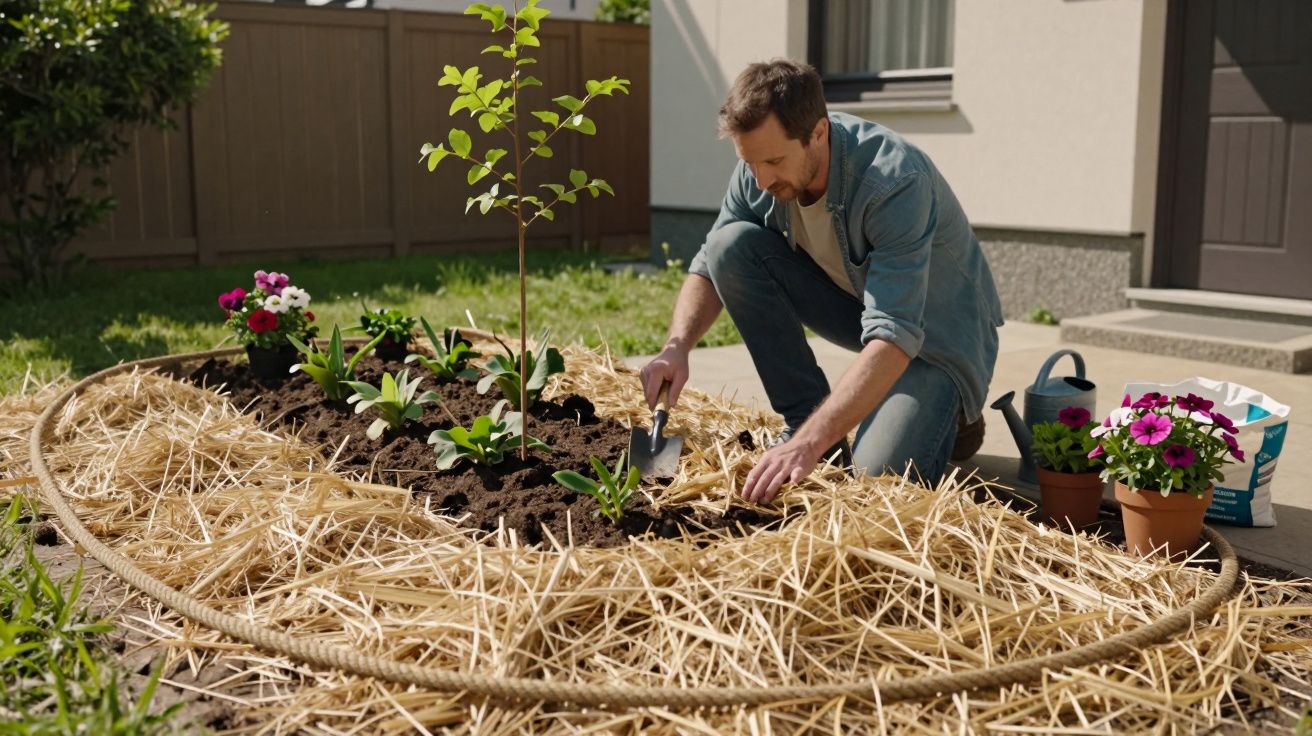
- A permanent cover: mulch, groundcover plants, or even a winter green manure so rain and sun aren’t directly hitting bare soil.
- Less digging: disturb as little as you can, as often as you can; roots and soil life do a better job when their home isn’t flipped.
- Regular organic inputs: compost, leaf mould, well-rotted manure, or chopped leaves - small amounts, often, beat one dramatic dump.
- A compaction check: paths where you actually walk, beds where you don’t; if the bed is regularly stood on, it will behave like concrete no matter what you add.
It’s not about being purist. It’s about making the default behaviour of the garden more forgiving.
Common mistakes that look “neat” but wreck resilience
The most common mistake is leaving soil bare because it looks clean. Bare soil bakes, erodes, crusts over, and swings wildly in temperature - which stresses roots even if you water.
The next mistake is trying to fix everything with quick feeds. Fast nutrients can make plants grow, but they don’t rebuild structure, they don’t increase water-holding, and they don’t create the stable biology that helps plants handle stress.
Finally, there’s the well-meaning habit of constant digging. If you’re improving a bed, it’s tempting to keep turning it because it feels like progress. But repeated disturbance breaks the very structure you’re trying to build, especially in clay and silty soils.
A good rule is to choose one: you can have “fluffy and freshly dug” today, or you can have “stable and resilient” in a season. The second option is the one that pays you back when the forecast turns ugly.
A quick, realistic plan for a more climate-resilient garden this year
If your garden feels like it’s always either too wet or too dry, the fix doesn’t have to be dramatic. Aim for small, repeatable actions that make soil less exposed and more biologically active.
- Stop leaving soil naked: mulch beds after planting, and top up before summer heat arrives.
- Add organic matter like you mean it: a thin layer of compost once or twice a year beats a panic-buy of bags every drought.
- Water for roots, not for reassurance: water less often but more deeply, then let the soil do the holding. Mulch makes this ten times easier.
- Keep feet off beds: define paths, use stepping stones, and resist the “just one step” habit that compacts the root zone.
- Let plants do some work: deep-rooters (comfrey, many grasses, some perennials) help open soil; chopped leaves and spent stems return carbon.
You’re not trying to create perfect soil. You’re trying to create soil that forgives you - and forgives the weather.
The part nobody sees, and why it matters
There’s a strange comfort in buying a new plant, because it’s visible progress. Soil work can feel like faith: you spread compost, you mulch, you don’t dig, and for weeks it looks like… nothing.
Then a heatwave turns up and your garden doesn’t immediately fold. Then a cloudburst hits and the beds don’t slump into a crusty mess. Then you realise the “hidden layer” has been doing its job quietly the whole time.
That’s the real role soil plays in climate-resilient gardens: it turns extreme weather from a crisis into a stress test you can actually pass.
| Point clé | Détail | Intérêt pour le lecteur |
|---|---|---|
| Le sol gère l’eau | Infiltration en pluie, rétention en sécheresse | Moins d’arrosage, moins de ruissellement |
| Régénérer plutôt que “corriger” | Couvrir, nourrir, moins perturber | Des plantes plus stables face aux extrêmes |
| La propreté peut fragiliser | Sol nu, engrais rapides, bêchage répété | Plus de stress, plus de problèmes en cascade |
FAQ:
- Do I need to replace all my soil to make my garden more resilient? No. Most gardens improve dramatically by adding organic matter, keeping soil covered, and reducing digging over time.
- What’s the quickest win for soil regeneration? Mulch. Covering soil reduces evaporation, buffers temperature swings, and protects structure during heavy rain.
- Will compost fix heavy clay? It helps, but think “repeat applications and patience”. Compost improves aggregation and biology, which gradually makes clay drain and hold water more intelligently.
- Is no-dig suitable for small UK gardens? Yes. It’s often easier in small spaces because you can keep beds covered and avoid compaction by keeping to fixed paths.
- How do I know if my soil is improving? Water soaks in faster, the surface crusts less, plants wilt less between waterings, and you’ll usually see more worms and a more crumbly structure under mulch.



Comments (0)
No comments yet. Be the first to comment!
Leave a Comment