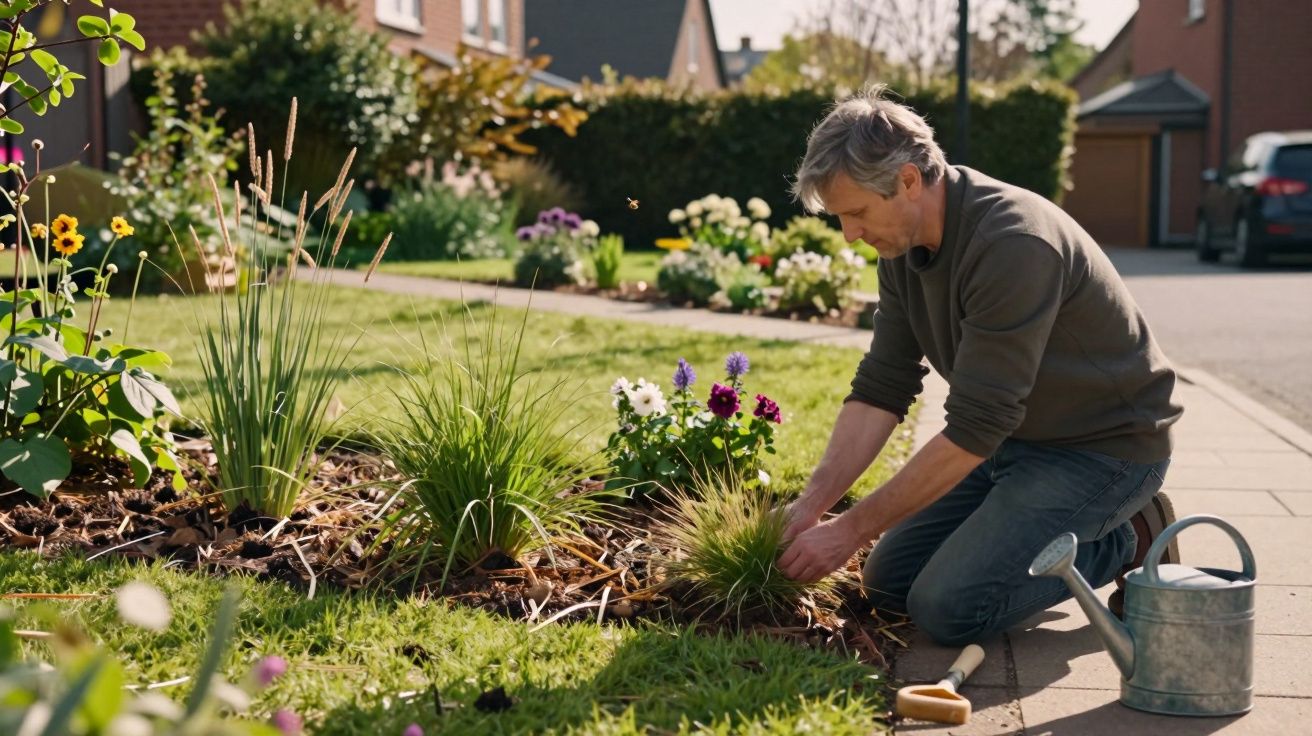
You notice it on a walk home: a front garden that used to be a clipped rectangle is now soft with colour, humming with insects. It’s not “wild” in the messy sense - it looks intentional - and it leans on native plants in the same way many urban greening projects do: less mowing, more life, better resilience in heat and heavy rain. For anyone paying water bills, juggling weekend chores, or just tired of a lawn that browns off every summer, it’s suddenly relevant.
A neighbour might call it a meadow. A council might file it under biodiversity. Most people just feel the difference: it looks calmer, it moves in the breeze, and it doesn’t demand your Saturday morning.
There’s a reason traditional lawns are being quietly replaced. And it isn’t because everyone has become an expert gardener overnight.
Why the classic lawn is starting to feel like hard work
Lawns were sold as the easiest option: one surface, one look, one routine. In reality, they’re a high-input system pretending to be low-maintenance. To keep that “green carpet” effect, you end up feeding it, watering it, cutting it, edging it, patching it, and fighting whatever takes advantage of the gaps.
Then the weather does what it does now. A dry spell turns grass to straw; a wet month turns it to squelch. Under that stress, the lawn’s promise - reliable, tidy, simple - starts to wobble.
One Bristol household put it bluntly after last summer’s hosepipe warnings: “We realised we were irrigating something we didn’t even sit on.” They kept a small sitting area, pulled up the rest, and replanted with a mix of local grasses and flowering perennials. The garden didn’t just survive the heat; it looked better during it.
That’s the pivot many people are making. Not to a “no rules” jungle, but to planting that behaves more like an ecosystem than a carpet.
The quiet garden swap people are making: grass out, native plants in
The trend is simple in concept: shrink the lawn to where you actually use it, and replace the rest with native plants that can handle your local conditions. Think of it as swapping constant maintenance for a bit of upfront design.
In practice, it often looks like this:
- A narrow mown path through taller planting instead of a full lawn.
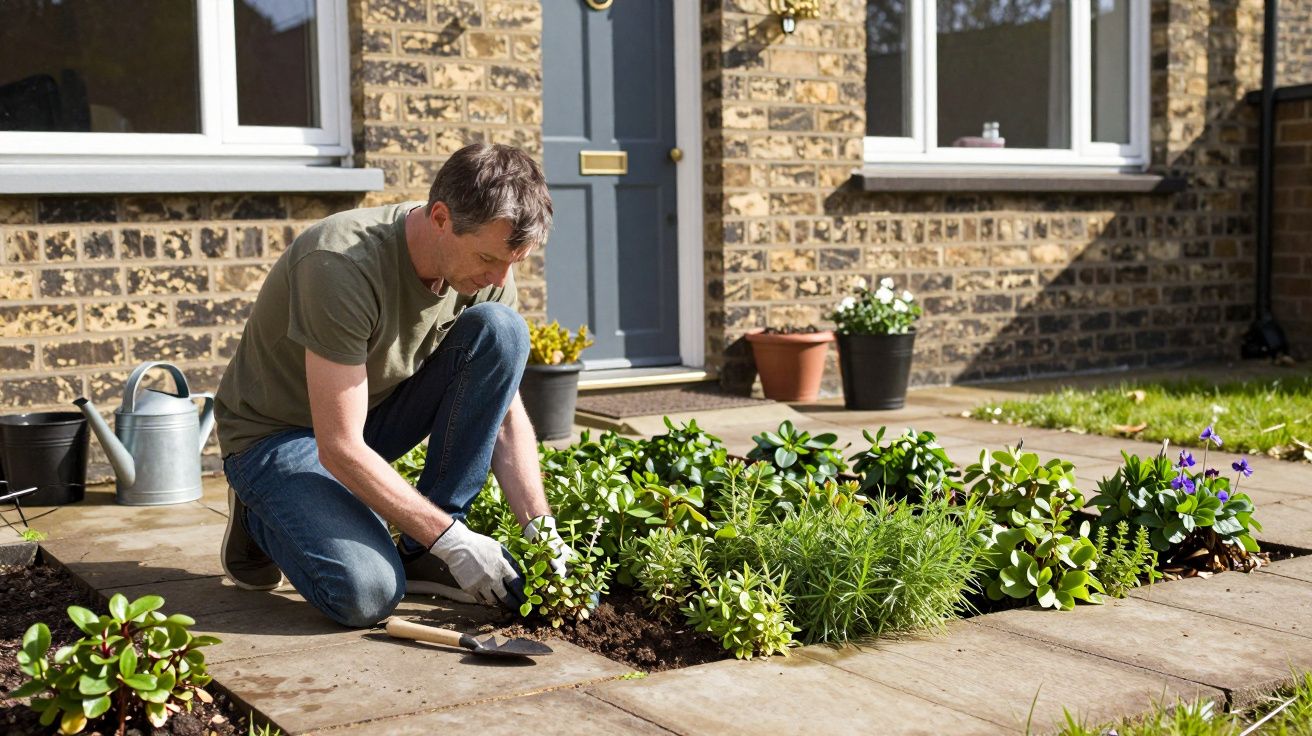
- A patchwork of groundcovers where grass used to thin out.
- Clumps of flowers and seed heads that stay standing through winter.
- More edges, more texture, fewer blank green metres.
The reason it feels so different is that native plants are doing jobs lawns don’t. Deeper roots hold soil during downpours. Flowers feed pollinators across the seasons. Mixed planting shades the ground, so it dries out slower and weeds have less of a foothold.
It’s also why you’re seeing echoes of it in urban greening projects - the logic scales. Cities are using tougher, locally adapted planting to cool streets, slow runoff, and bring wildlife back into hard landscapes. Home gardens are simply applying the same lesson in miniature: plant for the place you live, not the look you were sold.
“I thought it would look scruffy,” says Nadia, 41, who replaced half her lawn with native planting in a small Sheffield back garden. “But once you put in a clear edge and a path, it looks designed - and the mowing basically stopped being a thing.”
How to do it without turning your garden into a guessing game
Most people get stuck because they assume it’s all-or-nothing. It isn’t. The easiest wins come from keeping structure and changing what fills the space.
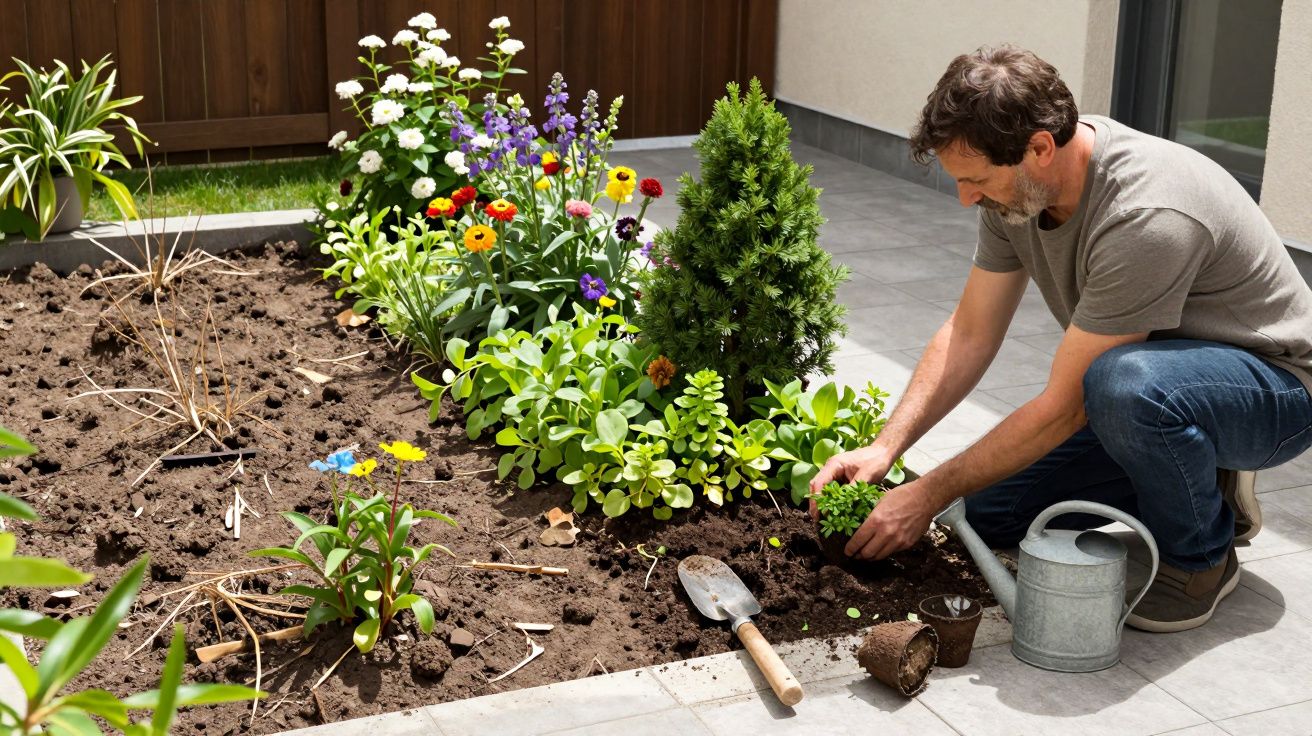
A practical way to start is a one-season experiment: pick the section of lawn you least enjoy maintaining and convert just that. You learn what thrives in your soil and how you like the look, without betting the whole garden.
A simple setup that works in many UK gardens:
- Decide what stays mown. Keep a small lawn “island” or a strip where kids play or you put a chair.
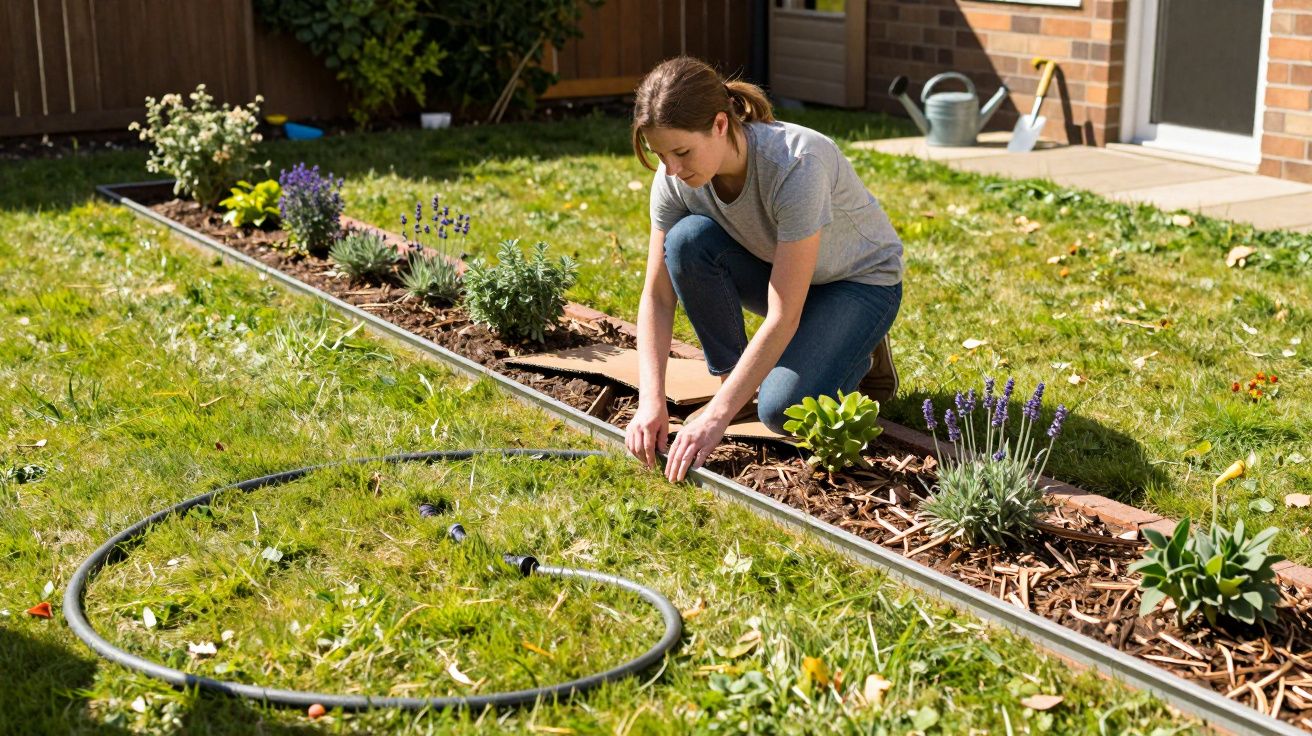
- Define edges first. A crisp border (timber, brick, metal, even a spade-cut trench) is what stops the whole thing reading as neglect.
- Choose a small palette of native plants. Fewer species, repeated, looks calmer than a bit of everything.
- Plant in drifts, not singles. Groups of 3–7 of the same plant look intentional and are easier to manage.
- Mulch like you mean it. The first year is about reducing weeds while roots establish.
Common traps are predictable. People pick only flowers and forget the “bones” (grasses and evergreen structure), then panic in winter when everything collapses. Or they plant too sparsely, leaving bare soil that weeds love. Let’s be honest: nobody wants a new hobby that’s just weeding.
A quick mental checklist helps:
- If it looks scruffy, it usually needs clearer edges, not more plants.
- If it’s weedy, it usually needs more coverage (denser planting + mulch), not harsher effort.
- If it’s flopping, it usually needs supporting plants (grasses, sturdier stems) or less rich soil.
What changes when you stop gardening for a lawn
The first change is time. Mowing drops from a weekly obligation to an occasional tidy-up - often just paths and edges. The second change is sound: you’ll notice more insects, more birds, more movement. It’s subtle, then it’s not.
And there’s a particular kind of relief in planting that doesn’t fight your conditions. When you stop forcing a thirsty lawn through hot spells, the garden stops feeling like a problem you’re always behind on. It becomes a place that holds up without constant intervention.
That’s why this shift is spreading quietly. It’s not a flashy renovation. It’s a series of small swaps - less turf, more native plants, a path here, a border there - until one day you realise you’re no longer maintaining a green rectangle. You’re keeping a living garden.
| Point clé | Détail | Intérêt pour le lecteur |
|---|---|---|
| Keep some lawn, lose the rest | Reduce turf to areas you actually use | Less mowing without losing usability |
| Native plants do the heavy lifting | Deeper roots, seasonal flowers, better resilience | More life, fewer inputs, steadier in extremes |
| Edges make it look “designed” | Borders and paths create structure | Avoids the “overgrown” worry while staying relaxed |
FAQ:
- How much lawn do I need to remove for this to work? You can start with as little as a corner or one strip. The effect comes from changing a meaningful patch, not doing the whole garden at once.
- Will native planting make my garden look messy? Not if you add structure: a clear edge, a path, and repeated plant groups usually reads as deliberate rather than untidy.
- Is this the same as a wildflower meadow? Not exactly. A meadow is one approach, but many people use a mix of native grasses, perennials, and groundcovers for a more “gardened” look.
- Do native plants mean zero maintenance? No. The first year needs watering while plants establish and some weeding. After that, maintenance shifts to seasonal cutting back and occasional thinning, rather than weekly mowing.
- Is this connected to what councils are doing? Yes - many urban greening projects rely on tougher, locally adapted planting to handle heat, manage rainwater, and support biodiversity, and home gardens are borrowing the same logic.



Comments (0)
No comments yet. Be the first to comment!
Leave a Comment