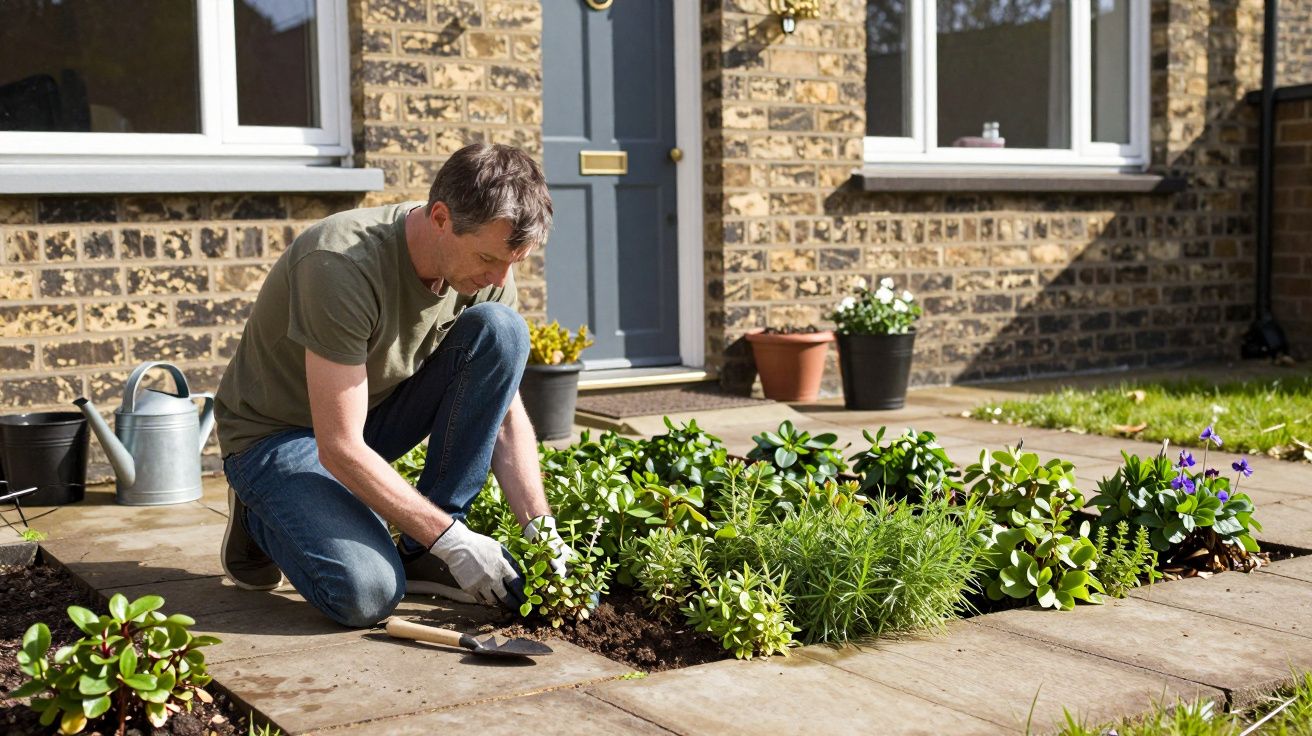
I first noticed it on a street where every front garden used to look the same: clipped box, a strip of gravel, a tidy line of bedding plants that lasted until the first hot week in June. Now the neat edging has quietly disappeared under natural ground cover, woven between stepping stones and spilling up to the front door like it’s always been there. It’s showing up in back gardens too, and it’s being copied from the logic of urban greening projects: less bare soil, fewer hard lines, more living surface that can cope with heat, rain and neglect.
It sounds like a style choice, and it is. But for a lot of households it’s also a practical response to summers that scorch, winters that waterlog, and the creeping sense that the old “border plus lawn” template is starting to feel like extra work for less reward.
The border is losing its monopoly
Traditional borders are a very British idea of control: a clean edge, a clear division, plants behaving themselves in their assigned lane. They look brilliant for a few weeks, and then real life steps in. Weeds arrive, soil bakes, slugs move in, and suddenly that crisp line becomes a job you keep postponing.
Natural ground cover changes the bargain. Instead of asking you to maintain an empty strip of exposed soil, it fills the space with low plants that knit together, shading the ground and softening the edges. You still have a garden, but you don’t have to fight it quite so hard.
And there’s a quieter shift underneath the aesthetics. When you keep soil covered, you keep moisture in, you reduce erosion in heavy rain, and you give insects somewhere to live that isn’t a single lavender bush buzzing for ten minutes in July.
What people actually mean when they say “ground cover”
Ground cover isn’t one plant. It’s a habit: low-growing species that spread, overlap, and create a living mulch. The appeal is how it behaves in the gaps we usually leave bare - under shrubs, along paths, around a pond edge, at the foot of a wall where borders often struggle.
In UK gardens, the most common approaches fall into a few familiar camps:
- Flowering mats for sun: creeping thyme, hardy geraniums, aubrieta, sedums.
- Evergreen carpets for shade: Vinca minor, Pachysandra, ivy (used carefully), some ferns as companions.
- Wildlife-leaning mixes: clover in lawns, self-heal, bugle, small native wildflowers where the soil allows.
- Softening plants for hard landscaping: mind-your-own-business (in the right damp spots), saxifrages in cracks, low campanulas.
The point isn’t perfection. The point is that the soil stops sitting there naked, waiting to be blasted by sun or pummelled by rain.
Why it’s catching on right now (and not just in glossy magazines)
This trend has the same mood as the recent obsession with “no-mow May”, rain gardens and swapping patio for planting: it’s part guilt, part fatigue, part common sense. People are tired of gardening systems that only look good if you feed them time, water and money on schedule.
The practical wins people notice first
Most gardeners don’t convert for ecology. They convert because they want their Saturday back.
- Less weeding: a dense cover leaves fewer open patches for annual weeds to take hold.
- More stable moisture: shaded soil dries out slower in summer.
- Fewer “dead zones”: those awkward strips where nothing thrives suddenly have a job.
- Softer maintenance: you trim and edit rather than constantly reset.
There’s also a social side to it. In rows of terraces, one front garden going lush and low can start a chain reaction. It looks modern, but not flashy. It looks cared for, but not fussy.
The bigger picture: gardens borrowing from cities
Urban greening projects have been pushing the same principles for years: reduce runoff, cool overheated areas, increase biodiversity, cover the ground. In a city, that might mean planting swales, pocket parks, green roofs, and roadside verges designed to survive on less.
In a back garden, it translates surprisingly well. When you replace exposed soil and sharp borders with living cover, you’re doing a miniature version of the same job: absorbing rainfall instead of shedding it, buffering temperature swings, and creating more usable habitat than a rectangle of mulch.
The common mistakes (the ones that make people give up)
Ground cover is forgiving, but it’s not magic. Most failures come from choosing the wrong plant for the wrong place and then resenting it for behaving exactly as it was bred to behave.
Watch-outs that matter in the UK
- Shade that isn’t really “shade”: dry shade under conifers will defeat many classics. Choose tough, dry-shade plants or improve the soil first.
- “Spreads quickly” can mean “never leaves”: some plants will wander into lawns and borders unless you edge them.
- New plants need a start: even drought-tolerant ground cover needs watering until it’s established.
- Slugs love cover too: dense planting can hide pests; balance it with habitat for predators (log piles, rough corners, a small pond if you can).
If you’ve ever planted something labelled “ground cover” and watched it sulk in a lonely clump for two years, the issue usually wasn’t your effort. It was the match.
A simple way to start without redesigning the whole garden
You don’t have to rip out your borders to join in. The easiest way is to treat ground cover as the “filler” that replaces bark chips and bare soil, then let it creep as confidence grows.
- Pick one problem area (the strip by the fence, the patch under a rose, the corner that always cracks and dries).
- Choose one species that suits the conditions (sun/shade; damp/dry).
- Plant closer than feels polite - small plants look sparse; ground cover works when it can touch.
- Mulch lightly for the first season to suppress weeds while it knits.
- Edit, don’t panic: if it spreads into the wrong place, lift and replant it elsewhere.
Within a year, it usually stops looking like “new planting” and starts looking like the garden has relaxed.
The quiet shift in what we think a “tidy garden” is
This is the part nobody says out loud: we’re changing our definition of neat. A garden can now be dense, soft-edged and slightly wild, and still read as intentional. In fact, the intention often shows more clearly - a path through thyme, a drift of low flowers, a shaded patch that looks finished instead of forgotten.
Traditional borders aren’t going extinct. But across the UK, the sharp line is being replaced by something more forgiving: living ground that does a job, looks good for longer, and asks for less. When that starts to feel normal, it’s hard to unsee how much effort we used to spend maintaining emptiness.






Comments (0)
No comments yet. Be the first to comment!
Leave a Comment