I didn’t understand sustainable landscaping the first time I paid for it. I understood the idea - less mowing, fewer chemicals, more wildlife - but the day-to-day felt like a downgrade until long-term ecological planning started showing its real maths. It’s used in ordinary front and back gardens, shared courtyards, new-build borders, even school grounds - anywhere you’d normally default to lawn, bedding plants, and a weekly watering habit. It matters because it’s one of the few home improvements that can lower work and risk over time, not just “look nicer” for a season.
The decision I’m talking about is simple to say and hard to commit to: stop designing for year one. Design for year three, then be patient while year one tries to embarrass you.
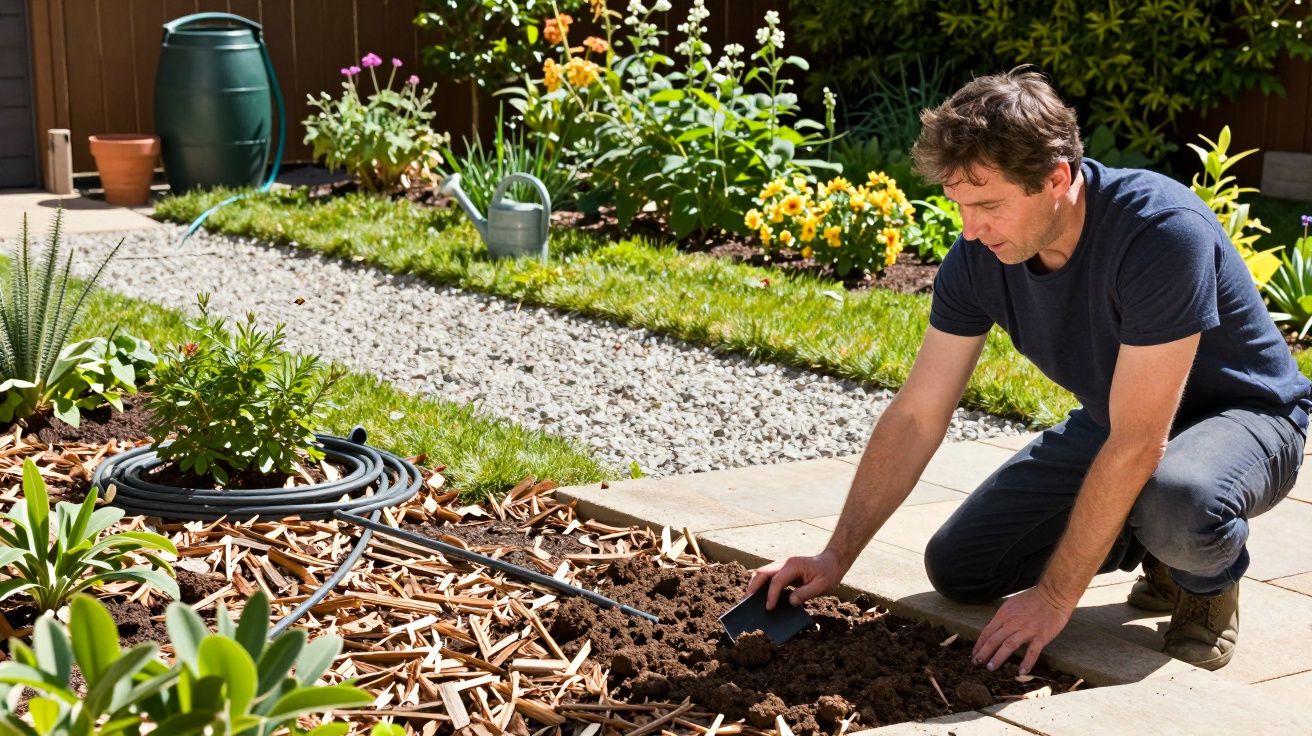
I watched a neighbour make the switch after another dry summer. They removed half the lawn, planted a mix of native shrubs and tough perennials, laid mulch, and swapped sprinklers for a drip line and a water butt. The first spring looked… fine. The first summer looked messy. By the second autumn, something clicked: the garden wasn’t asking to be rescued every weekend.
The decision: trade instant “tidy” for a system that learns
Most conventional gardens are built like a stage set. They’re brilliant on opening night, then they demand constant touch-ups: watering, feeding, deadheading, mowing, edging, fighting pests, replacing whatever didn’t like this year’s weather.
Sustainable landscaping is the opposite. You’re building a living system with a few rules: right plant, right place; keep soil covered; hold onto water; create habitat; accept a little seasonal scruff. Long-term ecological planning is what stops it becoming a vague “wild patch” and turns it into something that improves with age.
The year-two moment comes when the system starts doing jobs you used to do by hand. Shade appears. Roots knit soil. Mulch breaks down into structure. Predators show up for the pests. The garden stops acting like a project and starts acting like a place.
What year one doesn’t tell you (and why it feels like regret)
Year one is awkward because you’ve paid for potential. Plants are smaller than the gaps between them, so everything looks sparse from certain angles and overgrown from others. Weeds take advantage of light hitting bare soil. Friends ask, carefully, “Is it finished?”
There’s also a psychological trap: you compare a new ecological garden to a mature conventional one. That’s like comparing a newly planted hedge to a fence and wondering why it doesn’t block the wind yet.
If you’re used to instant impact, you interpret the settling-in phase as failure. In reality, it’s establishment - the bit that makes the later ease possible.
Here’s what tends to happen in the first 12 months:
- You notice every weed because the soil is still open.
- You water more than you expected because roots haven’t gone deep.
- You get uneven growth: one plant rockets, another sulks.
- You feel pressure to “tidy” back into neatness, which often resets the process.
The year-two shift: the garden starts paying you back
Somewhere after the second spring, you walk out and realise you haven’t been firefighting. The gaps are smaller. The mulch stays put. You’re weeding in minutes, not hours.
This is where the decision starts making sense financially and emotionally. Not because it becomes perfect, but because it becomes predictable.
A few paybacks show up early for most people:
- Less watering: deeper roots, more shade on soil, better infiltration.
- Less feeding: healthier soil biology means you’re not pushing growth with quick fixes.
- Fewer replacements: perennials settle, shrubs anchor, and you stop buying “just something for colour”.
- More resilience: heatwaves and wet spells don’t wipe out the whole look in a week.
The wildlife part is often the clearest proof. You’ll see more bees and hoverflies first, then birds, then the small “clean-up crew” in the soil. It feels like the garden has joined the local network instead of being an isolated display.
The practical choices that make year two easier (not just “greener”)
It’s tempting to focus on plants, but the boring decisions are the ones that carry you through year one without losing heart.
1) Cover the soil like you mean it
Bare soil is an invitation: to weeds, to evaporation, to crusting after heavy rain. Mulch is not decoration; it’s climate control.
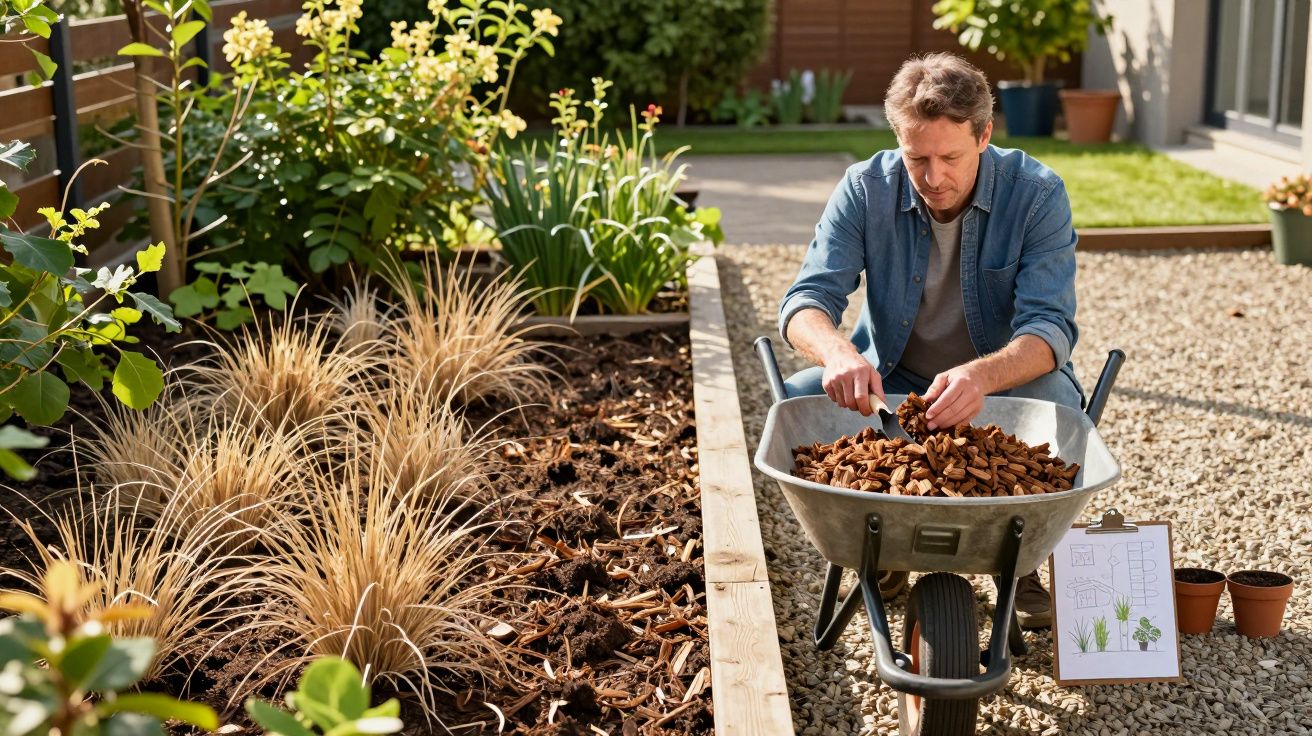
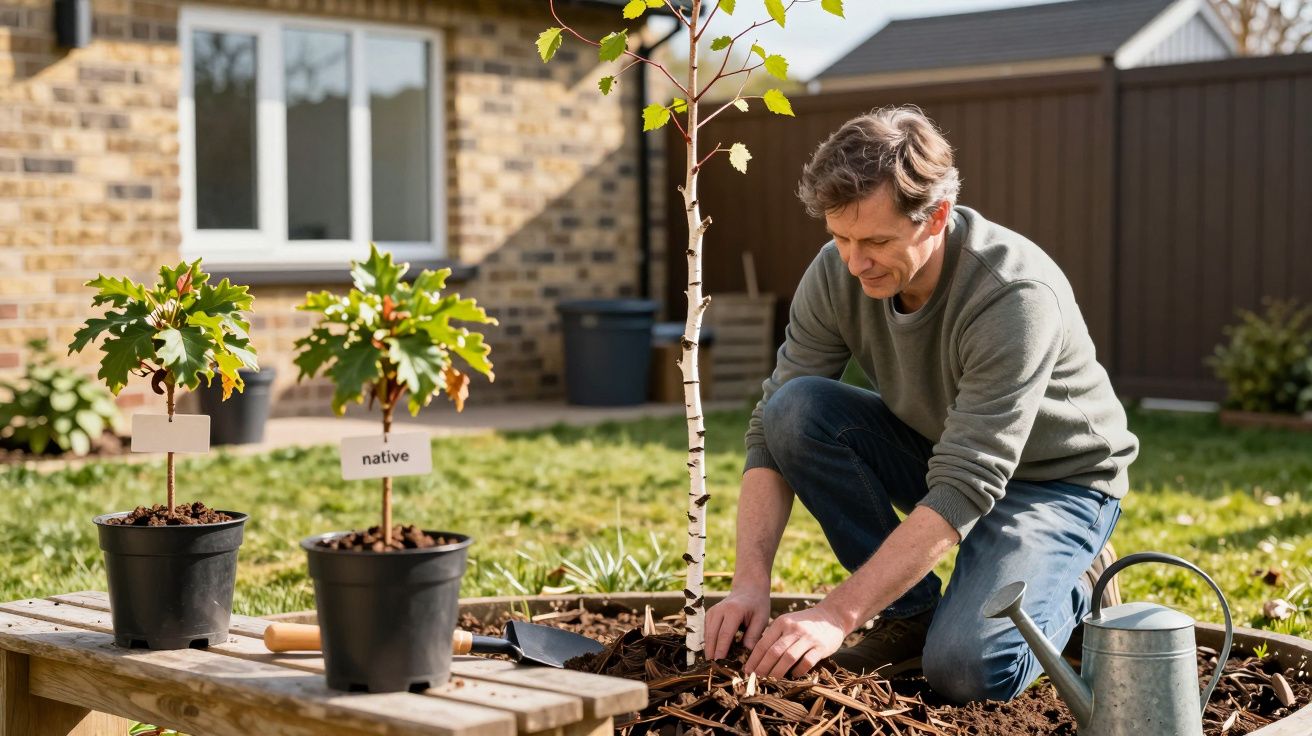
Aim for a generous layer of organic mulch (woodchip, leaf mould, composted bark) around new planting. Top up annually for the first couple of years, then let fallen leaves and plant material do more of the work.
2) Plant in communities, not specimens
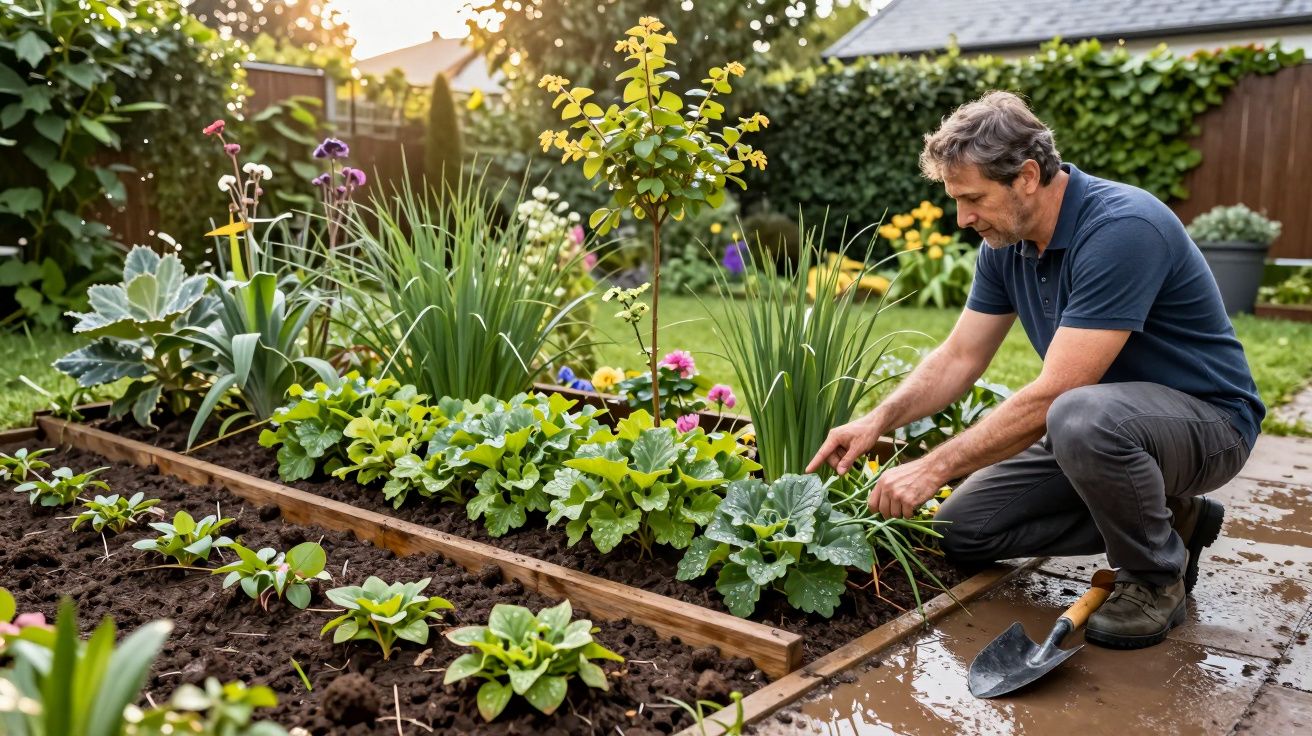
Single “feature” plants surrounded by open ground look clean on day one and demand weeding on day fifty. Mixed planting closes gaps faster and shares resources: tall plants shade short ones, groundcovers protect soil, and varied flowering times keep insects around.
A simple pattern that holds up:
- Structural shrubs for winter shape
- Tough perennials for long flowering
- Groundcovers to knit the surface
- A few grasses for movement and drought tolerance
3) Water like you’re training roots, not soothing guilt
In year one, water deeply and less often, then taper. Frequent light watering keeps roots near the surface, which makes everything fragile in heat.
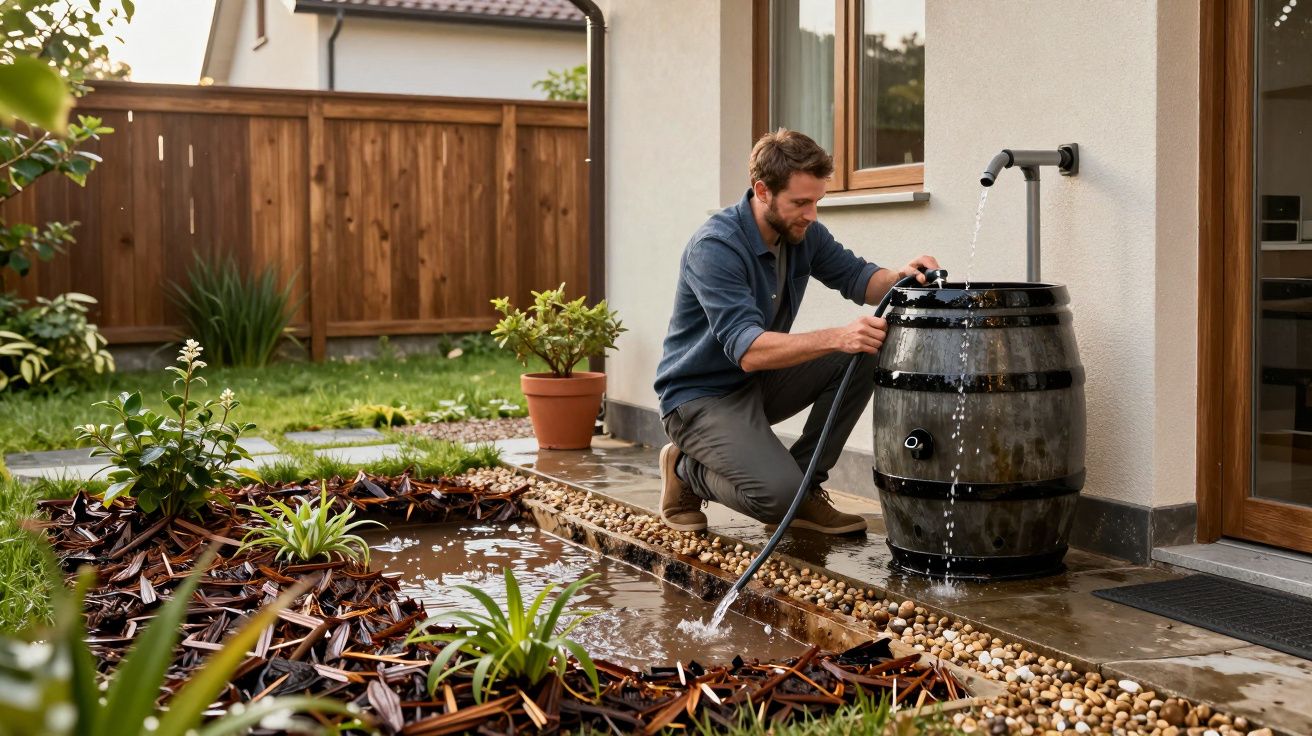
If you can, use drip lines under mulch or a slow soak at the base. And if restrictions tighten where you live, you’ll be grateful you built a garden that can cope with “less” without collapsing.
4) Keep a small “neat edge” on purpose
A sustainable garden doesn’t have to look unkempt. One crisp element - a mown strip, a gravel path, a clean border - makes the rest read as intentional. It buys you social peace while the plants fill in.
“The trick is to look deliberate while you wait for density.”
The most common mistake: redoing it after the first messy summer
People rip out promising planting because it didn’t give instant satisfaction. Or they “correct” every wobble - moving plants constantly, over-mulching into stems, feeding hard to force blooms, cutting back too early because it looks untidy.
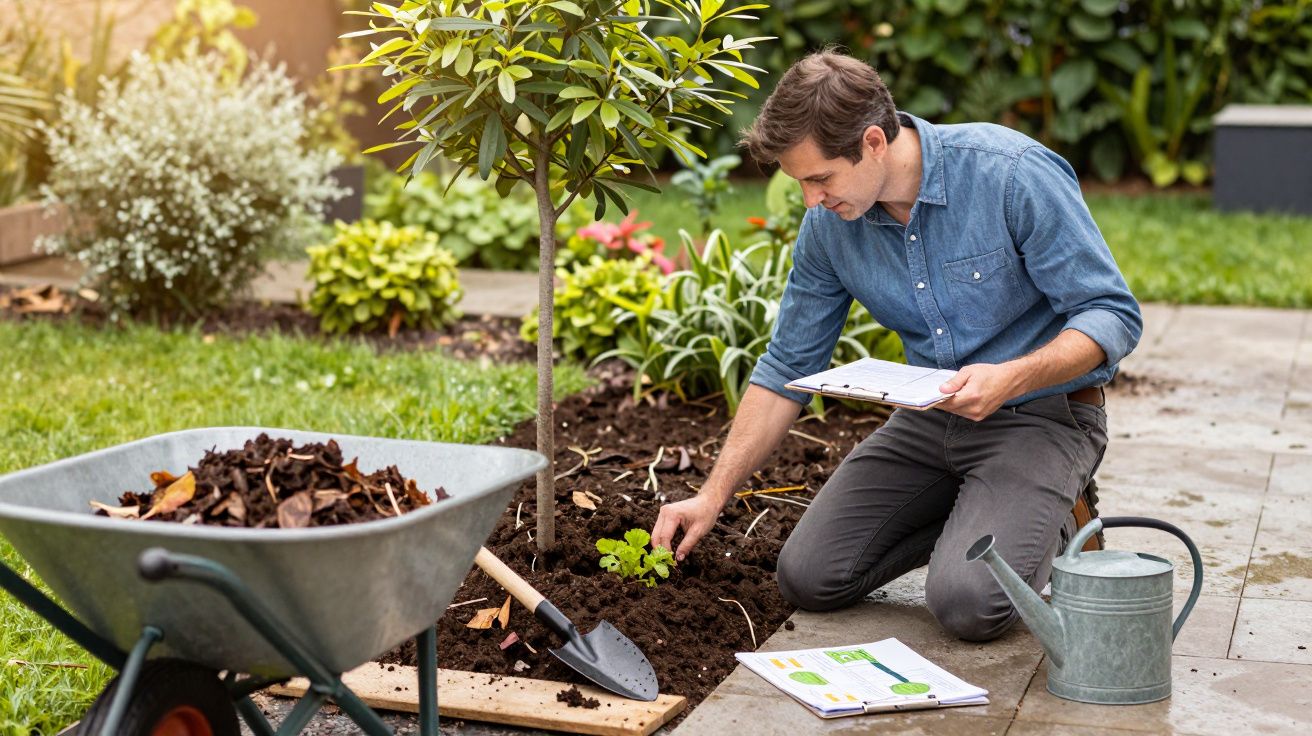
If you do one thing in year one, do this: take photos from the same spot each month. It’s the easiest way to see progress that your daily eyes miss. The garden will look different in a week, but it only makes sense across seasons.
A simple year-two checklist (so you know it’s working)
You don’t need a perfect garden; you need signals.
- Weeding time is shrinking, even if it’s not zero.
- Soil under mulch is dark and crumbly, not dusty or hard.
- Plants are holding their own shape without constant staking.
- You’re watering less often than last summer, not more.
- You can name what you’re doing and why (even if it’s “I’m leaving seedheads for birds”).
If none of those are happening, it doesn’t mean the idea failed. It usually means one design piece needs adjusting: too little mulch, not enough groundcover, or plants that don’t suit the site.
| What you change | What year one feels like | What year two starts to feel like |
|---|---|---|
| Less lawn, more planting | Sparse and “unfinished” | Cooler, fuller, easier to manage |
| Mulch + groundcover | Still some weeds | Fewer gaps, less weeding |
| Drought-tolerant design | Not as lush on demand | More stable through heat and bans |
What to tell yourself when it’s not pretty yet
You didn’t buy instant perfection. You bought a trajectory.
Sustainable landscaping rewards the kind of patience we rarely practise at home: the patience to let a system establish, to let your standards shift from “always immaculate” to “healthy, intentional, and resilient”. Year two is when you stop needing to explain it to yourself. Year three is when you start recommending it to other people.
FAQ:
- Is sustainable landscaping just letting a garden go wild? No. It’s planned: the goal is lower inputs and higher resilience, with design choices that still look intentional.
- When will it look “finished”? Most gardens start to knit together in year two, but many feel truly mature around year three to five, depending on plant sizes and site conditions.
- Do I have to remove the lawn entirely? Not at all. Reducing lawn to what you actually use is often the sweet spot: a smaller, healthier lawn plus planting that supports biodiversity and reduces watering.
- What if I’m renting or might move? Focus on reversible wins: container shrubs, mulching, water butts (if allowed), and replacing high-maintenance bedding with hardy perennials in pots or small borders.
- How do I keep it from looking messy? Build in one or two neat elements (edges, paths, clipped forms) and let the planting be softer behind them. This keeps the “planned” signal strong while the ecology does its slower work.

Comments (0)
No comments yet. Be the first to comment!
Leave a Comment