
You can spend Saturday morning edging the lawn until it looks like a billiard table. By Sunday evening, a fox has cut a diagonal shortcut, the wind has tipped seed heads across your path, and something you didn’t plant is flowering with audacious confidence.
Naturalistic planting schemes are the garden version of that truth: they use perennials, grasses and self-seeders arranged to behave more like a small ecosystem than a display bed, and environmentally conscious homeowners are turning to them because they feed pollinators, soften heat and reduce the chemical fuss. The catch is emotional, not botanical. We were taught that a “good garden” looks controlled.
The first time you try a naturalistic border, you learn a new kind of tidy. It isn’t the tidy of symmetry and bare mulch. It’s the tidy of intention - where plants are allowed to lean, mingle, and finish their sentences.
Why we crave neat - and why gardens refuse
Neatness is comforting because it’s legible. Crisp edges, single varieties in blocks, soil you can see between plants: your brain reads it as cared for. It signals time, money, competence.
Nature reads the same space as an invitation. Bare soil is a vacancy sign. A perfect line of identical plants is a buffet with opening hours. If you live in the UK, add wet springs, sudden warm spells and long autumns, and you get growth spurts at precisely the moments you thought you were “done”.
The dissonance is where frustration lives. You thought you were buying low-maintenance. What you were actually buying was a different maintenance: lighter, more frequent, more observational.
“A naturalistic bed isn’t messy,” says a Bristol-based landscape designer I once shadowed on a windy site visit. “It’s just not obedient.”
What “naturalistic” actually means (and what it doesn’t)
A naturalistic planting scheme isn’t a wildflower meadow dropped into any gap and left to fate. It’s designed to look relaxed while working hard: long-season interest, plants that knit together, and structure that holds up allowably chaotic moments.
It also isn’t no-work. The work simply moves away from constant clipping and towards editing: you thin, you lift, you divide, you choose what gets to self-seed and what gets politely removed.
A useful mental swap is this: you’re not keeping plants inside lines. You’re curating a community.
The three ingredients that make it look “meant”
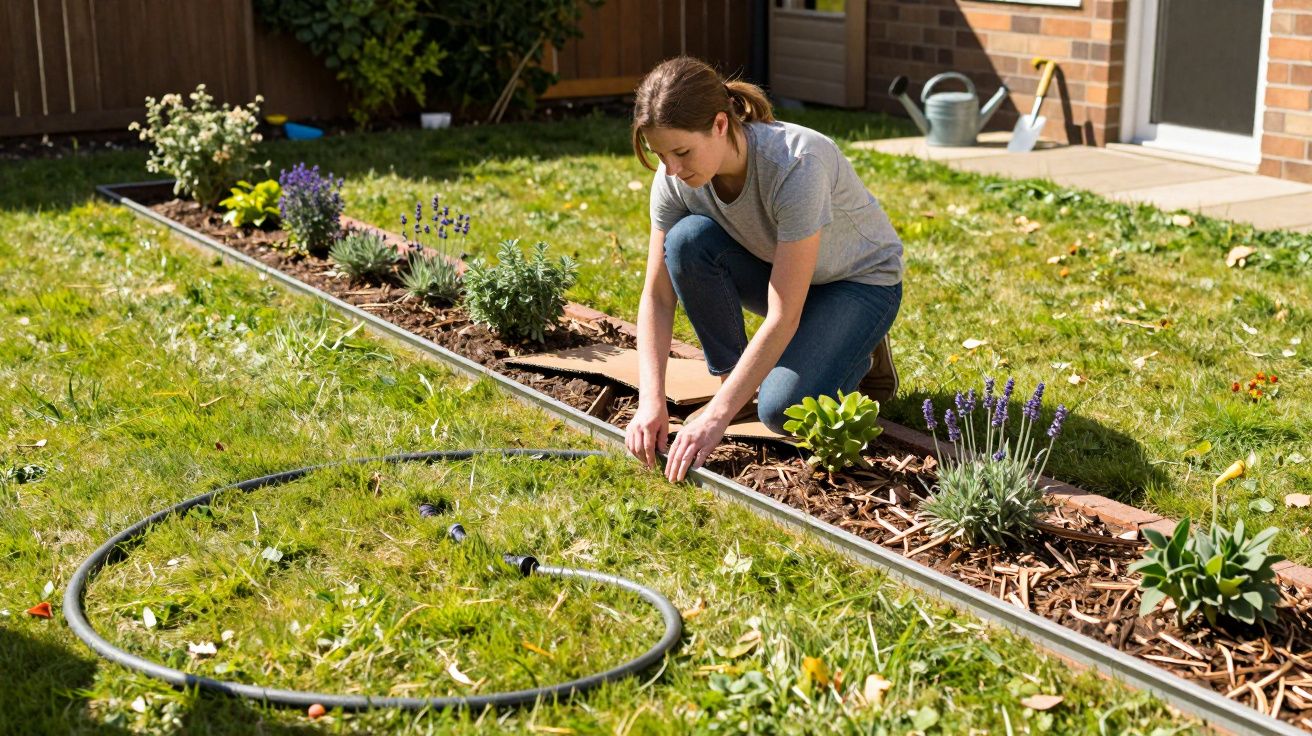
- A clear frame: a mown edge, a gravel strip, a path, a clipped hedge, a fence line. The frame tells the eye the looseness is deliberate.
- Repeats, not singles: the same grass or perennial appearing in three or five places reads as design, even when everything else is frothing around it.
- A few anchors: shrubs, upright grasses, or perennials with strong winter shape so the garden doesn’t collapse into mush in November.
Without those, the planting can feel like you’ve simply stopped gardening. With them, it reads as calm - even when the plants are doing their lively thing.
The quiet fight: neighbours, family, and your own nerves
Most homeowners don’t struggle with the plants first. They struggle with the story.
A seed head left standing becomes a moral debate. Your partner asks if you’re going to “sort that out”. A neighbour jokes about you letting it go. And you, secretly, miss the hit of certainty that comes from shearing everything into compliance.
Environmentally conscious homeowners often carry an extra pressure: to “do the right thing” and also make it look lovely. You want the bees and the beauty. You don’t want to be mistaken for someone who forgot.
This is where small signals help. A neat edge. A swept path. A little sign that says: I am paying attention.
The low-drama maintenance routine that keeps it on your side
Naturalistic gardens thrive when you do less, but at the right moments. Think of it like that hotel-bathroom lesson: the magic is in small, repeatable habits, not heroic cleans.
A simple seasonal rhythm (UK-friendly)
- Late winter / early spring: cut back (or “combing out” for some grasses), remove soggy stems, lift and divide overcrowded clumps.
- Late spring: a gentle weed patrol while the soil is still visible; top up mulch where plants haven’t knitted yet.
- Summer: deadhead selectively (not everything), stake only what truly flops into paths, keep one eye on watering in heatwaves.
- Autumn: resist the urge to clear; leave seed heads and stems for birds and overwintering insects, then tidy paths and edges instead.
The point is to keep access and intention, not to chase perfection. If the path is clear and the frame is crisp, the border can be exuberant without looking like a surrender.
The “edit list” that saves you from chaos
When something spreads, self-seeds, or leans into the wrong place, ask:
- Is it beautiful enough to keep?
- Is it helping wildlife more than it’s irritating you?
- Is it blocking a path, sightline, or smaller plant that you actually care about?
- Do you want it repeated elsewhere, or politely reduced?
Then act quickly and lightly. A ten-minute edit beats a three-hour resentful clear-out.
Design tricks that satisfy humans and still feed nature
If you want naturalistic planting but also want your garden to read as “kept”, borrow a few reliable cues from public gardens. They’re not tidy because they’re sterile; they’re tidy because they’re legible.
- Mown halo: keep grass short around wilder areas, like a picture mount around a painting.
- Hard edging: steel, brick or timber edges stop plants “spilling” visually, even when they physically do.
- One calm zone: a seating area with simpler planting nearby so your eye can rest.
- Repeat a texture: one grass (miscanthus, deschampsia, stipa) or one daisy-type repeated makes the whole thing feel planned.
And if you’re nervous, start small. A single bed by the patio can be your trial run, not your whole identity.
When “messy” is actually a problem (and how to spot it)
There’s a difference between naturalistic and neglected, and it’s worth being honest about it. Neglect often shows up as: too many bare patches, too many aggressive thugs, and not enough structure to carry the seasons.
Watch for these tell-tales:
- Bare soil in summer: a weed magnet and a sign the planting is too sparse.
- One plant doing a takeover: the border loses diversity and starts to look flat.
- Everything flopping into everything: you’re missing upright forms, repeats, or a frame.
- No winter shape: come December it becomes a tired brown puddle rather than a textured scene.
The fixes are usually simple: add ground-covering companions, introduce a few structural grasses or shrubs, and be ruthless with bullies early.
A neat garden isn’t the goal - a readable one is
Naturalistic planting schemes don’t ask you to stop caring. They ask you to care differently: less like a hairdresser and more like an editor. You decide what story the border tells, then you let the plants do the sentences.
If you’re an environmentally conscious homeowner, the reward is more than aesthetics. You get movement, pollinators, fewer chemicals, better resilience in strange weather, and a garden that feels alive rather than arranged.
And yes: some weeks it will look a bit much. That’s nature disagreeing with your timetable. Your job is to disagree back, gently, with a pair of secateurs and a clear edge.





Comments (0)
No comments yet. Be the first to comment!
Leave a Comment