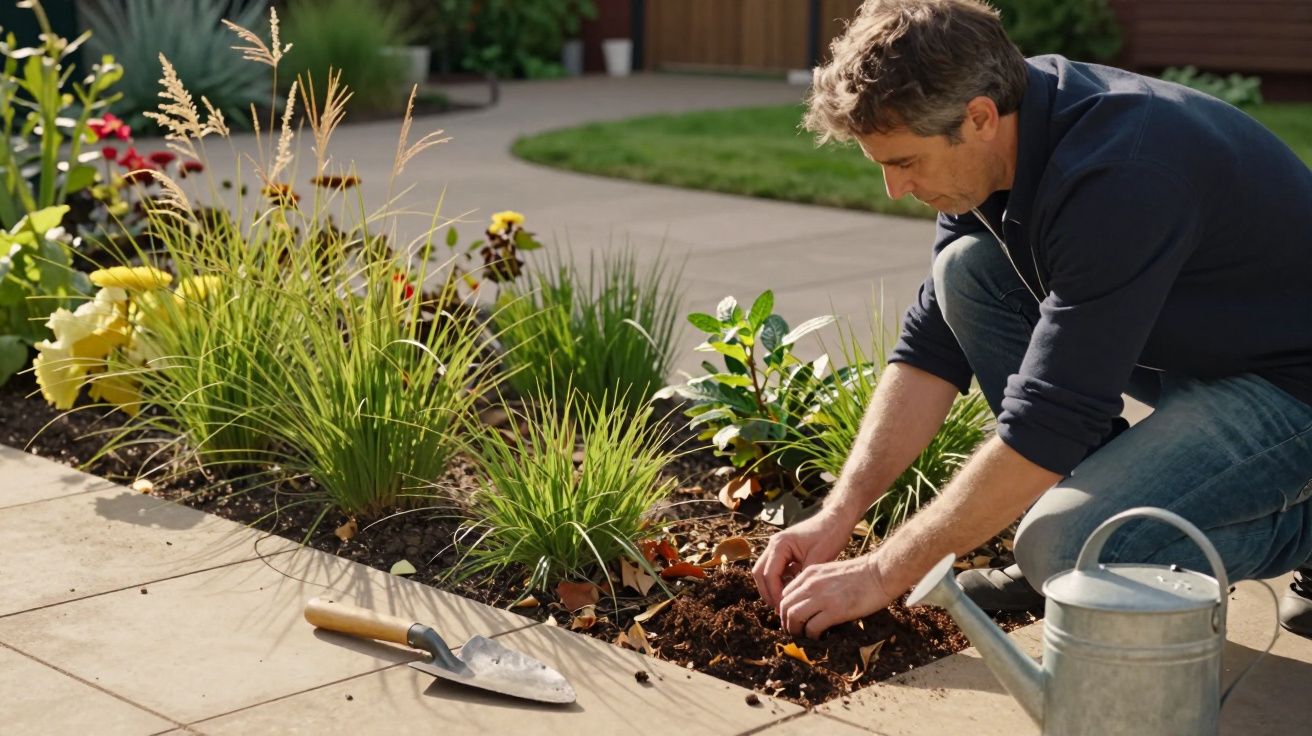
Sometime in late spring, you can spot the moment a garden stops feeling alive and starts feeling managed. Sustainable landscaping is often sold as a set of upgrades-permeable paving, rain gardens, “pollinator” mixes-yet it works best when the design leaves room for weather, insects and time to do their jobs. Naturalistic planting schemes fit that reality because they rely less on constant correction, and more on plants behaving like a small, local ecosystem.
The irony is that the greener the intention, the more tempting it is to over-plan: a grid of specimens, a perfect mulch blanket, edges trimmed to a ruler line. Then August arrives, the watering can comes out, and the garden turns into a weekly negotiation.
The over-designed garden is a high-maintenance machine
A tightly controlled layout is brilliant on paper. It has clear lines, predictable colours, and plants that perform on cue-until they don’t. In the real world, a dry spell, a wet winter, a few slugs and one windy night will test every neat decision you made in March.
Over-designing also narrows the margin for error. A single species planted in a crisp block looks modern, but it behaves like a monoculture: one pest, one disease, and the whole section collapses at once. A garden built to be “tidy” often ends up needing more water, more feeding, and more replacement plants than the owner expected.
What “less design” actually means (it’s not neglect)
This isn’t a plea for chaos, or for letting brambles swallow the patio. It’s a shift from controlling every inch to setting up conditions: healthier soil, layered planting, and a structure that can flex without failing. Think of it like making a plan that anticipates change rather than fighting it.
You still design-just differently. You decide where people walk, where water goes, where compost sits, where the sun bakes the ground. Then you choose plants that can cover, knit and recover, instead of plants that demand perfection.
Here’s what “less over-designed” looks like in practice:
- Fewer hard edges, more soft boundaries (a mown path through meadow planting, not a constant clipped border).
- Plants in repeating drifts rather than one-of-everything collections.
- Gaps allowed early on, with the expectation that groundcover and self-seeders will fill them.
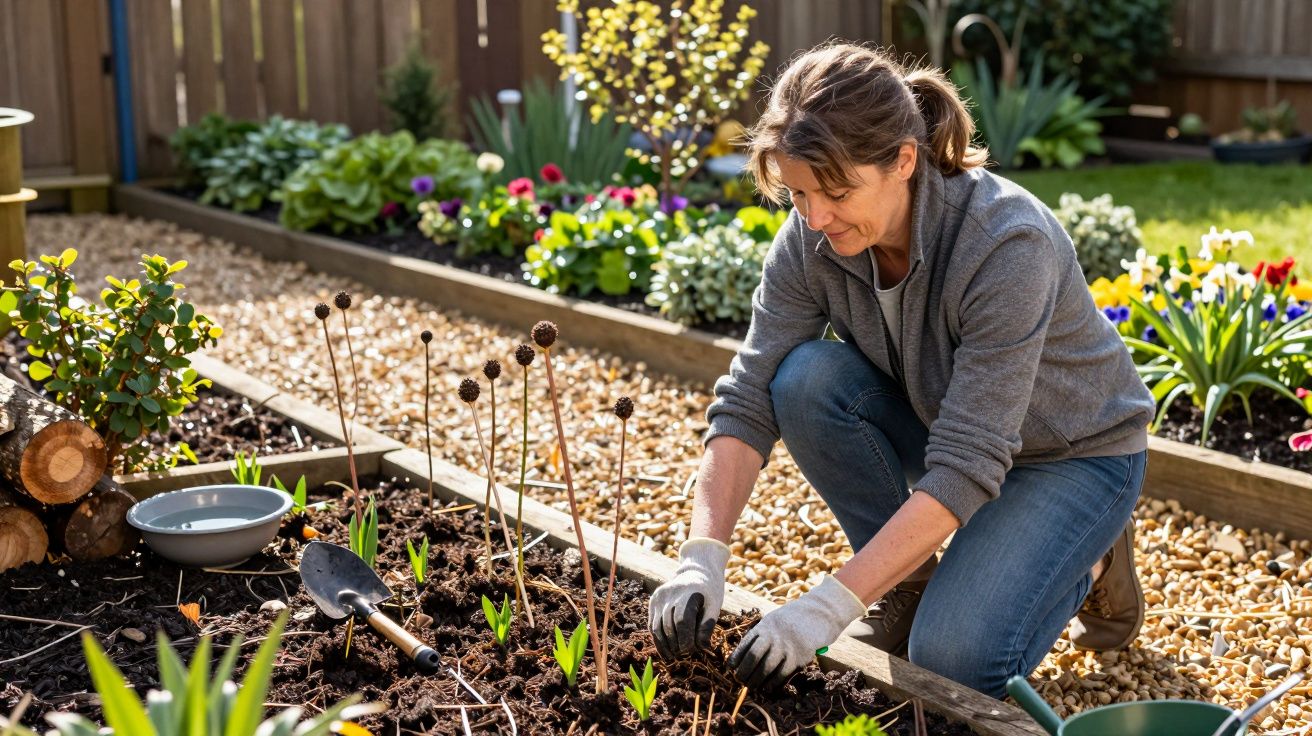
- Seasonal mess accepted (seed heads, leaf litter, hollow stems) because wildlife uses it.
Naturalistic planting schemes: the calm middle ground
Naturalistic planting schemes aren’t just an aesthetic; they’re a maintenance strategy. By combining plants that naturally coexist-grasses with perennials, spring bulbs under summer cover, low ground layers beneath taller stems-you reduce bare soil, and bare soil is where weeds and watering problems start.
Done well, this approach also spreads risk. If one plant sulks in a wet year, another enjoys it. If heat scorches a border, grasses and deep-rooted perennials hold on while shallow-rooted plants struggle. The garden looks “designed”, but it doesn’t unravel the moment conditions change.
A simple, reliable framework is:
- Structure: a few shrubs or small trees for height and winter shape.
- Matrix: grasses and hardy perennials that knit the space together.
- Seasonal stars: smaller groups of showier plants that come and go without leaving holes.
The hidden workhorse: soil, not styling
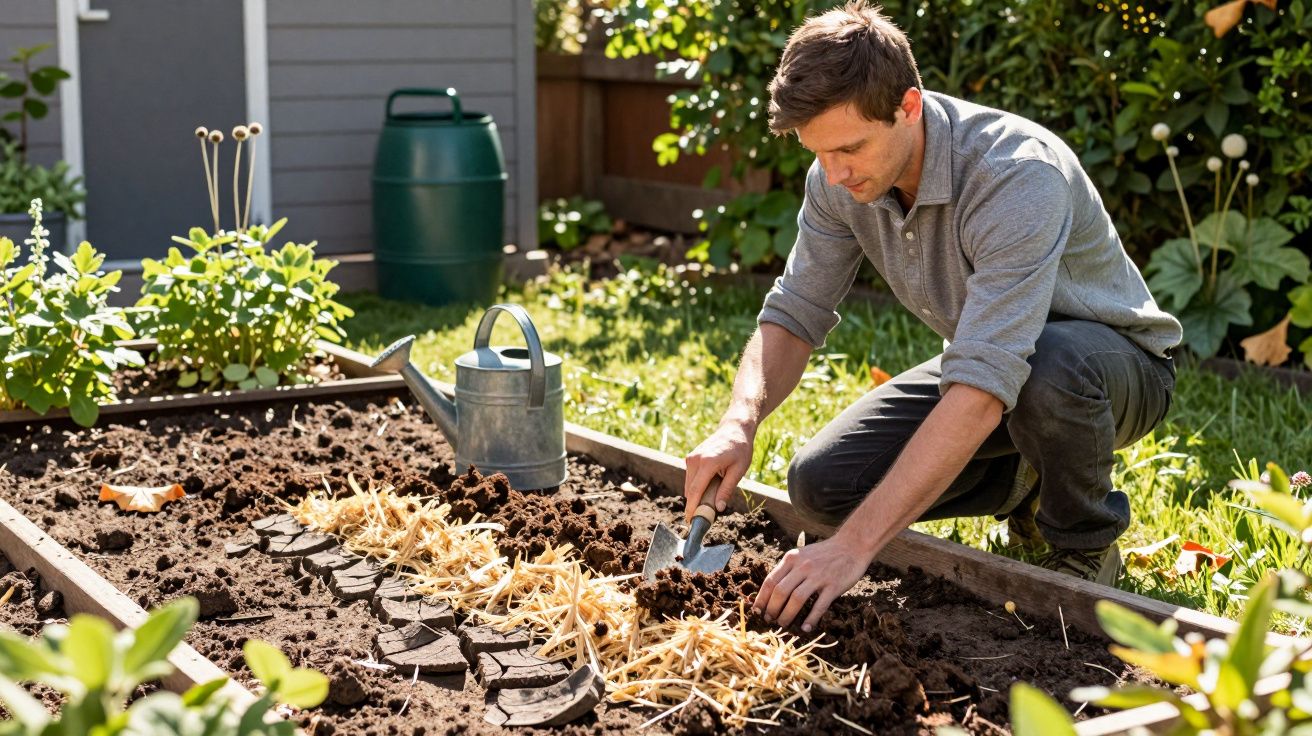
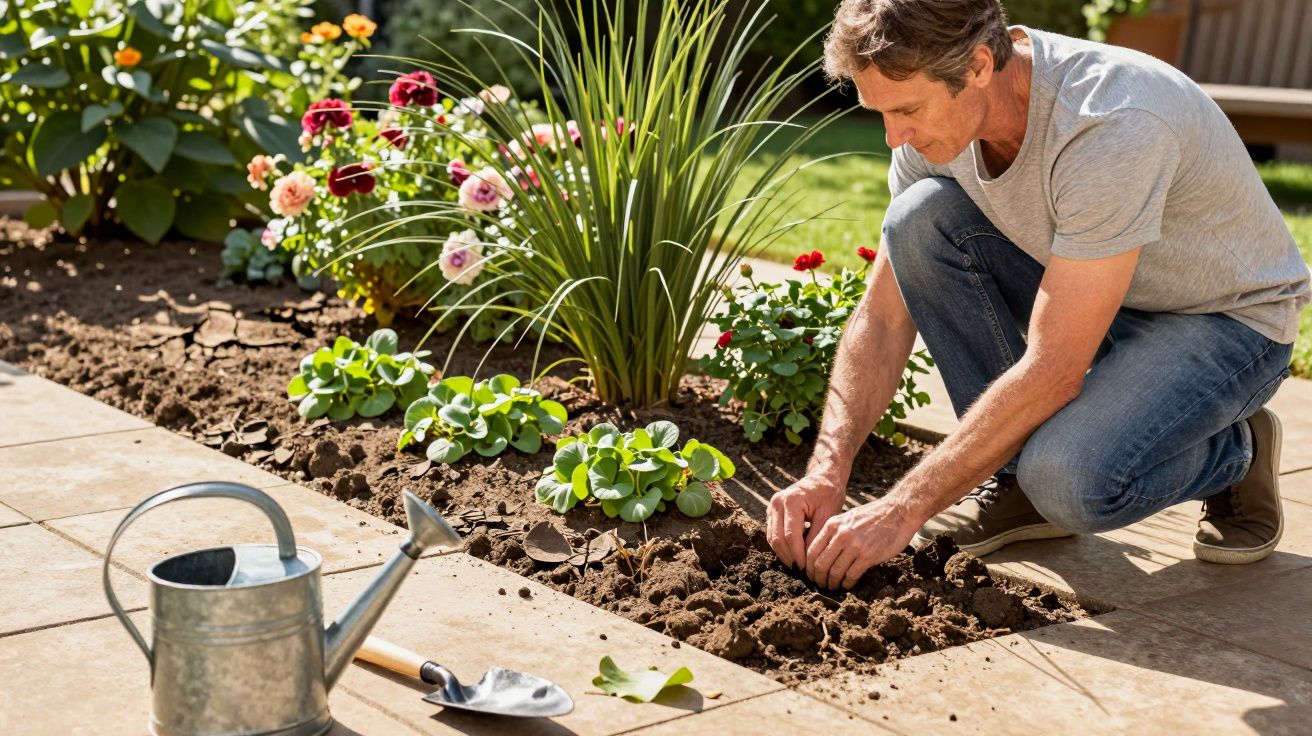
The most eco choice in a garden is often invisible. If you improve soil structure and keep it covered, you will water less, lose fewer plants, and spend less time “resetting” beds after extreme weather.
Over-design tends to treat soil as a blank canvas: dig, import, tidy, compress, repeat. Sustainable landscaping treats soil as a living system that gets better when it’s disturbed less.
A few high-impact moves that don’t require a full redesign:
- Mulch with compost once a year, then stop digging it in.
- Keep soil covered with plants, leaf mould, or a light organic mulch.
- Cut chemical inputs first, then adjust plant choices if pests increase.
- Let autumn leaves work in borders; move only what smothers crowns.
Water behaves better when the layout stops fighting it
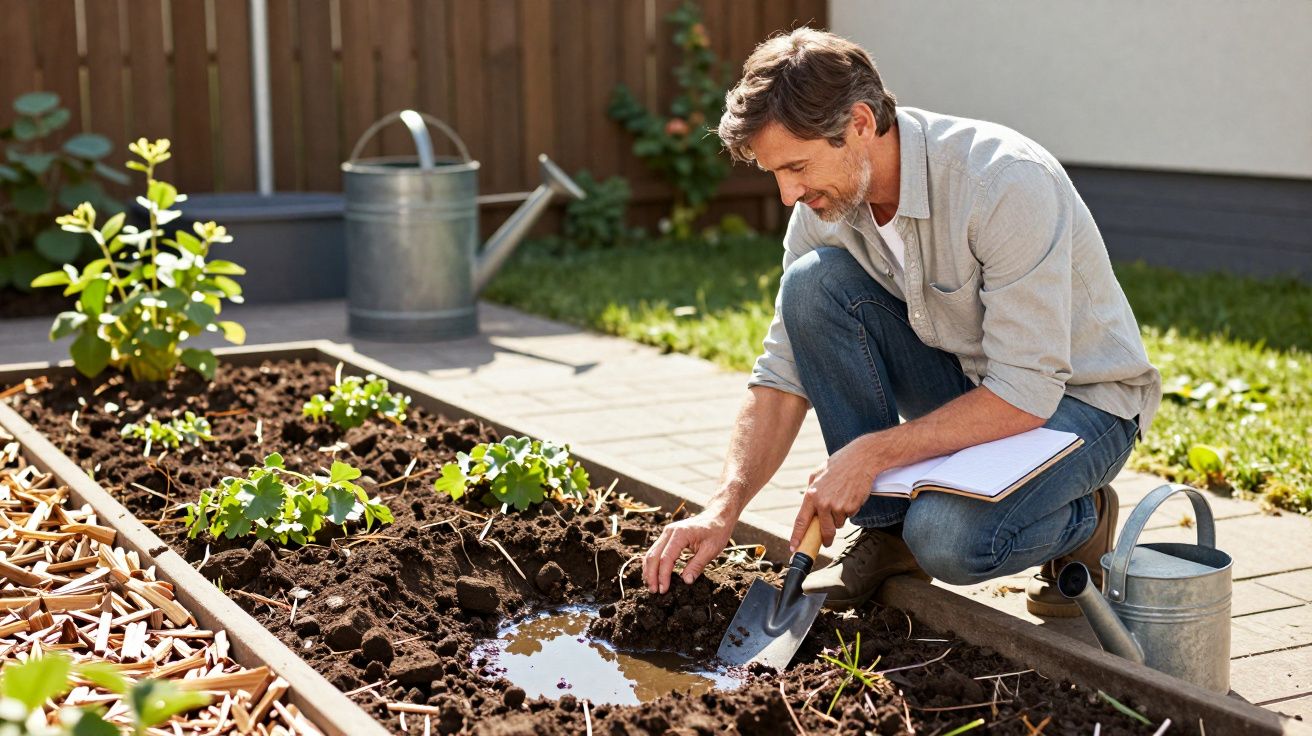
A common over-designed mistake is separating “drainage” from “planting”: hard surfaces shed water quickly, then beds sit dry, then sprinklers compensate. A more naturalistic layout uses shallow dips, looser edges, and planted areas that intercept rain where it falls.
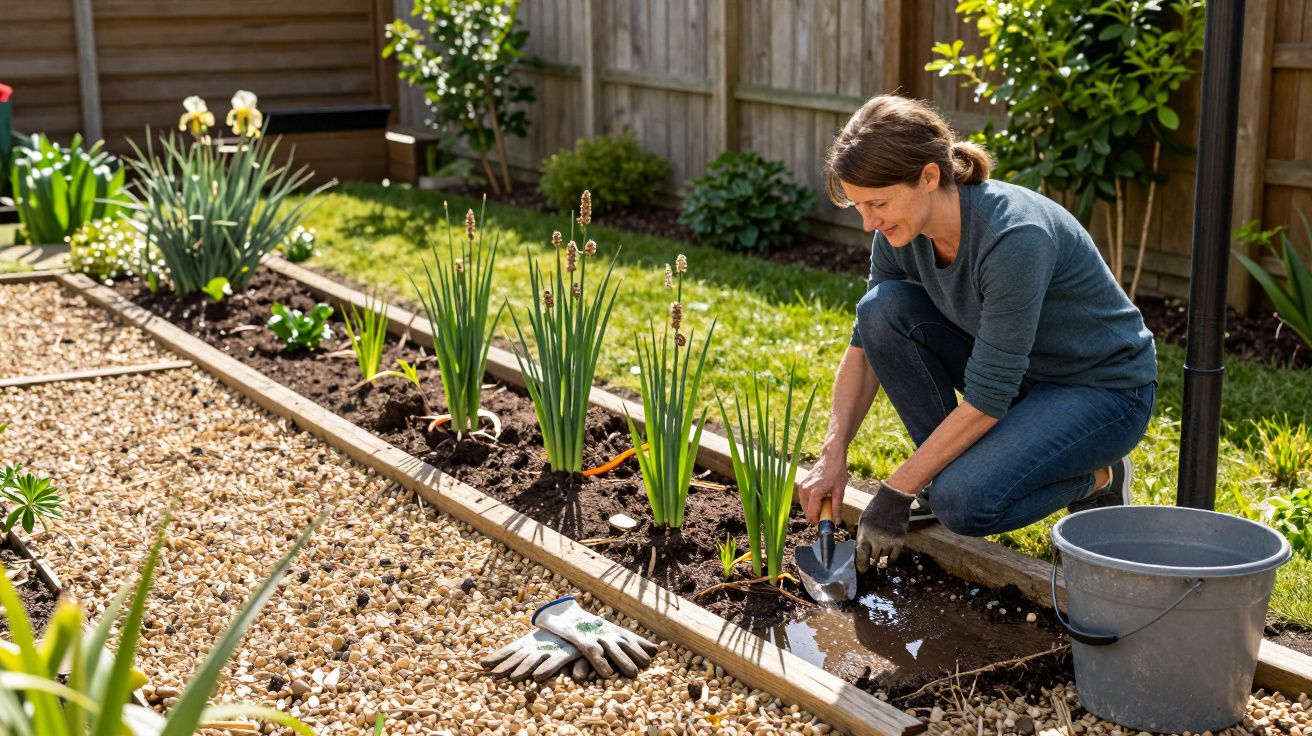
You don’t need a big rain garden to see the benefit. Even small changes-slightly lowering a border edge, swapping a strip of paving for gravel, planting thicker around downpipes-turn rainfall from a problem into free irrigation.
| Garden choice | What it encourages | What you do less of |
|---|---|---|
| Dense groundcover “matrix” | Cooler, shaded soil | Watering and weeding |
| Mixed species drifts | Resilience to pests/weather | Replacing failed plants |
| Soft edges and small basins | Rain infiltration | Hose use and runoff |
A quick self-check: are you designing for control, or for recovery?
If you want a garden that stays eco in practice (not just in intention), design for recovery. That means assuming some plants will flop, some will self-seed, and some years will be strange. Then you build a garden that still looks good when that happens.
Ask yourself:
- Can this bed look acceptable if I don’t touch it for three weeks?
- If one plant dies, will something nearby cover the gap?
- Is there any bare soil I’m “protecting” with effort rather than planting?
- Am I choosing plants for how they look in week one, or how they behave in year three?
The most convincing sustainable gardens often have one shared trait: they feel slightly unfinished, in a good way. They leave space for the garden to join in.
FAQ:
- How do I stop a naturalistic border looking scruffy? Keep one or two “signals of care”: a mown path, a crisp edge in one place, or repeated plant drifts. The planting can be relaxed if the structure looks intentional.
- Will naturalistic planting schemes attract pests? They can attract more life overall, which often balances out. Mixed planting and healthy soil typically reduce boom-and-bust pest problems compared with monocultures.
- What’s the simplest first step towards sustainable landscaping? Improve and cover the soil: add compost as mulch, reduce digging, and plant a groundcover layer. It changes water use and weed pressure quickly.
- Do I have to give up neatness entirely? No. Aim for “tidy routes, wilder rooms”: keep the areas you use most clean and legible, and let borders and back sections be more flexible.
- How long before it starts to look good? Many naturalistic plantings look sparse in year one, knit together in year two, and become low-fuss in year three once plants fill gaps and shade the soil.

Comments (0)
No comments yet. Be the first to comment!
Leave a Comment