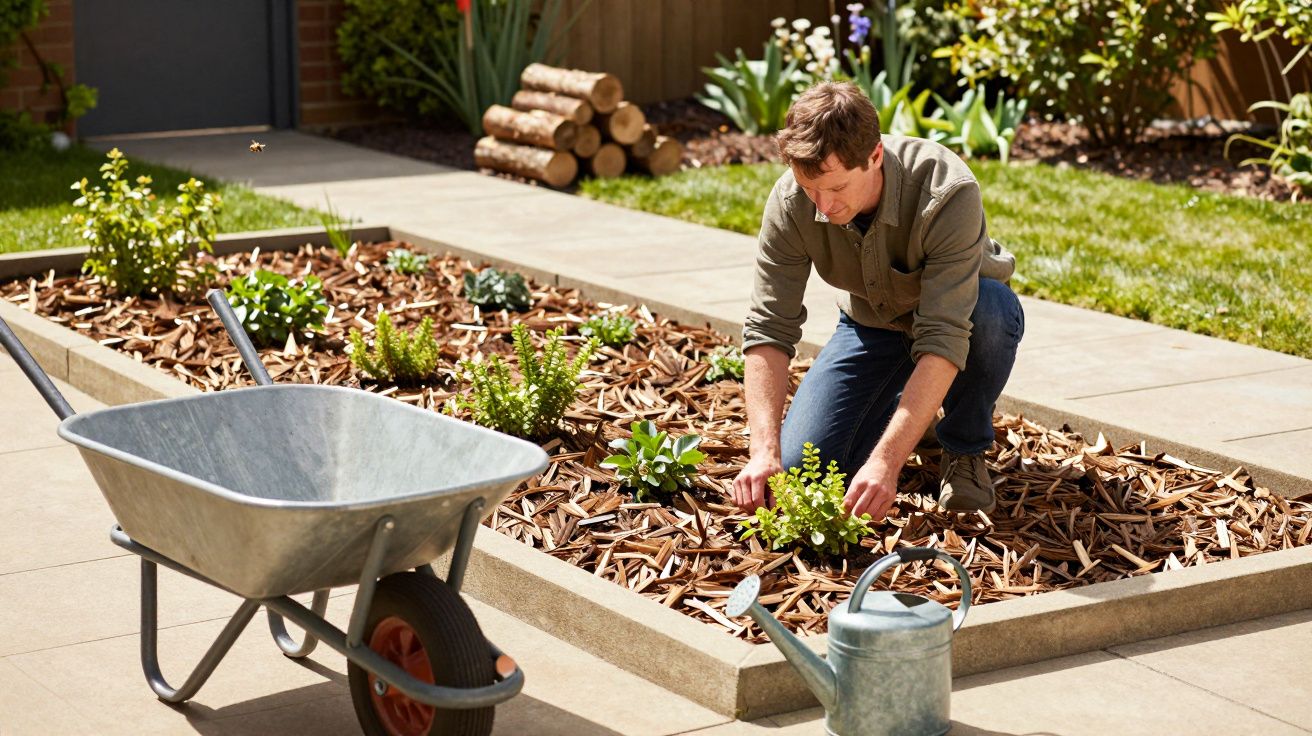
The first time I understood sustainable landscaping, it wasn’t in a glossy garden show or a brochure from a nursery. It was watching a scruffy back corner of a park quietly improve over three years, because someone had the patience to practise long-term ecological planning instead of “finishing” the job in a weekend. The place didn’t look perfect straight away, but it got cheaper to maintain, kinder to wildlife, and more resilient with each season - which is exactly why it matters if you’re spending money on a garden that has to cope with heat, heavy rain, and your limited time.
Most of us are taught to treat a garden like a room: design it, install it, keep it tidy. Eco landscaping flips that. It treats time as a material, the same way you treat stone, soil, or timber - something you shape on purpose.
Why time is the quiet design tool most gardens ignore
A conventional makeover aims for a “reveal”: instant coverage, instant neatness, instant impact. That often means imported topsoil, thirsty lawns, high-input planting, and a maintenance routine that never quite ends. You get a finished look, but you also inherit a system that needs constant correction.
Time-based design works differently. It assumes your site will change - because it will - and it plans for that change so it becomes an ally rather than a problem. Plants grow, shade shifts, rain patterns wobble, kids and dogs carve desire paths, and the soil biology responds to what you feed it (or don’t).
The odd truth is that a garden can look “messier” at month three and far more beautiful at year three, simply because the designer let succession happen. In ecological terms, that’s not delay; that’s the mechanism.
The simple logic: succession, soil, and sensible patience
If you want the short version, it’s this: ecology is a slow choreography. Bare soil gets colonised, pioneers change conditions, and those new conditions allow different plants to thrive. When you fight that process with constant replanting and harsh tidy-ups, you pay for it in water, labour, and disappointment.
In sustainable landscaping, you design for succession rather than against it. You start by improving the soil’s ability to hold water and cycle nutrients, because that’s what makes everything else easier. You choose plants that are happy where they are - not plants you’ll have to constantly rescue - and you accept that the “right look” arrives in phases.
A useful mental shift is to stop asking, “How will this look next month?” and start asking, “What will this space become once roots are deep, shade has settled, and the soil has recovered?”
The three-phase garden (so you don’t panic in year one)
The easiest way to make peace with time is to name the phases. It stops you interpreting normal change as failure.
Phase 1: Stabilise (0–6 months)
You’re preventing problems you can’t easily fix later: erosion, compaction, puddling, plant stress. Mulch goes on, watering is deliberate, and you do less “decorating” than you think you should.
Phase 2: Establish (6–18 months)
Roots deepen, gaps close, and the microclimate starts to shift. Your job is mostly editing: thinning, staking only where needed, and noticing which areas are too wet, too dry, or too shaded.
Phase 3: Mature (18 months–5 years)
This is the pay-off. Weeds drop back because the ground is covered, wildlife appears because there’s structure and food, and maintenance becomes seasonal rather than weekly. You prune to shape, not to rescue.
If that sounds slow, it is - but it’s also how you end up with a garden that doesn’t collapse the moment you go on holiday.
What long-term ecological planning looks like in real gardens
It’s not mystical. It’s practical, slightly unglamorous decisions made early so you don’t keep paying later.
- You design water first, then plants. Where does rain go in a downpour? Where does it sit? Where does it rush? Small swales, rain gardens, permeable paths, and simple grading can save you years of soggy regret.
- You treat soil like infrastructure. Compost, leaf mould, mulch, reduced digging, and fewer bare patches. The aim is stable moisture and active biology, not “perfect” dirt.
- You plant in layers, not specimens. Groundcover, perennials, shrubs, and (where space allows) small trees. Layers create habitat and self-shading, which reduces watering and weeds.
- You leave room for change. A young tree means future shade. A sunny border might become part-shade in five years. You plan for the garden you’ll have, not just the garden you’re standing in today.
One of the most calming moves is to design “good enough” edges - clear paths, tidy thresholds, a bench, a mown strip - and let the wilder bits evolve behind them. People cope better with ecological mess when the frame feels intentional.
A repeatable method: design the calendar, not just the layout
If you want eco landscaping to stick, borrow a trick from good home systems: make it small, repeatable, and timed.
- Map sun and water for one season before you commit. Take four quick photos from the same spots every month. Note where puddles form after heavy rain. This is free information.
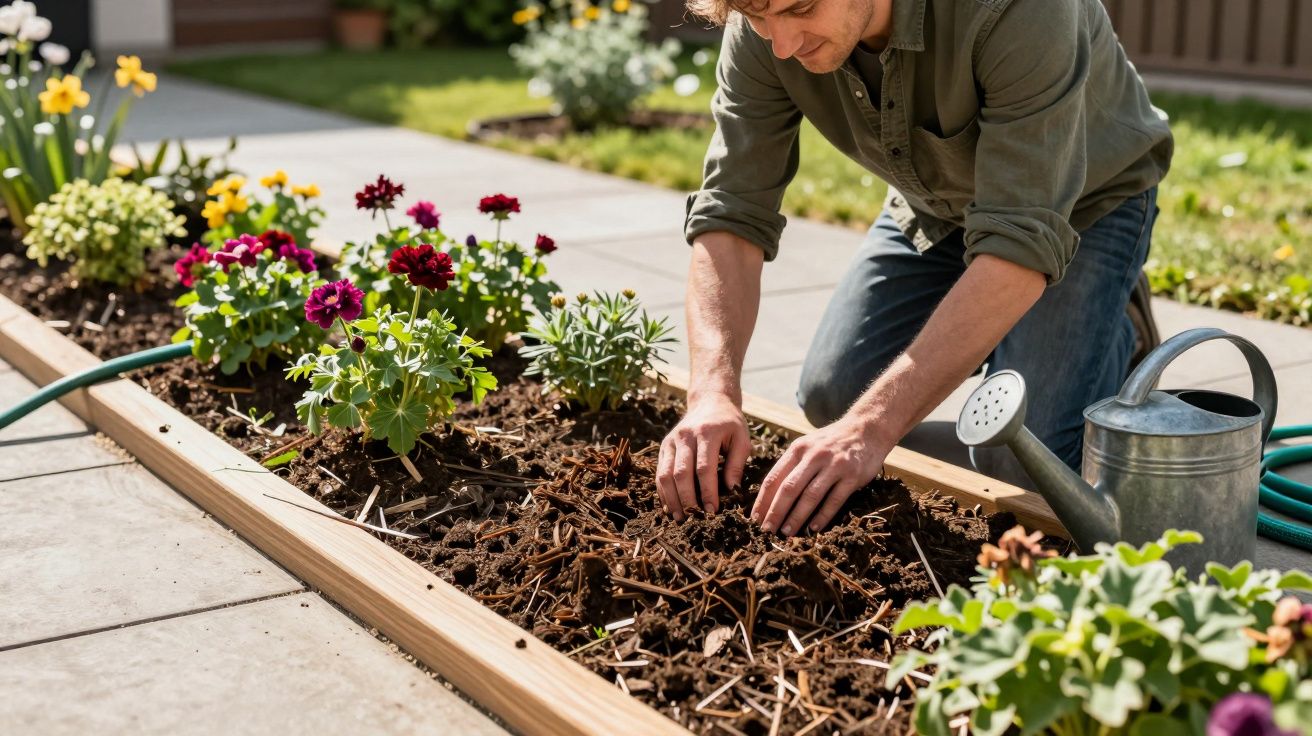
- Do one soil improvement, everywhere. A 5–8 cm mulch layer (composted bark, leaf mould, or woodchip depending on the area) is boring, transformative work.
- Plant for coverage, not instant fullness. Use tighter spacing for groundcover, accept temporary gaps, and plan where you’ll add later.
- Schedule edits, not constant chores. Two major “garden days” per year (spring and autumn) beats weekly nibbling that never ends.
- Keep a small “experiment strip”. Try a new native, a different mulch, a seed mix. The garden becomes a low-stakes lab, and you get better every year.
The goal is a garden that improves with your attention, but doesn’t punish you for missing a fortnight.
| Time tool | What you do | What you get back |
|---|---|---|
| Year-one patience | Mulch, water wisely, avoid overplanting | Fewer failures, steadier growth |
| Seasonal edits | Cut back, thin, re-mulch, re-seed gaps | Less weeding, better structure |
| Succession planning | Pioneers now, longer-lived plants later | A garden that “fills in” naturally |
Small pitfalls that make “eco” gardens feel hard
A lot of eco efforts fail for reasons that are more psychological than technical.
Planting everything at once is one. It looks impressive for a month, then the competition starts, air flow drops, mildew appears, and you’re suddenly in a cycle of replacement. Another is leaving soil bare because you’re “still deciding”; bare soil is an invitation to weeds and water loss.
The biggest trap is expecting a reveal. Nature doesn’t do reveals; it does trends. When you stop demanding an instant finished look, you notice the good stuff: fewer hose sessions, more birds, less panic in a heatwave.
From “perfect” to resilient: the feeling change you might not expect
There’s a particular relief in a garden that’s allowed to take its time. You stop seeing every dandelion as an emergency and start seeing patterns: which plants are genuinely struggling, which areas are improving, and where you can do less.
And that’s the point. Sustainable landscaping isn’t about a sanctimonious aesthetic or living with chaos. It’s about building a living system that gets easier - and better-looking - as the years pass, because time was part of the design from the start.
FAQ:
- How long does an eco landscape take to look “finished”? Often 18–36 months for that settled, cohesive feel. It will look good earlier, but the real ease arrives once roots are deep and groundcover has closed gaps.
- Do I have to use only native plants? No. Natives are often excellent for local wildlife and resilience, but the key is suitability: right plant, right place, and enough diversity to avoid a single point of failure.
- What’s the quickest win that still fits long-term ecological planning? Mulch and water management. Even simple changes (mulch layers, redirecting downpipes, adding a rain garden) reduce stress for everything else.
- Will it look messy to neighbours? It can, unless you add “signals of care”: crisp edges, a clear path, a maintained seating area, and intentional plant groupings. Frames make wildness read as designed.
- Can this work in a small UK back garden? Yes. Small spaces benefit quickly from shade planning, layered planting, permeable paving, and compact habitat features like a log pile, mini pond, or dense hedge.




Comments (0)
No comments yet. Be the first to comment!
Leave a Comment