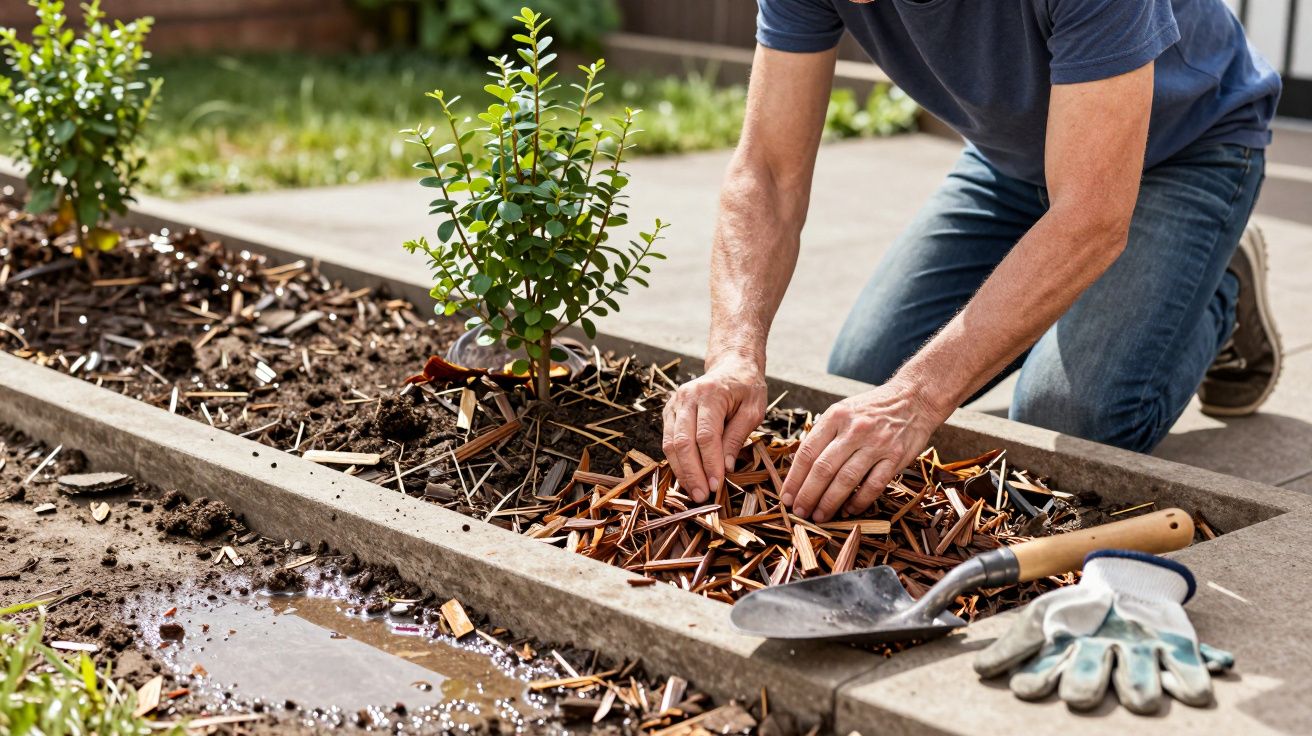
Soil regeneration is quietly becoming the starting point for eco landscaping, because the most visible environmental practices-wildflower meadows, rain gardens, tree planting-depend on what’s happening in the first 30 centimetres of ground. If you’re redesigning a garden, a school site, or a commercial frontage, the soil decides whether plants thrive, water soaks in, and carbon stays stored rather than drifting back into the air.
The mistake is treating soil like a neutral substrate you can “improve” with a bag of compost and a weekend of digging. In reality it’s a living system with structure, fungi, bacteria, pore spaces, and a water economy that can be broken by compaction, bare ground, and constant disturbance. Get the below‑ground conditions right and the above‑ground design gets easier, cheaper, and more resilient.
The quiet engine under every planting plan
A border can look lush for a season on irrigation and fertiliser, then collapse into stressed shrubs and algae‑green runoff. That isn’t bad luck; it’s usually a soil problem wearing a plant costume.
Healthy soil acts like a sponge and a scaffold at the same time. It holds water without becoming a puddle, lets roots breathe, and feeds plants through slow nutrient cycling rather than boom‑and‑bust dosing. When soil is degraded-compacted, low in organic matter, or repeatedly tilled-water sheets off the surface and plant roots stay shallow, which makes everything more vulnerable to heatwaves and downpours.
The most “eco” landscape isn’t always the one with the most plants. It’s the one where rainfall can enter the ground and stay there long enough for roots and microbes to use it.
What soil regeneration actually means in a garden
The goal isn’t to create “perfect” soil. It’s to rebuild structure and biology so the site can do more of the work on its own.
In practice, soil regeneration in landscaping usually looks like three moves repeated patiently: keep the surface covered, minimise disturbance, and add organic matter in forms that feed soil life. You’re nudging a system back into balance, not forcing it into submission.
The tell‑tale signs you’re working with tired soil
You don’t need a lab report to spot a problem. A few small observations can save months of trial and error:
- Water sits on the surface after moderate rain, then disappears suddenly into cracks.
- You can’t push a trowel in without effort, even when the ground is moist.
- Plants look hungry despite feeding, with shallow roots and rapid wilting in sun.
- Bare soil crusts over, grows algae, or becomes dusty and hydrophobic.
- Worms are scarce when you lift a spadeful.
Start with disturbance: the most overlooked design decision
Many “tidy-up” landscaping jobs begin with scraping, rotavating, and importing a thin layer of topsoil. It looks like progress, but it often resets the ecology to zero and leaves you with a fragile surface that needs constant inputs.
If you’re converting lawn to planting, consider leaving roots in place and smothering rather than stripping. If you must dig-utilities, levels, foundations-confine the damage to defined zones and protect the rest like you would a finished floor. Soil structure is slow to build and quick to ruin.
A practical low‑disturbance sequence
- Mark access routes for wheelbarrows and machinery to avoid widespread compaction.
- Cut and mulch existing vegetation rather than removing it wholesale.
- Add organic matter on top (compost, leaf mould, woodchip) and let biology pull it down.
- Plant into pockets or slots, not a fully turned bed.
- Keep the surface covered year‑round with mulch or living plants.
Water, carbon, and the “below-ground budget”
Soil regeneration is often sold as a biodiversity story, but the day‑to‑day wins are more immediate. Less runoff means fewer puddles on paths and less silt in drains. Better infiltration means fewer watering rounds in summer. More stable soil aggregates mean less erosion and less need to replant after storms.
It also changes the carbon maths of a site. Plants move carbon underground through roots and exudates, and stable organic matter can remain stored for years when soil is undisturbed and covered. You won’t “solve climate change” with a single garden, but you can stop a redesign from being a small carbon release disguised as greening.
The numbers that matter (at home scale)
| Site issue | What you notice | What regenerative soil changes |
|---|---|---|
| Compaction | Hard ground, standing water | More pore space, faster soak-in |
| Low organic matter | Frequent feeding/watering | Slower, steadier fertility |
| Bare soil | Weeds, crusting, erosion | Mulch cover, less weed pressure |
Choosing materials that don’t undo your good intentions
Not all “natural” inputs behave the same. Fresh manures can be too strong for beds and may add nutrients that wash into waterways. Peat‑based composts carry a big ecological cost and undermine the point of eco landscaping.
Aim for inputs that build structure and feed soil organisms without flooding the system with soluble nutrients. Locally produced green waste compost, leaf mould, and arborist woodchip are often the most straightforward options, especially when used as surface layers rather than dug in.
A simple materials checklist
- Prefer peat‑free composts and check the label, not the marketing.
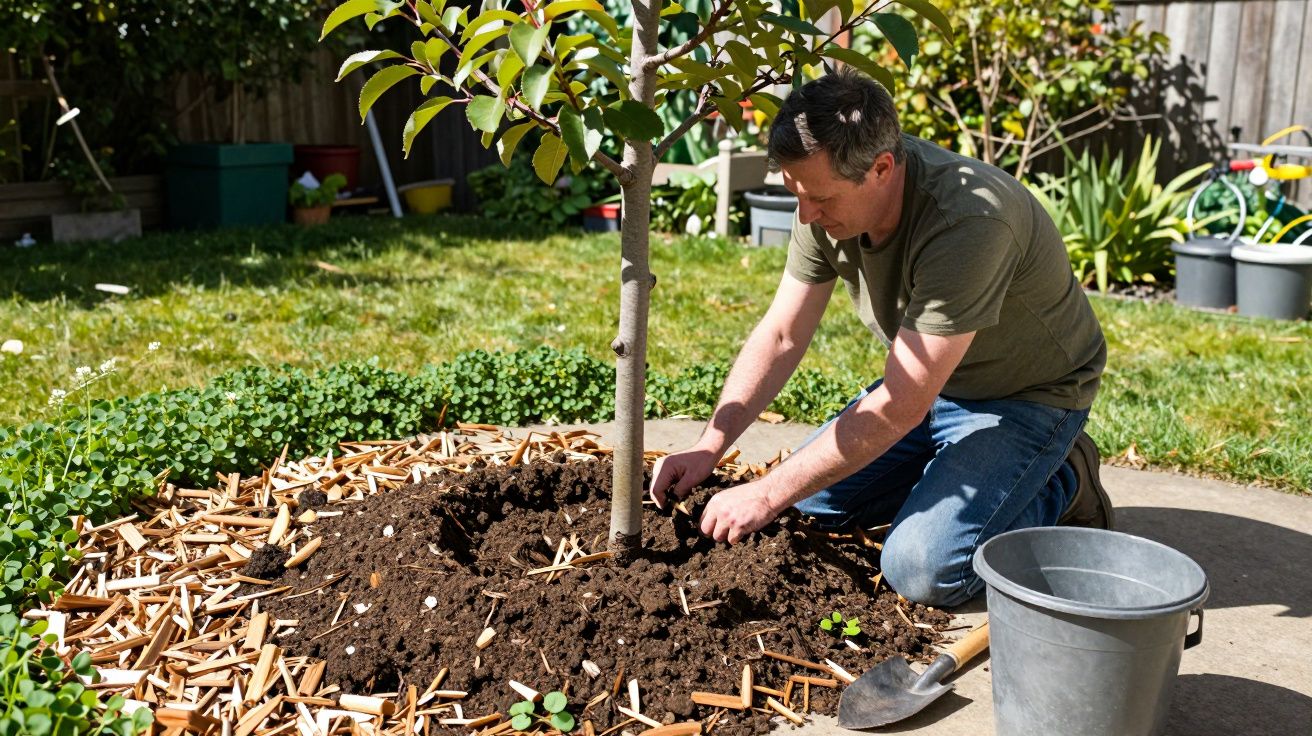
- Use woodchip on paths and around trees/shrubs; keep it off stems.
- Reserve rich compost for planting holes and vegetable beds, not blanket “top dressing” everywhere.
- Avoid importing unknown topsoil unless you can verify it’s clean and fit for purpose.
Designing with living roots, not just planting schemes
A regenerative landscape keeps something growing for as much of the year as possible. Roots are not merely anchors; they’re food supply lines for microbes and fungi, and they help keep soil crumbly and aerated.
That’s where eco landscaping becomes less about a final look and more about a maintained process. Groundcovers, mixed perennials, spring bulbs under later canopy, and shrubs with underplanting all do the same hidden job: they reduce bare ground and keep carbon moving below the surface.
If you want fewer weeds, fewer pests, and fewer watering problems, design for continuous cover first-flowers second.
Risks, open questions, and what to watch
Soil regeneration is forgiving, but it’s not magic. A few common pitfalls show up in well‑meaning projects:
- Mulch volcanoes: piling mulch against trunks invites rot and pests.
- Overfeeding: chasing “lush” growth can cause weak plants and nutrient runoff.
- Ignoring compaction: adding compost on top of a compacted base can create a soggy, anaerobic layer.
- Short timelines: biology responds in seasons, not days; the first year can look messy before it looks stable.
- Herbicide dependency: bare-soil management can lock you into repeated chemical use; cover is the exit route.
FAQ:
- Can I regenerate soil without digging up the whole garden? Yes. Most home projects improve faster with surface compost/mulch and minimal disturbance than with full cultivation.
- How long does soil regeneration take to show results? You can see better moisture handling within months, but structural and biological gains typically build over 1–3 growing seasons.
- Do I need to test my soil first? It helps, especially for pH and nutrient extremes, but basic observation (compaction, drainage, organic matter) is often enough to start.
- Is “no-dig” always best? Not always. If the soil is heavily compacted or contaminated, targeted intervention may be necessary-but avoid routine turning as a default.
- What’s the single most effective step? Keep the surface covered: mulch or living plants. Bare soil is where most problems begin.





Comments (0)
No comments yet. Be the first to comment!
Leave a Comment