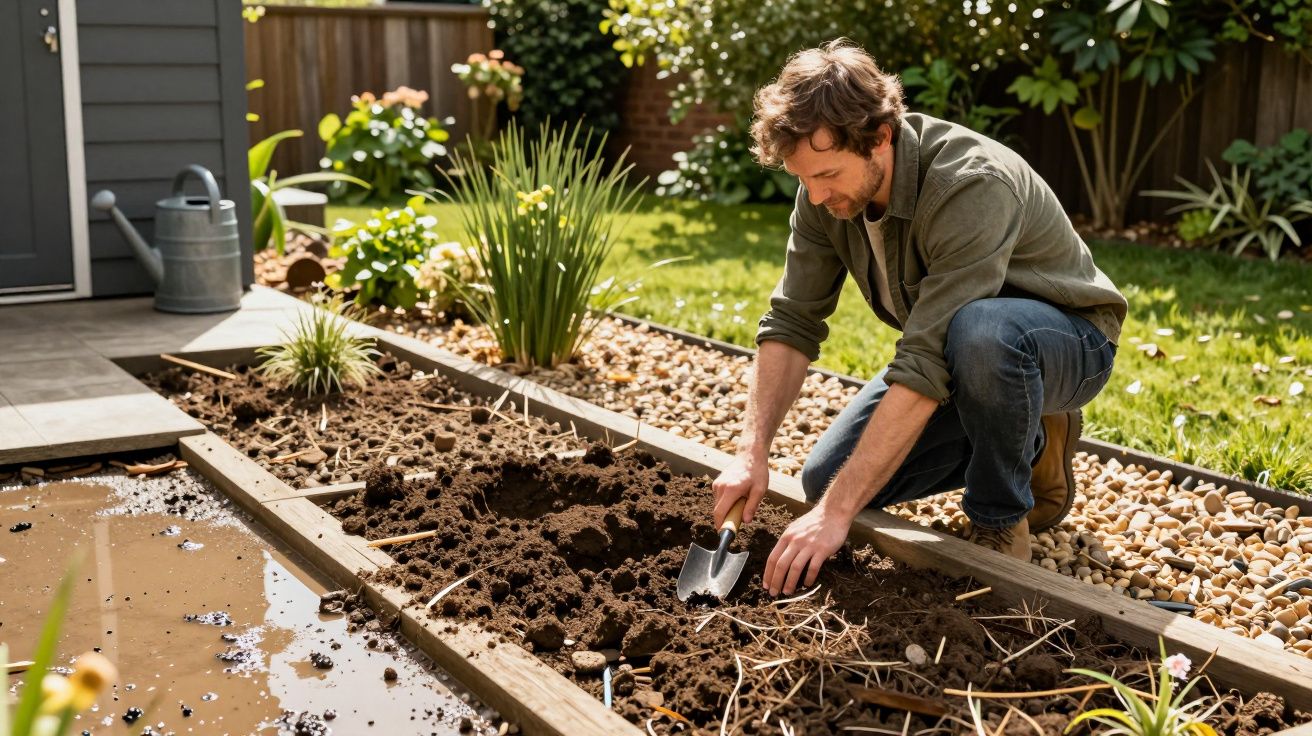
Eco gardens don’t just “happen”. Sustainable landscaping and the environmental practices behind it are deliberate, technical, and-done properly-slower than the glossy before/after reels suggest. If you’re planning a front garden, a small back patch, or even a shared courtyard, it matters because the choices you make decide what survives heatwaves, where rainwater goes, and how much ongoing effort you’ll inherit.
You’ve seen the look: loose grasses, soft planting, a little gravel, a path that seems to have always been there. It reads like ease. In reality, it’s often the result of hard constraints: soil that needs rebuilding, water that must be captured, and a design that has to work on day 300, not day 3.
Why “effortless” eco landscaping is usually the most planned
The biggest misconception is that eco means untidy and low-maintenance. It can be, but only after you’ve made the site behave: improving soil structure, matching plants to light and moisture, and cutting off the hidden causes of failure (compaction, runoff, hungry pests, drought pockets).
Take a typical new-build garden. Thin topsoil, rubble underneath, and a slope you don’t notice until the first downpour sends mulch into the patio drain. Planting “pollinator-friendly” perennials straight into that is like spraying perfume on wrists and washing your hands all morning: the system is set up to lose.
Sustainable landscaping is less about adding “green” features and more about removing the reasons landscapes degrade. That’s why it can look calm once it’s established-because the chaos was dealt with upfront.
The unglamorous work: soil, water, and the physics of a garden
Soil is the real infrastructure. If it’s compacted, water can’t infiltrate, roots can’t breathe, and everything becomes high-maintenance: more watering, more feeding, more replacing dead plants.
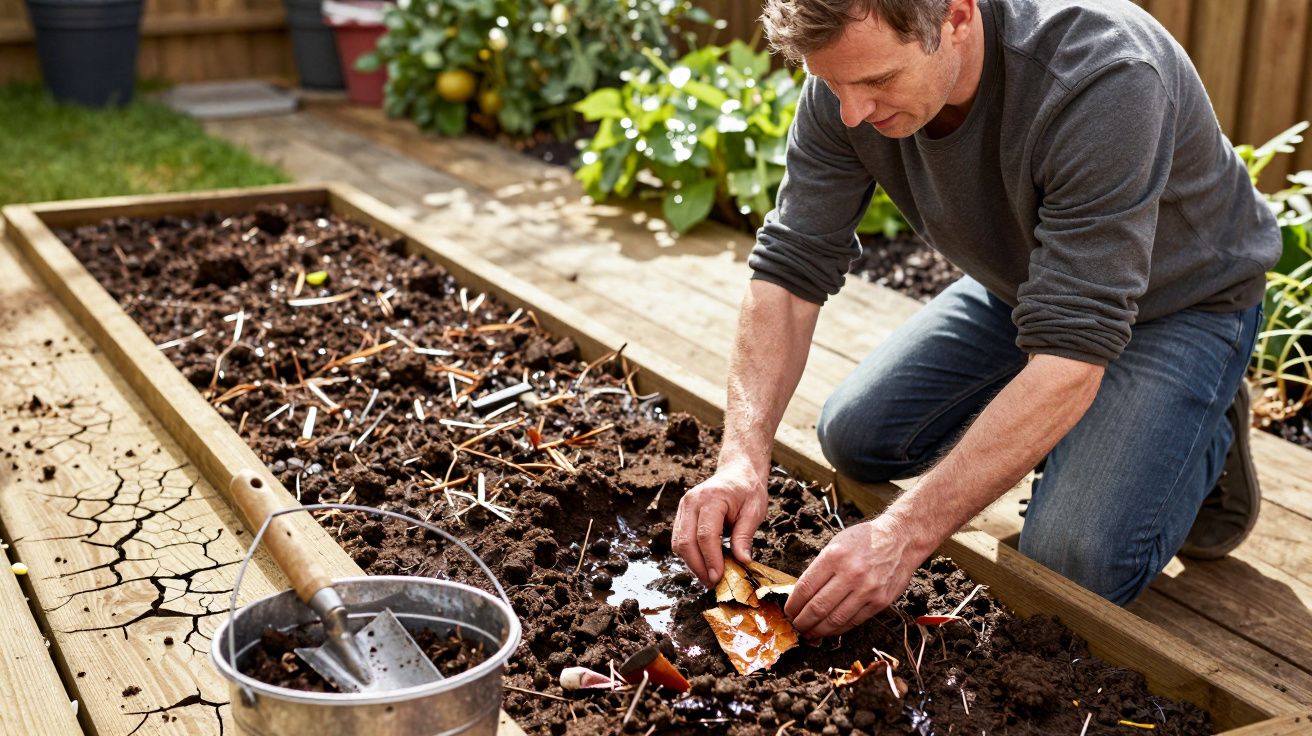
Water is the second constraint, and it’s not just about drought. UK gardens increasingly swing between saturation and dry spells. If you don’t plan where water goes, it will choose for you-usually towards the house, the shed, or the neighbour’s fence line.
A quick checklist that separates “pretty now” from “still working next year”:
- Soil texture and compaction: can you push a trowel in easily, or does it hit a brick-like layer?
- Drainage after rain: does water sit for hours, or disappear within 30–60 minutes?
- Sun and wind exposure: south-facing walls, shade from extensions, and wind tunnels between fences change everything.
- Existing ecology: mature trees, hedges, and even weedy corners are data, not embarrassment.
Most eco failures aren’t moral failures. They’re site-assessment failures.
The method that actually makes it low-maintenance: design for the “boring” season
A garden that looks good in June can still be a mess in November. The trick is to design for the months you don’t post: winter structure, spring emergence, summer stress, autumn dieback-plus how it will be managed when you’re busy.
A simple approach works better than a long wish list:
- Start with circulation and storage: where you walk, where bins live, where tools go. If those are awkward, you’ll trample planting and compact soil.
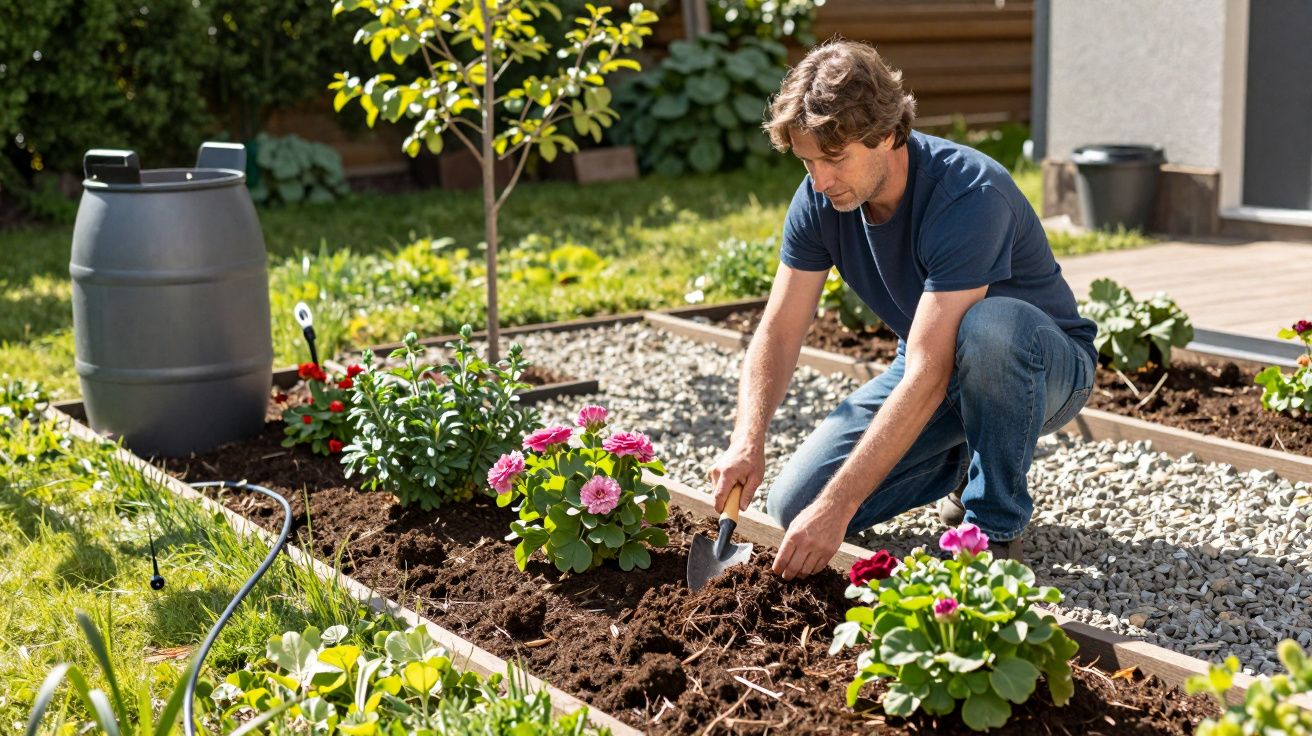
- Set water rules: capture it (water butt), slow it (swales, rain garden), sink it (healthy soil), and only then direct overflow.
- Choose plant communities, not specimens: groups that share needs (dry shade, damp sun, windy coastal) reduce intervention.
- Mulch as a system, not a one-off: mulch type, depth, and refresh rhythm are part of the design.
“Eco gardens don’t rely on you being motivated. They rely on you being consistent.” - a landscape designer’s way of saying: build habits into the layout.
“But I used native plants”-why that still doesn’t guarantee success
Native plants help wildlife, but they’re not magic. Put a damp-loving native in a baked, free-draining bed and it will struggle. Put a dry meadow mix into fertile, watered soil and you’ll get lush growth that flops, then weeds that love the fertility even more.
Also: eco landscaping is not plant-only. Hard landscaping choices-edging, paving bases, geotextiles, impermeable grout-can either support environmental practices or quietly undermine them for years.
Common points where “green” gardens become high-effort gardens:
- Weed membrane under mulch: it blocks natural soil cycling, tears, and creates a plastic-and-weed sandwich.
- Impermeable surfaces everywhere: water has nowhere to go but sideways (often into structures).
- Over-enriched soil: compost everywhere sounds virtuous; in the wrong place it fuels nettles, bindweed, and floppy growth.
- Tiny plant spacing for an instant look: it forces heavy watering and weeding until plants knit together-if they ever do.
The hidden labour nobody films: establishment and editing
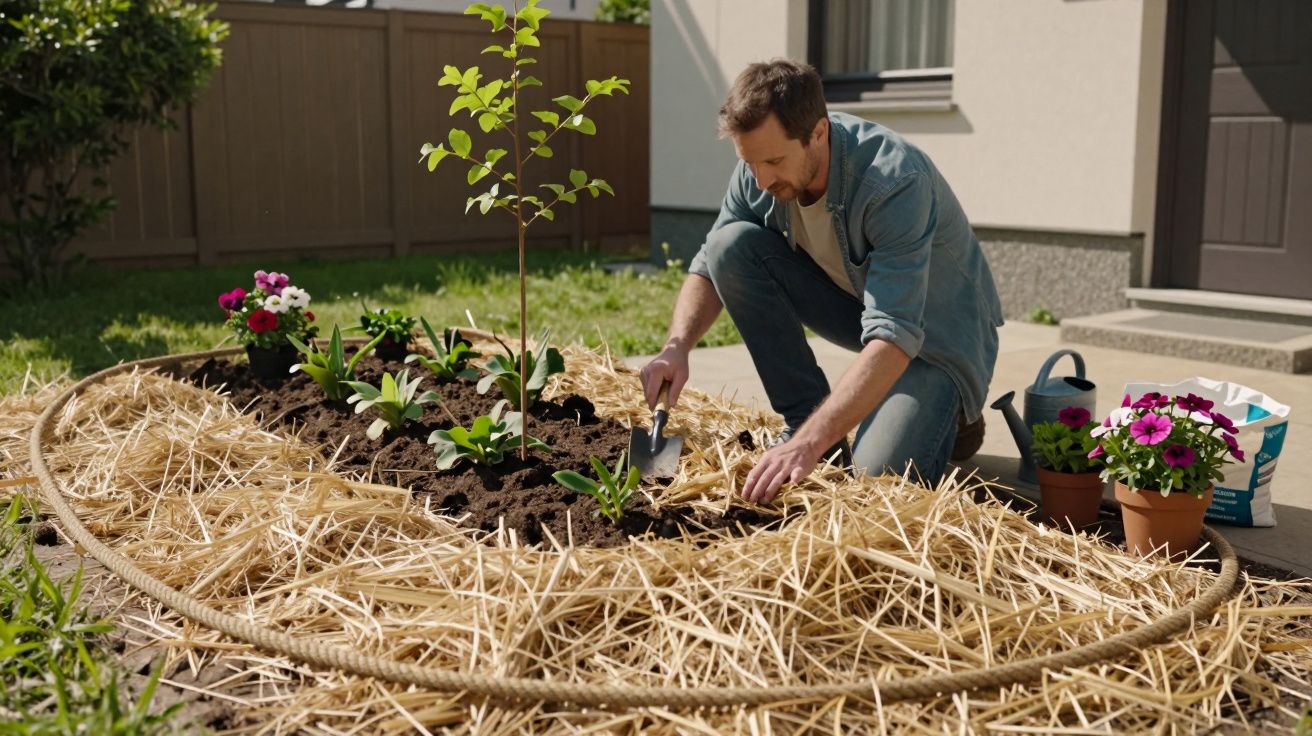
The first year is not maintenance-free. It’s establishment: watering deeply but less often, watching which areas bake or stay wet, protecting young plants, and learning what your garden wants to be.
Then comes the “editing”, which is where the effortless look is earned. You thin what self-seeded too well, divide what’s crowded, cut back at the right time for habitat, and accept that some plants were a poor match. This isn’t failure-it’s calibration.
A realistic rhythm for a small garden:
- Weeks 1–8: water monitoring, mulch top-ups, replacing losses quickly.
- Months 3–12: light weeding, staking only where needed, notes on shade and soggy spots.
- Year 2: dividing, replanting, reducing watering, tightening edges and paths.
- Year 3: the “effortless” phase-because roots and soil are finally doing the heavy lifting.
A quick reality check before you copy that perfect eco border
Ask yourself three questions before you buy plants:
- Where will the water go in a storm?
- What will this look like in February?
- How will I manage it in 20 minutes on a Sunday?
If you can answer those, you’re not just styling a garden-you’re building one that holds up.
| Pressure point | What to do | What you gain |
|---|---|---|
| Compacted soil | Aerate, add organic matter, avoid heavy traffic | Roots establish; less watering |
| Runoff and puddling | Create permeable areas, rain garden, slope planning | Fewer floods; healthier planting |
| High-maintenance planting | Match plants to microclimates; group by needs | Less intervention; fewer losses |
FAQ:
- Why does eco landscaping still need weeding? Because disturbed soil and new planting create open niches. The goal is to reduce weeding over time by improving soil cover and plant density, not to eliminate it instantly.
- Is sustainable landscaping more expensive upfront? Often, yes-because you’re paying for groundwork (soil, drainage, permeable bases). It can be cheaper long-term through lower watering, fewer replacements, and less hardscape failure.
- Do I have to use only native plants? No. Use plants that support local wildlife and suit your site conditions. A well-matched non-native can be lower-input than a struggling native in the wrong microclimate.
- What’s the biggest beginner mistake? Skipping the site assessment-especially drainage and compaction-then blaming plants when the underlying physics was the problem.
- How do I keep it looking “intentional”, not messy? Maintain clear edges, repeat a few plant shapes, and keep paths and access points clean. A defined structure makes wilder planting read as designed.



Comments (0)
No comments yet. Be the first to comment!
Leave a Comment