Most gardens are maintained like indoor rooms: clipped, swept, controlled. Low-maintenance landscapes flip that logic, and they’re becoming a practical cornerstone of sustainable landscaping in front gardens, communal spaces, school grounds and business parks. The relevance is simple: when you stop fighting every leaf and seed, the site often starts repairing itself faster than you expect-and you spend less time, money and water trying to keep it “tidy”.
There’s a moment many people recognise. You’ve weeded, you’ve edged, you’ve fed the lawn, and two weeks later it looks as if you never bothered. The temptation is to double down: more mulch, more chemicals, more weekend hours. Yet ecologists and experienced designers keep pointing to the same quiet truth: in many places, the fastest way to get a healthier, more resilient landscape is to do less, on purpose.
The counterintuitive effect: less interference, quicker stabilisation
We tend to assume a garden improves in a straight line: effort goes in, beauty comes out. But living systems don’t work like flat-pack furniture. They respond, adapt, fill gaps and exploit disturbance. When maintenance is heavy and frequent, you keep resetting the clock-creating bare soil, opening light, and inviting the very “problems” you’re trying to eliminate.
Reduced maintenance changes the rules. Leaf litter stays put and feeds fungi. Stems are left standing and shelter overwintering insects. Soil isn’t constantly disturbed, so a stable community of roots and microbes builds. The result is often a quicker shift from “patchy and needy” to “knitted together and self-managing”.
The goal isn’t neglect. It’s fewer resets-so the landscape can move from early, weedy stages to a more settled, diverse state.
Why constant tidying slows ecological succession
Ecological succession is just the process of a place filling in over time. In a wild setting, it’s what turns bare ground into grassland, then scrub, then woodland (depending on conditions). In gardens and public spaces, we interrupt that process constantly, sometimes without realising it.
Here are common “helpful” tasks that keep a landscape stuck in its most demanding phase:
- Frequent weeding and hoeing: exposes soil and triggers new germination.
- Short mowing: favours a narrow set of grasses and prevents flowering.
- Hard edging and stripping beds: creates open niches that opportunists love.
- Heavy feeding and watering: pushes fast, lush growth that needs more cutting.
- Repeated replanting: prevents perennials from maturing and filling space.
If you’ve ever noticed that a newly cleared border becomes a weed magnet, that’s not bad luck. It’s the landscape responding to disturbance exactly as it’s built to do.
What “reduced maintenance” actually means (and what it doesn’t)
People hear “low-maintenance” and imagine a garden abandoned behind a fence. In practice, the best low-maintenance landscapes are actively designed-but lightly managed.
Think of it as swapping repetitive grooming for occasional, well-timed interventions:
You do less, but you do it at the right moment
- One or two annual cuts instead of weekly mowing.
- Selective weeding (remove the bullies, leave the fillers) instead of stripping everything.
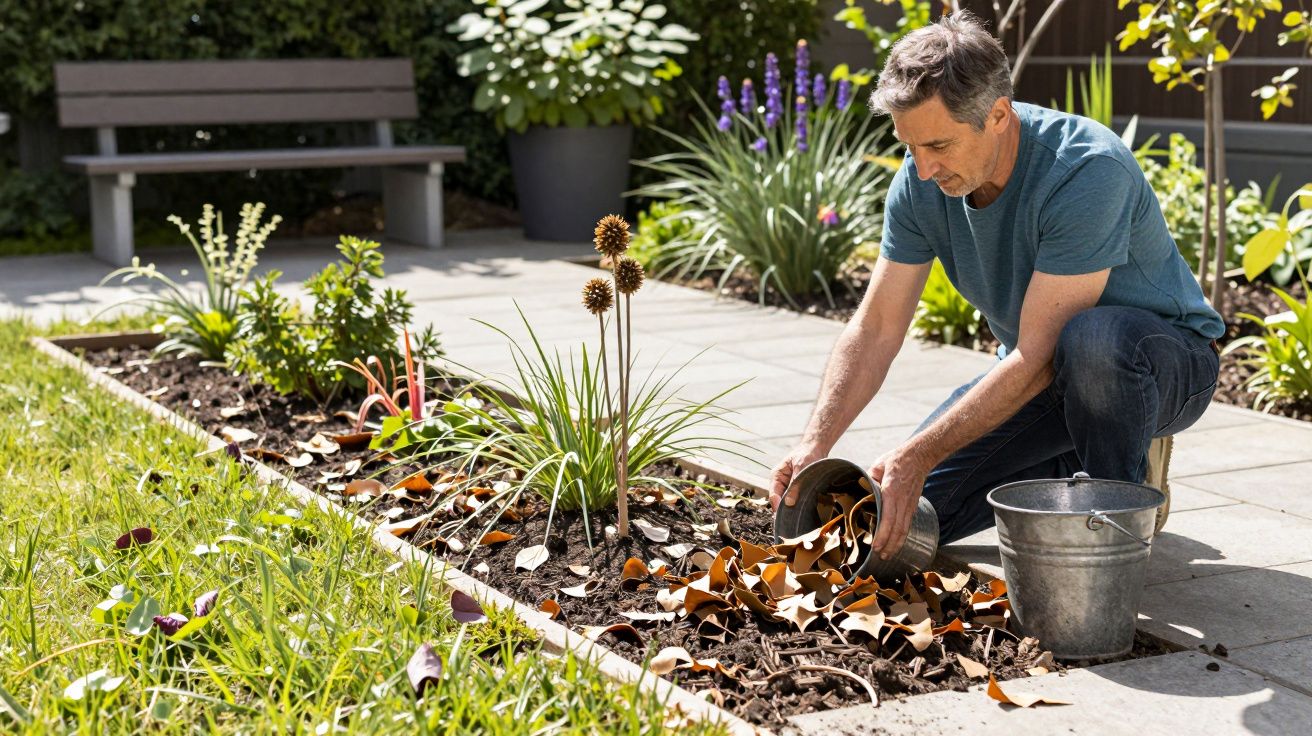
- Top up mulch when soil shows, rather than turning beds over each season.
- Water to establish, then taper down so roots learn to forage.
You still intervene when it matters
Aggressive invasives, blocked drains, trip hazards, visibility at junctions, and plants smothering paths aren’t “nature doing its thing”-they’re management issues. Reduced maintenance isn’t a refusal to act; it’s a smarter threshold for action.
The fastest wins: where low-maintenance landscapes evolve quickest
Not every site responds at the same speed. The quickest transformations usually happen where you remove one major stressor and let the system re-balance.
1) Lawns that become meadows (without the drama)
A typical lawn is maintained in a perpetual juvenile state. Let it lengthen and something immediate happens: flowers appear, pollinators arrive, and the soil stops overheating in summer.
A simple progression that works in many UK gardens:
- Raise the mower height for a month.
- Stop mowing strips along fences and under trees first (test zones).
- Cut and lift clippings rather than mulching them back (reduces fertility over time).
- After the first season, cut once in late summer and once in early spring if needed.
The speed comes from allowing plants to complete their cycles. Once they can flower and set seed, the community starts to assemble itself.
2) Borders that stop being “empty space”
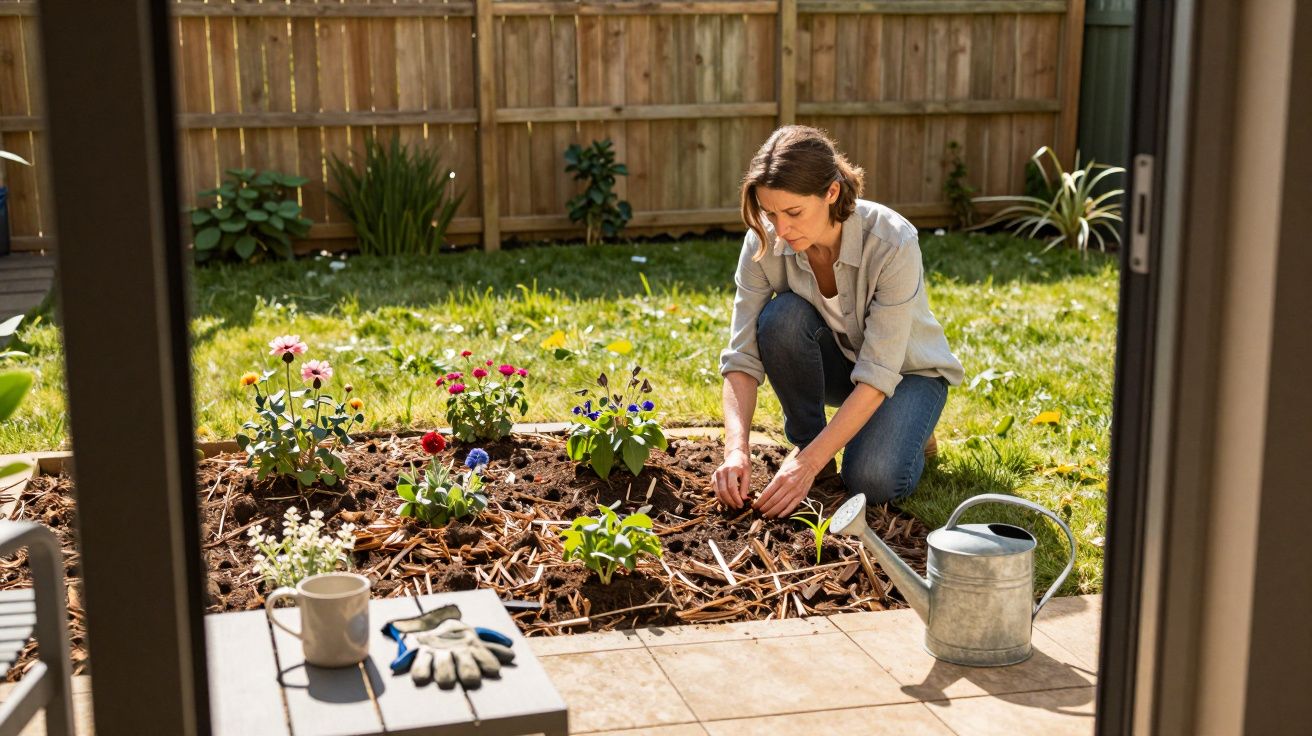
Bare soil is an invitation. When you reduce digging and stop leaving gaps, plants close ranks. Groundcovers, self-seeders and clump-forming perennials create a living mulch that shades out many annual weeds.
The trick is to tolerate a little mess in year one. In year two, that “mess” often becomes a stable layer of cover.
3) Shrubs and trees that begin to act like a system
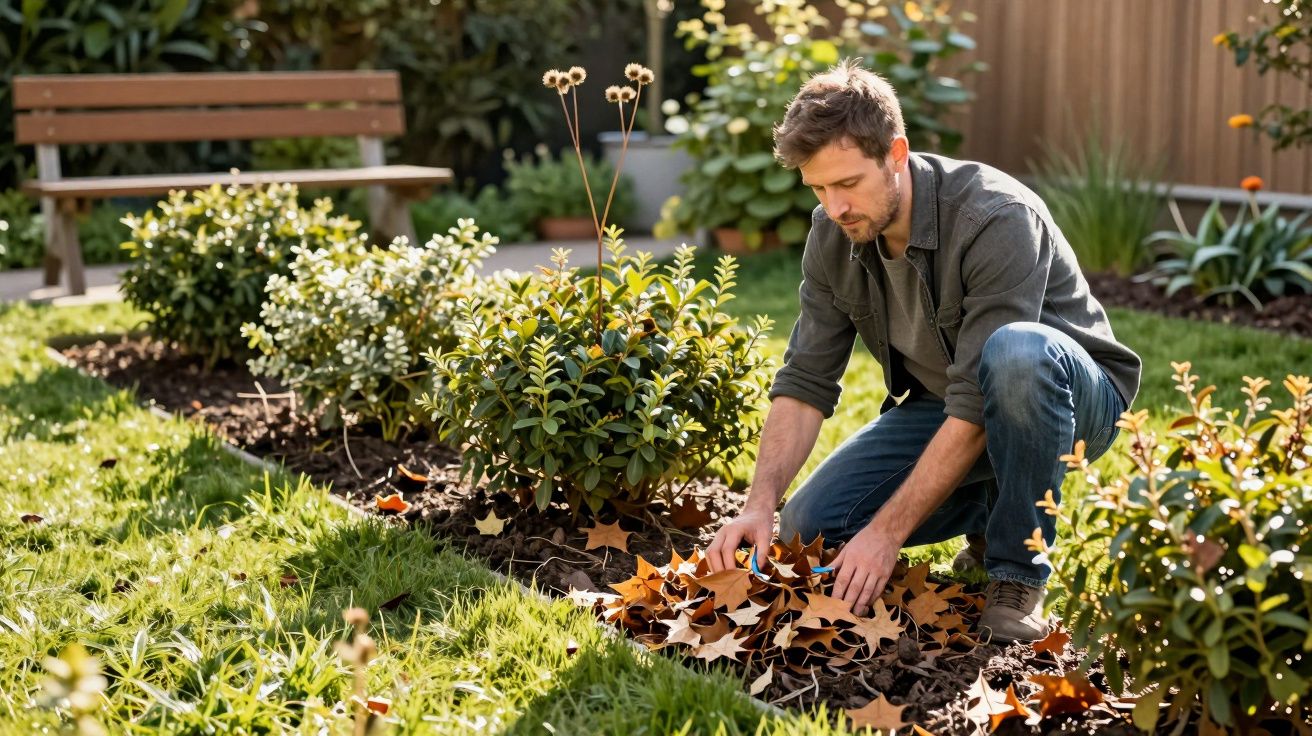
When leaf litter is removed, you export nutrients and habitat every autumn. Leave some of it under shrubs and hedges and you quickly see knock-on benefits: fewer slugs on tender plants (more predators), better moisture retention, and a softer, more buffered soil surface.
If you’re worried about tidiness, keep a narrow “clean edge” along paths and let the interior areas function more naturally. That small visual cue reassures the human eye without stripping the ecology.
The hidden reason it feels better: maintenance shifts from weekly to seasonal
There’s a psychological payoff people don’t expect. High-maintenance gardening creates a constant sense of being behind. Something always needs doing, and the garden always looks as if it’s halfway through a job.
Reduced maintenance tends to create clearer rhythms. You do a bigger cut-back, a mulch top-up, a few targeted edits-and then you’re done for weeks. It’s not just time saved; it’s a different relationship with the space.
Many people describe the change as relief. The garden stops being a list and starts being a place.
A “do less” checklist that still looks intentional
If you want the ecological benefits without the abandoned look, borrow the same tactic designers use: keep the structure, relax the details.
- Mown or gravel path through taller growth (it signals purpose).
- Defined edges at the boundary of wild areas.
- Repeat a few plants (drifts feel designed, not accidental).
- Leave seedheads for winter, then cut back in late winter before spring growth.
- Add one focal point: a bench, boulder, bird bath, or specimen shrub.
That’s the bridge between a wild process and a lived-in space. Sustainable landscaping works best when the ecology and the human brain both feel safe.
Mistakes that make “low maintenance” fail
Most disappointments come from reducing labour without changing the underlying conditions.
- Leaving fertile soil untouched and expecting fewer weeds: high fertility fuels fast weeds. Remove clippings, reduce feeding, and be patient.
- Stopping mowing entirely on a lawn full of ryegrass: it often flops and looks rough. Transition by raising height and reducing frequency first.
- Planting thirsty ornamentals and then “going low maintenance”: they’ll demand water or decline. Match plants to rainfall and soil.
- No plan for dominance: some plants (even pretty ones) will take over. Decide what you’ll edit out each season.
Low-maintenance landscapes aren’t maintenance-free. They’re maintenance-light because the system is doing more of the work.
The quiet payoff: resilience you can feel
When maintenance is reduced in the right way, landscapes often become more drought-tolerant, more wildlife-rich, and less prone to sudden failures. Soil stays covered. Roots go deeper. Beneficial insects find shelter. The space becomes less dependent on you turning up at the exact right moment with the exact right product.
That’s why eco landscapes can evolve faster when you step back. You’re not just saving effort-you’re letting the site move into a more mature, self-protecting phase.
FAQ:
- Will reduced maintenance make my garden look scruffy? It can, if you remove all structure. Keep paths, edges, and a few repeated plants, and the overall look usually reads as intentional even when parts are wilder.
- How long before I notice a difference? Often within one season you’ll see more insects and better moisture retention. A more stable, “knitted” plant community typically takes 1–3 years, depending on soil fertility and what’s already growing.
- Do low-maintenance landscapes mean no watering at all? Not at the start. Most plantings need watering to establish; the low-maintenance benefit comes from choosing suitable plants and tapering irrigation so roots learn to cope.
- What’s the first change that gives the biggest payoff? Stop creating bare soil. Whether that’s leaving leaf litter under shrubs, adding mulch, or using groundcovers, covering soil reduces weeds and water loss quickly.


Comments (0)
No comments yet. Be the first to comment!
Leave a Comment