Climate-resilient gardens are starting to make British back plots feel oddly out of sync: spring bulbs that linger, autumn colour that arrives late, and “quiet” months that suddenly buzz. The reason sits in seasonal biodiversity cycles, which are no longer tidy, predictable loops when weather swings harder and longer. If you garden for wildlife as well as beauty, this matters, because the old calendar-prune now, sow then, expect this insect in that month-misfires more often.
On a mild January afternoon you might see a bumblebee inspecting a hebe, or a blackbird pulling worms as if it’s March. It’s not that nature has forgotten the rules. It’s that the rules are being rewritten by warmer nights, sudden droughts, and rain that arrives in bursts instead of steady weeks.
The garden year is shifting - and it’s not just “earlier spring”
People talk about spring coming sooner, but the real change is messier. You get false starts (a warm spell that wakes everything up), followed by hard checks (a cold snap that stalls growth), then a second push that doesn’t line up with what pollinators or birds are expecting. In a garden built for resilience, you’re effectively managing for variation, not dates.
That’s why eco gardens can feel like they “skip” seasons. A damp, warm autumn keeps flowering going; a dry spring compresses the window for blossom; a wet summer can push fungal problems and slow down seed set. The result is not a new normal. It’s a wider range of normals.
What seasonal biodiversity cycles look like when the weather won’t hold still
In a stable pattern, plants flower, insects emerge, and predators time breeding to meet a reliable food peak. In a wobblier pattern, those peaks drift apart. You can have plenty of blossom, but fewer active pollinators in the right week; or lots of caterpillars, but not enough hungry chicks at the same moment.
Gardeners notice it in small, practical ways:
- A long, warm autumn keeps ivy flowering and wasps active later, which can be great for late nectar but odd for “end of season” tidy-ups.
- Mild winters encourage early aphids, which brings ladybirds sooner-until a late frost wipes one side of that equation.
- Spring ephemerals finish quickly in a dry April, leaving a “nectar gap” before summer plants get going.
- Sudden summer downpours refill water but can flatten meadow patches and wash pollen off open blooms.
You can’t micromanage the timing, but you can reduce the consequences of bad timing by stretching food and shelter across more months.
The practical rule: build overlap, not perfection
The old instinct is to match plant and wildlife needs like a timetable. The resilient approach is to create overlap-multiple options for nectar, seed, cover, and water-so if one seasonal cue slips, something else is still working.
Think in layers:
- Early: hellebores, pulmonaria, flowering currant, crocus, willows (for pollen)
- Mid: native geraniums, foxgloves, alliums, knapweed, thyme, clover in lawns
- Late: sedum, verbena bonariensis, ivy, michaelmas daisies, scabious
And keep structure that doesn’t vanish when weather goes weird: evergreen shrubs, tussocky grasses, logs, leaf litter in a corner, and a small patch you don’t “reset” every autumn because it looks untidy.
Why climate-resilient gardens often look less “seasonal” on purpose
A traditional garden can be designed around crescendos: spring bulbs, then roses, then dahlias. A climate-resilient garden is often designed around continuity, which can read as seasonless if you’re used to big peaks and clean gaps.
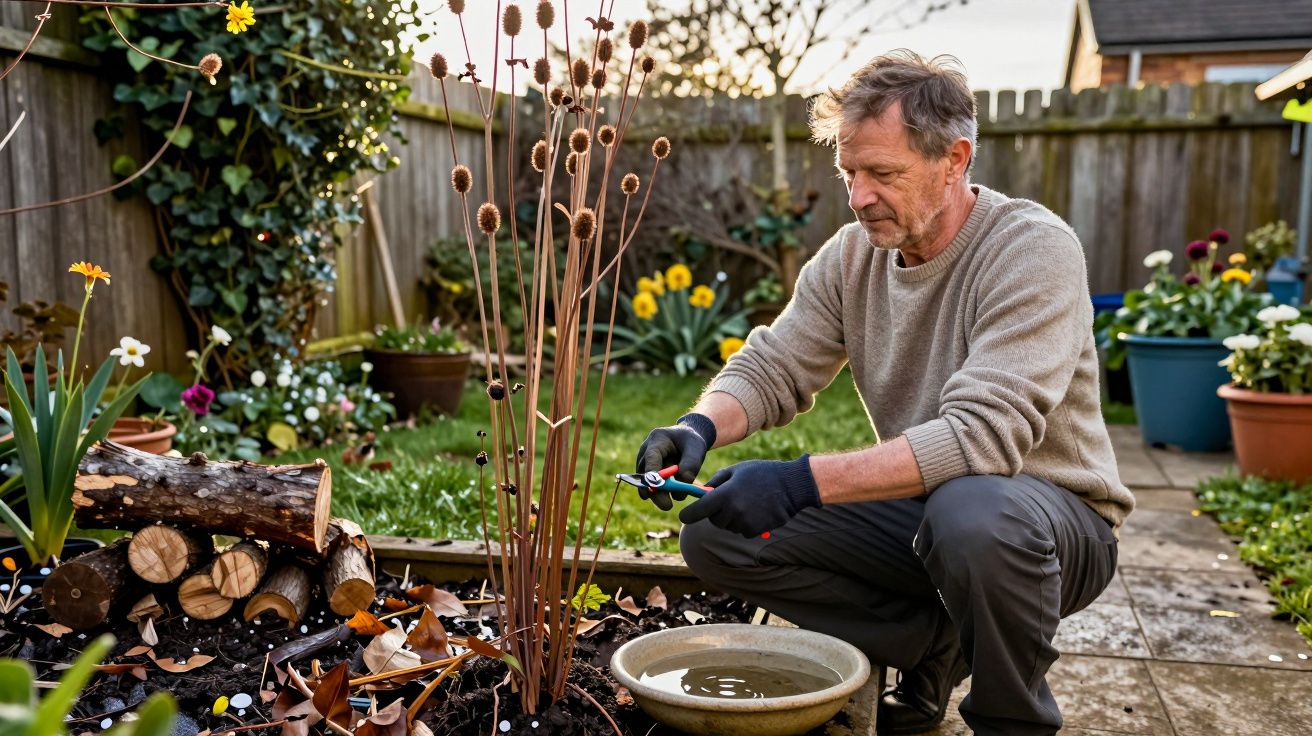
It also avoids the hard stop that comes from over-tidying. If you cut everything down in September because that’s what you’ve always done, you remove late nectar, winter shelter, and seed heads that feed finches. If you wait and respond to what the garden is doing (not what the calendar says), you keep more of the system intact.
A simple way to sanity-check your habits is to ask: am I gardening for my schedule, or for the garden’s signals?
A short “signal-based” seasonal routine that actually works
This isn’t about doing more. It’s about doing a few things at the moment they matter.
- Delay the big tidy until you see sustained growth. If shoots are up and nights are reliably above freezing, you can cut back without exposing new growth to a hard cold.
- Water for establishment, not for rescue. Deep water new planting in dry spells; let established plants show you which ones truly cope.
- Keep one messy refuge. A log pile, a leaf-litter corner, or a strip of long grass acts like insurance when cold snaps or heatwaves hit.
- Add one “bridge” plant per season. Choose something that fills a known gap-early pollen, midsummer nectar, late autumn flowering.
- Watch for mismatches. Lots of flowers but few insects? Consider adding shallow water, reducing night lighting, and increasing native or near-native forage.
Let’s be honest: nobody gets it “right” every year. The point is to make the garden robust enough that being slightly wrong doesn’t collapse the whole show.
Common mismatches - and what to change first
| What you see | Likely cause | First adjustment |
|---|---|---|
| Blossom everywhere, few pollinators | Cold snaps, wind, lack of shelter | Add hedging/structure; plant more sheltered forage |
| Aphids explode early | Mild winter + soft new growth | Encourage predators (diversity, water); avoid high-nitrogen feeds |
| Birds absent at feeding peaks | Food peak shifted | Leave seed heads; add berry shrubs; keep water available |
| Late-season “hangover” growth | Warm autumn extends season | Delay pruning; keep late nectar; don’t rush the cut-back |
The quiet upside: you get more life, more often
When you design for overlap and shelter, you stop relying on one perfect fortnight. The garden becomes less theatrical, but more alive across the year: hoverflies in October, frogs active earlier, small birds using grasses and stems through winter. It can feel like the seasons have blurred, yet what you’re really seeing is resilience doing its job-keeping habitat functioning when timing is unreliable.
FAQ:
- Are eco gardens “breaking” the seasons, or is it just climate change? Both. Climate change disrupts the cues that drive seasonal biodiversity cycles, and eco gardens amplify what still works by providing continuous food and shelter, so activity is more visible outside the usual months.
- Should I stop cutting back in autumn completely? Not completely. Delay the main cut-back until late winter/early spring, then do it in stages. Leave some stems, seed heads, and refuge areas year-round.
- What’s the single best plant choice for a shifting year? Ivy is hard to beat for late nectar, but the best strategy is a spread: at least one reliable pollen source early, a strong midsummer nectar patch, and something that flowers late.
- Do climate-resilient gardens need to look wild? No. You can keep clear paths and tidy edges. Resilience is mostly about layered planting, continuous forage, and leaving some habitat intact, not about abandoning design.





Comments (0)
No comments yet. Be the first to comment!
Leave a Comment