
Eco beds rarely stay “finished”, and that’s the point. Sustainable landscaping treats a garden as a working system that shifts with weather, soil life and seasonal biodiversity cycles, rather than a static display that needs constant correction. For the reader, that mindset saves time, cuts inputs, and creates a space that looks alive in every month-even when it looks a bit messy.
You can spot it in the way paths soften at the edges, seed heads linger into winter, and some corners look wilder than others. An eco garden doesn’t age evenly because it’s designed to respond, not to hold a pose.
Why uneven ageing is a feature, not a flaw
Traditional gardens often aim for uniformity: same height, same colour, same level of “tidy” across the whole plot. Eco-led design aims for variety in structure and pace. One border might peak in June, another in September; one patch is deliberately lean and spare, another thick with leaf litter and insects.
That unevenness is how you get resilience. If a dry spring knocks one set of plants back, another area still carries the garden. If a pest finds its favourite host, predators have somewhere nearby to live and breed.
A garden that looks perfect everywhere usually relies on heavy intervention. A garden that looks different in different places often relies on ecology.
The mechanics: how seasonal biodiversity cycles drive the look
The “untidy” phases aren’t random. They map to seasonal biodiversity cycles: when pollinators emerge, when birds need seed, when amphibians shelter, when fungi and microbes break material down.
- Spring: early nectar (dead-nettles, hellebores, willow catkins) supports queens and hoverflies before the showy stuff arrives.
- Summer: layered flowering stretches the food window; mixed heights reduce wind scorch and heat stress.
- Autumn: seed heads and late flowers feed finches and last pollinators; fallen leaves become habitat, not rubbish.
- Winter: stems hold overwintering insects, hollow stalks shelter larvae, and rough cover gives small birds a fighting chance.
If you remove all dying material the moment it browns, you erase the winter stage of the system. The garden may look “neat”, but it stops functioning as well.
What to design for: patches, edges, and planned “scruff”
Eco gardens age unevenly because they are built from zones with different rules. You’re not aiming for one finish; you’re orchestrating several.
Three zones that make it work
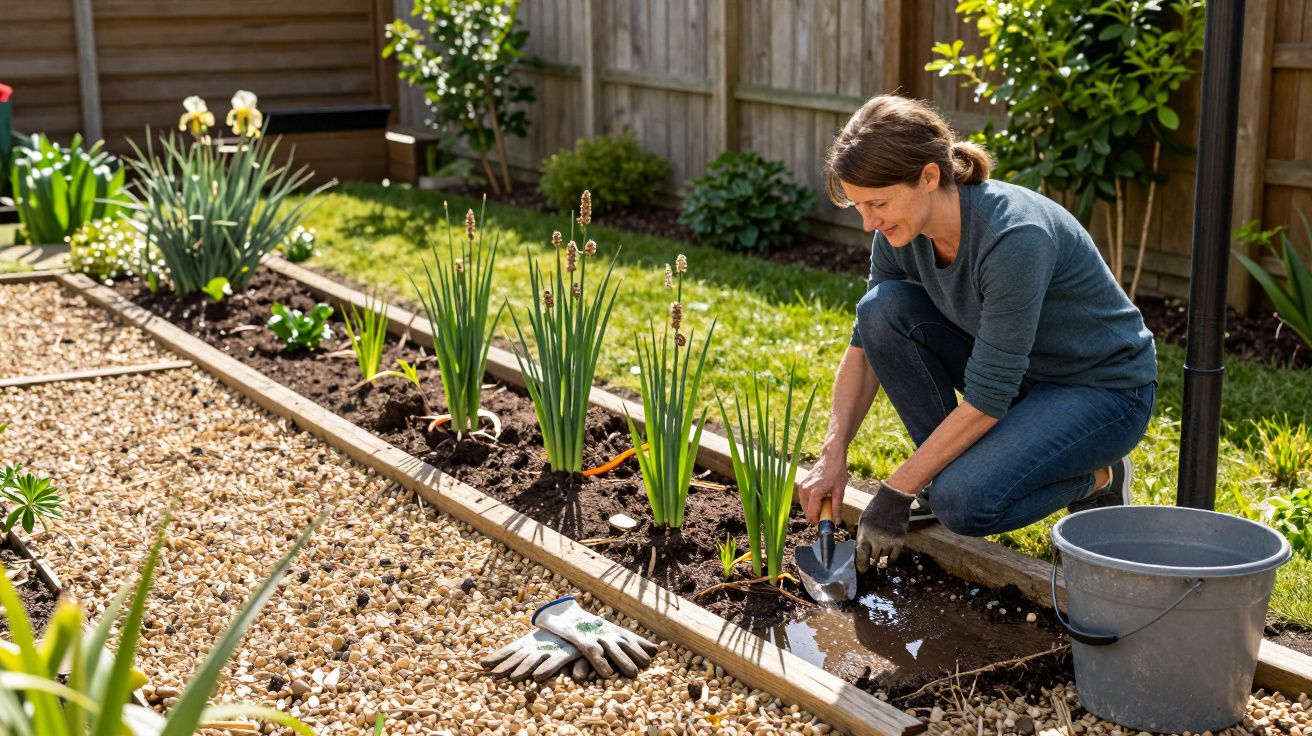
- A “show” edge near the house or path: tighter planting, clear lines, a place where you can keep it visually crisp.
- A middle matrix of robust perennials and grasses: the engine room that copes with weather swings and shades soil.
- A wild pocket (even a square metre): log pile, mini meadow, or leaf-litter corner that you mostly leave alone.
That last pocket is where biodiversity rebounds from disturbance. It’s also where the garden can look least even-and where it often does the most work.
The interventions that keep it intentional (not neglected)
Eco gardening isn’t no-maintenance. It’s different maintenance, timed to biology rather than to appearances.
- Cut back in stages, not all at once. Leave some stems standing until spring warms, then clear in halves over a few weeks.
- Mulch with compost, not constant digging. Soil structure improves when you stop churning it up.
- Edit hard once or twice a year. Pull excess self-seeders, thin aggressive spreaders, and keep paths honest.
- Water strategically. Deep, occasional watering builds deeper roots; frequent sprinkles train shallow roots and higher stress.
A simple rule helps: if you can explain why you’re leaving something-seed, shelter, soil cover-it reads as deliberate.
The goal is not “wild everywhere”. The goal is “life everywhere”, with visible choices that frame it.
A quick guide to what “good” unevenness looks like
Not all mess is useful. Here’s how to tell the difference without needing a wildlife survey.
- Good: mixed plant heights, clear access routes, obvious habitat features (logs, stones, seed heads), and bare soil kept to a minimum.
- Needs attention: plants smothered by one dominant species, damp piles against fences, blocked drains, or brambles swallowing young trees where you didn’t plan for it.
- Fix: create light and space-thin, lift, and re-edge-rather than starting over.
If you’re worried about how it reads from the street, put “tidy signals” at the front: a mown strip, a defined border, or one well-kept pot. People accept wildness faster when the boundaries are clear.
Small upgrades that pay off quickly
You don’t need a full redesign to lean into eco ageing. A few changes shift the whole rhythm.
- Swap a section of lawn for a mini meadow strip and cut it only a few times a year.
- Add a shallow water dish with stones for exits; refresh it often in summer.
- Plant for continuity: one early, two mid-season, one late flowering group per bed.
- Keep a leaf pile out of sight and use leaves as mulch once partly broken down.
These steps make the garden look more uneven in the short term, but more coherent over time, because it starts to run on its own momentum.
The trade-off: you get a living garden, not a frozen image
Sustainable landscaping asks you to judge success differently. Instead of “Does it look identical to last year?”, the question becomes “Does it cope, recover, and support life while still feeling like a place I want to be?”
Eco gardens don’t age evenly because nature doesn’t. When you design with that in mind, the shifts become the feature you look forward to, not the mess you feel obliged to erase.
FAQ:
- Is leaving stems and seed heads really safe and practical? Yes, if you keep paths clear and avoid piling material against buildings. Leave stems in beds, then cut back gradually in spring once nights warm and insects start moving.
- Will an eco garden look untidy all year? It will look different, not uniformly scruffy. Use tidy signals-edging, a mown strip, a clipped hedge-to make the wilder parts feel intentional.
- Do I need native plants only to support biodiversity? No. Prioritise plants that offer nectar, pollen, seed, and shelter across seasons. Natives often excel, but many non-natives contribute too if they’re not invasive.
- What’s the quickest win for seasonal biodiversity cycles in a small garden? Extend the flowering season and stop over-clearing in autumn. A longer nectar window plus winter structure supports far more species than a single “pollinator bed” that’s cut down too early.





Comments (0)
No comments yet. Be the first to comment!
Leave a Comment