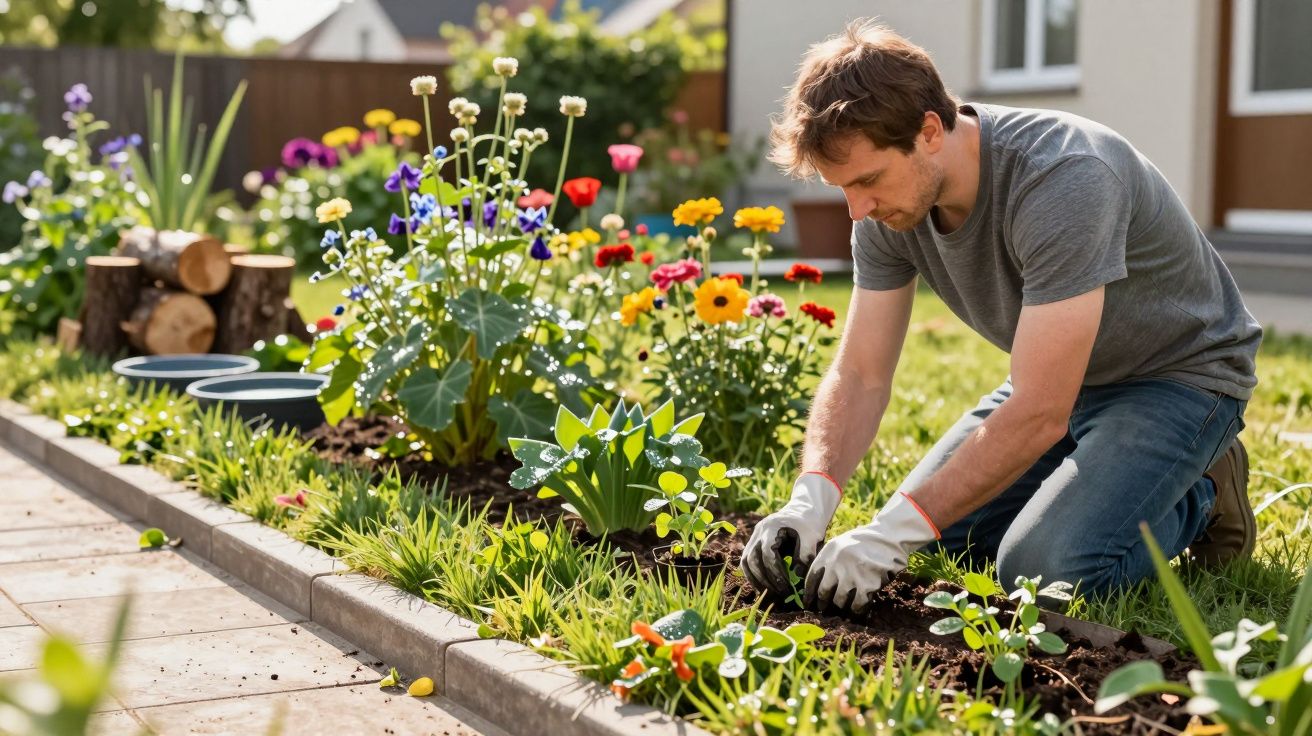
A spade by the back door, a border that looked perfect in May, and a sudden July flop you didn’t plan for. That’s the moment many people decide their garden is “failing”, when it’s often doing exactly what sustainable landscaping asks it to do: respond quickly to weather, soil and life. Seasonal biodiversity cycles are the clue here, because a garden that supports more insects, birds and fungi will look different month to month - and that variation is part of the benefit.
An eco garden isn’t a showroom that stays fixed. It’s a working habitat, designed to move.
Why eco gardens “turn over” faster than tidy ones
Conventional gardens are built to hold a picture: clipped edges, steady colour, predictable gaps filled. Eco gardens are built to hold processes. When you stop forcing a single look and start managing soil health, water flow and plant communities, change arrives faster because the system has permission to express itself.
You’ll see it in small, honest ways. A patch of self-seeded yarrow appears where you didn’t plant it, then vanishes after a wet spring. The lawn browns earlier because you’ve reduced irrigation and let roots learn the local rhythm. Seed heads stay up longer because they feed finches, even if the border looks “messier” for a few weeks.
This isn’t neglect. It’s an intentional trade: less control over aesthetics, more control over resilience.
The real driver is seasonal biodiversity cycles, not your “green thumb”
A wildlife-friendly garden isn’t just plants; it’s timing. Pollinators peak, birds nest, fungi fruit, and predators follow prey. When your planting supports those seasonal biodiversity cycles, the garden’s appearance becomes a moving map of who is active right now.
That’s why an eco border can feel like it changes weekly:
- Early spring: bulbs and early nectar plants carry hungry bees.
- Late spring to midsummer: meadow perennials surge, then sprawl after heavy rain.
- Late summer: seed heads take over; hoverflies and wasps hunt; grasses bronze.
- Autumn: leaves become mulch; fungi show up; birds work the seed buffet.
- Winter: structure matters more than flowers - stems, hedges, log piles, dry corners.
The garden looks “faster” because life is using it faster.
The intentional design move: swap permanence for repeatable patterns
The most useful mindset shift is this: you don’t design an eco garden to stay the same; you design it to return to recognisable shapes. Think rhythm, not stasis.
A designer I worked alongside on a small suburban plot called it “the three anchors”: one stable structure, one seasonal show, one self-editing layer. It meant the client could accept surprise growth without feeling the garden had run away.
Here’s what that can look like in practice:
- Stable structure: a native hedge, a small tree, or evergreen blocks that keep winter form.
- Seasonal show: a reliable run of long-flowering perennials, bulbs, or a mini meadow.
- Self-editing layer: annuals, self-seeders and groundcover that move into gaps and then retreat.
The garden changes quickly, but it changes within a plan.
A simple “eco edit” you can do without redoing the whole garden
If your garden currently swings between “lush” and “what happened here?”, the fix is rarely more fertiliser. It’s usually clearer boundaries and better habitat placement, so the wild bits don’t feel like they’re invading everything.
Try this small sequence over one weekend:
- Pick one area to be intentionally dynamic (a sunny strip, a corner, the back border).
- Give it a visible edge: mown line, timber, stones, or a narrow path.
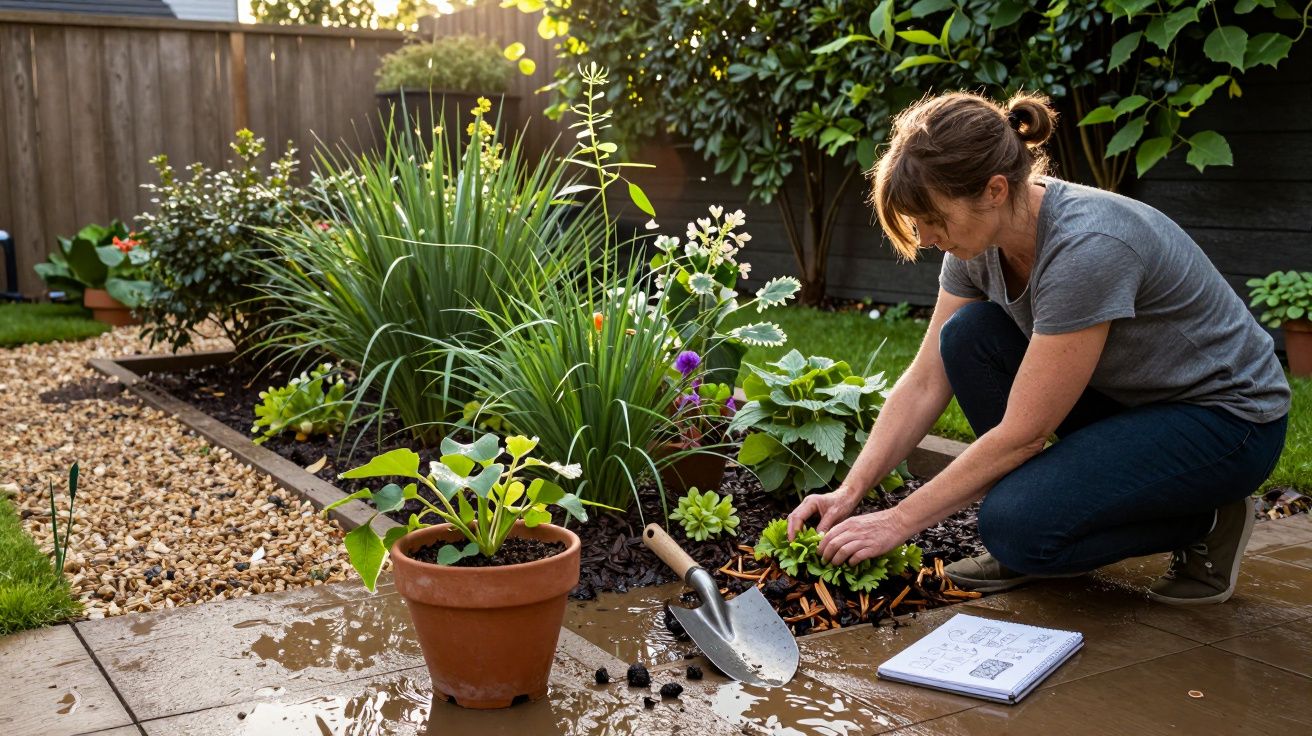
- Add two habitat elements that don’t move: a log pile and a shallow water dish, or a small heap of stones.
- Plant in groups of 3–7 of the same species, not single dots. (Groups read as “designed”, even when they seed about.)
- Leave one patch of bare-ish soil for ground-nesting bees and self-seeding. Resist the urge to mulch it immediately.
You’re not trying to control every plant. You’re making the change feel deliberate.
What to watch for: signals that change is healthy (and when it isn’t)
A fast-shifting garden can be thriving, or it can be stressed. The difference shows up in patterns.
Healthy change often looks like:
- New seedlings appearing in the same few places each year.
- More insects on warm days, even if you don’t know their names.
- Plants recovering after heat or wind without constant watering.
- Birds using the garden at specific times (dawn feeding, evening shelter).
Less healthy change tends to look like:
- One aggressive species replacing everything else.
- Bare soil expanding year to year, not just seasonally.
- Plants repeatedly collapsing from the base (often drainage issues).
- Heavy pest outbreaks with no predators following.
The aim in sustainable landscaping is not “no problems”. It’s a garden that corrects itself more often than it collapses.
The quiet promise: less perfection, more reliability
There’s a particular relief in a garden that doesn’t demand you freeze it in one moment. You stop chasing the exact May photo and start noticing the year as a sequence: who arrives, who leaves, what returns anyway. That’s the practical beauty of eco design - it changes faster, because it’s built to stay alive.
Quick guide: what to leave, what to cut, by season
| Season | Leave standing | Cut back / tidy |
|---|---|---|
| Autumn–winter | Seed heads, hollow stems, leaf litter in beds | Slippery paths, diseased foliage |
| Early spring | Some stems until nights warm | Last year’s growth before new shoots stretch |
| Summer | A portion of spent flowers for seed | Clear access edges; remove truly invasive spread |
FAQ:
- Do eco gardens always look messy? No. They look active. Strong edges, repeated plant groups, and a few evergreen anchors make the change read as intentional rather than chaotic.
- Won’t leaving seed heads and leaves create pests? It can increase some insects, but it also increases predators (birds, beetles, hoverflies). Problems usually come from imbalance, not from leaving all material everywhere.
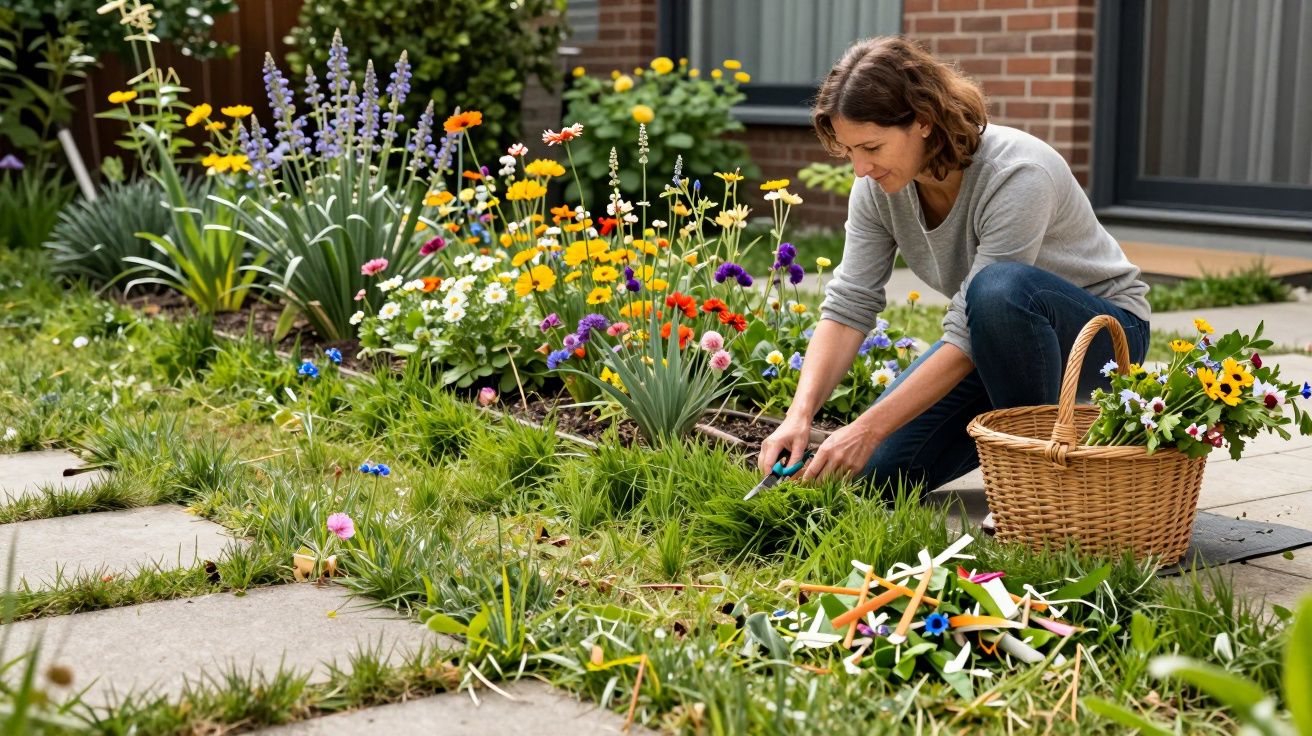
- How do I stop self-seeders taking over? Thin early, keep seedlings only where they suit the design, and use a clear boundary (path or mown strip). Self-seeding works best when you treat it like editing, not like surrender.
- What’s the fastest eco improvement with visible results? Reduce mowing frequency on one section and add a nectar-rich planting strip. You’ll usually notice more pollinators within weeks in warm weather.




Comments (0)
No comments yet. Be the first to comment!
Leave a Comment