Rain finds the weak points in a garden the way a kettle finds limescale: quietly, inevitably, and always at the worst time. That’s why climate-resilient gardens sit so naturally beside everyday environmental practices in UK homes, schools, and community plots - they’re designed for the weather we actually get, not the weather we wish we had. The point isn’t to build a “perfect” border that looks the same for ten years, but to create a space that keeps functioning when conditions swing.
I understood this properly during a July heatwave that turned, within a week, into a week of hard rain. A neighbour’s neatly clipped lawn browned, then flooded, then matted into a sour-smelling felt. Two streets over, a scruffier front garden looked almost unchanged - not because it was tougher in a heroic way, but because it was planned to bend.
Eco gardens are planned for instability, not permanence. Once you accept that, a lot of guilt evaporates. The garden stops being a museum and becomes a system.
What “planned for instability” actually means in a garden
A traditional garden often aims for control: straight edges, uniform surfaces, plants that behave, a tidy look that holds. The trouble is that control is expensive in water, time, and inputs - and it collapses fast when weather gets odd. Instability doesn’t just mean storms; it means mild winters followed by sharp frosts, long dry spells, sudden downpours, and pests that arrive earlier each year.
A climate-resilient garden assumes those swings are normal. It treats messiness as a feature, not a failure, because the “mess” (mulch, leaf litter, mixed planting, uneven height) is what buffers extremes. You don’t plan for one outcome. You plan for a range.
Think of it like this: the goal isn’t a border that always looks the same, but a border that always has something doing well.
The mistakes that make eco gardens brittle
Most gardens don’t fail because someone chose “the wrong plant”. They fail because the design has no slack in it. A few patterns show up again and again.
- Too much single surface: lawn, gravel, paving - each one can be fine, but big uninterrupted areas magnify heat, runoff, or compaction.
- Bare soil left exposed: it bakes in summer, slumps in rain, and invites weeds because it’s effectively an empty niche.
- Overreliance on thirsty or fussy favourites: plants that look stunning in a mild year can become a weekly emergency in a hard year.
- Drainage treated as an afterthought: if water has nowhere to go, roots suffocate; if it vanishes instantly, roots dry out. Both are stress.
There’s also a more subtle brittleness: the garden that only works if you’re always there. A resilient garden assumes you will go on holiday, get ill, have a busy month, or simply lose motivation. It should cope without constant rescue.
The core design moves that absorb shock
When people imagine “eco gardening”, they often jump straight to plant lists. The bigger wins usually come from structure: how water moves, how soil is covered, how many layers of planting share the load.
1) Treat water like a guest you must host - briefly
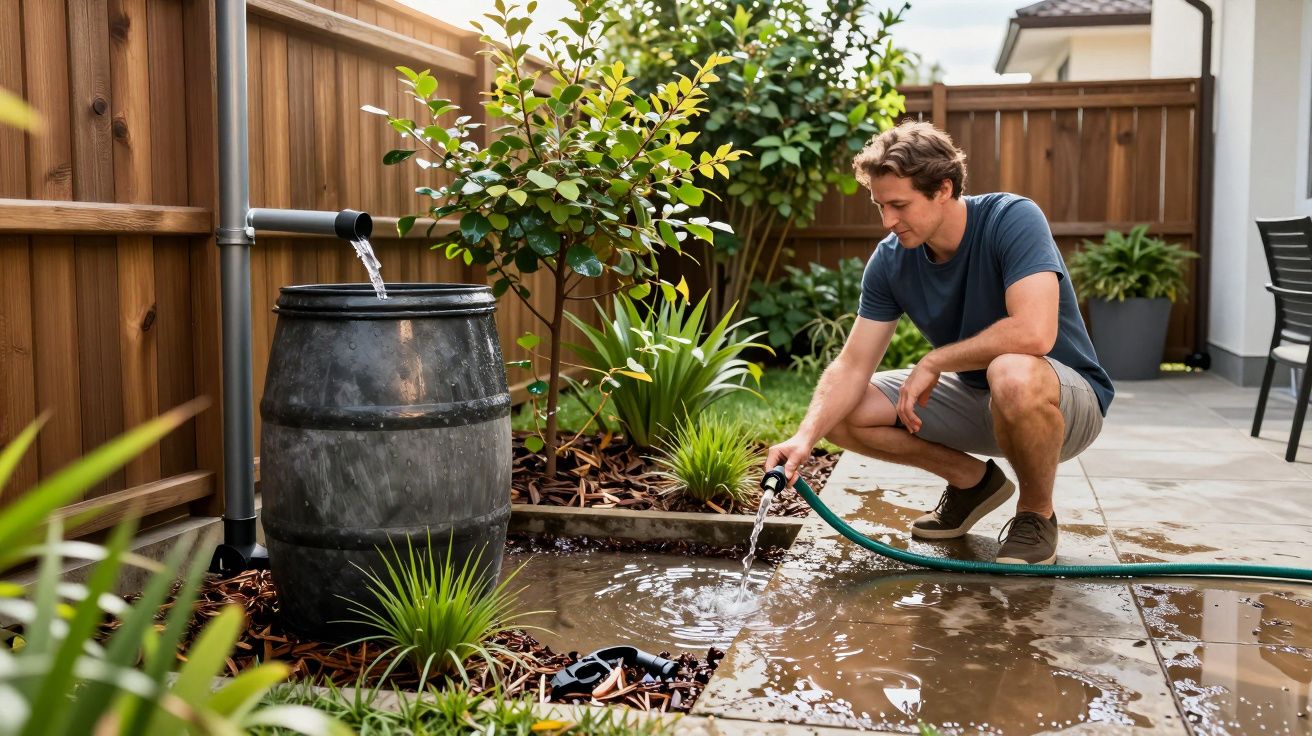
In UK conditions, the problem is increasingly both drought and downpour. The practical aim is to slow water down, let some soak in, and give excess a safe route.
- Add organic matter regularly: compost, well-rotted manure, leaf mould. It’s not glamorous, but it changes everything.
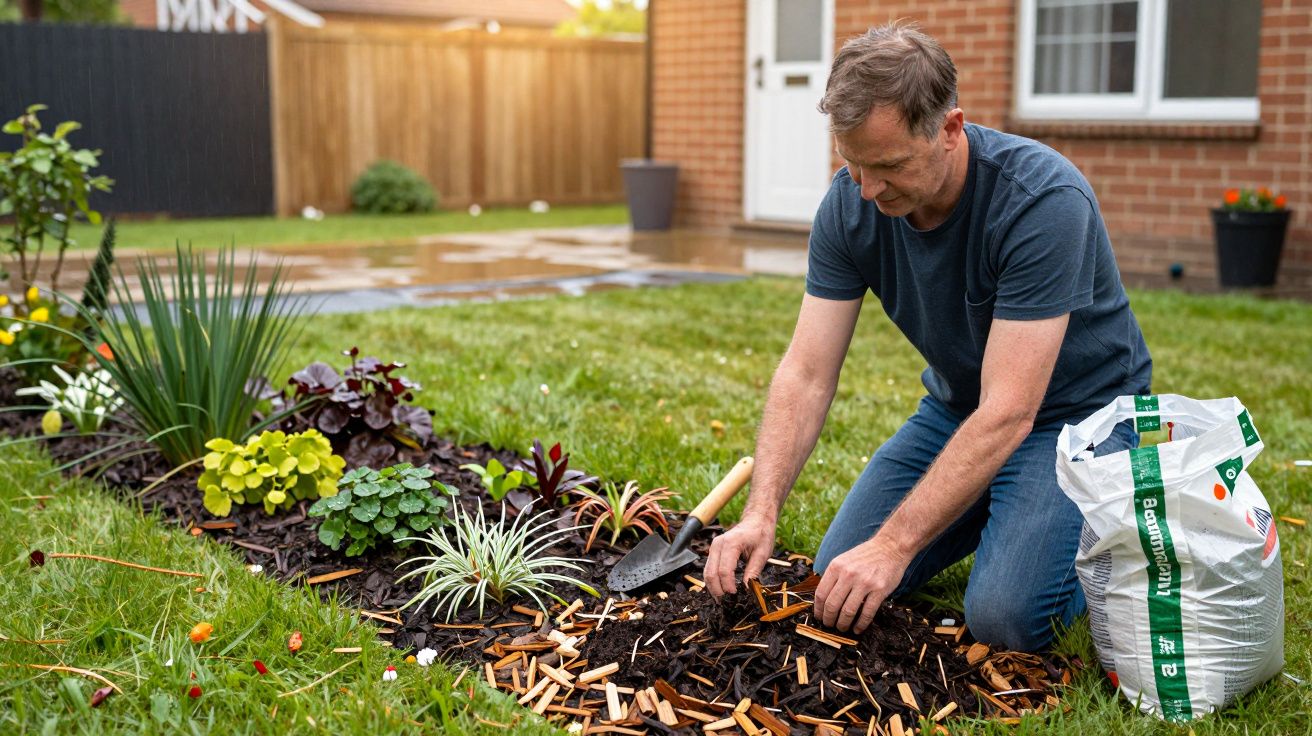
- Use mulch as a top layer to reduce evaporation and soften heavy rain impact.
- Create micro-contours: shallow basins, slightly raised planting areas, or a gentle swale to guide flow.
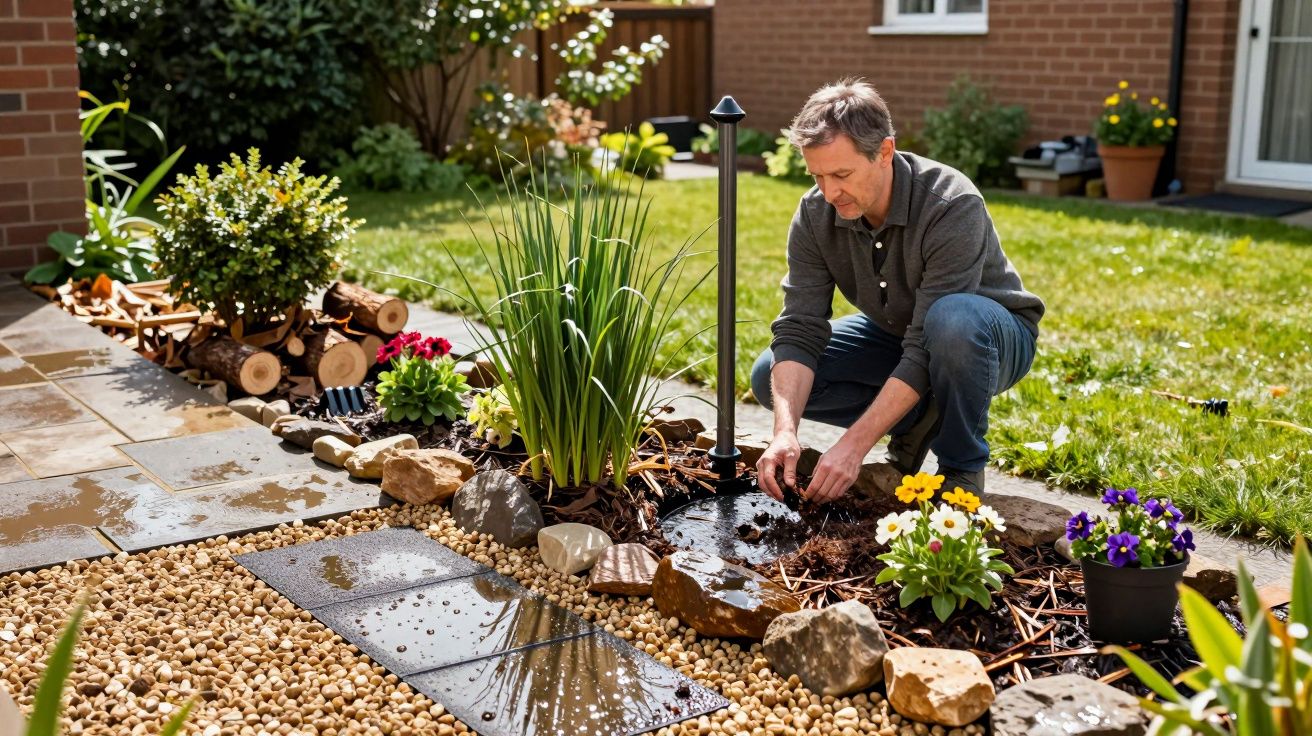
- If space allows, consider a rain garden or a simple soakaway area where water can sit temporarily without harming plants.
A garden doesn’t need to be flood-proof to be resilient. It needs a plan for where water goes when it arrives in a rush.
2) Plant in layers, not in lines
Mixed planting isn’t just aesthetic. Different roots, heights, and growth rhythms spread risk. When one plant sulks, another fills the gap, and the soil stays shaded.
A simple layering approach:
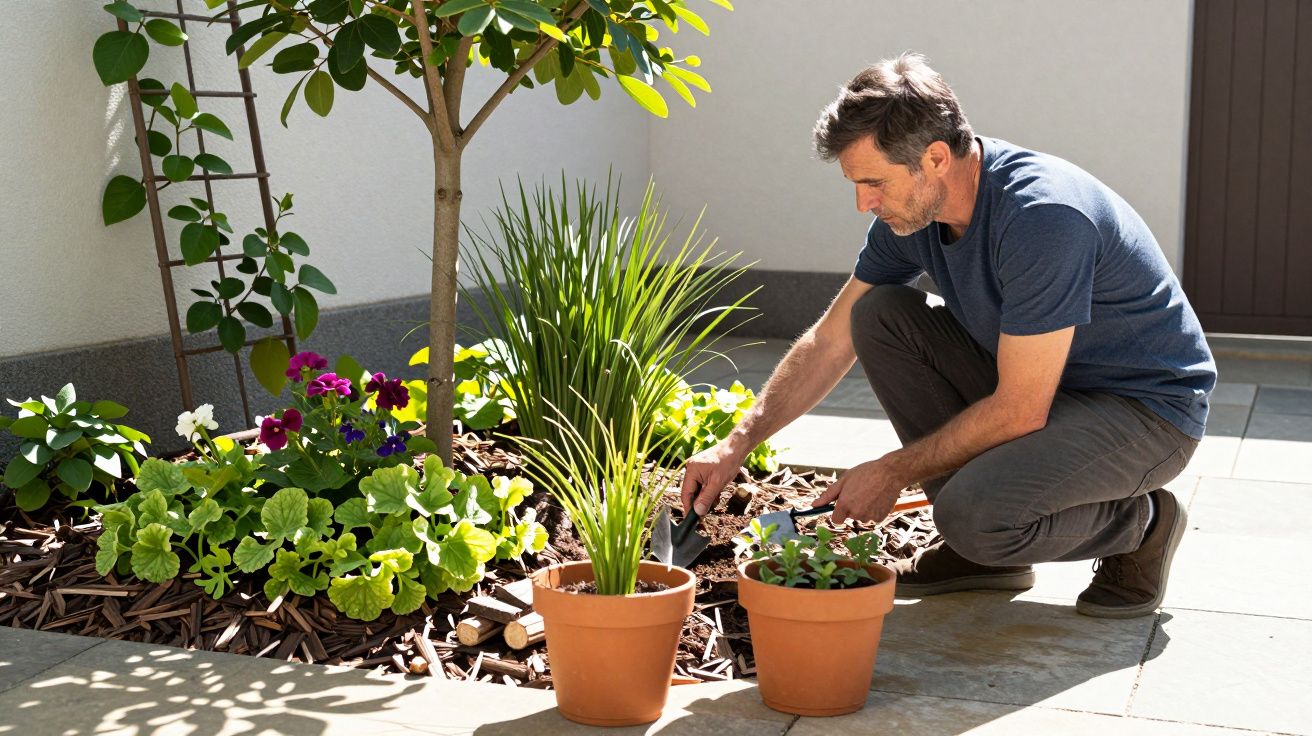
- Canopy/structure: small tree or large shrub (even in a modest garden)
- Mid-layer: flowering shrubs, grasses, perennial clumps
- Ground layer: low plants that knit soil together
- Optional “spill” layer: self-seeders that appear where conditions suit them
This is where “planned instability” becomes visible. You leave room for a little movement. You expect some self-seeding. You let certain areas be seasonal, not fixed.
3) Build soil like it’s the main project (because it is)
Healthy soil is the garden’s shock absorber. It holds moisture longer in dry spells, drains better in wet spells, and supports plants that can fend off pests without being pampered.
Small actions with outsized impact:
- Keep soil covered (mulch, groundcover, or living roots).
- Avoid working soil when it’s waterlogged (compaction lasts years).
- Feed soil biology with diverse organic materials: compost plus leaves plus chopped stems, not just one bagged product.
- Disturb less. You don’t need to go “no-dig” overnight, but you can dig less often and more gently.
A practical way to choose plants without chasing perfection
Plant choice matters, but in a resilient garden it’s about fit rather than fashion. The same plant can be tough in one spot and miserable in another. Before you buy anything, do a quick, honest audit.
- Where does water sit after heavy rain?
- Which areas bake in late afternoon sun?
- Where does wind funnel through?
- Which corners you neglect (be honest)?
Then match plants to those realities. Drought-tolerant plants won’t forgive heavy, wet clay in winter; “bog plants” won’t stay happy in a raised bed that dries by June. The best gardens don’t fight the site. They negotiate with it.
If you want a simple rule that stops most disappointment: choose more plants for your worst month than for your best month. In much of the UK, that “worst month” is often late winter wet, not midsummer heat.
Maintenance that supports resilience (without turning into a second job)
People often hear “eco” and assume it means “more work”. In reality, the work shifts from constant tidying to occasional, deliberate interventions.
A resilient maintenance rhythm looks like this:
- Spring: cut back, compost top-up, re-mulch bare areas, re-seat plants that lifted in frost.
- Early summer: deep water less often (if needed), thin seedlings where they’re too dense, spot-weed before seed set.
- Late summer: let some seedheads stand, note what coped well, plan autumn planting.
- Autumn: add leaf mould/compost, plant for winter structure, protect soil with mulch.
The goal is not to keep the garden “finished”. It’s to keep it recoverable.
Repair, replace, redesign: the calm way to respond when something fails
Sooner or later, a plant dies, a patch floods, a bed collapses into weeds. In a climate-resilient garden, that isn’t a moral failing - it’s data.
When something goes wrong, ask three questions:
- Was it a one-off event or a repeating pattern? (One freak frost vs. a consistently soggy corner.)
- Did the plant fail, or did the conditions fail it? (Too dry, too wet, too exposed.)
- What’s the smallest redesign that would reduce the stress? (Mulch, a change of plant, a small diversion of water, more shade.)
Sometimes the best environmental practice is simply not throwing good money after bad. Replace a struggling plant with something better suited, and move on without drama.
| Garden stress | What it looks like | Resilient response |
|---|---|---|
| Drought spell | Wilting, scorched edges, cracked soil | Mulch thicker, deepen soil organic matter, fewer thirstiest plants |
| Sudden downpour | Puddling, yellowing leaves, slumped beds | Improve drainage route, add organic matter, plant moisture-tolerant species |
| Heat + wind | Crisping, stunted growth | Add shelter, increase groundcover, group plants to shade soil |
FAQ:
- Do climate-resilient gardens have to look “wild”? No. They can be formal in shape and still resilient underneath, as long as soil is covered, water is managed, and planting is diverse.
- Is a lawn automatically “bad” environmentally? Not automatically, but large lawns can be fragile in drought and poor for biodiversity. Reducing lawn area and mixing in clover, daisies, or meadow sections often improves resilience.
- What’s the single best first step if I’m overwhelmed? Cover bare soil. A compost-and-mulch layer reduces weeds, buffers moisture swings, and improves soil structure without a full redesign.
- Can I do this in containers or a small courtyard? Yes, but be stricter about shade, wind protection, and watering strategy. Use larger pots, mulch the surface, and choose plants that tolerate drying cycles.
- How do I know if I’m doing “environmental practices” properly? If you’re reducing water waste, avoiding unnecessary chemicals, building soil health, and planting for local conditions, you’re already doing the important part.



Comments (0)
No comments yet. Be the first to comment!
Leave a Comment