Eco-friendly garden design can feel oddly confronting the first time you try it, especially if you’ve grown up thinking a “proper” garden means crisp edges and obedient plants. Naturalistic planting schemes ask for the opposite: a garden that behaves like a small ecosystem, where the odd bare patch, seedhead and self-sown surprise isn’t failure-it’s feedback. If you’re tired of spending weekends correcting nature, this approach matters because it saves time, supports wildlife, and looks better as it ages.
You know that moment when you step outside and notice something has flopped over, or a plant has wandered into the path, and your first instinct is to tidy it back into place? That impulse is basically the old garden contract: control in exchange for neatness. The newer contract is different. It says: let the garden move a bit, and it will start doing some of the work for you.
The perfection hangover (and why it’s costing you)
A lot of conventional gardening is built around the fear of looking “uncared for”. A leaf on the lawn reads as laziness. A seedhead reads as neglect. A patch of moss reads as you’ve somehow failed at being an adult with a hosepipe.
But the costs stack up quietly. Perfect lawns ask for mowing, feeding, watering and sometimes chemicals. Borders organised like a display shelf usually rely on constant weeding and replacement plants because the soil is left exposed and the planting is thin. And every time you reset the garden back to “neat”, you often reset habitats too.
Eco-friendly garden design doesn’t romanticise mess for the sake of it. It just treats small imperfections as useful information: where the soil is too bare, where a plant is stressed, where insects are arriving, where shade is creeping in. The garden isn’t misbehaving. It’s communicating.
What “imperfection as a feature” actually looks like
Naturalistic planting schemes can look loose without being chaotic. The trick is that they have structure underneath-like good hair that’s meant to be tousled. You’re aiming for a garden that can flex through weather, pests and your own busy weeks.
Here are the “imperfections” that are usually doing you a favour:
- Seedheads left over winter: food and shelter for birds and insects, plus free structure when everything else dies back.
- Self-seeded plants in odd places: a site test. If something sows itself successfully, it’s telling you the conditions suit it.
- Patchy groundcover: an invitation to plant more densely or mulch better, not a sign you should start from scratch.
- Moss in the lawn: often a shade/compaction story, not a “bad grass” story.
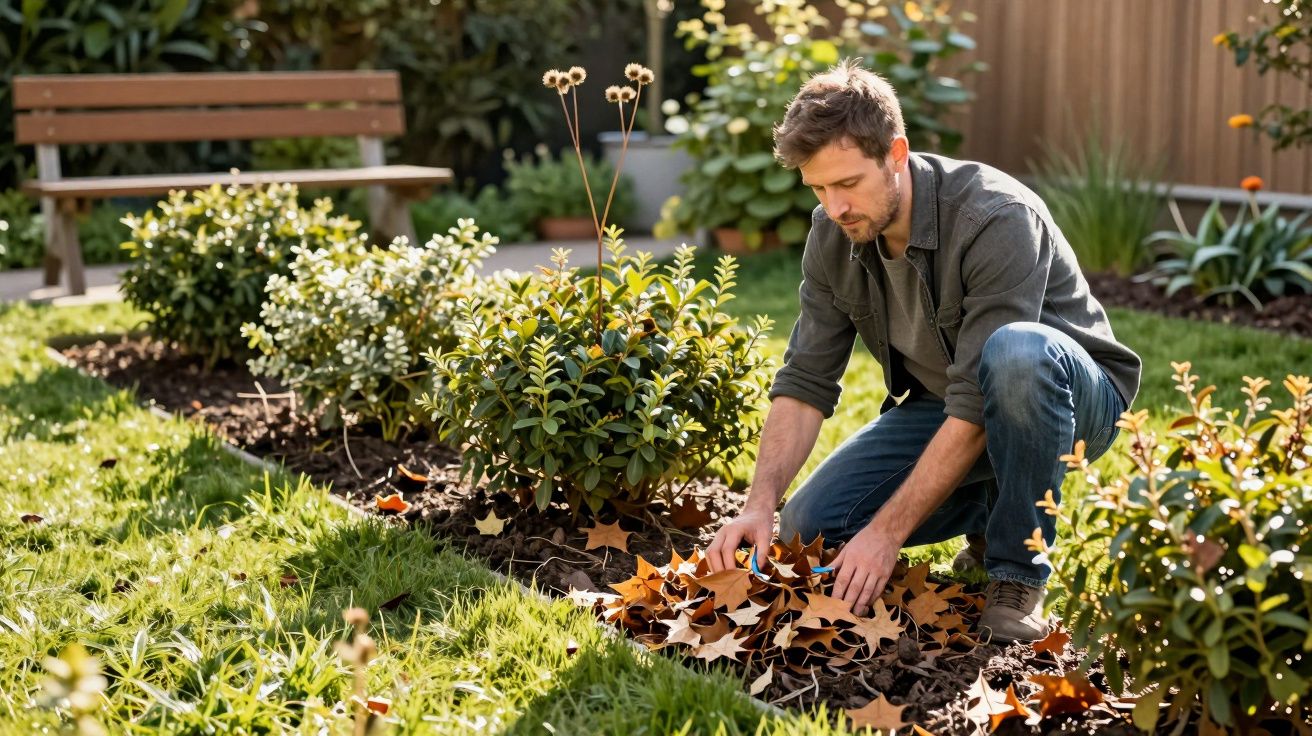
- Leaves in borders: free organic matter. Not a crisis.
If you’re worried this sounds like “just don’t do anything”, it isn’t. It’s more like: do fewer, smarter things, at the right moments.
The quiet engine: soil, not stuff
Most “eco” wins in gardens come from what you do to the soil surface. Bare soil is where problems breed: weeds germinate, moisture evaporates, beneficial fungi get disrupted, and you feel pressured to intervene.
A simple, low-drama routine looks like this:
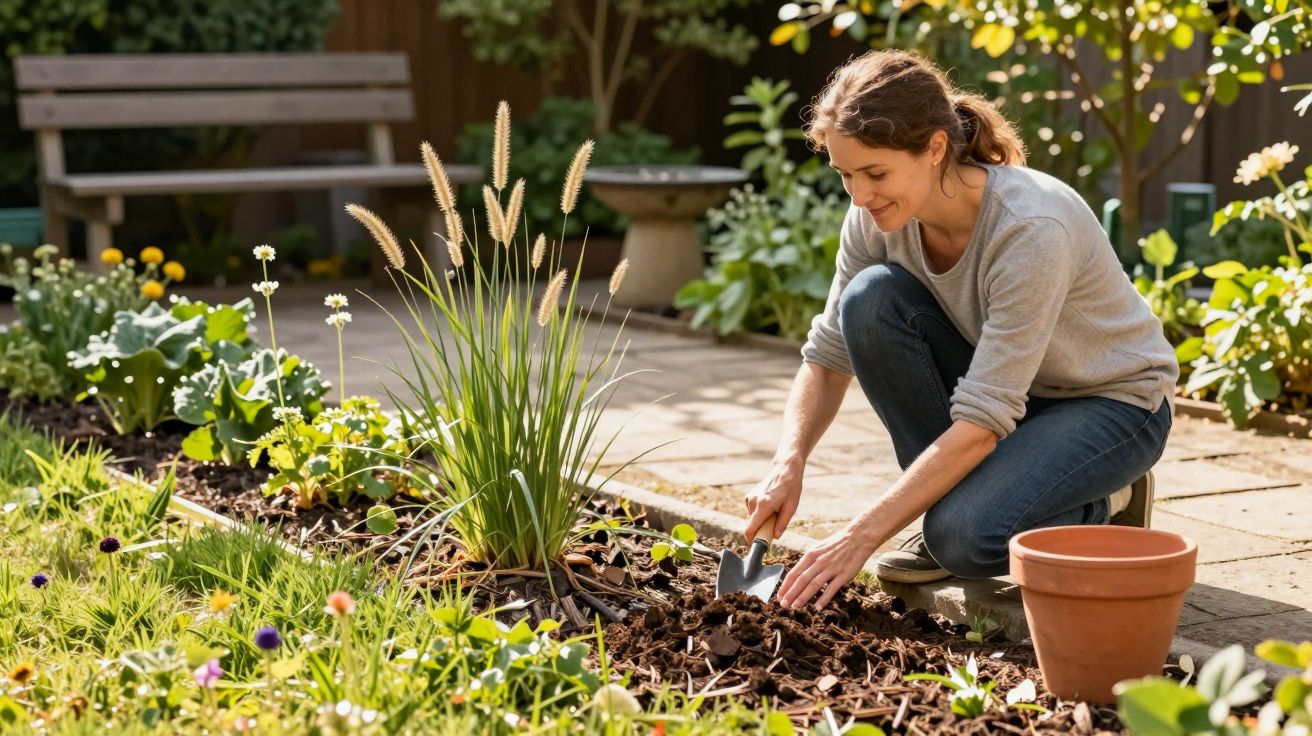
- Mulch once or twice a year with compost, leaf mould, or well-rotted manure (depending on what you can get).
- Plant closer together than feels polite so the soil stays shaded and cool.
- Stop digging as a default; disturb less, and you’ll keep soil life intact.
- Let plants complete their cycle where you can-flowers to seed, stems to winter habitat, then cut back in late winter/early spring.
It’s not a moral performance. It’s a way of building a garden that doesn’t collapse the minute you go away for a week.
Planting like nature: design rules that still feel like design
Naturalistic planting schemes work best when you borrow a few cues from landscapes that already hold themselves together: meadows, woodland edges, riverbanks. You don’t copy them perfectly; you steal their principles.
Repeat, then relax
Repetition is what stops “wild” from becoming “random”. Choose a small palette and repeat it across the garden, then allow a few plants to drift between areas.
- Pick 3–5 main performers (grasses, perennials, robust natives or near-natives).
- Add 2–3 seasonal sparks for early and late interest.
- Use one “linking” plant (for example a grass or a low evergreen) to stitch everything together.
Think in layers, not specimens
A single showstopper plant can look lonely in an eco garden because it’s usually exposed. Layering makes the planting more resilient and more forgiving.
- Structural layer: grasses, shrubs, small trees.
- Flower layer: perennials, bulbs, annuals (often self-seeding).
- Ground layer: low plants that cover soil and reduce weeds.
Choose plants that can cope with your neglect
This is where eco-friendly garden design gets brutally practical. A plant that needs constant watering and staking is not “sustainable” just because it’s fashionable. Your goal is a planting mix that survives your actual life.
A good test question is: Would this plant still look decent after two hot weeks and one distracted water? If the answer is no, plant fewer of them, or give them a more protected spot.
The “tidy” moves that keep it from looking scruffy
There’s a difference between habitat and chaos, and it often comes down to a few visible cues. You can keep the garden friendly to wildlife while still signalling intention to humans (and neighbours who peer over fences).
Try these high-impact, low-effort tactics:
- Mown edges: let the meadow bit be loose, but keep a crisp line where it meets a path or lawn.
- Clear routes: if people can walk through without brushing wet plants, the garden reads as welcoming, not overgrown.
- One hard element: a bench, a path, a pot, a birdbath. Structure makes softness look deliberate.
- Seasonal cut-back day: pick one weekend in late winter to cut down perennials and grasses, rather than fussing weekly.
The aim is not to remove the wildness. It’s to frame it.
A small shift in mindset that changes everything
If you grew up with the idea that a “good” gardener prevents problems, eco-friendly garden design can feel like learning a new language. You’re not preventing everything. You’re setting conditions, then watching what happens.
A slug-nibbled leaf becomes information about shelter and moisture, not proof you’re failing. A plant that flops tells you it wants less feeding, more light, or a neighbour to lean on. A patch of bare soil is a design note: this area needs covering, not correcting.
The funny part is that once you accept a little imperfection, the garden often looks better. Not because it’s messier, but because it’s more alive-more varied, more seasonal, more honest about weather and time.
A two-week “let it be” experiment
If you want to try naturalistic planting schemes without committing your whole garden to a new identity, run a short experiment. Choose one border or corner and do less, but with intention.
- Mulch it.
- Add a few plants in groups of three or five.
- Water to establish, then taper.
- Leave seedheads and stems until late winter.
- Only weed what’s truly invasive or smothering.
Then watch what changes: insect activity, moisture retention, how often you feel the urge to intervene. Most people are surprised by how quickly the space starts to look coherent once the soil is covered and the plants knit together.
The small promise of a garden that forgives you
A garden designed to be perfect will punish you for missing a week. A garden designed to be ecological will absorb your absence, adapt to the season, and carry on without a sulk.
That’s the real appeal of treating imperfection as a feature. It isn’t lowering standards. It’s choosing standards that match reality: weather, wildlife, work, tiredness, and the fact that living things don’t do straight lines for long.





Comments (0)
No comments yet. Be the first to comment!
Leave a Comment